
Table of Contents
Planting potatoes is one of the most rewarding projects for a beginner vegetable gardener. You don’t need a huge backyard, complicated equipment, or years of gardening experience. With healthy seed potatoes, loose soil, adequate sunlight, and proper watering, you can grow a surprisingly productive potato crop at home.
Potatoes (Solanum tuberosum) grow underground from specialized stems called tubers. As the plants develop above the soil, new tubers form below ground. Understanding this growth pattern makes planting potatoes and caring for the plants much easier.
If you’re wondering when to plant potatoes, how deep to plant them, what to do when potato seedlings or shoots appear, or when your potatoes will be ready to harvest, this guide walks you through the process step by step.
Quick Guide to Planting Potatoes
Here are the basics before you begin:
- Sun: At least 6–8 hours of direct sunlight
- Soil: Loose, fertile, well-drained soil
- Planting material: Certified disease-free seed potatoes are a good choice
- Planting depth: Commonly around 3–4 inches deep
- Spacing: About 10–12 inches apart for wide varieties
- Row spacing: Often around 2–3 feet
- Water: Consistent moisture without waterlogged soil
- Hilling: Add soil around growing stems as plants develop
- Harvest: Timing depends on whether you want new or mature potatoes
Exact planting recommendations can vary by variety, climate, and growing method.
What Are Seed Potatoes?
Despite their name, seed potatoes aren’t seeds in the usual sense.
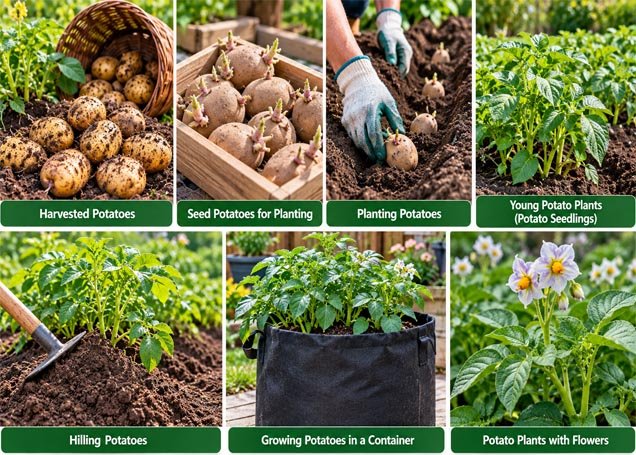
They are potato tubers intended for planting. Each seed potato has buds commonly called “eyes.” These eyes produce shoots that eventually develop into potato plants.
For home gardens, certified disease-free seed potatoes from a reputable garden supplier are generally preferable to random grocery-store potatoes.
Some grocery potatoes may have been treated to reduce sprouting, and potatoes not produced for planting can potentially carry diseases.
What Do Potato Seedlings Look Like?
The phrase potato seedlings is commonly used online for young potato plants, although potatoes grown from seed potatoes technically emerge as shoots rather than seedlings grown from botanical seed.
After planting, shoots push upward through the soil and develop green leaves.
Young potato plants usually have:
- Upright green stems
- Compound green leaves
- Rapid leafy growth once established
If you’ve planted seed potatoes and green shoots begin appearing above the soil, your potato plants are on their way.
When Is the Best Time for Planting Potatoes?
Potatoes are generally considered a cool-season crop.
In many parts of the United States, gardeners plant potatoes in early spring, but the exact date depends heavily on local climate.
Rather than relying only on a calendar date, consider soil conditions.
Potatoes shouldn’t be planted into extremely cold, saturated soil. Excess moisture can encourage seed pieces to rot before they establish.
In warmer regions, planting schedules may be quite different from those in northern states.
Your local Cooperative Extension service can provide planting dates suited to your area.
Can You Plant Potatoes Before the Last Frost?
Potatoes can tolerate cool growing conditions, but emerging foliage can be damaged by a hard freeze.
This is why local planting recommendations are important.
Gardeners in colder regions often time planting so the crop can establish during cool spring weather without exposing tender growth to unnecessarily severe conditions.
How to Choose Seed Potatoes
Successful potato growing starts with good planting material.
When shopping for seed potatoes, choose firm, healthy tubers without obvious decay.
You’ll also need to choose a variety.
Potatoes come in many types, including:
- Russet potatoes
- Red potatoes
- Yellow potatoes
- White potatoes
- Fingerling potatoes
- Purple or blue potatoes
Different varieties vary in flavor, texture, maturity time, disease resistance, and storage ability.
Choosing varieties recommended for your region can improve your chances of success.
Should You Sprout Potatoes Before Planting?
You may hear gardeners talk about chitting potatoes.
Chitting means allowing seed potatoes to begin developing short sprouts before planting.
It isn’t always necessary, but some gardeners use the technique to give potatoes a head start, particularly in areas with shorter growing seasons.
To chit seed potatoes, place them in a cool, bright location with indirect light until sturdy sprouts develop.
Avoid encouraging extremely long, pale, fragile sprouts.
Handle sprouted potatoes carefully when planting so you don’t accidentally break the shoots.
How to Prepare Potatoes for Planting
Small seed potatoes can often be planted whole.
Larger seed potatoes may be cut into pieces before planting. Each piece should contain at least one healthy eye, and many gardeners prefer pieces with more than one.
Use a clean knife when cutting seed potatoes.
Some gardeners allow cut surfaces to dry or cure briefly before planting, particularly when soil conditions are cool or damp.
Local Extension recommendations can help you determine the best practice for your climate.
How to Prepare Soil for Potatoes
Potatoes perform best in loose, well-drained soil.
Compacted or waterlogged soil can interfere with tuber development and create unhealthy growing conditions.
Before planting:
- Remove weeds and garden debris.
- Loosen the soil.
- Break up large clumps.
- Incorporate appropriate organic matter if needed.
- Make sure excess water can drain away.
A soil test can tell you more about nutrient levels and soil pH.
Avoid guessing and applying large amounts of fertilizer unnecessarily.
How to Plant Potatoes Step by Step
Now comes the important part: planting potatoes correctly.
Step 1: Choose a Sunny Location
Potatoes need plenty of sunlight for vigorous growth.
Select a garden location receiving approximately 6–8 hours or more of direct sunlight each day.
Step 2: Prepare Your Rows or Trenches
One common method is to create shallow trenches.
A trench roughly 3–4 inches deep can work for many home gardens, although planting depth varies according to soil type and growing method.
Step 3: Position the Seed Potatoes
Place your seed potatoes or seed pieces in the trench with healthy sprouts or eyes generally facing upward.
Don’t worry about achieving a mathematically perfect position. Shoots naturally grow toward the soil surface.
Step 4: Space the Potatoes
For wide varieties, spacing seed potatoes around 10–12 inches apart provides room for plant and tuber development.
Rows are commonly spaced approximately 2–3 feet apart.
However, follow recommendations for your particular variety whenever available.
Step 5: Cover With Soil
Cover the seed potatoes gently with soil.
Don’t heavily compact the soil.
Step 6: Water Appropriately
After planting, maintain suitable soil moisture without keeping the planting area constantly saturated.
Overwatering is not a shortcut to faster growth.
What Happens After Planting Potatoes?
For beginners, waiting for the first green shoots can be exciting.
How quickly shoots appear depends on:
- Soil temperature
- Weather
- Variety
- Whether the potatoes were pre-sprouted
- Planting depth
Once shoots emerge, the plants begin developing stems and leaves above ground while their underground structures develop beneath the soil.
This is when regular garden care becomes important.
Growth Stages
| Stage | Duration | Key Activity |
| Sprouting | 25–35 days (spring) / 10–20 days (autumn) | Eyes sprout; roots form; ideal temp 12–18°C |
| Seedling | 15–20 days after emergence | Leaves expand; stolons begin to form |
| Vegetative growth | ~30 days | Rapid leaf & stem growth; hilling needed |
| Tuber formation | Starts at flowering | Tubers initiate; consistent moisture critical |
| Bulking | 30–45 days | Tubers swell; highest water & nutrient demand |
| Maturation | Foliage yellows & dies | Skin thickens; ready for harvest |
Total time to harvest: 70–120 days (early varieties: 70–90 days; maincrop: 90–120 days)
Cultivation Guide
1. Climate & Soil
- Climate: Cool growing season, 15–22°C; tubers stop growing above 30°C
- Soil: Loose, well-drained loam; pH 5.0–6.5 (acidic soil prevents scab)
- Avoid: Heavy clay or waterlogged soil → deformed tubers & rot
- Sunlight: Full sun (6+ hours daily)
2. Planting
- Start with: Certified disease-free seed potatoes (not grocery store potatoes)
- Prep: Cut into 40–60g pieces, each with 2–3 eyes; let cut surface dry 1–2 days to form a protective scab
- Time: Plant 2–4 weeks before last frost; when soil temp ≥7°C
- Depth: 10–15 cm; spacing: 25–30 cm between plants, 60–75 cm between rows
- Orientation: Eyes facing upward
3. Care & Management
- Hilling (Earthing up): When plants reach 20–25 cm tall, mound soil around stems — repeat 1–2 more times. Critical: keeps tubers covered, prevents green potatoes (toxic when exposed to light)
- Water: 2.5–5 cm water/week; keep evenly moist, especially during tuber bulking. Reduce watering as foliage yellows
- Fertilizer: High potassium, moderate phosphorus, low nitrogen. Ratio N:P:K ≈ 1:1:2.5. Side-dress when plants are 15–20 cm tall
- Weeding: Shallow cultivation; avoid deep tilling, which damages shallow roots/tubers
- Crop rotation: Do not plant after tomato, pepper, eggplant — same family, shared diseases
4. Pests & Diseases
| Problem | Control |
|---|---|
| Late/early blight | Certified seed; good drainage; avoid wetting foliage; copper sprays |
| Colorado potato beetle | Hand-pick eggs & larvae; row covers |
| Aphids | Water spray; neem oil; natural predators |
| Scab | Acidify soil; maintain consistent moisture; resistant varieties |
5. Harvest & Storage
- New potatoes: Dig when plants flower, 70–90 days
- Main crop: Harvest when foliage turns brown and dies; dig carefully to avoid bruising
- Cure: Let tubers dry in a cool, shaded, well-ventilated area 1–2 weeks to harden skin
- Store: Dark, 4–7°C, high humidity; avoid refrigeration (converts starch to sugar)
Caring for Potato Seedlings and Young Plants
Once your potato seedlings or shoots emerge, focus on sunlight, moisture, weed control, and eventually hilling.
Give Them Plenty of Sunlight
Potato plants generally perform best in full sun.
Too much shade can reduce plant vigor and potentially affect your harvest.
Keep Weeds Under Control
Weeds compete with potato plants for:
- Water
- Nutrients
- Sunlight
- Growing space
Remove weeds carefully, particularly around young plants.
Avoid aggressive digging close to the plants because developing potatoes and roots are underground.
Watch Soil Moisture
Potatoes generally benefit from consistent moisture during active growth.
However, soil should not remain waterlogged.
Weather makes a major difference. A garden may require supplemental watering during a dry week and none during a rainy one.
Check the soil instead of watering automatically according to a rigid schedule.
How Often Should You Water Potato Plants?
There is no perfect watering schedule for every potato garden.
Your soil type, temperature, rainfall, plant size, and growth stage all affect water needs.
As a general principle, aim for consistent soil moisture without saturation.
Long periods of very dry soil followed by excessive watering aren’t ideal.
Watering deeply when necessary is generally better than repeatedly wetting only the soil surface.
If possible, direct water toward the soil rather than constantly wetting the foliage.
What Is Hilling Potatoes?
Hilling is one of the most important techniques to understand when growing potatoes.
As potato plants grow, gardeners gradually pull loose soil around the base of the stems, creating a mound or “hill.”
Why Hill Potato Plants?
Hilling can:
- Keep developing tubers covered
- Prevent tubers near the surface from being exposed to sunlight
- Help manage weeds
- Provide additional support around plants
Potato tubers exposed to light can turn green.
Green potatoes can contain elevated levels of glycoalkaloids and should not be treated like normal edible potatoes.
How to Hill Potatoes
Once plants have developed sufficient height, pull loose soil from the surrounding area toward the base.
Leave plenty of healthy foliage exposed above the mound.
As the plants continue growing, hilling may be repeated as needed.
The goal isn’t to bury the entire plant. You’re gradually increasing the amount of soil around the lower stems.
Can You Use Mulch Around Potato Plants?
Mulching can be useful in a potato garden.
Suitable mulch may help:
- Suppress weeds
- Reduce rapid moisture loss
- Protect soil
- Keep developing potatoes covered
Straw is commonly used by some potato growers.
However, mulch shouldn’t create permanently soggy conditions. Your growing method should still provide good drainage and airflow.
Do Potato Plants Need Fertilizer?
Potatoes need nutrients, but more fertilizer doesn’t automatically mean more potatoes.
Too much nitrogen can encourage excessive leafy growth rather than the balanced development you’re trying to achieve.
A soil test is the best starting point.
It can identify nutrient needs and help you avoid unnecessary fertilizer applications.
If fertilizer is needed, follow soil-test recommendations and product directions rather than applying extra “just in case.”
Potato Flowers: Should You Be Concerned?
Mature potato plants may produce flowers.
Depending on the variety, the flowers can be white, pink, purple, or bluish.
Flowering is a normal part of potato plant development.
Some plants may later form small fruits that resemble tiny tomatoes.
Do not eat potato fruits.
The edible part of the potato crop is the underground tuber.
Potato Vine vs. Potato Plant: What’s the Difference?
The keyword potato vine can be confusing.
People sometimes informally describe the above-ground growth of potato plants as vines. However, searches for “potato vine” may also refer to ornamental plants, particularly ornamental sweet potato vine.
Edible potatoes are Solanum tuberosum.
Ornamental sweet potato vine is generally Ipomoea batatas, the same species as sweet potato but typically selected for decorative foliage.
Therefore, if your goal is growing edible potatoes, make sure you’re purchasing seed potatoes intended for food production, not an ornamental plant sold primarily for its foliage.
Can You Grow Potatoes in Containers?
Yes.
Container gardening is an excellent option for people with limited garden space.
Potatoes can be grown in:
- Large pots
- Grow bags
- Suitable large containers
The container must have adequate drainage.
Planting Potatoes in Containers
Start with a layer of growing medium and plant seed potatoes with sufficient spacing.
As the plants grow, additional growing medium can be added around the stems while keeping healthy foliage exposed.
Don’t overcrowd the container.
A larger container generally provides more room for root and tuber development.
Container soil can dry faster than garden soil, so check moisture regularly.
Can You Grow Potatoes in Raised Beds?
Absolutely.
Raised beds can work particularly well because they often provide:
- Loose soil
- Easier hilling
- Better drainage
- Convenient harvesting
Just make sure the bed receives enough sunlight and has sufficient depth for growing and hilling your potato plants.
Common Problems When Growing Potatoes
Healthy plants can still experience occasional problems.
Potato Plants Turning Yellow
Yellow leaves can have several causes.
Possible explanations include:
- Natural aging
- Too much water
- Too little water
- Nutrient problems
- Disease
- Pest damage
Don’t immediately add fertilizer or water.
First inspect the entire plant and check soil moisture.
Holes in Potato Leaves
Chewed leaves may indicate insect activity.
One well-known potato pest in North America is the Colorado potato beetle.
Regularly inspect both sides of leaves so problems can be identified early.
Plants Growing but Few Potatoes
Possible causes include:
- Excess nitrogen
- Insufficient sunlight
- Poor growing conditions
- Improper watering
- Variety characteristics
- Harvesting too early
Good leafy growth doesn’t always guarantee a large underground crop.
When Are Potatoes Ready to Harvest?
Harvest timing depends on whether you want new potatoes or fully mature potatoes.
Harvesting New Potatoes
New potatoes are young, smaller tubers harvested before the crop reaches full maturity.
Gardeners often carefully check around plants after flowering begins, depending on the variety.
Harvesting Mature Potatoes
For mature potatoes, wait until the plants naturally begin yellowing and dying back.
This indicates the crop is approaching maturity.
Harvest timing still varies by variety, so keep track of the variety you planted and its expected days to maturity.
How to Harvest Potatoes
Harvest carefully because potato skins can be damaged by garden tools.
A garden fork can be useful, but insert it far enough away from the plant to reduce the chance of piercing the tubers.
Lift the soil gently and search through it for potatoes.
It’s surprisingly easy to leave potatoes behind, so check the soil thoroughly.
Handle freshly harvested potatoes carefully.
How to Store Homegrown Potatoes
Potatoes intended for longer storage require different handling from potatoes you plan to eat immediately.
After harvest, healthy mature potatoes can be cured under appropriate conditions before storage.
Store suitable potatoes in a:
- Cool
- Dark
- Well-ventilated
location.
Avoid exposing stored potatoes to light because light can cause greening.
Do not store damaged or diseased potatoes with healthy ones, since deterioration can spread during storage.
Common Potato-Growing Mistakes Beginners Should Avoid
Growing potatoes is relatively straightforward, but several mistakes can reduce your harvest.
1. Planting Grocery-Store Potatoes Without Considering Disease Risk
Certified seed potatoes are generally a better choice for predictable garden production.
2. Planting in Waterlogged Soil
Potatoes need moisture, but poorly drained soil can create serious problems.
3. Planting Too Closely
Crowded plants compete for resources and can reduce airflow.
4. Forgetting to Hill
Tubers developing near the surface need protection from sunlight.
5. Letting Potatoes Turn Green
Tubers exposed to light can develop green areas and increased glycoalkaloids.
6. Overfertilizing
Excess nitrogen can produce impressive foliage without necessarily producing the harvest you want.
7. Harvesting Too Early
If you’re growing mature storage potatoes, give the crop enough time to finish developing.
8. Ignoring Pests
Regular garden inspection helps you notice problems before they become severe.
Frequently Asked Questions About Planting Potatoes
How deep should I plant potatoes?
A common starting depth is approximately 3–4 inches, although planting depth can vary according to soil, variety, and growing method.
How far apart should potatoes be planted?
Many home gardeners space seed potatoes approximately 10–12 inches apart, with rows roughly 2–3 feet apart. Check recommendations for your specific variety.
How long do potatoes take to grow?
The growing period varies considerably by variety. Some early varieties mature much faster than main-season or storage varieties. Check the expected days to maturity provided with your seed potatoes.
Can I plant a potato from the grocery store?
It may sprout and grow, but certified seed potatoes are generally recommended because they are produced specifically for planting and can reduce certain disease concerns.
Do potatoes need full sun?
Potatoes generally grow best with at least 6–8 hours of direct sunlight per day.
Do potatoes need lots of water?
Potatoes need consistent moisture during important growth stages, but they don’t benefit from constantly waterlogged soil. Check soil moisture and account for rainfall before watering.
What are potato seedlings?
Gardeners may use “potato seedlings” to describe young potato plants. When potatoes are grown from seed tubers, however, the first growth you see is technically shoots emerging from the planted tuber.
Should I let potato plants flower?
Flowering is a normal part of potato growth. You generally don’t need to panic when flowers appear.
Can I eat potato berries?
No. The small fruits that sometimes develop after potato flowers are not the edible part of the plant and should not be eaten.
Can potatoes be grown in pots?
Yes. Large containers and grow bags can work very well when they provide adequate space, drainage, sunlight, and appropriate watering.
Final Thoughts
Planting potatoes is an excellent gardening project for beginners because you can watch the crop progress from sprouting seed potatoes to leafy plants and finally to a harvest hidden beneath the soil.
Start with healthy seed potatoes, choose a sunny location, prepare loose and well-drained soil, and give your plants enough space.
Once the young potato seedlings and shoots emerge, maintain consistent moisture, control weeds, and hill the plants as they grow to keep developing tubers protected from sunlight.
Most importantly, pay attention to your garden rather than relying on a rigid schedule. Weather and soil conditions change, and successful gardeners adjust their care accordingly.
With a little patience, digging into the soil at harvest time and finding your first homegrown potatoes can be one of the most satisfying experiences in a vegetable garden.
References and Further Reading
For science-based regional advice about planting potatoes in the United States, consult:
- Your state’s Cooperative Extension service
- USDA gardening and plant resources
- University Extension vegetable-growing guides
- Local Master Gardener programs
Local Extension recommendations are particularly useful for determining planting dates, recommended potato varieties, pest management, and fertilizer requirements for your area.