
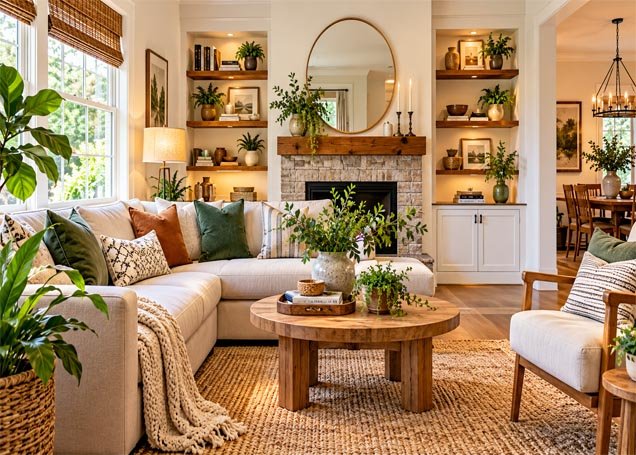
Choosing an interior design style sounds easy until you actually start decorating.
You save a warm living room on Pinterest, then fall in love with a clean modern kitchen, a rustic dining table, and a colorful vintage rug. Suddenly, your inspiration folder contains five completely different homes.
That is normal.
Most homes do not need to follow one design style perfectly. In fact, some of the most comfortable rooms borrow ideas from several styles. The useful part is understanding what makes each style different. Once you know that, choosing furniture, colors, lighting, rugs, and accessories becomes much easier.
Below are 15 popular interior design styles, along with practical ideas for deciding which ones actually suit your home and the way you live.
1. Modern Interior Design
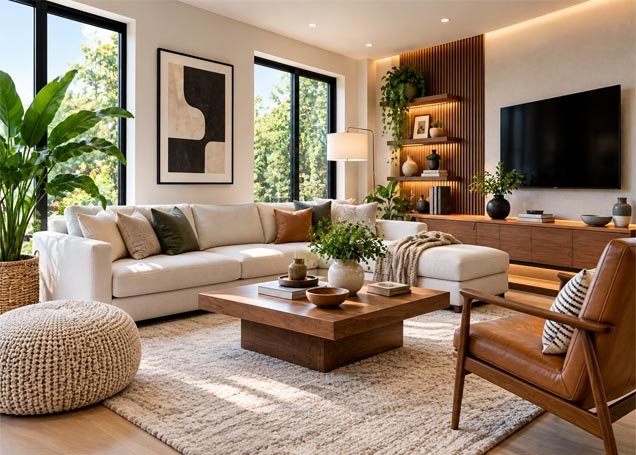
Modern design is often confused with contemporary design, but they aren’t exactly the same.
Modern interiors are influenced by design movements of the early-to-mid 20th century. The look tends to favor clean lines, simple forms, uncluttered rooms, and furniture that feels functional rather than decorative.
Common features include:
- Straight, clean lines
- Neutral or earthy colors
- Wood, leather, glass, and metal
- Furniture with simple silhouettes
- Limited decorative accessories
- Open, uncluttered layouts
A modern room doesn’t have to feel cold. Warm wood, textured fabrics, houseplants, and comfortable seating can soften the clean architecture.
Best for: People who like an organized home without excessive decoration.
2. Contemporary Interior Design
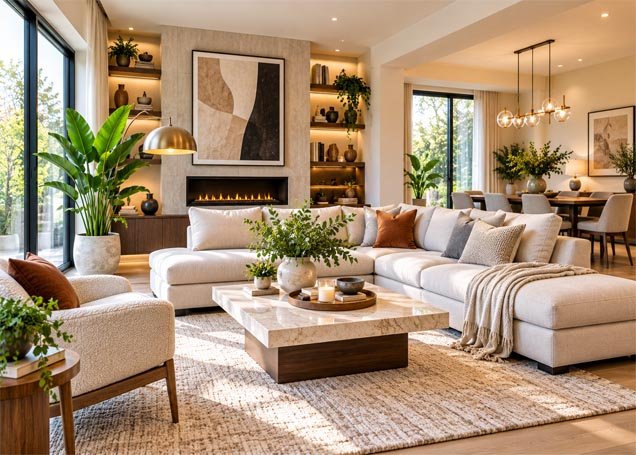
Contemporary design is more fluid because it reflects what feels current now.
A contemporary room might include curved furniture, oversized lighting, neutral walls, natural materials, large windows, and a few dramatic pieces of art.
Unlike a strict historical style, contemporary interiors continue to change as design trends evolve.
You may see combinations such as a sculptural sofa beside a simple wood coffee table or a minimalist kitchen warmed up with stone and textured fabrics.
The goal isn’t to fill every corner. Leaving some visual breathing room is part of the design.
Best for: Homeowners who enjoy an updated look and don’t mind changing details over time.
3. Minimalist Interior Design
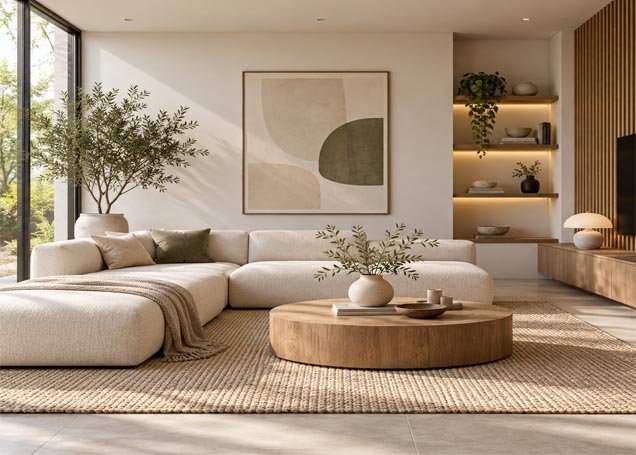
Minimalism is not simply owning as little as possible.
In interior design, it is more about being selective.
A minimalist living room may have a sofa, one comfortable chair, a coffee table, a lamp, and a few carefully chosen objects. Each piece has a purpose, and there is usually plenty of open space around the furniture.
Typical characteristics include neutral colors, concealed storage, simple furniture, limited patterns, and very little visual clutter.
The difficult part is storage. A minimalist room is much easier to maintain when everyday objects have somewhere to go.
Instead of buying more decorations, focus on better lighting, texture, materials, and proportion.
Best for: Anyone who feels calmer in simple, uncluttered spaces.
4. Scandinavian Interior Design
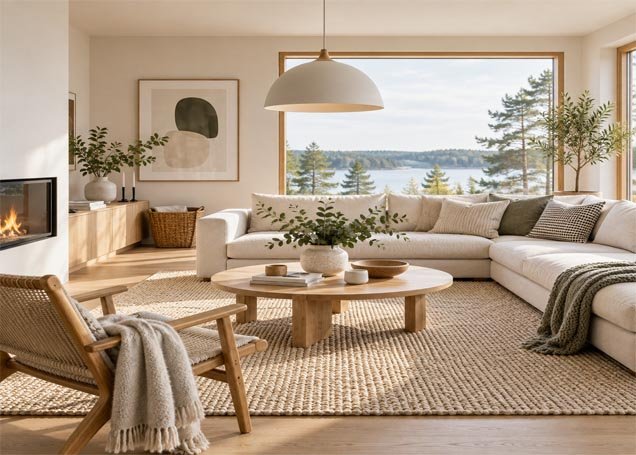
Scandinavian interiors manage to look simple without feeling bare.
Because Scandinavian design developed in countries with long, dark winters, light and comfort play an important role. Rooms often feature pale walls, light-colored woods, practical furniture, cozy textiles, and plenty of natural light.
Think:
- White, cream, gray, and soft earthy colors
- Light oak and other pale woods
- Wool throws and textured rugs
- Simple furniture
- Houseplants
- Soft, warm lighting
You don’t need an all-white room to achieve the look. Muted greens, dusty blues, warm beige, and natural wood can add personality while preserving the relaxed feeling.
Best for: Small homes, apartments, and anyone who likes bright but comfortable rooms.
5. Traditional Interior Design
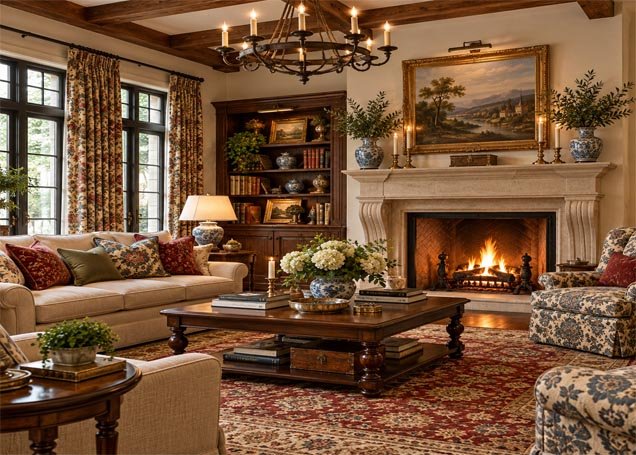
Traditional design favors symmetry, detail, and a sense of permanence.
Furniture often has curved shapes or decorative details. You may also find substantial wood pieces, framed artwork, patterned rugs, upholstered chairs, and classic lamps.
Unlike minimalism, traditional rooms aren’t afraid of decoration.
However, a traditional home doesn’t need to look like a museum. Mixing classic furniture with simpler accessories can make the style feel more appropriate for everyday life.
For example, a traditional wood dining table can work beautifully with lighter walls and relatively simple curtains.
Best for: People who prefer timeless rooms over fast-changing trends.
6. Transitional Interior Design
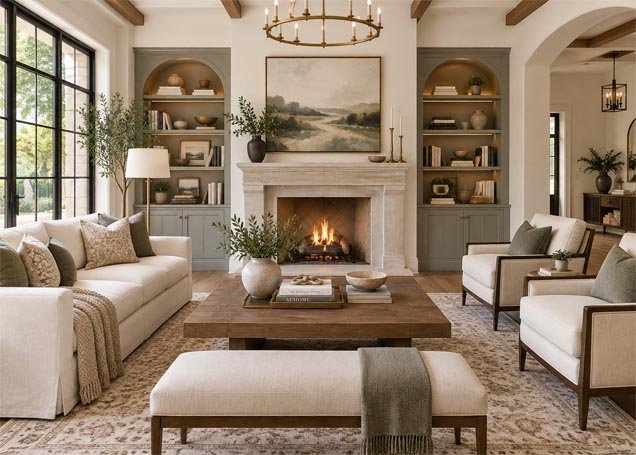
Can’t decide between modern and traditional?
That is exactly where transitional design becomes useful.
Transitional interiors combine the comfort and familiarity of traditional decorating with the cleaner lines of modern design.
Imagine a classic upholstered sofa paired with a simple coffee table, understated curtains, neutral walls, and contemporary lighting.
The contrast should feel intentional rather than random.
A restrained color palette often helps tie everything together.
Best for: Households where one person prefers traditional design and another prefers modern design.
7. Mid-Century Modern
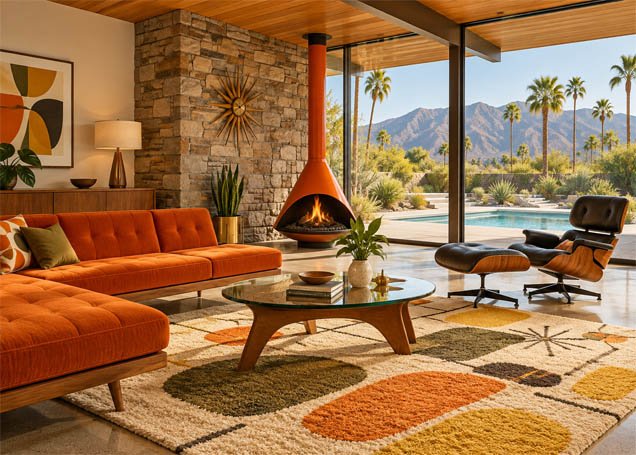
Mid-century modern design became especially influential around the middle decades of the 20th century, and many of its furniture shapes remain popular today.
Look for:
- Tapered furniture legs
- Low-profile seating
- Simple geometric forms
- Warm wood
- Functional furniture
- Occasional bold colors
Walnut tones, olive green, mustard, rust, and muted orange can work well, although you don’t need to use all of them.
One recognizable chair or sideboard may be enough to bring the style into a room. Filling the entire house with retro-looking furniture can easily become too themed.
Best for: Anyone who likes vintage character combined with relatively clean lines.
8. Farmhouse Interior Design
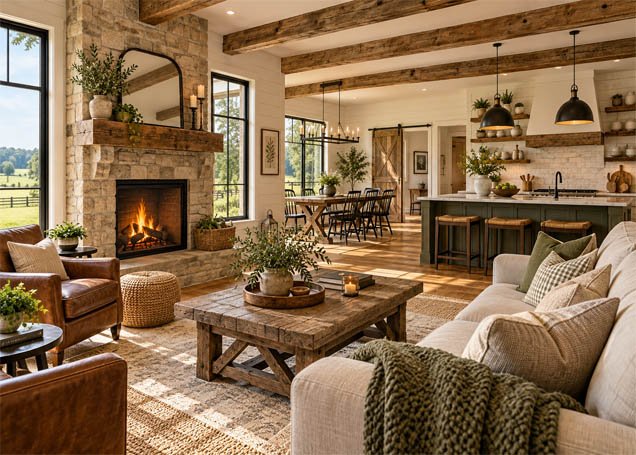
Farmhouse style is built around comfort, practicality, and natural materials.
Wood tables, woven baskets, linen or cotton fabrics, simple ceramics, and vintage-inspired accessories all fit comfortably into this look.
The strongest farmhouse rooms usually feel collected rather than overly coordinated.
Modern farmhouse takes the basic idea and simplifies it. Instead of filling a room with rustic signs and themed decorations, it may use a few farmhouse materials alongside cleaner furniture and a neutral palette.
This is one style where restraint makes a noticeable difference.
A solid wood table and warm natural textures can communicate farmhouse character without covering every wall with decorations.
Best for: Families and anyone who wants a relaxed, welcoming home.
9. Rustic Interior Design
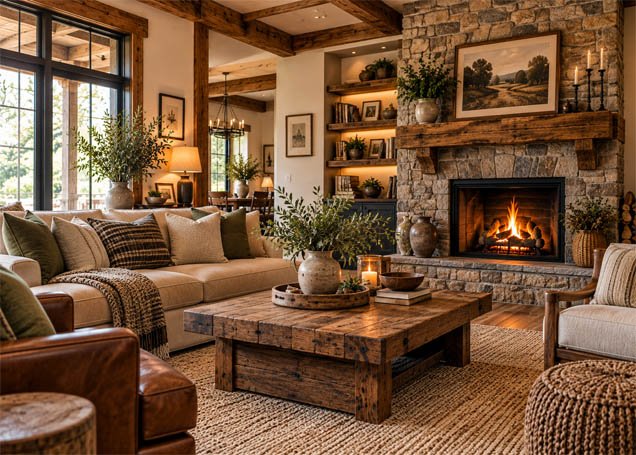
Rustic interiors celebrate materials that look natural, aged, or imperfect.
You might find exposed beams, stone, reclaimed-looking wood, leather, woven materials, and furniture with visible grain.
Colors are generally inspired by nature: brown, tan, cream, charcoal, forest green, and other earthy shades.
Texture matters more than polished perfection.
A scratched wood table may actually improve the look rather than ruin it.
You don’t need a cabin to use rustic design, either. In a suburban home, one reclaimed-wood feature, a textured rug, and a few natural materials can introduce rustic warmth without overwhelming the space.
Best for: People who enjoy earthy colors and natural materials.
10. Industrial Interior Design
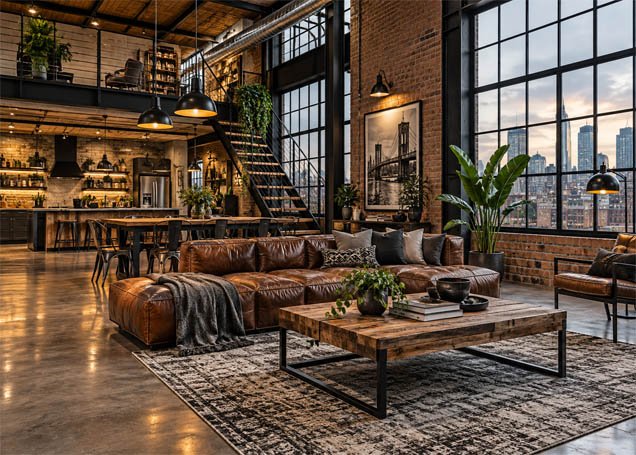
Industrial design takes inspiration from factories, warehouses, lofts, and other utilitarian spaces.
Typical elements include:
- Exposed brick
- Black metal
- Concrete
- Open shelving
- Visible structural elements
- Leather
- Reclaimed or weathered wood
Because these materials can feel hard, successful industrial interiors usually need something softer for balance.
A large rug, upholstered sofa, curtains, plants, or warm lighting can make a dramatic difference.
You also don’t need exposed brick walls to create the style. Black-framed lighting, wood-and-metal furniture, and a restrained color palette can provide a subtle industrial influence.
Best for: Lofts and open-plan spaces, or anyone who likes an urban look.
11. Bohemian Interior Design
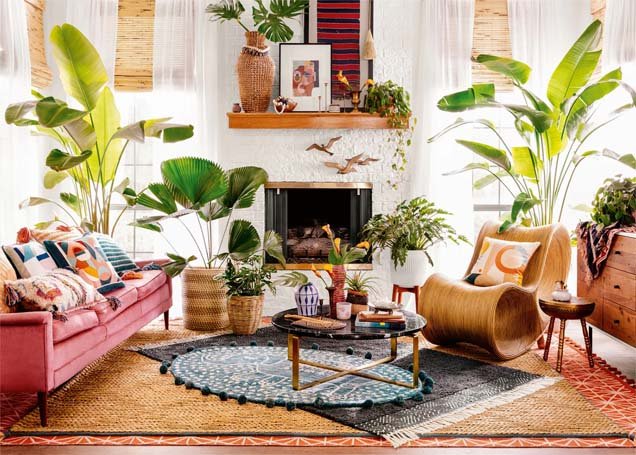
Bohemian, or boho, design cares much less about matching.
It embraces personality.
A boho room might contain a vintage table, colorful rug, handmade pottery, plants, books, patterned pillows, woven baskets, and objects collected while traveling.
Layers are important, but that doesn’t mean every surface needs decoration.
Start with a comfortable foundation and gradually add meaningful pieces. This usually looks more authentic than buying an entire matching “boho” collection at once.
Plants work particularly well here because they introduce irregular shapes and natural color.
Best for: Creative homeowners who enjoy color, collections, plants, and an informal atmosphere.
12. Coastal Interior Design
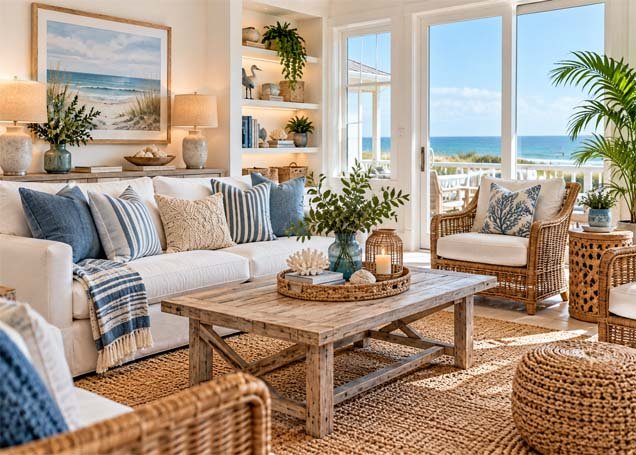
Coastal interiors draw on the relaxed feel of homes near the water, but seashell decorations aren’t required.
A more subtle coastal palette uses whites, sandy beige, pale blue, weathered wood, woven fibers, and plenty of natural light.
Furniture tends to be comfortable rather than formal.
Materials such as linen, cotton, rattan, jute, and light wood can reinforce the breezy feeling.
The easiest mistake is making the theme too literal. A room can feel coastal without anchors, boats, and nautical signs everywhere.
Think light and relaxed, rather than “beach souvenir shop.”
Best for: Bright homes and people who like airy, casual interiors.
13. French Country Interior Design
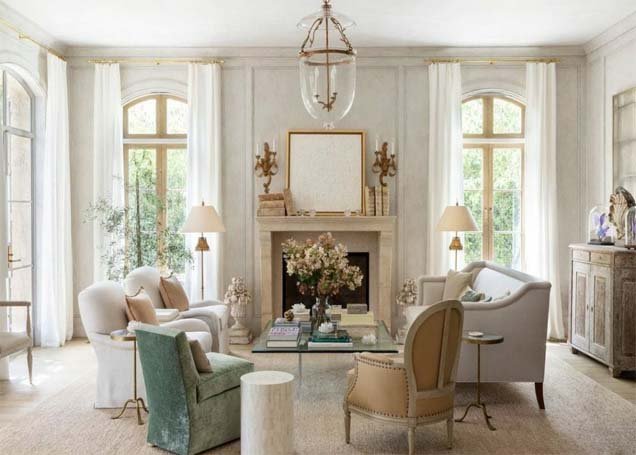
French country style combines rustic comfort with softer, more elegant details.
Natural wood, vintage-inspired furniture, muted colors, floral patterns, linen, ceramics, and aged finishes are common.
The palette often feels warm and gentle rather than stark.
Cream, dusty blue, muted green, soft yellow, and natural wood tones can work especially well together.
A room might pair an old-looking wood dining table with upholstered chairs and a simple vase of flowers.
It feels refined, but not overly formal.
Best for: Anyone who likes traditional decorating but wants something softer and more relaxed.
14. Japandi Interior Design
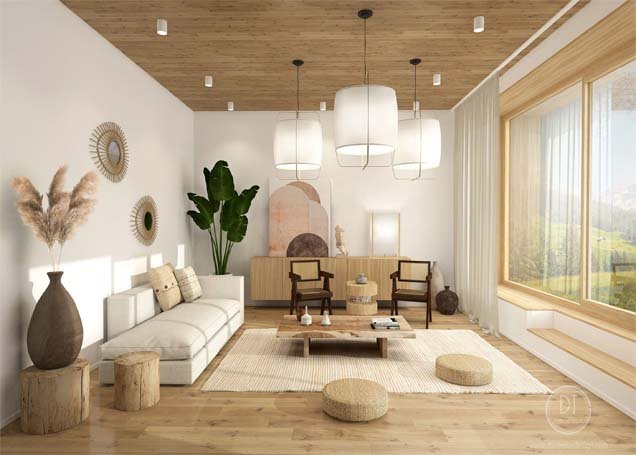
Japandi combines influences associated with Japanese and Scandinavian design.
Both approaches value simplicity, craftsmanship, natural materials, and useful objects, which makes the combination feel surprisingly natural.
Expect to see:
- Warm neutrals
- Wood
- Simple furniture
- Handmade-looking ceramics
- Natural textures
- Limited decoration
- Thoughtfully arranged open space
Compared with some Scandinavian rooms, Japandi interiors often use slightly deeper and warmer tones.
Rather than buying lots of inexpensive accessories, the approach favors fewer objects that you genuinely appreciate.
Best for: People who like minimalism but still want warmth and texture.
15. Eclectic Interior Design
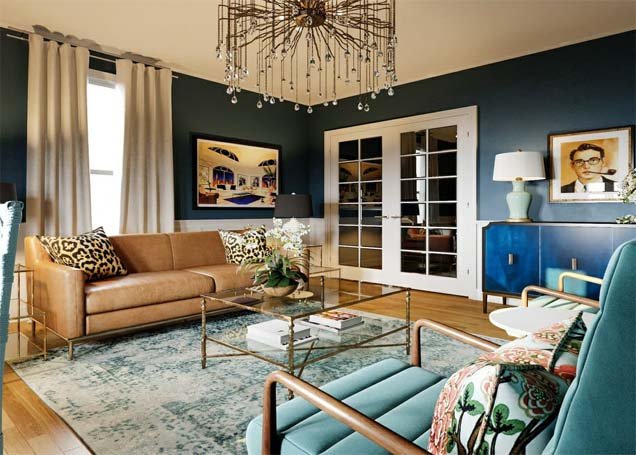
Eclectic design permits you to mix styles—but successful eclectic rooms aren’t random.
There is usually something connecting the different pieces.
It might be color, shape, material, scale, or repetition.
For example, you could combine a mid-century chair, traditional rug, modern lamp, and vintage artwork. If several pieces share related colors, the room can still feel cohesive.
This style is especially useful when you already own furniture you love and don’t want to replace everything simply to follow one aesthetic.
Start with the pieces that matter most to you, then build around them.
Best for: People whose answer to “What’s your favorite design style?” is “Several.”
How to Choose an Interior Design Style
Looking at beautiful rooms is easy. Deciding what will actually work in your own home requires a little more thought.
Start with how you live, not with a trend.
A white sofa may look fantastic online, for example, but it may not be the most practical choice for every household. Likewise, open shelving looks beautiful when carefully styled but requires more upkeep than closed cabinets.
Ask yourself a few practical questions:
What colors do I repeatedly choose?
Look at your saved rooms, clothing, furniture, and even favorite places. Patterns often appear.
How much visual clutter can I tolerate?
If busy rooms make you uncomfortable, minimalist, Scandinavian, contemporary, or Japandi design may appeal to you.
Do I prefer new or aged materials?
People who love patina and imperfect wood may naturally lean toward rustic, farmhouse, French country, or eclectic interiors.
How much maintenance do I want?
Your home needs to work on an ordinary Tuesday, not only when it is freshly styled for photographs.
You Don’t Have to Choose Just One Style
This is probably the most useful rule in the entire article.
Your home does not need to fit neatly into one design category.
You might love Scandinavian simplicity but prefer the warm wood of mid-century furniture. Or you may want a mostly traditional home with contemporary lighting.
That can work.
A simple approach is to choose one dominant style and use another as an influence.
For example:
Scandinavian + Mid-Century Modern
Keep the room bright and simple, then introduce warm wood and a few recognizable mid-century furniture shapes.
Modern + Rustic
Use clean furniture and uncluttered layouts, then soften them with wood, stone, or textured fabrics.
Traditional + Contemporary
Keep classic furniture but introduce simpler lighting, artwork, and accessories.
The goal isn’t to follow a decorating rulebook. It’s to prevent the room from feeling like several unrelated ideas competing with one another.
Start With What You Already Own
Before buying new furniture, take inventory.
Which pieces do you genuinely like?
Which ones are comfortable?
Which ones are simply taking up space because you’ve had them for years?
A room often becomes easier to design once you identify two or three pieces worth keeping.
Suppose you already have a beautiful wood dining table. Instead of replacing it because it doesn’t perfectly match a Pinterest photo, make it the starting point. Choose chairs, lighting, rugs, and wall colors that complement it.
This approach can save money and often produces a home with more personality.
Build a Simple Color Palette
Once you’ve narrowed down your preferred interior design style, create a basic color palette before shopping.
You don’t need ten colors.
Start with a main neutral, one or two supporting colors, and perhaps one accent.
For example, a relaxed natural palette might include warm white walls, medium wood, muted green, and small black accents.
Repeat those colors throughout the room.
Repetition creates visual connection, which is especially helpful when you’re mixing furniture from different styles.
Pay Attention to Texture
Color gets a lot of attention in decorating, but texture can completely change how a room feels.
Imagine a beige room containing a linen sofa, chunky wool throw, smooth wood table, woven basket, ceramic lamp, and jute rug.
The palette is simple, yet the room doesn’t feel flat because the materials are different.
This is particularly useful for minimalist, Scandinavian, Japandi, coastal, rustic, and farmhouse interiors.
Lighting Can Change the Entire Room
A beautifully furnished room can still feel uncomfortable under harsh lighting.
Try to use more than one source of light.
Depending on the room, that might include overhead lighting, table lamps, floor lamps, sconces, or natural daylight.
Lamps also help create smaller pools of light in the evening, which can make a large room feel much more inviting.
And before buying a dramatic light fixture, check its dimensions. A fixture that looks perfectly proportioned in a large showroom may feel enormous in a modest dining room.
Measure Before You Buy
This isn’t glamorous design advice, but it can prevent expensive mistakes.
Measure the room, doors, hallways, and important furniture before ordering large pieces.
Then consider scale.
A tiny rug beneath a large sofa can make the entire seating area look disconnected. An oversized sectional can make a small living room difficult to navigate.
Painter’s tape can be surprisingly useful. Mark the approximate dimensions of a sofa, table, or rug on the floor before ordering it. You’ll get a much better sense of how much space it will occupy.
Give Your Home Time to Develop
There is no rule saying a room needs to be completed in one weekend.
In fact, decorating slowly can produce better results.
Live with the major furniture first. Notice where you naturally put things, where you need a lamp, whether a corner feels empty, and which colors seem to be missing.
Then add pieces intentionally.
A home assembled gradually often feels more personal than one purchased as a complete matching set.
Frequently Asked Questions
What is the most popular interior design style?
There isn’t one style that works for everyone, and popularity changes over time. Modern, contemporary, traditional, Scandinavian, farmhouse, minimalist, and transitional influences are all commonly seen in American homes. Instead of choosing purely by popularity, consider your home’s architecture, your existing furniture, your budget, and how you use the space.
What is the difference between modern and contemporary interior design?
Modern design generally refers to established design ideas associated with the modernist movement and the 20th century. Contemporary design refers more broadly to what is current today, so it changes over time.
Can I mix different interior design styles?
Yes. Mixing styles can make a home feel more personal. The easiest approach is to choose one dominant style and use a second style for selected furniture, lighting, artwork, or accessories. Repeating colors and materials helps the combination feel intentional.
Which interior design styles work well in small spaces?
Minimalist, Scandinavian, contemporary, and Japandi-inspired approaches can work particularly well because they often emphasize functional furniture, visual simplicity, and efficient use of space. However, almost any style can work in a small home when furniture is appropriately scaled.
How can I find my interior design style?
Save images of rooms you genuinely like without worrying about labels. After collecting several, look for repeated features such as wood tones, furniture shapes, colors, patterns, and materials. Those similarities will tell you more about your preferences than choosing a style name first.
Final Thoughts
Understanding interior design styles isn’t about putting a label on every room.
It is about developing a vocabulary for what you like.
Maybe you’re drawn to the clean simplicity of Scandinavian interiors, the character of rustic materials, or the comfortable mix of old and new found in transitional design. You may even discover that your ideal home combines several of them.
Choose the elements that work for your space, budget, and everyday routine. Keep what you already love, measure before buying, and allow the room to evolve.
The best interior isn’t necessarily the one that follows a style most perfectly.
It’s the one that feels natural to live in.