
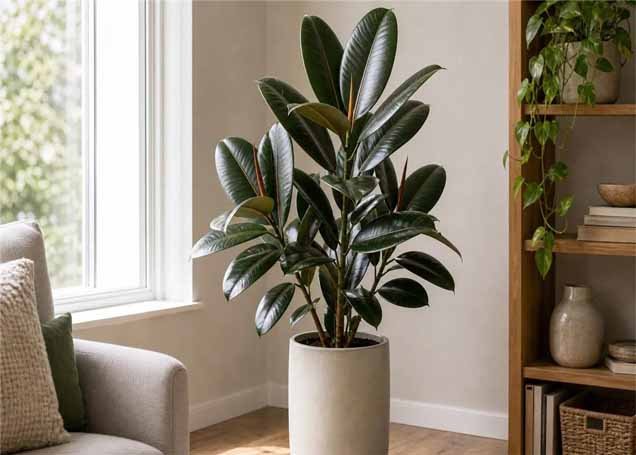
Rubber plants are among the most attractive houseplants you can grow indoors. With their large, glossy leaves, upright growth, and elegant appearance, they bring a tropical touch to living rooms, bedrooms, and offices.
The good news? Rubber plant care is relatively straightforward once you understand the plant’s basic needs.
Also known as Ficus elastica, the rubber plant is a tropical evergreen tree belonging to the fig family (Moraceae). In its natural habitat, it can grow into a massive tree, but indoors, it is commonly maintained at a manageable height.
Whether you recently purchased your first rubber plant or want to revive an existing one, this complete guide will help you understand watering, sunlight, soil, humidity, fertilizer, pruning, propagation, and common growing problems.
By the end, you will know how to keep your rubber plant healthy throughout the year.
Rubber Plant Care at a Glance
| Care Requirement | Recommendation |
|---|---|
| Botanical name | Ficus elastica |
| Common names | Rubber plant, rubber tree |
| Light | Bright, indirect sunlight |
| Watering | When the upper 1–2 inches of soil feel dry |
| Soil | Well-draining indoor potting mix |
| Temperature | Ideally around 65–85°F (18–29°C) |
| Humidity | Average to moderately humid indoor conditions |
| Fertilizer | Diluted houseplant fertilizer during active growth |
| Growth rate | Moderate to fast in favorable conditions |
| Indoor height | Commonly 2–10 feet |
| Propagation | Stem cuttings or air layering |
| Pet safety | Toxic if chewed or ingested |
The NC State Extension Gardener Plant Toolbox recommends bright indirect light, well-draining soil, and avoiding excessive watering for indoor rubber plants.
What Is a Rubber Plant?
The rubber plant (Ficus elastica) is native to tropical regions of Asia and has become a popular ornamental houseplant worldwide.
It is known for its thick, leathery, oval-shaped leaves, which may appear dark green, burgundy, cream, pink, or variegated depending on the cultivar.
Unlike smaller trailing houseplants, rubber plants often grow upright with a strong central stem. With proper pruning, they can develop a fuller, branching appearance.
One reason rubber plants are popular in American homes is their adaptability. They can grow successfully in containers, provided they receive suitable lighting and watering.
However, rubber plants dislike sudden environmental changes, prolonged waterlogging, and cold drafts.
1. Rubber Plant Light Requirements
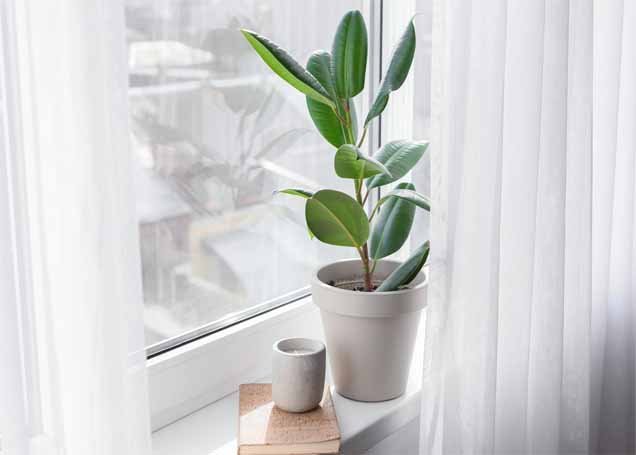
Lighting is one of the most important factors in successful rubber plant care.
Rubber plants generally perform best in bright, indirect sunlight.
How Much Light Does a Rubber Plant Need?
A location near a bright window is often ideal.
For homes in the United States, consider these placements:
- East-facing window: Provides gentle morning sunlight.
- South-facing window: Can provide excellent light when intense afternoon sunlight is filtered.
- West-facing window: Suitable with protection from harsh afternoon rays.
- North-facing window: May work in bright conditions, but growth can be slower.
Although established rubber plants can tolerate some direct sunlight, sudden exposure to intense light may scorch leaves.
Move plants gradually when changing their lighting conditions.
Signs Your Rubber Plant Needs More Light
Watch for these symptoms:
- Slow or weak growth
- Long gaps between leaves
- Leaning toward the window
- Loss of vibrant coloration in variegated varieties
- Older leaves dropping
If you notice these problems, move the plant closer to a suitable light source.
Can Rubber Plants Grow in Low Light?
Rubber plants can tolerate lower light levels for a time, but they usually grow better with brighter illumination.
A dark corner is not ideal for long-term healthy growth.
If your apartment receives limited sunlight, a suitable indoor grow light may help supplement natural light.
2. How Often to Water a Rubber Plant
Watering is one of the most common challenges for new rubber plant owners.
Too much water can lead to root problems, while prolonged dryness can cause wilting and leaf drop.
When Should You Water?
A reliable approach is to check the soil rather than follow a strict calendar.
Insert your finger about 1–2 inches into the potting mix.
If the upper layer feels dry, check the moisture deeper in the pot and water when appropriate. If it is still noticeably moist, wait and check again.
The exact frequency depends on:
- Pot size
- Soil composition
- Indoor temperature
- Sunlight exposure
- Humidity
- Season
- Plant size
The University of Florida IFAS Extension emphasizes allowing container-grown rubber plants to become somewhat dry between waterings and avoiding overwatering.
How to Water a Rubber Plant Properly
- Check the soil moisture.
- Use room-temperature water.
- Water the potting mix evenly.
- Continue until some water drains from the bottom.
- Allow the pot to drain completely.
- Empty excess water from the saucer.
Avoid leaving the roots submerged in standing water.
Signs of Overwatering
Common warning signs include:
- Yellowing leaves
- Persistent wet soil
- Leaf drop
- Soft or declining stems
- Unpleasant odor from the potting mix
These symptoms can have other causes, so inspect the roots and growing conditions before making changes.
Signs of Underwatering
Possible symptoms include:
- Drooping leaves
- Very dry potting mix
- Dry or crispy leaf edges
- Slower growth
- Leaf loss after prolonged drought
The goal is consistent, appropriate moisture rather than keeping the soil constantly wet.
3. Best Soil for Rubber Plants
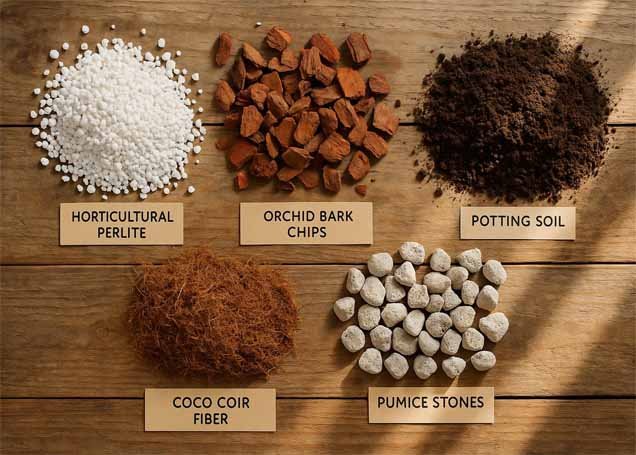
Healthy roots are essential for a thriving rubber plant.
Rubber plants prefer a potting mix that provides both moisture retention and good drainage.
What Type of Soil Is Best?
A high-quality indoor potting mix is generally suitable.
The ideal mix should provide:
- Good drainage
- Adequate air circulation around roots
- Moderate moisture retention
- Structural stability
If your potting mix remains wet for too long, incorporating suitable aeration materials such as perlite or coarse bark may help.
Can You Use Regular Garden Soil?
Garden soil is generally not recommended for indoor containers.
It can become compacted and may drain poorly.
A commercially prepared indoor potting mix is usually a more reliable option.
Do Rubber Plants Need Drainage Holes?
Yes.
Drainage holes allow excess water to escape and reduce the risk of waterlogged soil.
If you prefer a decorative container without drainage holes, keep the plant in a separate nursery pot with drainage and place it inside the decorative container.
Remember to remove any accumulated water.
4. Ideal Temperature for Rubber Plants
Rubber plants are tropical evergreens that prefer warm, stable indoor temperatures.
A temperature range of approximately 65–85°F (18–29°C) generally supports healthy growth.
Avoid prolonged exposure to temperatures below about 55°F (13°C).
Where Should You Avoid Placing a Rubber Plant?
Keep the plant away from:
- Cold drafts
- Frequently opened exterior doors
- Air-conditioning vents
- Heating vents
- Sudden temperature changes
Rubber plants may drop leaves when exposed to significant environmental stress.
In colder parts of the United States, pay particular attention to windows and exterior doors during winter.
5. Rubber Plant Humidity Requirements
Rubber plants generally tolerate average indoor humidity.
However, moderately humid conditions can support healthy tropical foliage.
Do Rubber Plants Need High Humidity?
Extremely high humidity is not necessary for most indoor rubber plants.
Many grow successfully in ordinary homes.
However, very dry indoor air may contribute to leaf-edge stress, especially when combined with inconsistent watering.
How to Improve Humidity
If your indoor air is unusually dry, consider:
- Using a room humidifier
- Keeping plants away from direct heating airflow
- Monitoring humidity with a hygrometer
- Maintaining suitable room temperatures
Avoid excessive humidity and poor airflow, which can contribute to fungal problems.
Should You Mist a Rubber Plant?
Routine misting is usually unnecessary.
Misting provides only temporary surface moisture and does not reliably maintain room humidity.
A humidifier is generally more effective when additional humidity is needed.
6. Best Fertilizer for Rubber Plants
Rubber plants benefit from nutrients during active growth.
However, too much fertilizer can damage roots and cause mineral buildup.
What Fertilizer Should You Use?
A balanced houseplant fertilizer is generally suitable.
Water-soluble fertilizers are convenient because they can be applied according to the manufacturer’s instructions.
Consider using a diluted application when appropriate.
When Should You Fertilize?
For many indoor rubber plants in the United States:
Spring: Begin feeding when active growth resumes.
Summer: Continue occasional feeding if the plant is growing well.
Fall: Reduce feeding as growth slows.
Winter: Fertilizer is usually unnecessary when the plant is not actively growing.
Signs of Overfertilizing
Watch for:
- Brown leaf tips
- White mineral deposits on soil
- Sudden leaf damage
- Root stress
- Stunted growth
Avoid applying fertilizer to a severely stressed plant until the underlying problem is addressed.
7. How to Prune a Rubber Plant
Rubber plants naturally grow upright.
Without pruning, some plants develop a tall, narrow appearance.
Pruning can help control height and encourage branching.
Why Prune Rubber Plants?
Pruning may help:
- Manage plant height
- Remove damaged growth
- Improve plant shape
- Encourage new branches
- Maintain a balanced appearance
When Is the Best Time to Prune?
Spring and early summer are generally convenient times because the plant is actively growing.
How to Encourage Bushier Growth
Removing an appropriate growing tip can sometimes encourage new shoots to develop.
However, branching depends on plant health, light, and growing conditions.
Avoid excessive pruning, especially when the plant is already stressed.
Important safety note: Rubber plants release a milky latex sap when damaged. The sap can irritate skin and eyes. Avoid direct contact, use appropriate protection when handling cut stems, and keep the plant away from pets and young children.
8. How to Propagate a Rubber Plant
Rubber plants can be propagated through stem cuttings and air layering.
Propagation allows gardeners to create new plants from healthy existing specimens.
Propagation Through Stem Cuttings
Healthy stem sections containing suitable nodes can develop roots under appropriate conditions.
Successful rooting generally requires suitable warmth, moisture, and light.
Because rubber plants produce irritating latex sap, use appropriate precautions when handling damaged or cut plant material.
Propagation Through Air Layering
Air layering encourages roots to develop on a stem while it remains attached to the parent plant.
This method can be useful for mature plants with larger stems.
Once a suitable root system develops, the rooted section can be established as a separate plant.
Propagation success varies depending on plant health and environmental conditions.
For a more detailed guide, we will create a separate supporting article titled How to Propagate Rubber Plant: A Beginner-Friendly Guide.
9. How to Repot a Rubber Plant
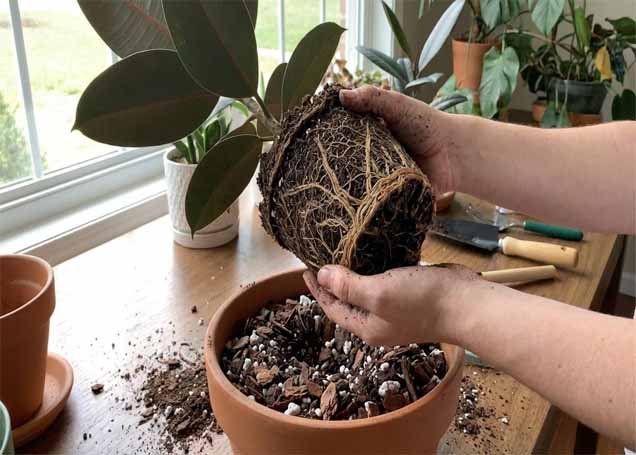
Rubber plants occasionally need repotting as their root systems expand.
However, repotting too frequently can create unnecessary stress.
Signs Your Rubber Plant Needs Repotting
Look for:
- Roots growing through drainage holes
- Roots circling tightly inside the container
- Water passing through the pot unusually quickly
- An unstable or top-heavy plant
- Deteriorated or compacted potting mix
Choosing the Right Pot
When additional root space is needed, choose a container approximately 1–2 inches wider than the current root ball.
Avoid excessively large containers because unused potting mix may remain wet for too long.
Best Time to Repot
Spring is often a suitable time.
After repotting, maintain stable growing conditions while the plant adjusts.
10. Common Rubber Plant Problems and Solutions
Even healthy rubber plants may occasionally develop problems.
The following table can help identify possible causes.
| Problem | Possible Cause | Recommended Action |
|---|---|---|
| Yellow leaves | Overwatering, low light, aging | Check soil and light |
| Brown edges | Dryness, temperature stress | Review watering and placement |
| Drooping leaves | Moisture stress | Inspect soil moisture |
| Falling leaves | Environmental changes | Maintain stable conditions |
| Slow growth | Insufficient light | Improve lighting |
| Leggy growth | Low light | Move gradually to brighter light |
| Brown spots | Sunburn, damage, pests, disease | Inspect affected leaves |
| Sticky leaves | Sap-feeding pests | Check stems and undersides |
Why Are My Rubber Plant Leaves Turning Yellow?
Yellowing leaves are commonly associated with watering problems.
If the potting mix remains wet for long periods, roots may struggle to function properly.
However, yellowing can also occur because of insufficient light, natural aging, or environmental stress.
Check the growing conditions before making major changes.
Why Is My Rubber Plant Dropping Leaves?
Rubber plants may drop leaves after sudden changes in their environment.
Possible causes include:
- Moving the plant
- Cold drafts
- Overwatering
- Underwatering
- Low light
- Pest infestations
Try to identify the most likely cause rather than changing every aspect of care at once.
Why Are My Rubber Plant Leaves Turning Brown?
Brown patches or edges can result from several problems.
These include excessive sunlight, inconsistent watering, cold exposure, fertilizer buildup, or pest damage.
Inspect the location and pattern of damage.
A leaf with permanent damage may not return to its original appearance, but correcting the underlying issue can protect new growth.
11. Rubber Plant Pests and Diseases
Rubber plants can occasionally attract common houseplant pests.
Spider Mites
Spider mites are tiny pests that may cause fine speckling or discoloration on leaves.
They can be difficult to detect without close inspection.
Mealybugs
Mealybugs often appear as small white, cotton-like clusters.
They may gather near leaf joints and new growth.
Scale Insects
Scale insects may appear as small bumps attached to stems and leaves.
Some species produce sticky honeydew.
How to Prevent Pest Problems
Inspect your plants regularly.
Pay attention to leaf undersides and stems.
Keep foliage clean and maintain appropriate growing conditions.
If pests appear, identify them correctly and choose a treatment labeled for the plant and pest.
For routine leaf cleaning, read our related guide:
How to Clean Indoor Plant Leaves: 7 Safe and Easy Methods
12. Popular Rubber Plant Varieties
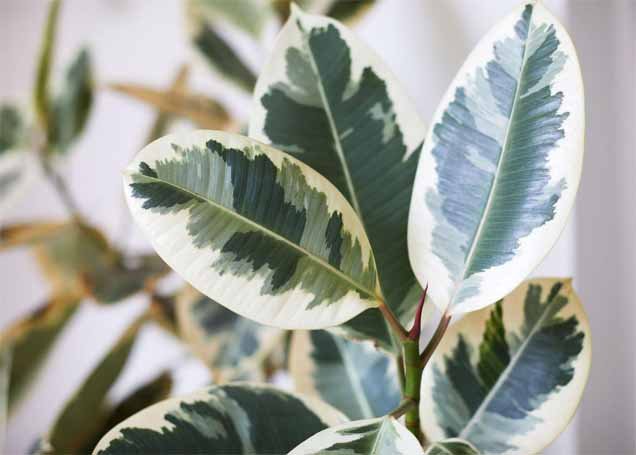
Rubber plants are available in several attractive cultivars.
Each offers different foliage colors and patterns.
Ficus elastica ‘Burgundy’
This variety features deep green to burgundy foliage.
Its dramatic coloring makes it popular in modern living rooms and offices.
Ficus elastica ‘Tineke’
‘Tineke’ produces beautiful variegated leaves with green and cream patterns.
Bright indirect light helps support healthy growth and maintain its attractive coloration.
Ficus elastica ‘Ruby’
‘Ruby’ is known for its colorful foliage with shades of pink, cream, and green.
It is particularly attractive in bright indoor spaces.
Ficus elastica ‘Robusta’
‘Robusta’ has broad, glossy green leaves and a strong upright growth habit.
It is often a convenient choice for beginners.
Which Rubber Plant Variety Is Best for Beginners?
Green-leaved varieties such as ‘Robusta’ are generally good starting points.
Variegated cultivars may require more careful lighting.
Botanical note: Baby rubber plant (Peperomia obtusifolia) is not the same species as Ficus elastica. Their care requirements should not be treated as identical.
13. Rubber Plant Care in Winter
Winter can be challenging for indoor plants in many parts of the United States.
Shorter daylight hours, cooler temperatures, and indoor heating may affect rubber plant growth.
Reduce Watering When Necessary
Rubber plants often use water more slowly during cooler, darker months.
Check soil moisture before watering.
Protect Against Cold Drafts
Keep plants away from cold windows and frequently opened exterior doors.
Maintain Suitable Light
A brighter indoor location may help compensate for shorter winter days.
Reduce Fertilizer
Avoid routine fertilization when the plant is not actively growing.
Monitor Indoor Humidity
Heating systems may reduce indoor humidity.
Maintain suitable conditions without encouraging excessive moisture around the foliage.
14. Where to Place a Rubber Plant Indoors
Rubber plants can complement many interior design styles.
Their large leaves create an attractive focal point.
Living Room
A mature rubber plant can look beautiful beside a sofa or near a bright window.
Home Office
A medium-sized rubber plant can add natural greenery to a well-lit workspace.
Bedroom
Rubber plants can grow in bedrooms that receive adequate light.
Apartment
Young or compact rubber plants are suitable for apartments with limited space.
Choose a container that fits the room while allowing appropriate root growth.
Always position rubber plants where pets and young children cannot chew the leaves or contact damaged stems.
15. Rubber Plant Care Mistakes to Avoid
Many common rubber plant problems can be prevented with simple adjustments.
Mistake 1: Watering on a Fixed Schedule
Do not assume your plant needs water every seven days.
Check the soil moisture first.
Mistake 2: Keeping the Plant in a Dark Corner
Rubber plants generally need bright light for healthy growth.
Mistake 3: Using a Pot Without Drainage
Poor drainage can contribute to waterlogged roots.
Mistake 4: Moving the Plant Too Frequently
Sudden environmental changes can stress rubber plants.
Mistake 5: Applying Too Much Fertilizer
Excess nutrients can damage roots and foliage.
Mistake 6: Ignoring Pest Symptoms
Regular inspection helps detect problems early.
Mistake 7: Using Leaf-Shining Products
Commercial leaf-shine sprays and household oils are usually unnecessary.
Use a damp microfiber cloth to remove dust from smooth leaves.
16. Rubber Plant Care Checklist
Use this simple checklist to maintain healthy indoor growth.
| Task | Recommended Frequency |
|---|---|
| Check soil moisture | Several times weekly or as needed |
| Water | When appropriate based on soil dryness |
| Inspect for pests | Weekly |
| Clean leaves | When dusty |
| Check lighting | Seasonally |
| Fertilize | During active growth |
| Inspect roots | Every few months |
| Prune | When needed |
| Repot | When root growth requires it |
These are flexible guidelines rather than strict rules.
Frequently Asked Questions About Rubber Plant Care
Is a Rubber Plant Easy to Care For?
Yes. Rubber plants are relatively easy to grow when provided with bright indirect light, well-draining soil, and appropriate watering.
How Often Should I Water My Rubber Plant?
Water when the upper portion of the potting mix has dried sufficiently, considering the moisture deeper in the container. Frequency varies with season, temperature, pot size, and lighting.
Does a Rubber Plant Need Direct Sunlight?
Rubber plants generally prefer bright indirect sunlight. Some direct sunlight may be tolerated, but intense exposure without gradual acclimation can damage foliage.
Why Is My Rubber Plant Not Growing?
Slow growth can result from insufficient light, cooler temperatures, limited root space, or seasonal changes.
How Tall Can Rubber Plants Grow Indoors?
Indoor rubber plants commonly grow approximately 2–10 feet tall, depending on growing conditions, pruning, and container size.
Can Rubber Plants Grow in Water?
Stem cuttings can sometimes develop roots in water. However, established rubber plants are generally grown in suitable potting mixes.
Are Rubber Plants Toxic to Cats and Dogs?
Yes. Ficus elastica is toxic to cats and dogs if ingested. Keep it out of reach of pets.
How Can I Make My Rubber Plant Bushier?
Adequate light and appropriate pruning may encourage branching. Results depend on the plant’s health and growth stage.
Should I Mist My Rubber Plant?
Routine misting is usually unnecessary. A humidifier may be more useful if indoor humidity is consistently too low.
How Long Do Rubber Plants Live?
Rubber plants can live for many years indoors when provided with suitable growing conditions and consistent care.
Final Thoughts
Successful rubber plant care begins with understanding the plant’s essential needs.
Bright indirect sunlight, well-draining soil, appropriate watering, and stable indoor temperatures provide the foundation for healthy growth.
Regular observation helps you identify problems early and adjust your care routine as conditions change.
Whether you grow a classic green rubber plant or a colorful variegated variety, consistent care can help it become a beautiful feature of your indoor garden.
Remember that every home has different lighting, humidity, and temperature conditions. Adjust your routine according to your plant’s actual needs rather than following a rigid schedule.
For more beginner-friendly houseplant advice, explore IdeaSproutly and discover practical tips for growing healthy indoor plants.
References and Further Reading
These horticultural resources provide additional information about rubber plant identification, cultivation, and houseplant care.
- NC State Extension – Ficus elastica (Rubber Plant)
- University of Florida IFAS Extension – Ficus elastica: Rubber Tree
- University of Minnesota Extension – Houseplants
- ASPCA – Toxic and Non-Toxic Plants
Read more: How to Clean Indoor Plant Leaves
Read More How to Propagate Rubber Plant