
Table of Contents
Indoor plants bring natural beauty, greenery, and a peaceful atmosphere to any home. Whether you grow a Monstera in your living room, a rubber plant beside a sunny window, or a peace lily in your bedroom, keeping their leaves clean is an important part of houseplant care.
Over time, indoor plant leaves collect dust, dirt, pet hair, and airborne particles. This buildup can make plants look dull and reduce the amount of light reaching their leaves.
If you are wondering how to clean indoor plant leaves safely, the good news is that most houseplants need nothing more than clean water, a soft cloth, and gentle handling.
However, not all plants should be cleaned the same way. Smooth leaves, fuzzy leaves, and delicate foliage require different approaches.
In this complete guide, you will learn seven easy ways to clean indoor plant leaves, which methods work best for different plants, what cleaning products to avoid, and how often to clean your houseplants.
Why Is Cleaning Indoor Plant Leaves Important?
Cleaning indoor plant leaves is about more than appearance. It also helps you monitor your plants and maintain a healthier growing environment.
1. Helps Plants Receive More Light
Plants rely on photosynthesis to convert light into chemical energy.
When leaves become heavily covered with dust, less light may reach their surfaces.
This is particularly relevant for houseplants growing in apartments, offices, and rooms with limited natural light.
Removing accumulated dust allows more available light to reach the foliage.
However, cleaning cannot replace adequate sunlight or suitable grow lights.
2. Keeps Houseplants Looking Beautiful
Healthy foliage is one of the most attractive features of indoor plants.
Large-leaved plants such as Monstera, rubber plants, and philodendrons can lose their natural shine when dust accumulates.
Gentle cleaning helps restore their appearance without artificial polishing products.
3. Makes Pest Detection Easier
Dusty leaves can make it difficult to notice early signs of pests.
During cleaning, inspect your plants for spider mites, mealybugs, scale insects, unusual spots, and damaged foliage.
Pay particular attention to the undersides of leaves and areas where leaves join stems.
4. Encourages Regular Plant Maintenance
Cleaning provides an opportunity to check the overall condition of your plants.
You may notice yellowing leaves, dry soil, root problems, or signs of insufficient light.
These observations help you adjust your plant-care routine before minor issues become serious.
How to Clean Indoor Plant Leaves: 7 Easy Methods
The best method depends on the plant species, leaf texture, size, and amount of dust.
Here are seven practical methods that work for different types of indoor plants.
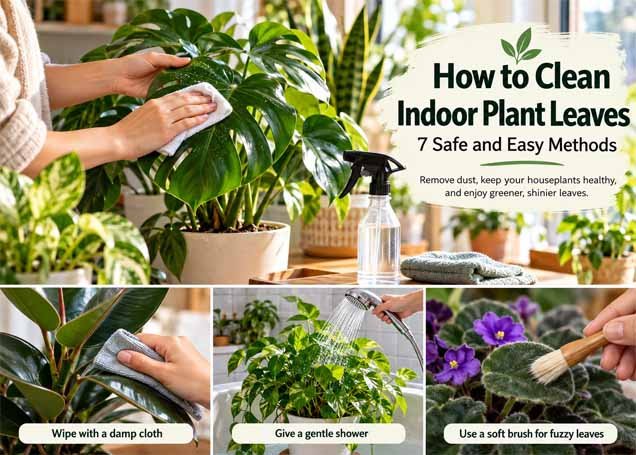
Method 1: Clean Indoor Plant Leaves With a Damp Microfiber Cloth
Best for: Monstera, rubber plants, peace lilies, ZZ plants, snake plants, and broad-leaved philodendrons.
A damp microfiber cloth is one of the simplest and safest ways to clean smooth indoor plant leaves.
Step-by-step instructions:
- Fill a small bowl with room-temperature water.
- Dip a clean microfiber cloth into the water.
- Wring out excess water until the cloth is slightly damp.
- Support the underside of a leaf with one hand.
- Gently wipe the upper surface from the base toward the tip.
- Clean the underside if needed.
- Repeat with a clean section of the cloth.
Avoid rubbing aggressively or pulling on delicate stems.
Practical tip: For large Monstera or rubber plant leaves, use a fresh section of the cloth after every few leaves. This prevents spreading collected dust around the plant.
Method 2: Give Indoor Plants a Gentle Shower
Best for: Spider plants, pothos, and other water-tolerant houseplants.
Some indoor plants have numerous leaves, making individual cleaning time-consuming.
A gentle shower can remove dust efficiently.
How to clean plants using a shower:
- Move the plant to a bathtub or shower.
- Check that its container has drainage holes.
- Use a gentle stream of lukewarm water.
- Carefully rinse the upper and lower leaf surfaces.
- Avoid strong water pressure.
- Allow the pot to drain thoroughly.
- Return the plant to its normal location.
Do not leave the pot sitting in standing water.
If the potting mix is already very wet, choose a dry or damp-cloth cleaning method instead.
Avoid showering plants with fuzzy or moisture-sensitive foliage.
Method 3: Use a Soft Brush for Fuzzy Leaves
Best for: African violets and other plants with hairy or velvety foliage.
Some indoor plants have tiny hairs covering their leaves.
These hairs can trap dust, but the foliage may be damaged by excessive rubbing or prolonged moisture.
A clean, soft brush is often the best option.
Steps:
- Choose a soft artist’s brush.
- Support the leaf gently.
- Brush away dust using light strokes.
- Follow the direction of the leaf hairs when possible.
- Avoid excessive pressure.
This method works especially well for African violets.
Never scrub fuzzy leaves with a rough cloth.
Method 4: Rinse Small-Leaved Plants Carefully
Best for: Small-leaved, water-tolerant houseplants.
Plants with dozens of tiny leaves may be difficult to clean individually.
A gentle water rinse can help remove dust from these plants.
Place the plant near a sink and use room-temperature water to rinse the foliage.
Keep the water pressure low to avoid damaging delicate stems.
Allow excess moisture to drain before returning the plant to its growing location.
If you are unsure whether a plant tolerates wet foliage, use a soft brush instead.
Method 5: Remove Light Dust With a Dry Microfiber Cloth
Best for: Smooth-leaved houseplants with light dust accumulation.
Not every cleaning session requires water.
A soft, dry microfiber cloth can remove loose dust from smooth leaves.
Support each leaf while wiping gently.
Avoid rubbing leaves covered with gritty dirt, since the particles may scratch delicate foliage.
For heavier buildup, a damp cloth is usually more effective.
Method 6: Clean Narrow Leaves With a Soft Brush
Best for: Dracaena, palms, and plants with narrow foliage.
Long, narrow leaves can be challenging to wipe.
A soft brush allows you to reach areas that are difficult to clean with a cloth.
Brush gently along each leaf, working from the base toward the tip.
Avoid bending or pulling the foliage.
For water-tolerant plants, a gentle rinse may also be appropriate.
Method 7: Clean Large Indoor Plants in Sections
Best for: Mature Monstera, large rubber plants, and indoor trees.
Large houseplants often have leaves at different heights and angles.
Cleaning the entire plant at once can be difficult.
Instead, divide the plant into sections.
Start with the upper leaves and gradually work downward.
Use a damp cloth for broad, smooth leaves and a soft brush for delicate areas.
Inspect both sides of the foliage as you work.
If a leaf is difficult to reach, carefully reposition the plant rather than stretching or climbing.
Best Ways to Clean Different Indoor Plants
Different plants require different cleaning techniques.
| Indoor Plant | Recommended Cleaning Method | Important Precaution |
|---|---|---|
| Monstera | Damp microfiber cloth | Support large leaves |
| Rubber Plant | Damp cloth | Avoid oily leaf polish |
| Peace Lily | Damp cloth or gentle rinse | Avoid waterlogging |
| Pothos | Damp cloth or gentle rinse | Protect delicate stems |
| Snake Plant | Damp microfiber cloth | Avoid water collecting in leaf bases |
| ZZ Plant | Damp microfiber cloth | Wipe gently |
| Spider Plant | Gentle water rinse | Allow proper drainage |
| African Violet | Soft, dry brush | Avoid prolonged leaf wetness |
| Parlor Palm | Soft brush or gentle rinse | Avoid damaging narrow leaflets |
| Philodendron | Damp cloth | Support delicate foliage |
The safest method is the one suited to your plant’s particular leaf structure and growing conditions.
How to Clean Rubber Plant Leaves
Rubber plants (Ficus elastica) are popular indoor houseplants because of their large, naturally glossy leaves.
However, these broad leaves can collect visible dust.
To clean rubber plant leaves, use a microfiber cloth dampened with room-temperature water.
Support each leaf from underneath and wipe gently from the base toward the tip.
Repeat on the underside when necessary.
Avoid commercial leaf-shining sprays, cooking oils, and furniture polish.
A healthy rubber plant naturally produces attractive foliage without additional polishing.
How to Clean Monstera Leaves
Monstera plants are known for their large, distinctive leaves with natural splits and openings.
These broad surfaces can accumulate dust, especially in rooms with heating or air-conditioning systems.
Use a damp microfiber cloth to remove dust.
Clean carefully around the splits and openings to avoid tearing the foliage.
Inspect the undersides for pests.
If your Monstera is particularly large, clean a few leaves at a time rather than rushing through the entire plant.
How to Make Indoor Plant Leaves Shiny Naturally
Many houseplant owners want glossy, attractive foliage.
Fortunately, you usually do not need commercial leaf-shining products.
For plants with naturally glossy leaves, removing dust is often enough to restore their appearance.
Follow these simple practices:
- Clean smooth leaves using a damp microfiber cloth.
- Provide suitable lighting for the plant species.
- Water according to the plant’s needs.
- Avoid excessive fertilizer.
- Inspect for pests and disease.
- Avoid unnecessary oils and polishing products.
Remember that some plants naturally have matte or velvety leaves.
Trying to make these leaves shiny can damage their natural surfaces.
How Often Should You Clean Indoor Plant Leaves?
There is no universal cleaning schedule.
The frequency depends on how dusty your home becomes and the type of houseplants you grow.
A practical approach is to inspect the leaves every one or two weeks.
Clean them when you notice visible dust.
Plants near frequently opened windows, busy living areas, or air vents may need more frequent attention.
Houseplants in cleaner rooms may require cleaning less often.
Avoid unnecessary handling, especially for plants with delicate foliage.
The best rule is to clean your plants when needed rather than following a strict schedule.
Can You Use Soap to Clean Indoor Plant Leaves?
For ordinary dust removal, plain water is usually sufficient.
Household dish soap is not necessary for routine leaf cleaning.
Some cleaning products may damage plant foliage, especially when used at inappropriate concentrations.
If your plant has an insect infestation, an insecticidal soap labeled for the particular plant and pest may be appropriate.
However, insecticidal soap is not the same as ordinary household detergent.
Always follow the manufacturer’s label instructions.
Can You Use Vinegar to Clean Plant Leaves?
Vinegar is sometimes recommended online as a natural household cleaner.
However, it is not a good choice for routine plant-leaf cleaning.
Its acidity may damage sensitive plant tissue.
For ordinary dust and dirt, clean water and a soft cloth are generally safer.
Avoid using vinegar, lemon juice, or other acidic household mixtures on your houseplants.
Common Mistakes to Avoid When Cleaning Indoor Plant Leaves
Even simple cleaning can cause problems when done incorrectly.
Using Harsh Household Chemicals
Glass cleaners, furniture polish, disinfectants, and other household chemicals are not intended for living plant foliage.
They may cause discoloration or damage.
Applying Cooking Oil to Leaves
Some tutorials recommend coconut oil or olive oil for shiny leaves.
However, these products can leave residue and attract additional dust.
They are unnecessary for routine cleaning.
Rubbing Leaves Too Hard
Excessive pressure can tear or bruise foliage.
Always use gentle movements.
Using Extremely Hot or Cold Water
Water at extreme temperatures may stress sensitive plant tissues.
Room-temperature water is generally preferable.
Leaving the Potting Soil Waterlogged
If you rinse a plant in the shower, allow excess water to drain completely.
Do not leave the container sitting in water.
Wetting Sensitive Foliage Unnecessarily
Plants with fuzzy or delicate leaves may require dry cleaning.
Choose the method according to the species.
Why Are My Indoor Plant Leaves Turning Yellow After Cleaning?
Yellow leaves can be concerning, especially when they appear shortly after cleaning.
However, cleaning is not always the cause.
Common reasons for yellowing leaves include:
- Overwatering
- Underwatering
- Insufficient sunlight
- Natural leaf aging
- Root damage
- Pest infestations
- Temperature stress
- Improper use of cleaning chemicals
Start by checking soil moisture, drainage, lighting, and the overall condition of the plant.
If only one older leaf is turning yellow while the rest of the plant remains healthy, natural aging may be responsible.
If multiple leaves begin yellowing, investigate the growing conditions more carefully.
Cleaning removes dust, but it cannot correct an underlying watering or lighting problem.
How to Keep Indoor Plant Leaves Clean Longer
Preventing excessive dust buildup can reduce the need for frequent cleaning.
Keep Your Indoor Space Clean
Dust nearby shelves, windowsills, and furniture regularly.
This helps reduce particles settling on plant leaves.
Inspect Plants During Watering
Make leaf inspection part of your normal watering routine.
Look for dust, pests, discoloration, and damaged foliage.
Avoid Dusty Airflow
Avoid placing sensitive plants directly in strong heating or cooling airflow.
Air vents may contribute to dust accumulation and environmental stress.
Maintain Appropriate Humidity
Some tropical houseplants benefit from moderate indoor humidity.
However, humidity needs vary by species, and excessive moisture can encourage disease.
Use a hygrometer when needed and follow species-specific care recommendations.
Provide Proper Lighting
Healthy foliage depends on adequate light.
Cleaning helps remove accumulated dust, but suitable light conditions remain essential for plant growth.
Indoor Plant Leaf Cleaning Checklist
Use this quick checklist when caring for your houseplants.
| Task | Recommended Practice |
|---|---|
| Inspect leaves | Every 1–2 weeks |
| Remove visible dust | As needed |
| Clean smooth leaves | Damp microfiber cloth |
| Clean fuzzy leaves | Soft, dry brush |
| Check for pests | During routine inspection |
| Rinse water-tolerant plants | When appropriate |
| Check drainage | After water rinsing |
| Avoid harsh chemicals | Always |
Frequently Asked Questions About Cleaning Indoor Plant Leaves
What Is the Best Way to Clean Indoor Plant Leaves?
For most houseplants with smooth leaves, gently wiping with a damp microfiber cloth is one of the safest and easiest methods. Plants with fuzzy or delicate foliage may need a soft, dry brush.
Can I Use Baby Wipes on Indoor Plant Leaves?
It is better to avoid baby wipes because they may contain fragrances, lotions, or other ingredients that leave residue. A clean cloth dampened with water is generally preferable.
How Do I Clean Leaves on Indoor Plants Naturally?
Use plain room-temperature water and a soft microfiber cloth for smooth foliage. For fuzzy leaves, use a clean, soft brush.
Can I Spray Water on Indoor Plant Leaves?
Some plants tolerate occasional spraying, but others are sensitive to moisture remaining on their foliage. Spraying is not a reliable substitute for proper watering or humidity management.
Should I Clean Both Sides of Indoor Plant Leaves?
Yes, when appropriate. Dust and pests can accumulate on both sides of leaves. Clean the undersides gently, especially when checking for insects.
Can Dust Kill Indoor Plants?
A small amount of dust is unlikely to kill a healthy plant. However, heavy buildup may reduce available light reaching the leaf surface. Serious plant decline is more commonly associated with problems such as improper watering, inadequate light, pests, or root disease.
How Do You Clean Fuzzy Indoor Plant Leaves?
Use a clean, soft, dry brush. Avoid aggressive rubbing and unnecessary wetting, particularly for plants such as African violets.
How Do You Clean Indoor Plant Leaves Without Damaging Them?
Identify the leaf texture first. Use a damp cloth for smooth leaves, a dry brush for fuzzy foliage, and a gentle rinse only for plants that tolerate wet leaves. Avoid harsh chemicals and excessive pressure.
Final Thoughts
Learning how to clean indoor plant leaves is a simple but valuable part of caring for houseplants.
For most smooth-leaved indoor plants, a damp microfiber cloth is all you need. Plants with fuzzy foliage may require a soft brush, while water-tolerant houseplants with numerous leaves can sometimes benefit from a gentle rinse.
The key is to choose a method suited to the plant, handle leaves carefully, and avoid unnecessary cleaning chemicals.
Regular leaf inspection also helps you detect pests, monitor plant health, and maintain an attractive indoor garden.
With suitable lighting, proper watering, and occasional gentle cleaning, your favorite houseplants can continue adding natural beauty to your home.
Explore more beginner-friendly houseplant care guides at IdeaSproutly.
References and Further Reading
For additional information about houseplant care, leaf maintenance, and growing conditions, consult these university extension resources:
- University of Minnesota Extension – Houseplants
- Penn State Extension
- Clemson Cooperative Extension – Home & Garden Information Center
Read more: How to Water Houseplants