
Table of Contents
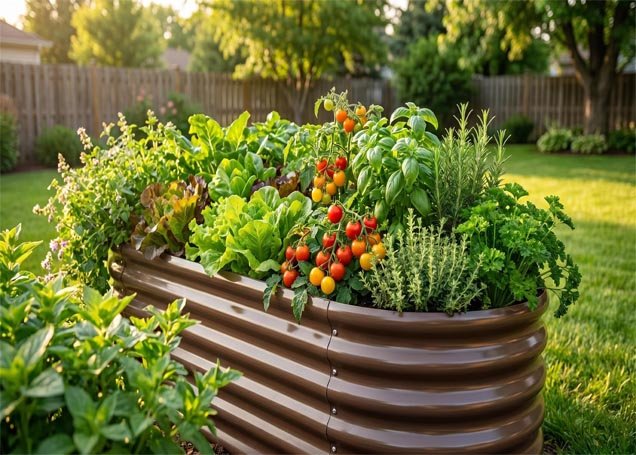
Metal raised garden beds are becoming a popular choice for American homeowners who want a productive vegetable garden without the maintenance associated with traditional wooden beds. With their clean appearance, durable construction, and flexible designs, these garden beds can work in small backyards, suburban landscapes, and larger vegetable gardens.
Unlike wooden structures that may gradually rot, galvanized metal garden beds resist moisture-related deterioration. They also provide defined growing spaces where gardeners can manage soil quality, watering, weeds, and plant spacing more effectively.
But are metal raised garden beds safe for growing vegetables? Do galvanized steel garden beds become too hot in summer? And are they worth the investment compared with cedar or other materials?
This guide explains the benefits, disadvantages, safety considerations, installation methods, soil requirements, and maintenance needs of metal raised garden beds so you can choose the right setup for your garden.
What Are Metal Raised Garden Beds?
Metal raised garden beds are elevated planting areas surrounded by metal panels, usually galvanized steel. The panels hold soil above the surrounding ground and create a defined space for growing vegetables, herbs, flowers, and other plants.
Many metal garden beds have an open bottom, allowing water to drain and plant roots to grow into the native soil underneath when conditions permit.
Common types include:
- Galvanized steel raised garden beds
- Corrugated metal garden beds
- Powder-coated metal raised beds
- Galvanized metal planter boxes
- Repurposed galvanized stock tanks with suitable drainage
Galvanized steel garden beds are particularly popular because a protective zinc coating helps prevent rust.
According to the University of Minnesota Extension, galvanized steel is a long-lasting alternative to wood, although buyers should verify the quality and safety of the materials used.
7 Benefits of Metal Raised Garden Beds
1. Excellent durability
One of the biggest advantages of metal raised garden beds is their resistance to decay. Unlike wood, galvanized steel does not rot from prolonged exposure to moist soil.
High-quality galvanized raised beds can remain functional for many years, although their actual lifespan depends on coating thickness, local weather, soil conditions, and construction quality.
2. Lower maintenance requirements
Wooden beds may require board replacements or other repairs as they age. Metal garden beds generally need less routine maintenance.
Inspect the panels, fasteners, and protective coating periodically. Clean away accumulated debris and check for corrosion, especially near damaged edges.
3. Attractive garden designs
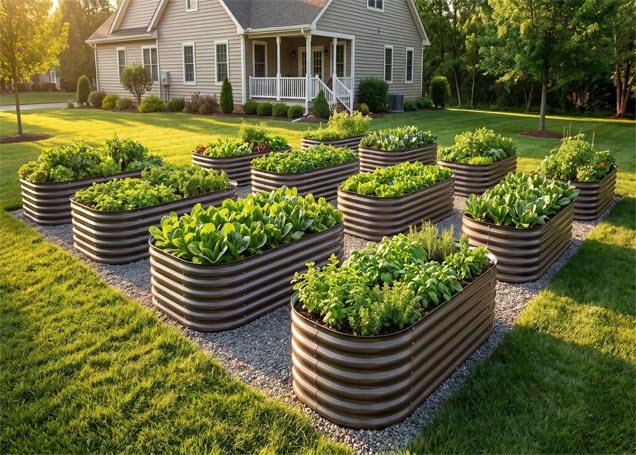
Metal raised garden beds offer a modern appearance that complements many landscaping styles.
They are available in rectangular, square, round, and oval shapes. Some manufacturers also offer modular kits you can assemble in different configurations.
4. Better control over soil conditions
With metal raised garden beds, gardeners can fill the growing area with a suitable soil mixture rather than relying entirely on existing backyard soil.
This is especially useful when native soil is compacted, rocky, or poorly structured.
However, the raised bed must still have adequate drainage, and gardeners should avoid placing edible crops directly over contaminated ground without an appropriate protective design.
5. Easier garden organization
Raised garden beds galvanized with protective coatings create clear boundaries between vegetables, walkways, and surrounding landscaping.
Defined beds can simplify crop rotation, mulching, irrigation, and seasonal garden cleanup.
6. Comfortable gardening height
Metal raised garden beds are available in different heights, allowing gardeners to choose a setup that reduces the amount of bending required.
A taller bed can be especially convenient when harvesting leafy greens, watering plants, or removing weeds.
7. Flexible placement
Metal garden beds can be installed in backyards, community gardens, and other suitable outdoor spaces.
The ideal location receives enough sunlight for the intended crops and has access to water. Most fruiting vegetables, including tomatoes and peppers, grow best with approximately six to eight or more hours of direct sunlight.
Are Galvanized Steel Garden Beds Safe for Growing Vegetables?
One of the most frequently asked questions about metal raised garden beds concerns the safety of galvanized steel.
Galvanized steel is coated with zinc to protect the underlying metal from corrosion. Zinc is an essential plant micronutrient, but excessive amounts can affect plant health.
The University of Maryland Extension considers galvanized metal raised beds generally safe for food crops. However, the University of Minnesota Extension explains that zinc may leach more readily in highly acidic soils, particularly when the soil pH falls below 5.
For safer vegetable gardening:
- Choose new, reputable galvanized steel products intended for gardening.
- Ask manufacturers about their coating composition and material testing.
- Avoid unknown painted, heavily corroded, or contaminated scrap metal.
- Test soil pH periodically.
- Consider a suitable non-toxic sidewall liner when there are concerns about direct soil contact.
- Keep the bottom adequately drained.
Some prefabricated metal garden beds have been found to contain lead, according to the University of Minnesota Extension, making material verification important.
For most ordinary vegetable-growing conditions, properly manufactured galvanized steel garden beds are a reasonable option. Still, product quality and soil chemistry matter more than broad claims that every metal bed is completely safe.
Metal Raised Garden Beds vs. Wooden Raised Beds
Choosing between metal raised garden beds and wooden beds depends on budget, appearance, climate, and long-term maintenance preferences.
| Feature | Metal raised beds | Wooden raised beds |
|---|---|---|
| Durability | Often long-lasting | Depends on wood species and treatment |
| Rot resistance | Does not rot like wood | Wood can decay |
| Maintenance | Generally low | May require repairs |
| Appearance | Modern, structured | Natural, rustic |
| Initial cost | Varies; often higher | Varies by wood type |
| Heat behavior | Exposed metal can warm quickly | Wood is less thermally conductive |
| Customization | Modular kits or custom panels | Easy to build in custom sizes |
| Material concerns | Coatings and metal composition | Wood treatments and preservatives |
Cedar raised garden beds are an attractive choice for gardeners who prefer natural materials. However, galvanized steel raised garden beds may be preferable when long-term resistance to decay is the main priority.
Neither material is automatically superior in every situation.
Best Sizes for Metal Raised Garden Beds
Choosing the right dimensions is essential for healthy plant growth and convenient garden maintenance.
A metal raised garden bed should be narrow enough to reach the center without stepping on the soil.
| Bed size | Suitable use |
|---|---|
| 2 × 4 feet | Herbs and compact vegetables |
| 3 × 6 feet | Small backyard vegetable gardens |
| 4 × 8 feet | Mixed vegetable planting |
| 2 × 8 feet | Narrow garden spaces |
| 4 × 4 feet | Square-foot gardening |
These are practical planning examples rather than mandatory dimensions.
How deep should a metal raised garden bed be?
For many vegetables, a bed with approximately 12 inches of suitable growing soil can work when roots can also extend into healthy native soil.
Deeper beds may be useful for larger root systems, restricted underlying soil, or gardeners who want a taller working height.
The University of Maryland Extension describes raised beds in a range of heights and emphasizes providing adequate growing space for roots.
When selecting metal raised garden beds, consider the total rooting environment, not just the height of the metal walls.
How to Install Metal Raised Garden Beds
Installing metal raised garden beds usually involves choosing a suitable location, preparing the ground, assembling the frame, and filling it with growing soil.
Step 1: Choose a sunny location
Select a location that receives adequate sunlight and has convenient access to a water source.
Avoid places where water regularly collects after rainfall.
Step 2: Prepare the ground
Remove debris and check that the surface is reasonably level.
If the metal garden bed will sit directly over grass, plain cardboard can be used temporarily to suppress existing vegetation. Avoid thick layers of plastic that block drainage and root growth.
Step 3: Assemble the frame
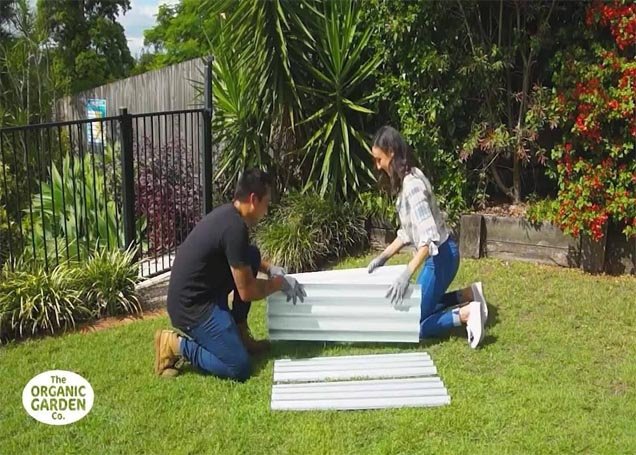
Follow the manufacturer’s assembly instructions. Ensure the panels are secure, structural supports are properly positioned, and exposed edges are safely finished.
Because metal edges can be sharp, protective gloves and adult assistance are appropriate during assembly.
Step 4: Check drainage
Most open-bottom metal raised garden beds drain into the soil beneath them.
Fully enclosed metal planter boxes require suitable drainage openings. Without drainage, excess water can accumulate around plant roots.
Step 5: Fill with appropriate soil
Use a balanced soil mix suited to your crops and local conditions.
Avoid filling the entire bed with uncomposted organic waste, dense clay, or pure compost.
Step 6: Plant vegetables
Once the bed is filled and watered, begin planting according to your local growing season.
For beginners, lettuce, radishes, bush beans, and herbs are manageable choices.
Best Soil Mix for Metal Raised Garden Beds
The soil inside metal raised garden beds is often more important to vegetable performance than the frame material.
Healthy soil should provide sufficient nutrients, drainage, air circulation, and moisture retention.
One possible starting mixture is:
Example Raised-Bed Soil Mix
This is an illustrative recipe, not a universal formula. The ideal proportions depend on the texture of your topsoil, compost quality, drainage, and plant requirements. A soil test can help identify necessary amendments.
Why compost matters
Finished compost supplies organic matter that supports soil structure and microbial activity.
However, excessive compost can contribute to nutrient imbalances. More compost does not automatically mean better growing conditions.
For detailed instructions, read our Compost for Raised Bed Garden guide.
You can also explore our Best Soil for Raised Garden Beds guide for additional soil recommendations.
Do Metal Raised Garden Beds Get Too Hot?
Metal raised garden beds can become warm when exposed to direct sunlight, particularly during hot summer afternoons.
Because metal conducts heat efficiently, exposed panels may become noticeably hotter than wooden walls.
However, this does not mean the entire soil volume automatically reaches a harmful temperature.
Soil temperature depends on several factors, including:
- Air temperature and sunlight
- Soil moisture
- Bed dimensions
- Metal color and surface finish
- Mulch coverage
- Local climate
How to manage heat in galvanized garden beds
In hot regions such as Arizona, Texas, and parts of California, gardeners should pay attention to soil moisture and plant stress.
Apply organic mulch around plants to moderate soil temperature and reduce evaporation. Water deeply when needed rather than relying on frequent light sprinkling.
In particularly exposed locations, temporary afternoon shade may benefit heat-sensitive crops.
Light-colored finishes can also reduce solar heat absorption compared with darker finishes under otherwise similar conditions.
Best Vegetables to Grow in Metal Raised Garden Beds
Metal raised garden beds can support many comm
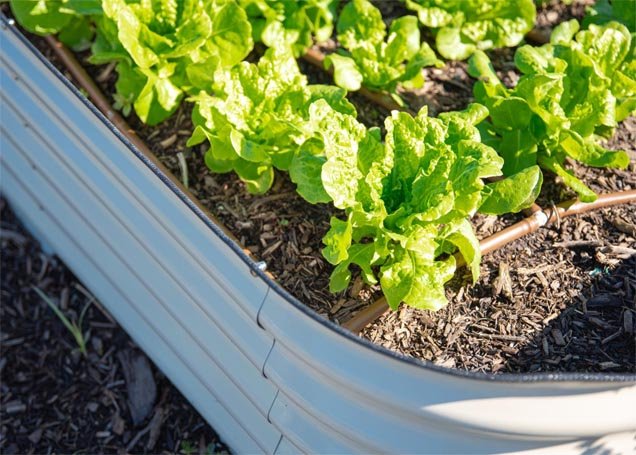
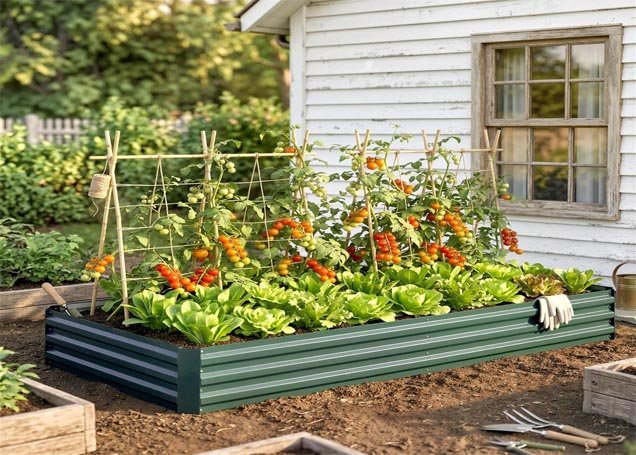
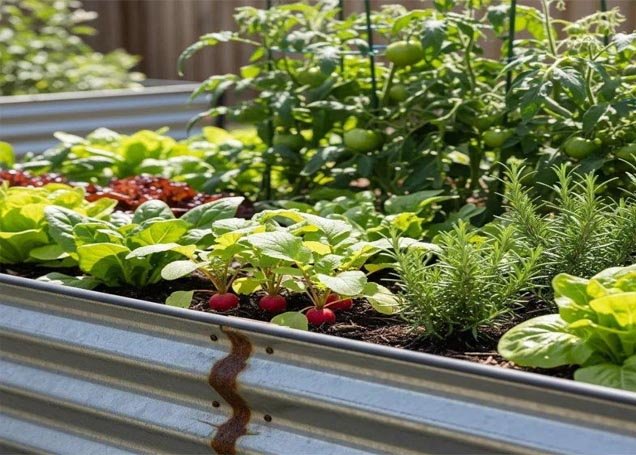
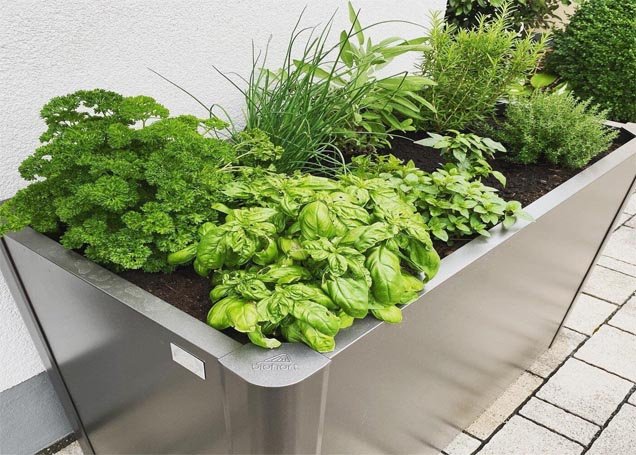
For the best results, select crops according to the USDA Plant Hardiness Zone and your local planting calendar.
Avoid overcrowding plants simply because a raised bed appears spacious when seedlings are small.
How to Water Metal Raised Garden Beds
Water management is essential for productive metal garden beds.
Raised beds may dry out more quickly than in-ground gardens, especially during warm and windy weather.
Check moisture below the soil surface before watering. The surface can appear dry even when deeper soil remains moist.
Drip irrigation or soaker hoses can provide water directly to the root zone and reduce unnecessary wetting of foliage.
A layer of organic mulch helps conserve moisture and can reduce the frequency of watering.
Do not rely on a fixed daily watering schedule. Adjust watering according to weather, plant growth, and soil conditions.
How Long Do Galvanized Steel Raised Garden Beds Last?
The lifespan of galvanized steel raised garden beds depends on manufacturing quality and environmental exposure.
The University of Minnesota Extension notes that galvanized steel can provide very long service life, potentially several decades under favorable conditions. This should not be interpreted as a guarantee for every commercial garden-bed kit.
Factors that affect longevity include coating quality, corrosion, physical damage, and exposure to highly acidic conditions.
To extend the useful life of metal raised garden beds, inspect the panels regularly, maintain drainage, and replace damaged components when necessary.
Common Mistakes to Avoid With Metal Raised Garden Beds
Even well-designed galvanized raised beds can perform poorly when installed or maintained incorrectly.
Using unsuitable soil: Heavy, compacted soil can restrict drainage and root development.
Adding gravel to the bottom: Gravel layers are not generally necessary and can interfere with drainage behavior. Michigan State University Extension advises against routinely adding gravel, rocks, or large branches beneath galvanized raised beds.
Overcrowding plants: Too many vegetables compete for sunlight, nutrients, and water.
Ignoring material quality: Unknown metal coatings or repurposed industrial materials may introduce avoidable risks.
Underestimating soil volume: Large metal raised garden beds require substantial amounts of growing medium.
Ignoring seasonal maintenance: Periodic checks help identify loose connections, corrosion, and drainage problems before they become serious.
Are Metal Raised Garden Beds Worth It?
For gardeners who want durable, organized, and relatively low-maintenance vegetable growing spaces, metal raised garden beds can be a worthwhile investment.
They are especially appealing when long-term resistance to decay matters more than achieving the lowest initial purchase cost.
However, gardeners should consider local climate, product quality, available space, and the total cost of filling the beds with soil.
A well-built wooden raised bed may be equally suitable for someone who prefers natural materials or wants greater flexibility in construction.
The best choice is the one that fits your garden’s practical needs.
Frequently Asked Questions About Metal Raised Garden Beds
Are metal raised garden beds safe for vegetables?
Galvanized metal raised garden beds are generally considered suitable for growing vegetables when made from appropriate materials. Verify the manufacturer’s coating specifications and avoid unknown or contaminated metal.
Do galvanized steel garden beds rust?
Galvanized steel has a zinc coating that helps resist rust. However, corrosion can develop over time, especially when the coating is damaged or exposed to unfavorable conditions.
Are metal garden beds better than wood?
Metal raised garden beds generally resist rot better than wood, while wooden beds offer a natural appearance and can be easier to customize. The better option depends on budget, maintenance, and design preferences.
What should I put at the bottom of a metal raised garden bed?
For an open-bottom bed placed on healthy ground, you generally do not need gravel or rocks. Cardboard may be used to suppress grass temporarily, while hardware cloth can help exclude certain burrowing pests.
Can I grow tomatoes in galvanized raised garden beds?
Yes. Tomatoes can grow successfully in galvanized raised garden beds when they receive adequate sunlight, water, nutrients, rooting space, and support.
How much soil do metal raised garden beds need?
Calculate soil volume by multiplying the bed’s length, width, and soil depth in feet. For example, a 4 × 8-foot bed filled to a depth of 1 foot requires approximately 32 cubic feet of soil before allowing for settling.
Are metal planter boxes suitable for small gardens?
Yes. Metal planter boxes can be useful in compact gardens and patios, provided the location can support their weight and the containers have adequate drainage.
Final Thoughts
Metal raised garden beds offer a practical combination of durability, garden organization, and design flexibility. Whether you choose corrugated metal garden beds, galvanized steel garden beds, or compact metal planter boxes, successful vegetable gardening depends on good soil, suitable drainage, proper sunlight, and consistent plant care.
For many homeowners, galvanized raised garden beds are an attractive alternative to wooden frames. By choosing well-manufactured materials and maintaining healthy soil, you can create a productive growing space for years to come.
If you are starting your first raised-bed garden, explore our How to Build a Raised Garden guide for additional planning ideas.