Table of Contents
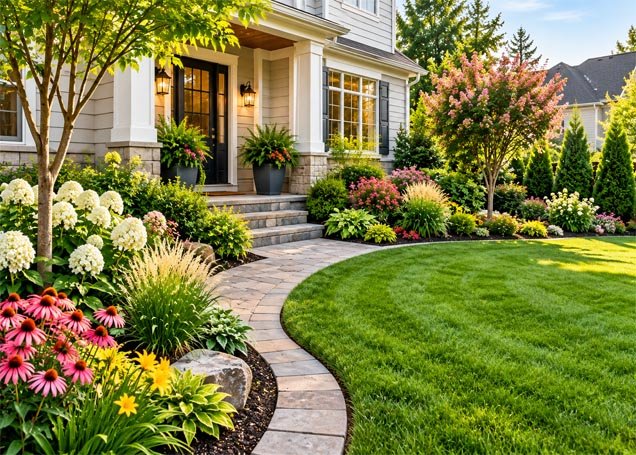
A beautiful landscape rarely happens by accident. The most attractive yards usually start with thoughtful planning—understanding the property, deciding how you’ll use the outdoor space, choosing suitable plants, and arranging everything so the elements work together.
Landscape design can sound complicated, especially if you have never planned a yard before. However, you do not need to be a professional landscape designer to make meaningful improvements to your property.
A successful landscape should be more than attractive. It should also be practical, comfortable, manageable, and appropriate for your local climate.
Whether you are starting with an empty yard or improving an established landscape, this guide will walk you through the major steps to create an outdoor space that works for your home and lifestyle.
What Does Designing the Landscape Mean?
Landscape design is the process of planning how different outdoor elements will be arranged around a property.
These elements can include:
- Lawns
- Trees
- Shrubs
- Flowers
- Garden beds
- Walkways
- Patios
- Decks
- Fences
- Seating areas
- Water features
- Outdoor lighting
- Driveways
- Retaining walls
- Vegetable gardens
- Outdoor structures
Good landscape design considers how these features relate to one another rather than treating each feature separately.
For example, you might love a particular tree, patio, and flower bed individually. But if you place them randomly, the yard may feel disconnected.
Planning helps you create a landscape where the individual pieces feel like parts of one larger design.
1. Start With the Purpose of Your Landscape
Before you buy any plants or move soil, start by asking yourself one simple question:
What do I want my yard to be?
Every homeowner wants something different from their outdoor space.
For example, one family might want a big lawn for their kids to play on. Another person might dream of a peaceful garden with lots of flowers and a cozy place to sit. Someone else might want a space to dine and entertain outdoors.
Take a moment to write down what matters most to you.
Your list might include things like:
- Outdoor entertaining
- Gardening
- Relaxation
- Children’s play
- Pet-friendly areas
- Privacy
- Outdoor dining
- Growing vegetables and herbs
- Improving curb appeal
- Attracting pollinators
- Reducing lawn maintenance
- Creating shade
- Making the property easier to maintain
This step matters because your goals will help guide almost every choice you make next.
2. Study Your Existing Yard
A common landscaping mistake is starting to design before you really understand your yard.
Take some time to look closely at your property.
Notice what is already there and what conditions you need to consider.
Sunlight
Pay attention to how sunlight changes throughout your yard during the day.
Some spots get direct sunlight most of the day, but areas near buildings, fences, or big trees might stay partly shaded.
This matters when you pick out plants.
Plants that like full sun may not do well in deep shade. In the same way, shade-loving plants can get stressed if they get too much hot afternoon sun.
Soil
Your soil type affects how your plants grow, how water drains, and how often you need to water.
Soil can vary widely across your yard, even if it’s all on the same property.
Test your soil before you make big planting decisions. A soil test will tell you things like the pH and nutrient levels.
Don’t add fertilizer just because you think your soil might need it.
Drainage
Check your yard after it rains.
See whether water drains away quickly or sits in spots for a long time.
If some areas don’t drain well, you might need to choose different plants or find ways to improve drainage.
Watch how water flows away from your house, too.
Check for any big drainage problems before you spend money on landscaping.
Existing Features
Make a list of what’s already in your yard, like:
- Large trees
- Utility areas
- Fences
- Sheds
- Driveways
- Sidewalks
- Slopes
- Downspouts
- AC units
- Septic systems, where applicable
- Existing patios and decks
Some things might fit into your new design, but others may need to be hidden, moved, repaired, or removed.
3. Draw a Basic Landscape Plan
You don’t need costly design software to get started.
A piece of graph paper and a pencil are enough for your first plan.
Draw the general shape of your property and mark these features:
- House
- Garage
- Driveway
- Existing trees
- Property boundaries
- Gates
- Walkways
- Utility areas
- Patios or decks
- Existing garden beds
Next, mark spots where you might want to add new features.
At this point, don’t worry about picking specific types of flowers.
Focus on planning the spaces first.
For example, you might have:
House → Patio → Lawn → Garden → Trees
This approach is much easier than picking plants at random and then figuring out where they should go.
4. Divide the Yard Into Outdoor Zones
Imagine your yard as a house with no roof.
Just as your home has different rooms for different uses, you can set up your yard the same way.
Here are some ideas for different zones you can create:
Entertainment Zone
A patio, deck, or any comfortable seating area can serve as the main spot for gatherings.
Play Zone
Families might like an open lawn or another space where kids can play outside.
Garden Zone
This area could have flowers, vegetables, herbs, or decorative plants.
Relaxation Zone
A bench, a shady tree, a small water feature, or a quiet spot to sit can make a peaceful place to relax.
Utility Zone
Keep things like trash bins, garden tools, compost, and hoses in spots where you can reach them easily, but they don’t stand out in your yard.
Setting up different zones can help keep your yard neat and organized.
5. Create a Natural Flow Through the Landscape
It’s important to create a clear, comfortable way for people to move through your yard.
Walkways help connect key areas in your yard, such as:
Driveway → Front Door
House → Patio
Patio → Garden
Back Door → Vegetable Garden
Deck → Lawn
The path you choose should feel logical and easy to follow.
If people often walk across the grass instead of using your walkway, the path may not be in the most convenient spot.
Curved paths give your yard a softer, more relaxed look. Straight paths usually feel more formal and direct.
There’s no single right choice. Pick the style that fits your home’s design and the look you want for your yard.
6. Understand the Basic Principles of Landscape Design
Landscapes that look professionally designed usually follow a few basic design principles.
Balance
Balance gives a landscape visual stability.
Formal landscapes often use symmetrical balance, with similar features on both sides.
Informal landscapes might use asymmetrical balance, where different elements still have similar visual weight.
Proportion
Think about how the size of plants and other features compares to your house and yard.
A small shrub might seem to disappear next to a big two-story house, while a huge tree can take over a small yard.
Always think about how big a plant will get when it’s fully grown, not just how it looks at the garden center.
Unity
Your landscape should feel connected.
Using some of the same plants, materials, shapes, or colors in different areas can help your whole yard feel more consistent.
Rhythm
Repeating certain elements can help guide your eye through the landscape.
For example, planting the same ornamental grasses along a walkway can create rhythm.
Contrast
Contrast helps important parts of your landscape stand out.
Using plants with different heights, textures, shapes, or colors can make your yard more interesting.
You don’t need contrast everywhere. If too many elements compete, your yard can start to feel chaotic.
7. Choose a Landscape Style
Deciding on a general style early on makes later choices easier.
Some people like a formal landscape with balanced shapes and clear lines.
Others prefer a more relaxed, natural look.
Here are some popular styles to consider:
Traditional
This style uses neat lawns, trimmed shrubs, trees, and classic garden beds.
Modern
Modern gardens feature simple shapes, clean lines, limited plant choices, and up-to-date materials.
Cottage Garden
Cottage gardens have lots of flowers, dense plantings, winding paths, and a laid-back feel.
Native Landscape
Native landscapes focus on plants that naturally grow well in your area.
Wildlife-Friendly Garden
Wildlife-friendly gardens include plants and features that offer food, shelter, and habitat for animals.
Low-Maintenance LandscaLow-maintenance designs use easy-care plants, good groundcovers, efficient watering, and aim to keep upkeep simple. You don’t need to stick to
8. Plan the Lawn Carefully
A lawn gives you open space and makes garden beds stand out. But you don’t have to plant grass everywhere. Think about which areas of your yard really need a lawn.awn.
Grass may work well for:
- Recreation
- Children’s activities
- Pets
- Open gathering areas
- Visual separation between planting beds. Steep slopes, narrow spaces, shady spots, and areas you rarely use might be better suited for other landscaping options.ntCutting back on extra lawn areas means less mowing and more space for other plants.ing.
9. Choose Plants for the Right Place
Choosing plants is one of the most enjoyable parts of landscape design, but you should plan first.
Don’t pick plants just because they look nice. Make sure you consider what they need to grow well.
Check:
- USDA Plant Hardiness Zone
- Sun requirements
- Mature height
- Mature width
- Soil preferences
- Moisture needs
- Growth habit
- Maintenance requirements
- Seasonal appearance
- Local suitability
The USDA Plant Hardiness Zone Map shows the average lowest winter temperatures, which helps gardeners choose plants. Still, hardiness zones are just one factor to consider.
Other factors like sun, soil, moisture, heat, wind, and local conditions matter too.
10. Think About Mature Plant Size
A plant that looks small at the nursery can grow much bigger over time.
New gardeners can easily overlook how much plants can grow.
Always check how tall and wide a plant will get before you plant it.
Proper spacing can:
- Reduce overcrowding
- Improve airflow
- Make maintenance easier
- Allow plants to develop naturally
- Reduce the need for excessive pruning
Don’t plant large shrubs right next to your house just because they seem small now.
Think about how your landscape will look in a few years as the plants grow.
11. Use Trees to Build the Landscape Framework
Trees are often some of the most important features in a home landscape.
The types of trees you choose and where you plant them can offer benefits like:
- Shade
- Privacy
- Seasonal color
- Wildlife habitat
- Visual structure
- A focal point
Since trees stay in your yard for many years, think carefully about where you plant them.
Consider how tall and wide the tree will get, and check for potential conflicts with buildings, power lines, sidewalks, or other structures.
Before digging, homeowners should also locate underground utilities as required by local regulations.
12. Use Shrubs to Connect Large and Small Elements
Shrubs usually fill the space between tall trees and shorter flowers or groundcovers.
They can be useful for:
- Foundation plantings
- Privacy
- Screening
- Defining spaces
- Adding flowers
- Creating year-round structure
If you mix evergreen and deciduous shrubs, you’ll get year-round structure and seasonal variety.
Remember to choose shrubs based on how big they’ll get when fully grown, not just how they look when you buy them.
13. Add Flower Beds for Color and Interest
Flowers bring seasonal color and personality to your yard throughout the seasons. individual flowering plants everywhere, consider grouping compatible plants into intentional beds.
You can combine:
- Annuals
- Perennials
- Flowering shrubs
- Ornamental grasses
- Groundcovers
- Bulbs
Think about bloom period. Pay attention to when different plants bloom. Only spring-flowering plants may look wonderful for several weeks and then become less interesting.
Plan for changing intereTry to plan for flowers and plants that offer something interesting all season long.
14. Consider Native Plants
Native plants are a great choice for home gardens if they match your yard’s conditions.
Since the United States has many different climates and ecosystems, there isn’t one list of the best native plants for every garden.
For example, a plant that grows well in Florida might not work in Colorado.
Check your state’s university Extension service, local native plant groups, or trusted botanical gardens for advice on plants that fit your area.
Native plants also help support local insects, birds, and other wildlife.
15. Add Hardscaping
Plants are just one part of landscape design.
Hardscaping means adding built features that aren’t living, like stone or wood structures.
Examples include:
- Patios
- Walkways
- Retaining walls
- Steps
- Fences
- Pergolas
- Edging
- Stone features
- Decks
Hardscaping gives your yard structure and makes outdoor spaces easier to use.
Choose materials that match your home’s style.
16. Create an Outdoor Living Area
Modern residential landscapes often function as extensions of the home.
A patio or deck can become an outdoor living room.
Depending on your available space, you might include:
- Outdoor seating
- Dining table
- Shade structure
- Planters
- Outdoor lighting
- Weather-appropriate furnishings
Positioning outdoor living areas near the house can make them easier to access.
Privacy, shade, wind, drainage, and afternoon sun should also be considered.
17. Add a Focal Point
A focal point gives your eyes a place to settle.
Some examples of landscape focal points are:
- Specimen tree
- Large planter
- Garden sculpture
- Fountain
- Fire feature
- Pergola
- Bench
- Flowering tree
- Attractive garden structure
One strong focal point usually works better than several features competing for attention.
Place focal points thoughtfully to highlight the most attractive areas of your landscape.
18. Plan for Privacy
Privacy can make your outdoor space feel much more comfortable.
You have several options, such as:
- Fences
- Trees
- Shrubs
- Hedges
- Trellises
- Pergolas
- Privacy screens
Before you put up a fence or large structure, check local rules, permits, setbacks, and any homeowners association requirements that might apply.
Plants can provide a softer screen, but keep in mind they often need time to grow and fill in.
19. Don’t Forget Outdoor Lighting
Adding landscape lighting can make your yard feel more inviting and help you see better at night.
Lighting works well in areas like:
- Entrances
- Steps
- Walkways
- Patios
- Decks
- Seating areas. Try not to use too much lighting.g.Just a few well-placed lights can make your yard look nicer than lighting up the whole space.t.
Use equipment and installation methods made for outdoor use. For bigger electrical projects, follow local codes and hire a professional if needed.
20. Think About Water Before Planting
Build water management into the design from the start.
Group plants with similar moisture requirements where practical.
This makes irrigation easier and helps avoid situations where you overwater one plant to satisfy another.
Depending on your landscape, watering options might include:
- Hand watering
- Drip irrigation
- Soaker hoses
- Irrigation systems
Local watering restrictions and climate should also influence your approach.
21. Plan for Drainage
Drainage is less exciting than choosing flowers, but it can be much more important.
Watch for:
- Standing water
- Erosion
- Runoff
- Water flowing toward structures
- Permanently soggy areas
Do not assume that adding soil or digging a trench will automatically solve a complicated drainage problem.
Major grading or drainage issues can affect structures and neighboring properties and may require professional evaluation.
22. Design for All Four Seasons
A great landscape should not depend entirely on summer flowers.
Consider what the yard will look like throughout the year.
Spring
Flowering bulbs, trees, and early perennials can provide color.
Summer
Perennials, annuals, shrubs, and outdoor living areas often take center stage.
Fall
Trees, shrubs, ornamental grasses, and late-season flowers can provide changing colors and textures.
Winter
Evergreens, bark, branches, ornamental grasses, hardscape, and garden structures can maintain visual interest.
The exact seasonal pattern will vary considerably across different parts of the United States.
23. Create Layers in Your Planting Beds
Layering helps your planting beds look fuller and more planned.
One easy way to do this is:
Start with tall plants in the back, then add medium plants, followed by shorter ones, and finish with groundcovers at the front.
For example, you could use a large shrub as the background, fill the middle with medium-sized perennials, and place lower plants along the front edge.
Also, think about where people will view your garden from when arranging your plants.
If you have a garden bed visible from all sides, try putting the tallest plants in the center instead of at the back.
24. Use Color With a Plan
You don’t have to use every color you see at the garden center.
Sticking to just a few colors can help your garden look more unified.
Possible combinations include:
Green + white + purple
or
Green + yellow + blue
You can also use leaf color and texture, not just flowers, to add interest.
Keep in mind that flowers don’t last forever, but leaves usually stay visible longer.
25. Use Texture to Make the Landscape Interesting
Texture is about how plants and materials look and feel in your garden.
For example, a plant with big, wide leaves looks very different from one with thin, fine leaves.
Mixing different textures can make your garden feel more interesting and layered.
For instance, you could try combining:
broad-leaved plants, fine ornamental grasses, and smooth stones
can produce contrast without requiring lots of different colors.
26. Design a Low-Maintenance Landscape
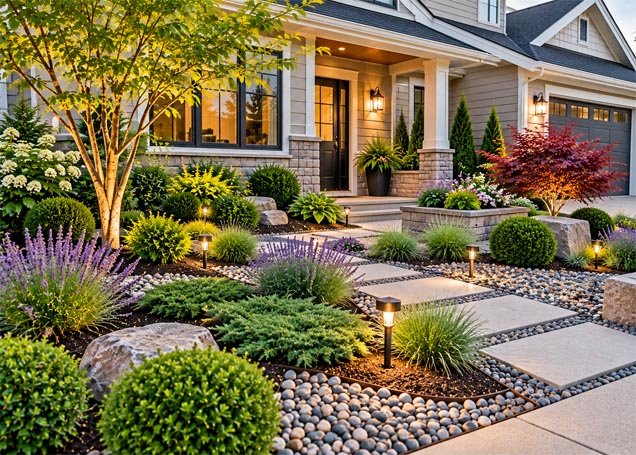
A beautiful landscape does not have to require constant work.
If low maintenance is a priority, design for it from the beginning.
Helpful strategies can include:
- Selecting plants suited to the site
- Providing adequate spacing
- Using mulch appropriately
- Reducing unnecessary lawn
- Grouping plants by similar needs
- Choosing durable hardscape materials
- Avoiding overly complicated planting designs
Remember that low maintenance does not mean no maintenance.
Every landscape requires some care.
27. Mulch Garden Beds Properly
Mulch gives planting beds a neat look and also serves several useful purposes.
The benefits of mulch depend on the type you use and your garden’s conditions. It can help to:
- Reduce weed growth
- Moderate soil temperature
- Conserve soil moisture
- Protect soil from erosion
You can use organic mulch like wood chips, shredded bark, or leaves.
Don’t pile mulch right up against tree trunks.
The common “mulch volcano” around trees is actually a poor landscaping practice.
Keep mulch away from the trunk and make sure the root flare stays visible.
28. Plan Landscaping Around the Front of the House
Front-yard landscaping boosts curb appeal and helps guide people from the street to your front door.
Make sure your front door is easy to spot.
A walkway, plants, lighting, or other features can help draw attention to your entrance.
Choose foundation plants that highlight your home’s architecture instead of covering it up. Remember how big plants will get when placing them near:d:
- Windows
- Doors
- Walkways
- Driveways
- Utility equipment. A small shrub might block a window as it grows if you plant it too close.
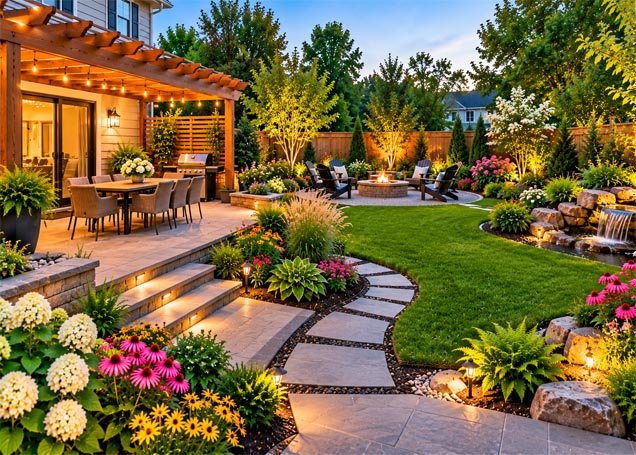
29. Designing the Backyard Landscape.
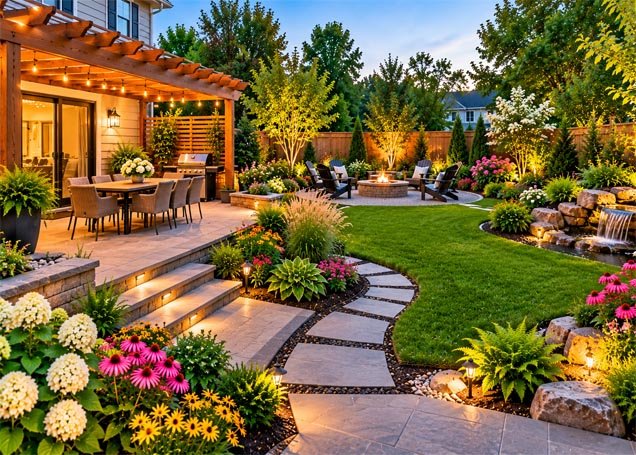
Backyards usually have different priorities than front yards.
The backyard is often more focused on personal use.
You might include:
- Patio
- Outdoor dining
- Lawn
- Vegetable garden
- Play area
- Privacy planting
- Shade
- Fire pit area
- Garden beds
- Storage
- Outdoor kitchen
Start with the largest functional areas before filling smaller spaces with decorative plants.
This keeps the backyard useful instead of overcrowded.
30. Landscape Design for a Small Yard.
Less space can inspire more creative design choices. Look for features that can do more than one job.s.For example, a bench can give you a place to sit and also serve as a focal point. Vertical gardening lets you use walls, fences, or trellises to grow plants.
Consider:
- Vertical planters
- Narrow garden beds
- Compact plants
- Container gardens
- Multi-purpose seating
- Carefully placDon’t try to squeeze every landscaping idea into a small yard. A simple design can help a small outdoor space feel bigger. small outdoor area feel more spacious.30. Landscape Design for a Small Yard.
30. Landscape Design for a Small Yard
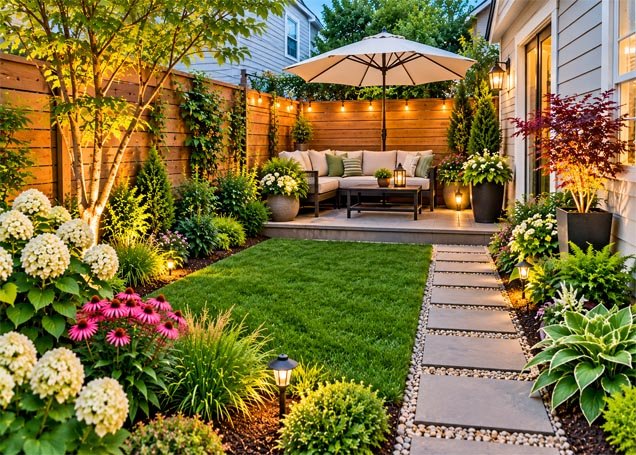
Even a small yard can look beautiful.
Having less space often leads to more thoughtful design choices.
Try to include features that can serve more than one purpose.
For example, a bench can give you a place to sit and also become a focal point in your yard.
You can also use vertical gardening to make the most of walls, fences, or trellises.
Some ideas to consider are:
- Vertical planters
- Narrow garden beds
- Compact plants
- Container gardens
- Multi-purpose seating
- Carefully placed focal points
- Simple color schemes
Try not to squeeze every landscaping idea into a small yard.
A simple design can actually make a small outdoor space feel bigger.
31. Landscaping on a Budget
You do not need to redo your whole yard all at once.
Start by making a master plan, then break the project into smaller steps.
For example:
Year 1: Improve soil, drainage, and major pathways.
Year 2: Add important trees and shrubs.
Year 3: Expand perennial beds and outdoor living areas.
This way, you can spread out the costs over time.
Here are some other budget-friendly ideas:
- Starting with smaller plants
- Dividing established perennials when appropriate
- Reusing suitable existing materials
- Prioritizing high-impact areas
- Doing manageable projects yourself
But for things like complex grading, large tree work, big retaining walls, electrical work, or other specialized jobs, it may be worth hiring a professional.
32. Common Landscape Design Mistakes to Avoid
Even a costly landscape can be disappointing if it is not well planned.
Some common mistakes include:
Buying Plants Before Planning
This often leads to a mix of plants that do not fit together well.
Ignoring Mature Size
Trees and shrubs can eventually outgrow the space where they were planted.
Planting Too Close to the House. Leave enough space for plants to grow and for you to maintain your property.
Ignoring Sun Requirements. Pick plants that match the real conditions in your yard.s.
Forgetting Drainage. Water issues can cause problems for both your plants and your property.y.
Using Too Many Different Materials. Using too many colors, types of pavers, stones, edging, or decorations can make your yard feel cluttered.d.
Overcrowding Plants. New landscapes might look a bit empty at first since young plants are still small.Try not to fill every empty spot right away.p.
Designing Only for Appearance. Your landscape should be practical as well as attractive.l.A pretty pathway is not useful if it doesn’t take people where they need to go.
33. Create a Landscape Maintenance Plan
Think about future maintenance before completing the design.
Your routine may eventually include:
- Mowing
- Watering
- Weeding
- Pruning
- Mulching
- Cleaning patios
- Managing fallen leaves
- Inspecting plants
- Seasonal garden cleanup
If you have limited time for yard work, choose a simpler landscape.
A smaller number of well-chosen plants can look much better than an ambitious landscape that becomes difficult to maintain.
34. When Should You Hire a Landscape Professional?
Many homeowners can handle basic landscape planning themselves.
However, professional help may be useful when the project involves:
- Major grading
- Significant drainage problems
- Retaining walls
- Complex irrigation
- Large tree removal
- Structural outdoor features
- Major electrical work
- Extensive property redesign
Landscape architects, landscape designers, contractors, arborists, and other professionals have different areas of expertise.
Choose the right professional for your project.
35. Make a Landscape Design Checklist
Before beginning your project, review these questions:
- What is my landscaping budget?
- How will my family use the yard?
- Which areas receive sun and shade?
- What type of soil do I have?
- Where does rainwater go?
- What plants already exist?
- Which existing features should stay?
- Where do I need privacy?
- Do I need a lawn?
- Where will people sit?
- How will people move through the yard?
- Which plants are suitable for my climate?
- What will the plants look like when mature?
- How much maintenance can I realistically handle?
- What will the landscape look like throughout the year?
Answering these questions can prevent many expensive mistakes.
Designing the Landscape: A Simple Step-by-Step Plan
If the entire process feels overwhelming, simplify it.
Step 1: Measure and study the property.
Step 2: Decide how you want to use the yard.
Step 3: Draw the existing property.
Step 4: Divide the yard into functional zones.
Step 5: Plan major features such as patios, paths, lawn areas, and garden beds.
Step 6: Address drainage and other site problems.
Step 7: Choose major trees and shrubs.
Step 8: Add smaller plants and seasonal interest.
Step 9: Plan lighting, irrigation, furniture, and accessories.
Step 10: Complete the landscape in manageable phases.
Frequently Asked Questions About Designing the Landscape
What is the first step in designing a landscape?
Begin by looking at your property and deciding how you want to use your outdoor space. Before choosing new plants or features, consider sunlight, soil, drainage, existing plants, structures, and walkways.
Can I design my own landscape?
Yes, many homeowners can design smaller residential landscapes on their own. Begin with a simple site plan and build your design step by step. For complex drainage, grading, structural, electrical, or large tree work, you may need to hire professionals.
What are the main elements of landscape design?
Typical elements are plants, lawns, trees, garden beds, paths, patios, outdoor structures, lighting, water features, and other hardscape items. Good design brings all these parts together in a balanced way.
How do I make my yard look professionally landscaped?
Have a clear plan, repeat plants and materials, consider how big plants will get, create clear spaces, use focal points wisely, and avoid crowding. Keeping things consistent helps your yard look more finished.
How do I landscape a small yard?
Focus on what you really need from your yard. Choose smaller plants, use vertical space, add containers, pick furniture that fits, and keep the design simple instead of adding too much.
Should I landscape my whole yard at once?
You don’t have to do everything at once. You can work through your landscape plan over time. Begin with basics like infrastructure, drainage, paths, and main plants, then add smaller details later.
What is the difference between landscaping and landscape design?
Landscape design is about planning how outdoor spaces and features fit together. Landscaping is a broader term that also covers installing and maintaining those features.
How much should I spend on landscaping?
There’s no one-size-fits-all landscaping budget. Costs depend on where you live, your property size, materials, plants, labor, grading, and the project’s complexity. Set a budget before you finish your design and get local estimates for big jobs.
Final Thoughts
Landscape design gets easier when you think about your whole property instead of just focusing on individual plants.
Begin by thinking about what you need. Take a good look at your yard and learn about the sunlight, soil, water, and what’s already there. Next, divide your property into useful areas before picking plants and decorations.
Remember that landscapes change.
Trees grow. Shrubs spread. Flowers come and go with the seasons. Families also change how they use their outdoor spaces.
So, a well-planned landscape should have space to change and grow over time.
You don’t have to create your dream yard in a weekend. Develop a plan, prioritize the most important improvements, and complete the project one stage at a time.
With good planning, the right plants, useful outdoor spaces, and realistic upkeep, you can make a yard that looks great, works well, and stays enjoyable for years.
References & Helpful Resources
USDA Plant Hardiness Zone Map — Useful for readers choosing perennial plants suited to their location. USDA explains that the map is based on average annual extreme minimum winter temperatures. USDA Climate Hubs
USDA Plant Hardiness Zone Map
U.S. EPA WaterSense – Water-Smart Landscape Design — Covers planning attractive landscapes while considering water use, plant selection, soil, irrigation, and maintenance. US EPA
EPA Water-Smart Landscape Design
EPA WaterSense – Landscaping Tips — Particularly useful for your sections about choosing plants, climate, sunlight, maintenance, lawns, shrubs, shade trees, and water-efficient landscaping. US EPA
EPA Landscaping Tips
EPA WaterSense – Landscape Photo Gallery — Provides real-world water-smart landscape examples organized by U.S. region. This could also be useful inspiration for IdeaSproutly readers. US EPA
EPA Landscape Photo Gallery
EPA WaterSense – Water Budget Tool — Useful for the irrigation and water-planning sections. The tool uses local climate information to help evaluate landscape water efficiency for U.S. locations. US EPA
EPA Water Budget Tool