
Designing a small living area can feel challenging, but limited space does not mean you have to sacrifice comfort or style. With the right layout, furniture, colors, lighting, and storage, even a compact room can feel open, organized, and welcoming.
The key to successful living area design for small spaces is making every part of the room work harder. Instead of filling the space with large furniture and unnecessary decorations, focus on pieces that fit the room, serve a purpose, and create visual breathing room.
Whether you live in a small apartment, condo, studio, or compact home, these 15 practical ideas can help you create a living area that looks beautiful while making better use of the space you have.
1. Start With a Simple Layout
Before buying furniture or decorating, think carefully about how you use your living area.
Do you mainly watch television there? Do you need space for guests? Is the room also used for reading, studying, dining, or working from home?
Once you understand the room’s main purpose, arrange the furniture around it.
In a small living area, avoid blocking natural walking paths with chairs, tables, or oversized sofas. You should be able to move comfortably from one part of the room to another.
A simple arrangement often works better than trying to fit too many pieces into a compact room.
Small-space tip: Measure your living area and major furniture before deciding on the final layout.
2. Choose Furniture That Fits the Room
One of the most common small-space design mistakes is choosing furniture that is too large.
A huge sectional may look comfortable in a showroom but can overwhelm a compact living room.
Instead, consider a smaller sofa, loveseat, apartment-size sectional, or a pair of comfortable chairs.
Look for furniture with clean lines and relatively slim profiles. Pieces with exposed legs can also create a greater sense of openness because more of the floor remains visible.
The goal isn’t necessarily to buy the smallest furniture available. It’s to choose pieces that are correctly proportioned for your particular room.
3. Use Light and Neutral Colors
Color can dramatically change how a small living area feels.
Soft whites, warm beige, cream, light gray, and other gentle neutral shades can create a bright and airy atmosphere.
However, this doesn’t mean your entire living room needs to be white.
You can introduce personality through cushions, rugs, artwork, plants, curtains, and decorative objects.
For example, start with warm neutral walls and furniture, then introduce muted green, terracotta, blue, or another accent color.
This approach keeps the room visually calm while preventing it from looking plain.
4. Take Advantage of Natural Light
Natural light can make a compact room feel brighter and more spacious.
Avoid covering windows with heavy furniture whenever possible. Instead, keep the area around your windows relatively open.
Lightweight curtains can provide privacy while still allowing daylight into the room. Hanging curtains slightly higher can also draw the eye upward and emphasize the room’s height.
If your living area receives plenty of daylight, arrange seating so you can enjoy it rather than blocking it.
A bright room generally feels more inviting than a dark, crowded one.
5. Add Mirrors Strategically
Mirrors are a classic decorating tool for small spaces.
A large mirror can reflect both light and parts of the room, helping create a greater sense of depth.
Try placing a mirror across from or near a window where it can reflect natural light.
You could use one large statement mirror rather than filling the wall with many small ones.
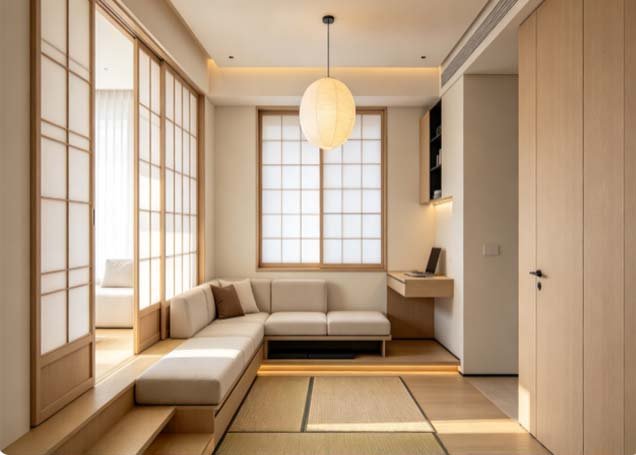
Choose a frame that complements your overall interior style—simple wood for Scandinavian or Japandi interiors, metal for contemporary spaces, or a decorative frame for traditional rooms.
6. Choose Multifunctional Furniture
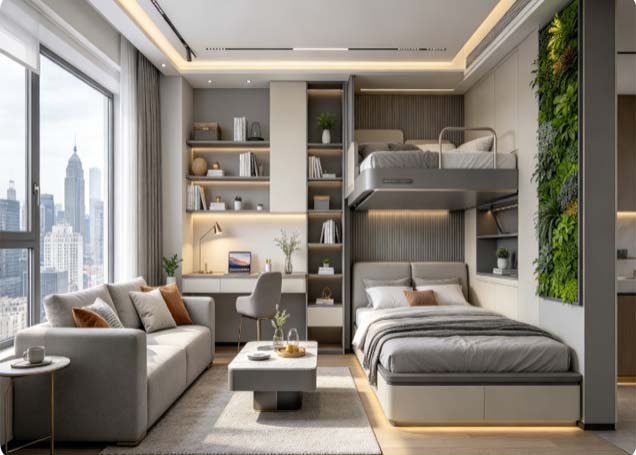
When floor space is limited, furniture that performs more than one job becomes especially valuable.
Consider pieces such as:
- An ottoman with hidden storage
- A coffee table with drawers or shelves
- A nesting table set
- A storage bench
- A sofa bed for occasional guests
- A console that doubles as a small desk
Multifunctional furniture can reduce the number of separate pieces you need.
For example, instead of having both a coffee table and an extra storage cabinet, a storage coffee table can provide both functions.
That helps maintain a cleaner, less crowded living area.
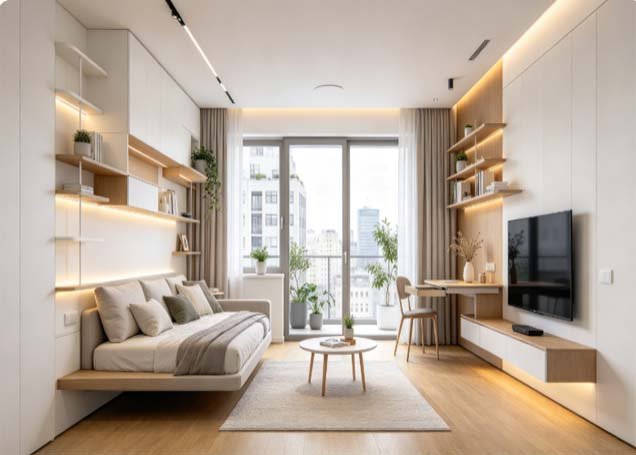
7. Use Vertical Space for Storage
When you don’t have much floor space, look upward.
Walls provide valuable storage opportunities that are often overlooked.
Tall bookcases, floating shelves, wall-mounted cabinets, and vertical storage units allow you to store or display items without occupying too much floor area.
Floating shelves can hold books, small plants, framed photographs, and decorative pieces.
However, don’t cover every wall with storage. Leaving some empty wall space helps prevent a small room from feeling visually overloaded.
Balance storage with open areas.
8. Keep the Floor as Open as Possible
The more uninterrupted floor you can see, the more spacious a room may feel.
Furniture with raised legs can help achieve this effect. Instead of bulky pieces that sit completely against the floor, consider sofas, chairs, consoles, and side tables with visible space underneath.
Wall-mounted solutions can help too.
For example, a wall-mounted television can eliminate the need for a large entertainment cabinet. Floating media units and shelves can provide storage while maintaining an open appearance.
This is especially useful when designing very narrow living areas.
9. Define the Room With the Right Rug
A rug can visually connect the furniture and make a small living area feel intentional rather than randomly arranged.
One common mistake is choosing a rug that is too small.
A tiny rug floating in the center of the room can make the seating arrangement look disconnected.
Instead, choose a rug large enough to visually anchor the main seating area. Depending on the layout, at least the front legs of the primary seating pieces can rest on the rug.
Simple patterns and lighter tones often work beautifully in compact spaces, but a stronger pattern can also work when the rest of the room is relatively understated.
10. Create a Clear Focal Point
Every well-designed room benefits from having something that naturally attracts attention.
In a small living area, a focal point also helps establish visual order.
Your focal point could be a fireplace, large piece of artwork, attractive window, feature wall, bookshelf, or television area.
Once you choose it, arrange other elements to complement rather than compete with it.
For example, if you have a beautiful piece of wall art above the sofa, you may not need several additional decorative items around it.
A clear focal point can make the room feel more intentional and less cluttered.
11. Add Greenery Without Taking Up Too Much Space
Houseplants can bring color, texture, and natural beauty into a compact living area.
You don’t need a collection of huge plants.
A small plant on a side table, a narrow floor plant in an unused corner, or a trailing plant on a shelf may be enough.
If floor space is extremely limited, consider wall shelves or hanging planters where appropriate.
Choose plants based on the actual light conditions in your home rather than appearance alone. A plant that needs bright light won’t thrive in a dark corner simply because it looks attractive there.
12. Layer Your Lighting
A single ceiling light often isn’t enough to create a comfortable living area.
Instead, combine different types of lighting.
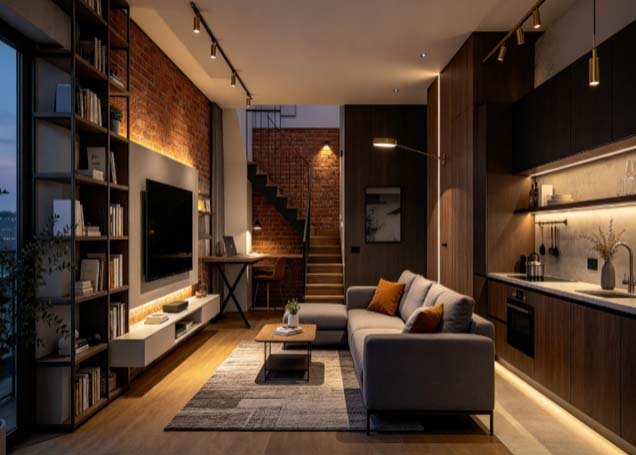
Start with general lighting from a ceiling fixture. Then add task lighting, such as a floor or table lamp near a reading chair. Finally, use subtle accent lighting to highlight shelves, artwork, or architectural details.
This layered approach gives you more control over the room’s atmosphere throughout the day.
For extremely small spaces, wall-mounted sconces can be particularly useful because they provide light without occupying table or floor space.
13. Reduce Visual Clutter
Even an attractive room can feel cramped when too many objects are visible.
Instead of displaying every decoration you own, select a smaller number of pieces that you genuinely like.
Keep everyday items organized using baskets, drawers, cabinets, or attractive storage boxes.
Pay attention to cables as well. Television cords, chargers, and other electronics can quickly make a compact living area look messy.
Regularly removing items you no longer need is one of the simplest—and least expensive—ways to improve a small room.
14. Create Zones in an Open Living Area
Many apartments and smaller homes combine the living room, dining area, and sometimes kitchen into one open space.
Rather than treating the entire room as one area, create visual zones.
A rug can define the living area, while a pendant light can help identify the dining area. A narrow console or open shelving unit can provide subtle separation without building a wall.
Furniture placement can accomplish the same thing.
For example, positioning the back of a sofa toward the dining space can establish a natural boundary between the two areas.
The goal is separation without making the overall room feel closed.
15. Add Personality Without Overdecorating
Small spaces should still reflect the people who live in them.
You don’t have to remove every decorative item in the name of minimalism.
Instead, be selective.
Display a few favorite photographs, books, plants, artwork, handmade objects, or travel keepsakes. Combine them with colors and textures that make the room feel comfortable to you.
The secret is giving decorative elements enough space to stand out.
A few meaningful pieces usually make a stronger impression than dozens of unrelated accessories competing for attention.
Best Colors for Small Living Areas
There is no single color that every small living room must use.
Light neutrals are popular because they’re versatile and can help maintain a bright appearance. Warm white, ivory, beige, soft gray, and pale greige can all work well.
But darker colors aren’t automatically off-limits.
A deeper green, navy, charcoal, or earthy shade can create an attractive accent when used thoughtfully.
Instead of focusing only on whether a color is light or dark, consider the room’s natural light, furniture, flooring, and overall atmosphere.
Keeping the color palette relatively cohesive can be especially helpful in compact spaces.
Furniture Ideas for Small Living Spaces
When shopping for a small living area, measurements matter more than assumptions.
A few inches can make a significant difference in a tight floor plan.
Before purchasing furniture, measure the room, doorways, windows, and available wall space. You can even mark furniture dimensions on the floor with painter’s tape to visualize how much space each piece will occupy.
Prioritize the furniture you actually need.
For many small living areas, a comfortable sofa, compact coffee table, one side table, and carefully selected storage may be enough.
Add additional pieces only when they provide a clear function.
Common Small Living Area Design Mistakes
A small room can quickly become uncomfortable when every available corner is filled.
Some problems to watch for include oversized furniture, too many small decorative pieces, poor lighting, insufficient storage, blocked windows, and furniture arrangements that interrupt walking paths.
Another mistake is assuming that every piece must be pushed against a wall. Depending on the room, slightly floating a sofa or chair can actually create a more functional arrangement.
Most importantly, don’t copy a room simply because it looks beautiful online. Your layout should work with your home’s actual dimensions and your everyday needs.
How to Make a Small Living Area Look Bigger
You don’t need major renovations to create a more spacious feeling.
Start by improving natural light and removing unnecessary clutter. Choose appropriately scaled furniture and maintain clear walking paths. Use vertical storage to reduce pressure on the floor, and consider a strategically positioned mirror to reflect light.
Keeping flooring and major colors visually consistent can also create smoother sightlines.
These changes won’t physically increase the square footage, but they can make the existing room feel more comfortable, organized, and open.
Final Thoughts
Successful living area design for small spaces is less about squeezing everything into the room and more about making thoughtful choices.
Start with a functional layout. Choose appropriately sized furniture, maximize natural light, use vertical storage, and select multifunctional pieces whenever they genuinely solve a problem. Then add lighting, plants, artwork, textiles, and personal details to make the space feel like home.
A small living area can be every bit as attractive and comfortable as a larger room. When each piece has a purpose, and the overall design remains balanced, even limited square footage can become a beautiful place to relax, entertain, and enjoy everyday life.
References & Further Reading
For additional home-design guidance and inspiration, readers can explore Architectural Digest – Decorating, Better Homes & Gardens – Decorating, and The Spruce – Home Design & Decorating.