Table of Contents
Starting a vegetable garden can transform your backyard into a place where you grow fresh food, enjoy more greenery, and feel proud of your efforts. Whether you have a big yard, a small patio, or just space for a few raised beds, you can create a garden that fits your space.
If you’re new to gardening, it might feel overwhelming at first. You may wonder where to put your garden, which vegetables to grow, how much sunlight your plants need, or whether to use raised beds or plant in the ground.
The good news is you don’t need a big garden or lots of experience to begin. A small, well-planned vegetable garden is usually easier to care for and can still give you a great harvest.
This guide will walk you through each step of starting a vegetable garden, from picking a sunny spot and preparing the soil to planting, watering, caring for, and harvesting your vegetables.
1. Choose the Right Location
Picking the right spot is one of the most important parts of starting a vegetable garden. Most vegetables do best in full sun. Penn State Extension suggests choosing a place that gets about 6 to 8 hours of sunlight and is close to a water source. Penn State Extension
Before building your garden, observe your yard throughout the day. Watch how shadows from your home, garage, fences, and trees move. Tomatoes, peppers, cucumbers, and many other fruiting crops generally benefit from sun.
Pick a spot that drains well and is easy to get to. A garden near your home and water supply is usually easier to check on, water, weed, and harvest.
Good garden locations generally have:
* Plenty of direct sunlight
* Good drainage
* Convenient access to water
* Easy access from the house
* Enough airflow around plants
* Protection from heavy foot traffic
Avoid low areas where water regularly collects after rain.
2. Start Small
A common mistake for new gardeners is starting with a garden that’s too big.
A big garden might seem exciting in the spring, but by midsummer it often needs much more watering, weeding, harvesting, and care than you might expect.
It’s better to begin with a small, manageable garden.
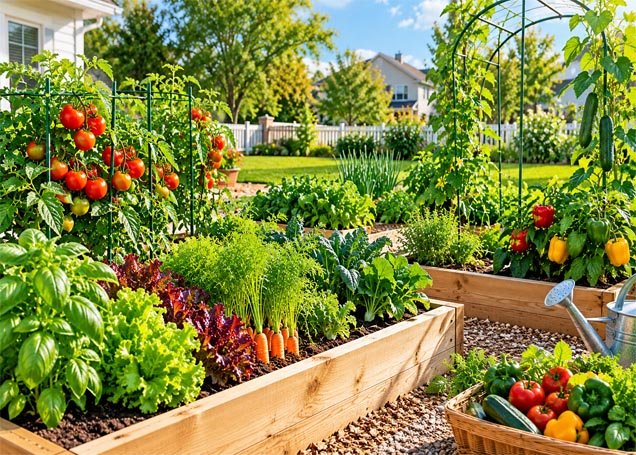
A small raised bed, a modest in-ground plot, or several large containers can offer plenty of space to learn the basics.
You can always make your garden bigger next year.
Starting small also helps you find out which vegetables grow well where you live and which ones your family likes to eat.
Instead of planting 20 different vegetables, start with five or six of your favorites.
3. Decide Between In-Ground, Raised-Bed, and Container Gardening
No single type of vegetable garden is perfect. The right setup depends on your available space, existing soil, budget, and preferences.
In-Ground Gardens
An in-ground garden is created directly in your existing yard soil. It can be an economical option when you have suitable soil and enough backyard space.
In-ground gardens can also be expanded relatively easily.
However, you’ll need to evaluate your soil before planting.
Raised Beds
Raised garden beds are extremely popular in American backyards.
They provide clearly defined growing spaces and let you add a suitable soil mixture instead of relying completely on your existing yard soil.
Raised beds can also make pathways and garden organization easier.
They do require materials and soil to establish, so the initial cost may be higher than planting directly in the ground.
Containers
Don’t have a backyard?
You can still grow vegetables.
Large containers can work well on patios, decks, and other small outdoor spaces. Herbs, lettuce, peppers, and some compact tomato varieties are good options.
Containers need drainage holes, and because the soil volume is limited, you’ll need to watch moisture closely.
4. Learn About Your Soil
Test and Prepare Your Soil
Healthy soil is the foundation of a productive vegetable garden.
Before adding large amounts of fertilizer or amendments to an in-ground garden, consider testing your soil. A soil test can help you understand its condition and determine whether you actually need particular amendments.
Penn State Extension includes soil testing as one of its first steps for beginner vegetable gardeners and recommends using the results to determine whether amendments are necessary. Penn State Extension
Finished compost and other appropriate organic matter can help prepare garden soil, but don’t assume more fertilizer automatically means healthier plants.
If possible, look for soil-testing information from your state’s university Cooperative Extension program.
5. Choose Vegetables You Actually Eat
American gardeners frequently hear about the USDA Plant Hardiness Zone Map.
The zones are useful primarily for understanding average annual extreme minimum winter temperatures, especially when selecting perennial plants.
For an annual vegetable garden, your local frost dates, soil temperature, seasonal weather, and individual crop requirements are often more useful for deciding when to plant.
The planting calendar for someone in Minnesota can be very different from the calendar for someone in Georgia, Texas, California, or Florida.
Instead of following one nationwide planting date, use recommendations for your specific region and crop.
Your local Cooperative Extension service can be especially helpful for regional planting calendars and crop timing.
6. Know Your USDA Plant Hardiness Zone—But Don’t Rely on It Alone
American gardeners frequently hear about the USDA Plant Hardiness Zone Map.
The zones are useful primarily for understanding average annual extreme minimum winter temperatures, particularly when selecting perennial plants.
For an annual vegetable garden, however, your local frost dates, soil temperature, seasonal weather, and individual crop requirements are often more immediately useful for deciding when to plant.
A planting calendar for someone in Minnesota can look very different from one for someone in Georgia, Texas, California, or Florida.
Instead of following one nationwide planting date, use recommendations for your specific region.
Your local Cooperative Extension service can be especially helpful for regional planting calendars.
7. Understand Cool-Season and Warm-Season Vegetables
Try not to plant all your vegetables at once.
Vegetables usually fall into two groups: cool-season and warm-season crops.
Cool-Season Crops
Examples include crops such as:
- Lettuce
- Spinach
- Peas
- Radishes
- Carrots
- Broccoli
Most cool-season vegetables are planted in the cooler parts of spring or fall, but the best time varies depending on where you live in the United States.
Warm-Season Crops
Examples include:
- Tomatoes
- Peppers
- Cucumbers
- Beans
- Squash
Warm-season vegetables usually do best once the risk of frost is over, and the weather is warm enough for each plant type.
Be sure to read the seed packet or plant label for the best planting instructions.
8. Seeds or Transplants?
Beginners often wonder whether to start vegetables from seed or buy young plants.
Both approaches work.
Some vegetables are easy to plant directly from seed in the garden. Others are convenient to buy as transplants, especially when you’re just getting started.
Seed packets provide valuable information about planting depth, spacing, timing, and days to maturity.
Don’t throw the packet away after planting. Keep it for reference throughout the growing season.
When purchasing transplants, choose healthy-looking plants rather than automatically choosing the biggest
9. Plan Before You Plant
Avoid randomly placing plants wherever there is empty soil.
Sketch your garden first.
Write down what you want to grow and approximately where each crop will go.
Pay particular attention to mature plant size.
That tiny zucchini seedling at the garden center can become surprisingly large. Tomatoes may also need significant space and support.
Follow the recommended spacing on seed packets or plant labels rather than squeezing extra plants into the bed.
Crowding plants can reduce airflow and create unnecessary competition for sunlight, water, and nutrients.
You can also place taller crops where they’re less likely to shade shorter sun-loving vegetables as the season progresses.
10. Plant at the Right Time
When you plant depends a lot on where you live.
The United States has many different climates. In the north, the growing season is short, while in the south, some areas are almost subtropical and have very different gardening calendars.
That is why advice like “plant tomatoes in April” doesn’t work for everyone.
Instead, find out your area’s usual spring and fall frost dates. Then, check local advice for the vegetables you want to grow.
Be sure to read each seed packet too.
When planting seeds, follow the recommended planting depth. Planting seeds much deeper than recommended can make emergence more difficult. For transplants, use the planting tips for each crop and water them right after you plant them.
11. Water Your Vegetable Garden Properly
Vegetables need enough moisture to grow well, but that doesn’t mean you should just add as much water as you can.
Soil that is too dry or always soggy can both cause problems for your plants.
Instead of watering on a set schedule, check the soil moisture first. What works for one gardener might not work for your garden.
Pay attention to the weather.
Your garden will probably need more water during hot, dry spells and much less after a good rain.
Try to water the soil directly instead of spraying the leaves. This helps get water to the roots, where plants need it most.
Watering early in the day helps because plants have moisture as the temperature rises.
If you grow vegetables in containers, check them often in warm weather since they dry out faster than garden beds.
12. Add Mulch
Using mulch is an easy way to make your vegetable garden less work.
The right mulch around your plants helps reduce weeds, keeps soil temperature steady, and slows how quickly the soil dries out.
Good organic mulches for vegetable gardens include straw, shredded leaves, and other plant-based materials.
Don’t pile mulch right up against your plants’ stems.
The best type and amount of mulch to use depends on what you’re growing and your local weather.
13. Stay Ahead of Weeds
Weeding may not be the most fun part of gardening, but it’s much easier if you pull weeds when they’re still small.
Weeds take water and nutrients away from your vegetable plants.
Walk through your garden often and pull young weeds before they get big and start making seeds.
Adding mulch can help stop new weeds from popping up.
Try not to let weeds build up for weeks and then spend a whole afternoon pulling them all at once. Doing a little bit of weeding regularly is usually much easier. or Garden Pests and Plant Problems
Vegetable garVegetable gardens attract all kinds of life, but not everything that shows up will help your harvest. In your region and crops, you may encounter insects, plant diseases, or animals feeding on your vegetables.
Check plants: Look over your plants often. Check the sides of leaves, stems, flowers, and developing vegetables. Watch for unusual discoloration, holes, wilting, or other changes.
But don’t assRemember, not every insect is a problem.to contain pollinators and beneficial organisms.
Figure out what’s wrong before you try to fix it. If you’re not sure what’s affecting a plant, your local Extension office can help.
15. Support Vining and Tall Plants
Some vegetables benefit from physical support.
Tomatoes may require cages, stakes, or another support system depending on the variety and growing method.
Pole beans and cucumbers can be trained on trellises.
Vertical growing can be especially useful in smaller gardens because it uses upward space rather than letting every plant spread across the ground.
Install supports early whenever possible. Pushing a large trellis into the soil after a plant has developed an extensive root system can be inconvenient.
16. Harvest Regularly
Harvesting is the payoff for all the effort you put into your garden.
Different vegetables are ready to harvest at different times, so learn when each crop is mature.
Remember, bigger isn’t always better.
Some vegetables can get tough or lose flavor if you leave them on the plant too long.
Picking vegetables regularly can help some plants keep producing more. Taste your harvest as soon as practical for the fresh-from-the-garden experience that makes home vegetable gardening so enjoyable.
Common Beginner Vegetable Gardening Mistakes
Your first garden won’t be perfect, and that’s completely fine.
Making and learning from small mistakes is how you become a better gardener.
Some common mistakes include:
- Starting with a garden that’s too large
- Choosing a location with insufficient sunlight
- Planting crops at the wrong time for the local climate
- Crowding plants
- Ignoring mature plant size
- Watering without checking soil conditions
- Allowing weeds to become established
- Planting vegetables the household doesn’t actually eat
- Applying fertilizer without understanding the soil’s needs
- Ignoring plants until problems become sevTake notes on what works and what doesn’t. These notes will be really helpful when you plan your garden next year.
A Simple First Vegetable Garden
Begin with one or two small garden beds or a few containers, and pick just a handful of vegetables to grow.
For example, you could plant tomatoes, peppers, lettuce, green beans, cucumbers, and some herbs in your first garden.
What you plant will depend on your climate, how much space you have, your growing season, and the foods you like to eat.
After your first season, you’ll have a better sense of your garden’s sunlight, soil, pests, watering needs, and which crops grow well.
Once you feel comfortable, you can start to expand your garden.
Frequently Asked Questions
What is the easiest vegetable garden for a beginner?
A small garden with a limited number of familiar vegetables is usually easier to manage than a large garden with many crops. Choose vegetables suited to your local climate and growing season.
How much sunlight does a vegetable garden need?
Many common vegetables perform best in a sunny location, especially fruiting crops such as tomatoes, peppers, cucumbers, and squash. Some leafy vegetables can tolerate less direct sun. Check the requirements for each crop you’re growing.
What month should I start a vegetable garden?
There isn’t one correct month for the entire United States. Planting time depends on your location, frost dates, weather, and the vegetables you’re growing. Use a regional planting calendar rather than a nationwide date.
Can I start a vegetable garden without a backyard?
Yes. Container gardening lets you grow vegetables and herbs on patios, decks, and other small outdoor spaces, as long as the plants get enough light and care.
Is a raised bed better than an in-ground garden?
Neither method is universally better. Raised beds give you more control over the growing medium and can be convenient to organize, while in-ground gardens may cost less to establish when the existing soil is suitable.
Do I need to test my soil?
Soil testing is particularly useful for an in-ground garden because it can reveal information about pH and nutrient levels. It can help you avoid adding amendments or fertilizer your soil doesn’t need.
Final Thoughts
Learning how to start a vegetable garden doesn’t require creating the perfect backyard on your first attempt.
Start with a sunny, manageable space. Learn about your soil. Choose vegetables you genuinely want to eat. Follow planting recommendations for your region, water appropriately, control weeds, monitor your plants, and enjoy the process.
Your first season is as much about learning as it is about harvesting.
As you gain experience, you’ll discover which vegetables thrive in your garden, when your local growing season really begins and ends, how quickly your soil dries, and which gardening methods work best for you.
Start small this year. A few seeds, healthy soil, sunlight, water, and regular attention can start a vegetable garden you’ll improve season after season.
Good sources would include:
- USDA Plant Hardiness Zone Map — for USDA hardiness-zone information.
- USDA National Institute of Food and Agriculture — Cooperative Extension — for finding research-based Extension gardening information.
- A state university Cooperative Extension source for vegetable planting, soil testing, and local growing advice.