
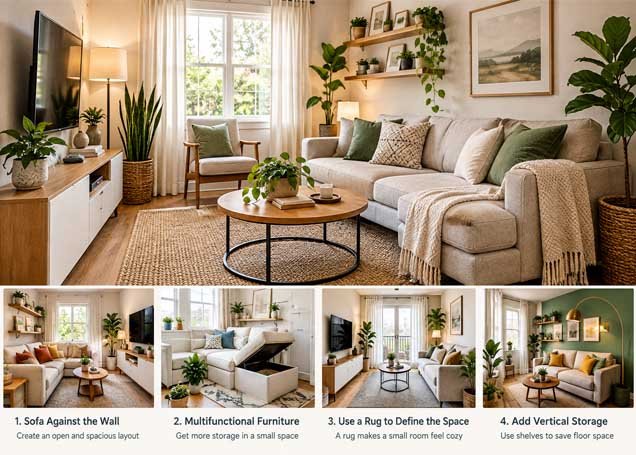
A small living room doesn’t have to feel cramped, cluttered, or uncomfortable. With the right furniture arrangement, smart storage, and thoughtful design choices, even a compact apartment can become a stylish and functional place to relax, entertain guests, and enjoy everyday life.
The secret is not necessarily buying smaller furniture or removing everything you love. It’s understanding how to use the available floor space, improve traffic flow, and make every piece of furniture serve a purpose.
Whether you’re decorating a studio apartment, a narrow city living room, or a cozy one-bedroom rental, these small living room layout ideas will help you make the most of your space without sacrificing comfort or personality.
Why Your Small Living Room Layout Matters
In a large living room, furniture placement may feel flexible. In a small apartment, however, moving a sofa just a few inches can affect how easily you walk through the room, access storage, or open a door.
A well-planned layout can:
- Create comfortable walking paths.
- Make the room feel more open and organized.
- Improve conversation and television viewing.
- Provide storage without overcrowding the space.
- Support multiple activities, including relaxing, working, and entertaining.
Before buying furniture, measure the room and identify its main function. A living room used primarily for watching movies may need a different arrangement from one that doubles as a home office.
1. Float a Compact Sofa to Define the Living Area
One of the most effective small living room layout ideas is positioning a compact sofa slightly away from the wall.
Although pushing every piece of furniture against the perimeter seems logical, a floating sofa can sometimes create a more intentional arrangement.
This approach works especially well in open-plan apartments where the living room shares space with a dining area or kitchen.
Place a narrow console table behind the sofa if there is enough room. It can hold a small lamp, decorative objects, or baskets for everyday essentials.
Best for: Open-plan apartments and combined living-dining spaces.
Design tip: Check the walking clearance behind the sofa before choosing this arrangement.
2. Place the Sofa Against the Longest Wall
For many rectangular living rooms, placing the sofa against the longest uninterrupted wall is a practical solution.
It keeps the central floor area open and creates a clear focal point.
Choose a sofa that fits the wall without extending too close to doors or walkways.
A two-seat or apartment-size sofa may be more suitable than a large sectional.
Pair it with a slim coffee table or nesting tables to preserve floor space.
Best for: Small rectangular rooms and one-bedroom apartments.
3. Create an L-Shaped Seating Arrangement
An L-shaped layout creates a comfortable conversation area without requiring multiple bulky sofas.
You can achieve this with a compact sofa and one accent chair positioned at a right angle.
Alternatively, a small sectional may work if its dimensions fit the room.
Keep the arrangement open toward the entrance or main walkway.
A round coffee table often works particularly well because it has no sharp corners projecting into circulation paths.
Best for: Square living rooms and apartments where guests frequently visit.
4. Choose a Small Sectional for a Corner Layout
A sectional sofa is not automatically unsuitable for a small living room.
In some spaces, a carefully measured sectional can provide more seating with fewer separate furniture pieces.
Position it in a corner so the longer side follows the room’s main wall.
Avoid oversized designs with deep seats and thick arms if they block important walkways.
Look for compact sectionals with relatively narrow arms and a chaise orientation that matches your room.
Best for: Small family apartments and television-focused living rooms.
5. Use Two Accent Chairs Instead of a Large Sofa
Not every living room needs a traditional sofa.
If you live alone or rarely entertain large groups, two comfortable accent chairs can create a flexible seating area.
Arrange them facing each other with a small table between them.
This layout makes conversation easy and keeps the room visually lighter.
Choose chairs with exposed legs to reveal more floor area beneath the furniture.
Best for: Studio apartments, reading rooms, and very small living spaces.
6. Arrange Furniture Around a Window
Natural light can make a compact room feel brighter and more welcoming.
If your living room has a large window, use it as a visual feature.
Position a low-profile sofa or chair arrangement so daylight can enter the room without being blocked by tall furniture.
Avoid placing large shelving units directly in front of windows.
Light-filtering curtains can provide privacy while maintaining a bright atmosphere.
Best for: Apartments with one prominent window or limited natural light.
7. Design a Narrow Living Room with a Linear Layout
Narrow living rooms require special attention because furniture can easily interrupt the main walking path.
A linear arrangement often works best.
Place the sofa along one long wall and use a shallow media console or wall-mounted television opposite it.
Choose slim furniture rather than deep cabinets.
If the room is extremely narrow, skip the traditional coffee table and use a small side table instead.
Best for: Railroad-style apartments and long, narrow rooms.
8. Create a Living Room and Home Office Combination
Many apartment dwellers need their living rooms to serve as workspaces.
Instead of adding a large office desk, choose a compact desk that fits an unused corner or wall.
A wall-mounted folding desk can be especially useful where space is limited.
Keep the desk visually connected to the room by choosing materials and colors that complement the existing furniture.
Use vertical shelving for office supplies, and manage cables to reduce visual clutter.
Best for: Remote workers and studio apartments.
9. Use a Round Coffee Table to Improve Traffic Flow
A rectangular coffee table can work beautifully, but its corners may make movement difficult in a tight seating arrangement.
A round coffee table provides a softer shape and can make it easier to walk around the seating area.
Choose a size that leaves comfortable space between the table and sofa.
For additional functionality, consider a round table with a shelf or hidden storage compartment.
Best for: Small square rooms and compact seating arrangements.
10. Divide a Studio Apartment with Furniture
In a studio apartment, the living area often shares one open space with the bedroom and dining zone.
Furniture placement can create separation without building permanent walls.
Position the sofa with its back toward the sleeping area.
Add an open shelving unit or narrow console behind it if space allows.
An area rug can visually establish the living zone.
Avoid tall, solid dividers that block daylight or make the apartment feel enclosed.
Best for: Studio apartments and open-concept rentals.
11. Make the TV Wall Work Harder
A television can become the focal point of a small living room, but the surrounding furniture should remain proportional.
Wall-mounting a television may free up space previously occupied by a large entertainment center.
A slim media console can provide storage for electronics and accessories.
Keep cables organized and avoid crowding the wall with too many decorative elements.
If you rent your apartment, check your lease and obtain permission before drilling.
Best for: Small entertainment-focused living rooms.
12. Choose Multifunctional Furniture
Multifunctional furniture is particularly valuable in small apartments.
Instead of filling the room with separate pieces, look for items that perform more than one job.
Examples include storage ottomans, nesting tables, sofa beds, and coffee tables with shelves.
A storage ottoman can function as a footrest, occasional table, and place to store blankets.
A sofa bed may be useful for apartments without a separate guest room.
Choose pieces based on how you actually live rather than buying features you will rarely use.
Best for: Studio apartments and multifunctional family spaces.
13. Use Vertical Storage to Keep the Floor Clear
When floor space is limited, walls can provide valuable storage.
Floating shelves, tall bookcases, and wall-mounted cabinets allow you to organize belongings without adding numerous floor-standing pieces.
Use a mix of open and closed storage.
Open shelves can display plants, books, and decorative objects, while closed cabinets hide everyday clutter.
Secure tall or heavy furniture properly to prevent tipping.
Best for: Apartments with limited built-in storage.
14. Make a Small Living Room Feel Bigger with Color and Lighting
Furniture arrangement is important, but lighting and color also influence how spacious a room feels.
Light-colored walls can reflect daylight and create an airy appearance.
However, darker colors can also work beautifully in small rooms when used intentionally.
Consider combining a neutral base with warm wood tones, textured fabrics, and a few accent colors.
Use multiple light sources rather than relying on one overhead fixture.
A floor lamp beside the sofa and a small table lamp can create a more comfortable atmosphere.
A mirror placed where it reflects daylight may help brighten the room.
Best for: Apartments with limited windows or compact living areas.
15. Create a Minimalist Layout with Fewer, Better Pieces
Sometimes the most effective solution is simply reducing the number of furniture pieces.
Start with the essentials: comfortable seating, a useful table, adequate lighting, and necessary storage.
Avoid adding extra chairs, cabinets, or decorative furniture unless they serve a clear purpose.
Leave some open space around the main furniture arrangement.
This doesn’t mean your living room must look empty or impersonal.
A few carefully selected pieces of art, indoor plants, and textured cushions can create a welcoming atmosphere without overwhelming the room.
Best for: Very small apartments and anyone who prefers a clean, uncluttered interior.
Small Living Room Layout Ideas by Room Shape
The shape of your room should influence how you arrange furniture.
| Room Shape | Recommended Layout | Furniture Strategy |
|---|---|---|
| Square | L-shaped seating | Compact sofa, accent chair, round table |
| Long and narrow | Linear arrangement | Sofa along long wall, slim media console |
| Rectangular | Sofa against longest wall | Apartment-size sofa, nesting tables |
| Studio | Furniture-defined zones | Floating sofa, open shelving |
| Open-plan | Floating seating area | Sofa with console, area rug |
| Very small | Minimalist seating | Two chairs or compact loveseat |
These arrangements are starting points. Door positions, windows, heating equipment, and walking paths may require adjustments.
How to Measure Your Small Living Room Before Buying Furniture
A successful layout begins with accurate measurements.
First, measure the room’s length and width. Then record the locations of doors, windows, radiators, outlets, and other fixed features.
Measure your existing furniture, including its full depth and any space required for reclining mechanisms or opening storage compartments.
As a general planning guide, aim for approximately 30–36 inches of clearance along major walking routes where practical.
Around a coffee table, roughly 14–18 inches between the table and sofa is a common starting point.
These are flexible interior-design guidelines, not universal building-code requirements. Accessibility needs and local regulations may require different clearances.
Use painter’s tape to mark furniture dimensions on the floor before making purchases.
This inexpensive step can help prevent buying a sofa or table that is too large.
Best Furniture for Small Apartment Living Rooms
Choosing furniture with appropriate proportions can make a significant difference.
Apartment-Size Sofas
Look for sofas with a shorter overall length and a depth suited to the room.
Slim arms and raised legs can help the furniture appear visually lighter.
Nesting Tables
Nesting tables provide additional surfaces when needed and can be tucked together afterward.
They are useful for entertaining without permanently occupying valuable floor space.
Storage Ottomans
A storage ottoman can hold throws, magazines, or small accessories while doubling as a footrest.
Slim Media Consoles
Choose shallow storage units that fit against the wall without projecting too far into the room.
Wall-Mounted Shelves
Floating shelves can display books and decorative objects while preserving floor area.
Always install them according to the manufacturer’s instructions and the wall’s construction.
Small Living Room Layout Mistakes to Avoid
Even attractive furniture can make a compact room uncomfortable when arranged poorly.
One common mistake is buying furniture before measuring the space. A sofa that looks compact in a showroom may overwhelm a small apartment.
Another mistake is blocking natural light with tall cabinets or oversized furniture.
Too many small decorative pieces can also create visual clutter.
Avoid placing furniture where it prevents doors from opening fully or restricts important walking routes.
Finally, don’t assume that every piece of furniture must touch a wall. In some layouts, moving a sofa slightly inward creates a more balanced and functional space.
Budget-Friendly Small Living Room Makeover Tips
Improving your living room doesn’t always require purchasing new furniture.
Start by rearranging what you already own.
Move unnecessary furniture into another room, if possible, and evaluate whether the space feels more comfortable.
Use affordable storage baskets to organize small belongings.
Replace heavy window coverings with lighter curtains if you want more daylight.
Consider updating cushion covers, adding a washable rug, or changing lamp placement.
Secondhand furniture can also be an affordable option, provided you carefully inspect its condition and dimensions.
Focus your budget on changes that improve daily comfort and functionality rather than purely decorative trends.
Frequently Asked Questions
What is the best layout for a small living room?
The best layout depends on room shape, doors, windows, and how the space is used. A compact sofa against the longest wall or an L-shaped arrangement often works well.
How do I arrange furniture in a very small living room?
Begin with essential seating, maintain clear walking paths, and choose compact multifunctional furniture. Avoid adding pieces that do not serve a practical purpose.
Should a sofa touch the wall in a small living room?
Not necessarily. Placing a sofa against a wall can save space, but floating it slightly inward may improve the layout in an open-plan room.
Can I put a sectional in a small apartment?
Yes, provided the sectional is appropriately sized and does not block doors or walkways. Compact sectionals can sometimes be more efficient than multiple separate seats.
What color makes a small living room look bigger?
Light neutrals can create a bright, open feeling, but good lighting, consistent color choices, and furniture proportions are equally important.
Is a round or rectangular coffee table better for a small living room?
A round table may improve movement in tight seating areas, while a narrow rectangular table can suit a long room. Choose based on available clearance.
How can I create more storage in a small living room?
Use wall shelves, storage ottomans, slim cabinets, and multifunctional furniture. Combine closed storage with a few open display areas.
How do I make a small living room look cozy?
Layer comfortable textiles, use warm lighting, add personal decorative objects, and choose furniture that fits the room without crowding it.
Final Thoughts
The best small living room layout ideas are those that make everyday life easier while reflecting your personal style.
Whether you choose a compact sectional, floating sofa, minimalist seating arrangement, or multifunctional furniture, the goal is to create a comfortable room with good circulation and practical storage.
Start by measuring your space, identifying your priorities, and testing different arrangements before investing in new furniture.
With thoughtful planning, even a small apartment living room can become a beautiful, organized, and welcoming space.
References and Further Reading
For additional room-planning and interior-design guidance, explore:
- IKEA — Living Room Ideas
- Apartment Therapy — Home Design Inspiration
- Architectural Digest — Interior Design
- Houzz — Living Room Design Ideas
These are general design resources rather than direct citations for each layout recommendation.