
Table of Contents
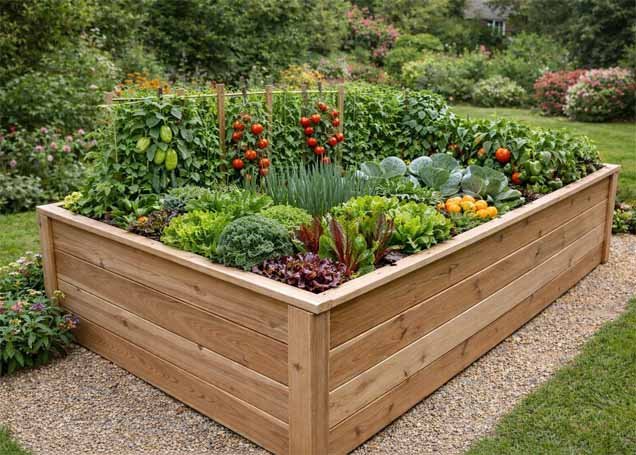
Building a raised garden bed is one of the simplest ways to start growing vegetables, herbs, and flowers in your backyard. Whether you have a spacious lawn or a small outdoor area, raised beds offer an organized and practical way to garden.
If you’re wondering how to build a raised garden, you don’t need an elaborate landscape design or expensive equipment. With suitable materials, healthy soil, and a little planning, you can create a productive growing space that lasts for years.
Raised garden beds can improve access to plants, make soil management easier, and provide better control over growing conditions. They are especially useful for beginners who want to start gardening without preparing a large section of native soil.
This guide explains how to make a raised garden bed, choose the right materials, calculate soil requirements, and grow your first vegetables successfully.
What Is a Raised Garden Bed?
A raised garden bed is a growing area where soil sits above the surrounding ground level. Many raised beds have wooden, metal, stone, or composite borders that hold the soil in place.
Unlike traditional in-ground gardens, raised beds allow gardeners to create their own soil mixture and organize plants within a defined space.
There are two common types:
- Framed raised beds: Soil is contained within a structure made from wood, metal, or another durable material.
- Mounded raised beds: Soil is shaped into an elevated planting area without permanent borders.
For beginners, a simple rectangular wooden bed is often an accessible starting point.
Why Build a Raised Garden Bed?
Raised garden beds provide several practical advantages.
Better Control Over Soil Quality
Gardeners can fill raised beds with a suitable blend of mineral soil and organic matter rather than relying entirely on existing ground conditions.
This is especially helpful where native soil is compacted or has poor structure.
Improved Drainage
Properly constructed raised beds often drain more effectively than compacted in-ground gardens. However, drainage still depends on the soil mixture and the surface underneath the bed.
Easier Garden Maintenance
A well-designed raised bed makes planting, watering, mulching, and harvesting more convenient.
Narrow beds also reduce the need to step onto growing soil, helping prevent compaction.
Organized Growing Space
Raised beds create defined planting areas that work well in small backyards, suburban gardens, and community gardening spaces.
Extended Growing Opportunities
Raised soil can warm earlier in spring, potentially allowing earlier planting of suitable cool-season crops. Actual planting dates still depend on local climate and soil temperature.
Step 1: Choose the Best Location for Your Raised Garden
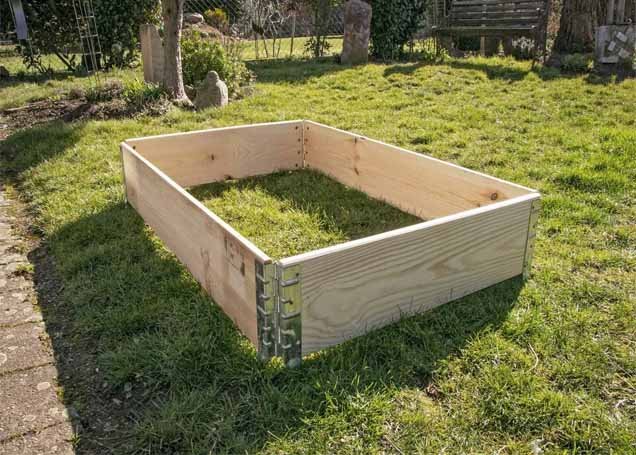
Before purchasing materials, decide where your raised bed will go.
Most fruiting vegetables, including tomatoes and peppers, perform best with at least six to eight hours of direct sunlight daily.
Leafy vegetables such as lettuce and spinach may tolerate somewhat less direct sunlight, especially in warmer regions.
When selecting a location, consider:
- Sun exposure throughout the day.
- Access to a nearby water source.
- Ground slope and drainage.
- Distance from large tree roots.
- Enough walking space around the bed.
Avoid locations where rainwater regularly collects.
Beginner tip: Observe your chosen area during the morning, afternoon, and evening before committing to the location.
Step 2: Decide on the Right Raised Garden Bed Size
One of the most important decisions when learning how to build raised garden beds is choosing dimensions that allow easy access to your plants.
A rectangular 4-by-8-foot bed is a popular choice for backyard vegetable gardening.
| Bed Size | Best Use |
|---|---|
| 2 × 4 feet | Small spaces and herbs |
| 3 × 6 feet | Compact vegetable gardens |
| 4 × 4 feet | Beginners and square-foot layouts |
| 4 × 8 feet | Mixed vegetable gardening |
| 4 × 12 feet | Larger backyard gardens |
For beds accessible from both sides, a width of approximately four feet allows many adults to reach the center without stepping on the soil.
If the bed can only be accessed from one side, consider keeping it around two feet wide.
How Deep Should a Raised Garden Bed Be?
A bed approximately 12 inches tall is a practical starting point for many gardeners when placed over healthy, accessible native soil.
Deeper beds may be helpful where the underlying ground is compacted, unsuitable for growing, or inaccessible to plant roots.
Remember that different crops have different rooting requirements.
Step 3: Gather Your Raised Garden Bed Materials
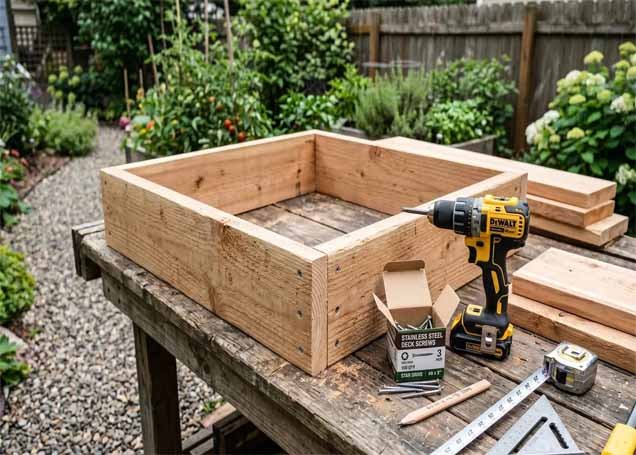
You don’t need complicated equipment to construct a basic raised bed.
For a simple 4 × 8-foot wooden frame approximately 11 inches high, one possible material plan is:
| Material | Quantity |
|---|---|
| Cedar boards, approximately 2 × 12 × 8 feet | 3 |
| Exterior-rated screws suitable for the wood | As needed |
| Corner supports or brackets | 4 sets, if required by the design |
| Measuring tape | 1 |
| Carpenter’s level | 1 |
| Garden soil and compost | Based on bed volume |
| Mulch | As needed |
Two boards form the long sides. The third board can be cut into two shorter end pieces, with the exact cuts adjusted for board thickness and desired outside dimensions.
The nominal 2 × 12 board is typically smaller than its stated dimensions, so measure the actual lumber before planning cuts.
For beginners, purchasing precut boards or a ready-to-assemble raised bed kit can simplify construction.
What Is the Best Wood for Raised Garden Beds?
Cedar is a popular option because it offers natural resistance to decay.
Untreated pine can also work, although it may deteriorate sooner when exposed to damp soil.
Modern pressure-treated lumber is another option, but gardeners should verify the treatment’s suitability for vegetable garden use and follow relevant extension guidance.
Avoid salvaged wood of unknown origin, railroad ties, or materials that may contain hazardous preservatives.
Step 4: Prepare the Ground
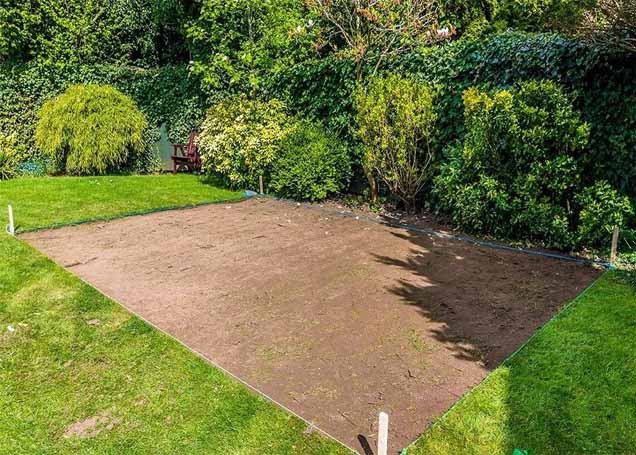
Once you’ve selected the location and gathered materials, prepare the surface.
Start by removing large rocks, debris, and persistent weeds.
Check whether the ground is reasonably level. A level base helps the frame sit securely and keeps soil depth more consistent.
For a bottomless raised bed placed over ordinary garden soil, you generally do not need to excavate a deep foundation.
If you’re building over grass, you can remove the sod or use overlapping plain cardboard as a temporary weed-suppressing layer. The cardboard will gradually decompose.
Avoid placing impermeable plastic underneath an open-bottom vegetable bed because it can restrict drainage and root growth.
Where burrowing animals are a problem, properly installed hardware cloth may provide protection.
Step 5: Assemble the Raised Garden Bed Frame
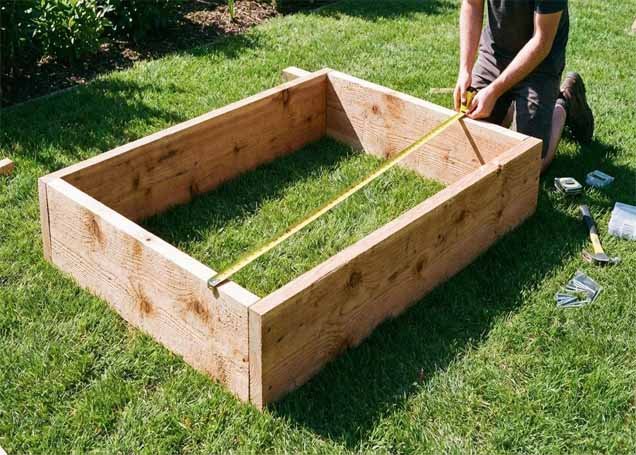
Now it’s time to construct the frame.
For a simple rectangular design, arrange the wooden boards on a flat surface and check that the opposite sides match.
Join the boards using suitable exterior-rated fasteners and corner supports according to your chosen design.
Check the corners for squareness and confirm that the structure sits level.
If the bed is especially long or tall, additional reinforcement may be needed to resist outward pressure from the soil.
For anyone asking how do you build a raised garden that lasts, careful material selection and a stable frame are more important than decorative features.
If you are unfamiliar with power tools, ask an experienced adult to help with cutting and assembly, or use precut materials.
Step 6: Calculate How Much Soil You Need
Before filling the bed, calculate its approximate soil volume.
Use this formula:
Length × Width × Soil Depth = Cubic Feet of Soil
For example, a 4 × 8-foot raised bed filled to a depth of 12 inches requires:
4 × 8 × 1 = 32 cubic feet
32 ÷ 27 ≈ 1.19 cubic yards
Because one cubic yard equals 27 cubic feet:
Raised Garden Soil Calculator
Calculate how much soil you need for your raised garden bed.
Your Soil Requirements
Please enter positive numbers in all fields.
Estimates assume a rectangular bed. Measure internal dimensions for better accuracy. Allow for soil settling and the space below the rim when planning your purchase.
Estimate assumes a rectangular bed filled to the selected depth. Actual soil requirements vary with settling, board thickness, and the space left below the rim.
Step 7: Fill Your Raised Garden With the Right Soil
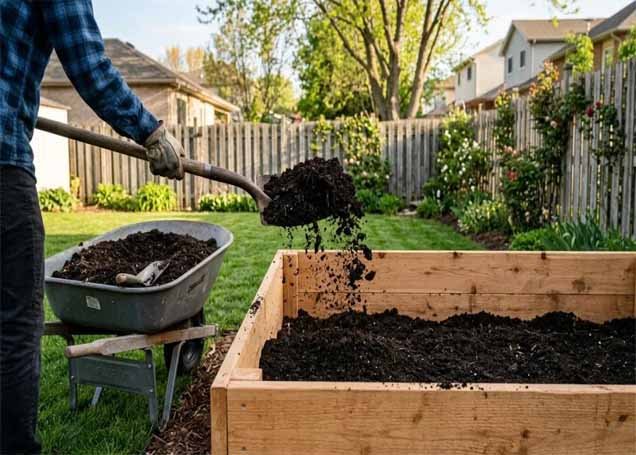
Healthy soil is one of the most important parts of a successful raised garden.
Avoid filling a vegetable bed entirely with dense clay soil or pure compost.
Instead, choose a well-draining raised-bed soil blend that contains mineral soil and mature organic matter.
A practical approach is to use a quality bulk raised-bed mix from a reputable local supplier, then incorporate compost as needed based on the mix’s existing composition.
What Makes Good Raised Bed Soil?
Good garden soil should:
- Hold enough moisture for plant roots.
- Drain excess water effectively.
- Contain suitable nutrients.
- Support healthy root development.
- Have a loose, workable structure.
A soil test can help determine whether additional nutrients or pH adjustments are necessary.
After filling, gently water the soil and allow it to settle. Add more mix if necessary, leaving a little space below the frame’s upper edge for watering and mulch.
Step 8: Choose the Best Vegetables for Your Raised Garden
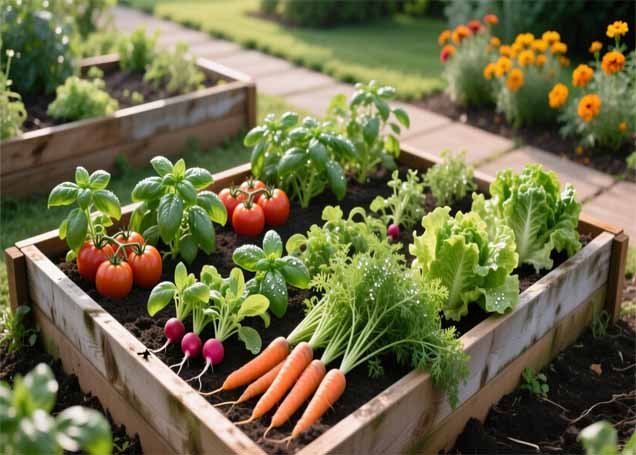
After construction, the next step is deciding what to grow.
For beginners, select vegetables that suit your growing season, available sunlight, and bed size.
| Vegetable | Growing Season | Beginner Notes |
|---|---|---|
| Lettuce | Cool season | Good for repeat harvests |
| Radishes | Cool season | Many varieties mature quickly |
| Spinach | Cool season | Prefers cooler temperatures |
| Bush beans | Warm season | Compact and productive |
| Carrots | Cool season | Need loose, sufficiently deep soil |
| Tomatoes | Warm season | Need support and adequate spacing |
| Peppers | Warm season | Prefer warm conditions |
| Basil | Warm season | Useful culinary herb |
For a first raised bed, lettuce, radishes, bush beans, and herbs can be manageable choices.
Tomatoes and peppers are also rewarding, but they require more attention to temperature, spacing, and watering.
Check your local frost dates before planting warm-season crops.
For additional beginner advice, see our How to Start Vegetable Gardening guide.
Step 9: Plan Your Raised Garden Layout
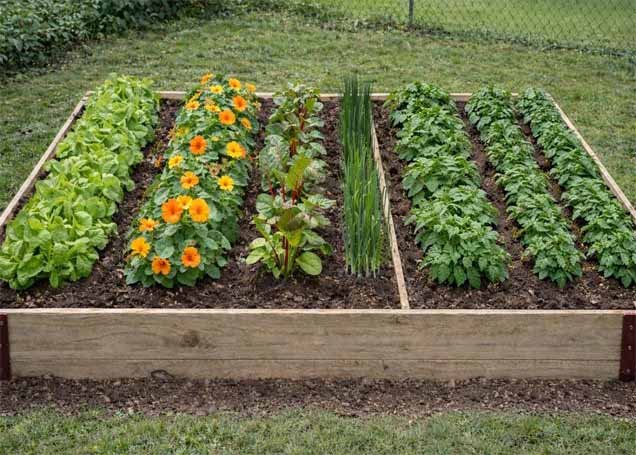
Good spacing helps plants receive enough sunlight, air circulation, and nutrients.
Avoid crowding seedlings simply because the bed looks empty when first planted.
A basic 4 × 8-foot layout might include leafy greens in one section, compact herbs in another, and one or two larger vegetables with sufficient room to mature.
Place tall plants and climbing supports where they will not shade smaller crops unnecessarily.
In much of the Northern Hemisphere, positioning taller plants toward the northern side of the bed can help reduce shading of shorter plants.
However, the ideal layout depends on the direction of sunlight and nearby structures.
Step 10: Water and Mulch Your Raised Garden
Raised beds can dry out faster than some in-ground gardens, particularly during hot weather.
Check moisture below the soil surface instead of watering automatically every day.
If the soil feels dry around one to two inches below the surface, many established vegetables may benefit from watering, depending on the crop and conditions.
Water near the base of plants to help keep foliage dry.
A layer of clean straw, shredded leaves, or another appropriate organic mulch can reduce evaporation and help moderate soil temperatures.
Keep mulch away from direct contact with plant stems.
Drip irrigation or soaker hoses can also make watering more consistent.
Common Raised Garden Bed Mistakes to Avoid
Even a well-built garden bed can struggle when basic growing conditions are overlooked.
1. Choosing a Shady Location
Most vegetables need sufficient sunlight for healthy growth and productivity.
2. Making the Bed Too Wide
If you cannot reach the center comfortably, routine maintenance becomes difficult.
3. Using Poor-Quality Soil
Compacted soil, unsuitable fill materials, or excessive compost can interfere with root development.
4. Overcrowding Plants
Seedlings need room to reach their mature size. Follow appropriate spacing recommendations.
5. Ignoring Drainage
An impermeable base or poorly draining growing medium can leave roots waterlogged.
6. Forgetting Seasonal Maintenance
Raised beds still require weeding, soil care, watering, and occasional repairs.
For more general gardening guidance, explore our Gardening Tips for Beginners article.
How Much Does It Cost to Build a Raised Garden Bed?
The cost depends on the frame material, bed dimensions, soil volume, and local prices.
A small raised bed built from basic lumber may be less expensive than a tall cedar or metal design.
However, soil can represent a substantial portion of the total project cost, particularly for deep beds.
Before starting, compare local prices for lumber, raised-bed kits, bulk soil, bagged soil, and delivery.
For larger projects, bulk soil may offer better value than buying many small bags.
To reduce costs, consider starting with a smaller bed and expanding your garden later.
How to Maintain a Raised Garden Bed Year After Year
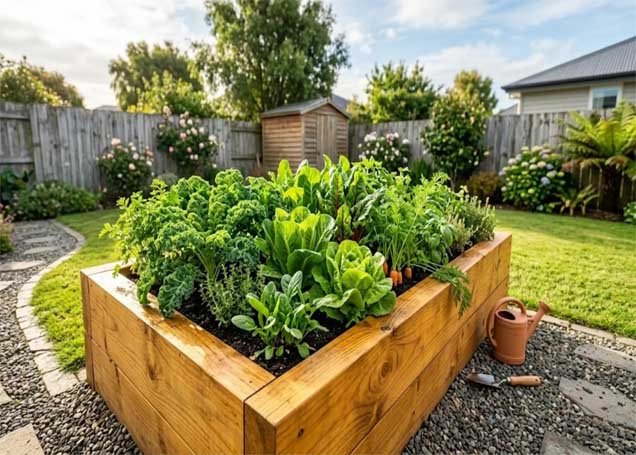
A raised garden bed requires ongoing care, but routine maintenance can be straightforward.
Remove weeds before they establish deep roots. Replenish organic matter according to soil needs, and monitor plants for pests and diseases.
At the end of the growing season, remove diseased plant debris and consider planting a suitable cover crop or protecting exposed soil with mulch.
Inspect wooden frames periodically for loose fasteners or deteriorating boards.
With appropriate care, your raised garden can remain productive over multiple growing seasons.
Frequently Asked Questions
How do you build a raised garden for beginners?
Start with a sunny, reasonably level location. Choose a manageable bed size, assemble a stable frame using suitable materials, fill it with quality garden soil, and plant crops suited to your local climate.
How to build raised garden beds without wood?
You can use raised-bed kits made from suitable metal, stone, masonry, or other garden-safe materials. Ensure the structure is stable and provides adequate drainage.
How to make a raised garden on a budget?
Start with a smaller bed, compare local material costs, and use suitable economical lumber or a simple soil mound. Avoid unknown treated or contaminated materials.
Can you build a raised garden directly on grass?
Yes. Many bottomless raised beds can be installed over grass. Removing sod or using overlapping plain cardboard can help suppress the existing vegetation while allowing eventual root access to the soil below.
What should you put at the bottom of a raised garden bed?
For most bottomless beds over healthy native soil, no special bottom layer is necessary. Remove problematic weeds and loosen compacted soil if needed. Avoid adding rocks solely for drainage; they do not reliably improve drainage.
How deep should a raised garden bed be for vegetables?
Around 12 inches of raised soil is useful for many crops when roots can also extend into suitable native soil. Where the bed sits over an impermeable surface, a deeper growing medium and an appropriate drainage design may be needed.
How long does a raised garden bed last?
The lifespan depends on the materials, climate, construction, and maintenance. Naturally decay-resistant lumber and durable metal beds may last for many years, while less-resistant wood may need replacement sooner.
Final Thoughts
Learning how to build a raised garden is a rewarding way to begin growing your own vegetables and herbs.
You don’t need a large backyard or a complicated design. A simple, well-placed raised bed with healthy soil, suitable plants, and regular care can provide a productive gardening space.
Start small, observe how your plants respond, and make improvements as you gain experience.
Whether you’re exploring how to build raised garden beds for vegetables or simply want to make your backyard more functional, the most important step is creating growing conditions that work for your location and the crops you enjoy.
References and Further Reading
These university extension resources offer additional guidance on raised-bed construction, soil preparation, and vegetable gardening.
- University of Minnesota Extension — Home gardening and raised-bed resources.
- University of Maryland Extension — Vegetable gardening and soil management.
- Oregon State University Extension — Raised-bed gardening and crop guidance.
- Penn State Extension — Vegetable gardening and soil health.
Read more Gardening Tips for Beginners