
Table of Contents
A beautiful living room should feel comfortable, welcoming, and easy to use. But when books, blankets, electronics, toys, and everyday essentials start piling up, even a spacious room can feel crowded.
The good news is that you do not always need more square footage to create a more organized home. With the right living room storage ideas, you can make better use of existing furniture, empty walls, unused corners, and hidden spaces.
Whether you live in a small apartment, a cozy townhouse, or a larger family home, these 17 practical solutions can help you reduce clutter without sacrificing style.
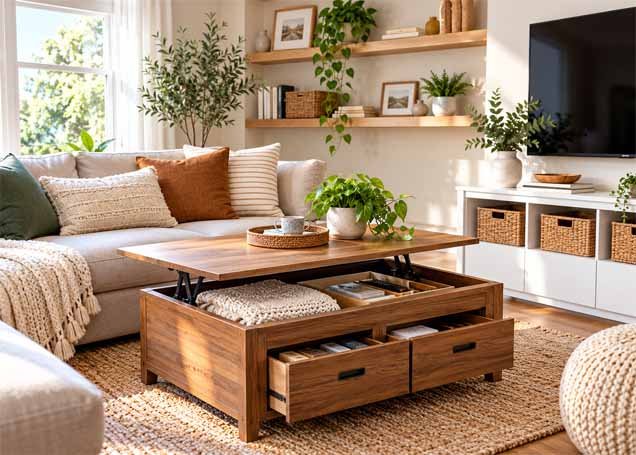
1. Choose a Coffee Table With Hidden Storage
A coffee table is often the centerpiece of a living room, making it an excellent opportunity to add functional storage.
Instead of choosing a traditional table with no compartments, consider a lift-top coffee table, a design with built-in drawers, or a model with open shelves.
These options can hold remote controls, magazines, charging cables, board games, and other frequently used items.
Best for: Small living rooms where every piece of furniture needs to serve more than one purpose.
2. Use Floating Shelves to Maximize Wall Space
Floating shelves are among the simplest storage solutions for small spaces because they use vertical wall space without taking up valuable floor area.
Install them above a sofa, beside a television, or along an otherwise empty wall.
Use shelves to display books, plants, framed photographs, and decorative storage boxes.
For a clean appearance, leave some space between objects rather than filling every shelf completely.
Choose suitable wall anchors and follow the manufacturer’s weight limits.
3. Invest in a Storage Ottoman
A storage ottoman is a practical alternative to a conventional coffee table or footrest.
Many designs include a lift-up lid that reveals a compartment for blankets, pillows, magazines, or children’s toys.
Some larger ottomans can also provide occasional seating when designed for that purpose.
Choose upholstery that complements your sofa and other furniture.
Design tip: A round ottoman can soften a living room filled with rectangular furniture.
4. Add Built-In Shelving Around the Television
The television wall often occupies a large portion of the living room but offers relatively little storage.
Built-in shelves and cabinets can transform this area into a functional entertainment center.
Combine closed lower cabinets with open upper shelves.
Use the cabinets for cables, electronics, games, and accessories, while reserving the open shelves for books and decorations.
Built-in cabinetry can be especially useful in narrow living rooms where freestanding furniture might obstruct walkways.
5. Choose a Sofa With Built-In Storage
Some modern sofas and sectional couches include storage compartments beneath their seats or chaise sections.
These hidden areas are useful for storing spare cushions, seasonal throws, and other bulky items.
A sofa with storage can be a practical choice for studio apartments or homes without a separate linen closet.
Before purchasing, check how easily the compartments open and whether the furniture fits comfortably through doorways.
6. Organize the Living Room With Decorative Baskets
Decorative baskets provide a simple way to organize items without making the room look overly functional.
Woven baskets work particularly well in farmhouse, coastal, Scandinavian, and natural interior styles.
Use them for blankets, magazines, toys, or craft supplies.
Place larger baskets beside the sofa and smaller ones on shelves.
Matching baskets can create a coordinated appearance, while different textures add visual interest.
7. Install Floor-to-Ceiling Bookshelves
Tall bookshelves help you use vertical space efficiently.
Instead of spreading several short storage units around the room, consider one taller unit that provides multiple shelves in a smaller footprint.
Arrange frequently used items on lower shelves and less frequently needed objects higher up.
Keep heavy objects near the bottom and secure tall furniture to the wall to reduce tipping risks.
8. Use a Console Table Behind the Sofa
A narrow console table behind a sofa can provide extra storage without changing the overall furniture arrangement.
Choose a design with drawers, lower shelves, or a combination of both.
This is a convenient place for table lamps, books, baskets, and small decorative objects.
A console table can also help define separate living and dining areas in an open-plan apartment.
9. Make Use of Empty Corners
Corners are frequently overlooked when planning living room storage.
A corner bookcase, triangular shelf, or compact cabinet can turn an unused area into a functional storage zone.
Corner storage is especially helpful in apartments where placing another full-size cabinet against the wall would make the room feel crowded.
Keep the arrangement simple to maintain an open appearance.
10. Add a Window Seat With Storage
If your living room has a suitable window area, a window seat with drawers or lift-up storage can provide both seating and organization.
The space beneath the seat can hold blankets, books, and seasonal accessories.
Add cushions and pillows to create a comfortable reading nook.
For a built-in design, ensure the seat is properly supported and does not obstruct heating vents or necessary window access.
11. Choose a TV Stand With Cabinets and Drawers
A minimalist television stand may look attractive, but a model with storage can be more practical for everyday living.
Look for cabinets that accommodate media devices, remote controls, game consoles, and accessories.
Closed cabinets help reduce visual clutter, while open compartments can provide ventilation for compatible electronics.
Measure your television, wall, and available floor space before selecting a unit.
12. Use Nesting Tables With Storage
Nesting tables are useful in smaller living rooms because they provide extra surfaces when needed and can be grouped together afterward.
Some models also feature shelves or compartments for additional storage.
These tables work well beside sofas and accent chairs.
Choose lightweight designs that can be moved easily without damaging flooring.
13. Add Wall-Mounted Cabinets
Wall-mounted cabinets are a good option when floor space is limited.
They can hold books, electronics, documents, and everyday essentials while keeping the floor beneath them clear.
Choose cabinets that match your wall color for a subtle appearance, or use contrasting wood finishes to create a focal point.
Professional installation may be appropriate for heavy cabinetry or uncertain wall construction.
14. Create a Dedicated Toy Storage Area
Family living rooms often need to accommodate children’s toys alongside adult furniture and entertainment equipment.
Instead of allowing toys to spread throughout the room, designate one specific storage area.
Low cabinets, accessible bins, and labeled baskets can make cleanup easier.
Keep frequently used toys within easy reach and avoid placing heavy storage items above children’s head height.
A simple storage system is often easier to maintain than a complicated arrangement.
15. Use Multifunctional Furniture
One of the most effective living room storage ideas is to select furniture that performs more than one function.
Examples include storage benches, lift-top coffee tables, side tables with drawers, and shelving units that also act as room dividers.
Multifunctional furniture can reduce the total number of pieces required in a room.
This helps preserve open floor space while providing storage for daily essentials.
16. Organize Small Items With Drawer Dividers
Even a living room with plenty of cabinets can become disorganized if everything is placed together.
Drawer dividers help separate remote controls, batteries, cables, stationery, and other small accessories.
Choose adjustable dividers or small containers that fit inside existing drawers.
Group similar items together so they are easier to find.
17. Create a Hidden Storage Zone
Not every storage solution needs to be visible.
Closed sideboards, cabinet drawers, and furniture with concealed compartments can keep everyday clutter out of sight.
A hidden storage zone is particularly useful for items that are necessary but not decorative.
Consider storing chargers, paperwork, games, and extra accessories in clearly organized compartments.
The goal is not simply to hide clutter but to give each item a consistent place.
Best Living Room Storage Solutions: Comparison Table
Choosing the right storage depends on your room size, budget, and the items you need to organize.
| Storage Solution | Best For | Main Benefit | Space Saving |
|---|---|---|---|
| Storage Coffee Table | Small apartments | Hidden everyday storage | Excellent |
| Floating Shelves | Books and decorations | Uses wall space | Excellent |
| Storage Ottoman | Blankets and pillows | Seating and storage | Excellent |
| Built-In Cabinets | Entertainment areas | Large storage capacity | Good |
| Storage Sofa | Compact living rooms | Hidden compartments | Excellent |
| Decorative Baskets | Toys and blankets | Flexible organization | Good |
| Tall Bookshelves | Book collections | Vertical storage | Excellent |
| Console Table | Behind-sofa spaces | Narrow storage | Good |
| Corner Shelves | Unused corners | Uses awkward spaces | Excellent |
| Storage Window Seat | Window alcoves | Seating and storage | Good |
How to Choose Storage for a Small Living Room
Before buying new furniture, evaluate your available space and existing storage needs.
Measure Your Living Room
Measure the room and identify where furniture can fit without blocking doors, windows, or walkways.
Pay particular attention to the depth of cabinets and storage benches.
Identify Your Main Clutter Problems
Make a list of items that regularly create clutter.
For example, if blankets are the biggest problem, a storage ottoman may be more useful than another bookshelf.
If books and decorations dominate the room, vertical shelving may be a better solution.
Combine Open and Closed Storage
Open shelves are ideal for attractive objects and frequently used books.
Closed cabinets are better for electronics, paperwork, and miscellaneous items.
Combining both types can create a balanced appearance.
Match Storage to Your Interior Style
Choose materials, finishes, and colors that complement the rest of the room.
Light wood, white cabinets, and neutral baskets can create a calm atmosphere.
Darker wood or metal furniture can work well in modern and industrial interiors.
Budget-Friendly Living Room Storage Ideas
You do not need to replace all your furniture to improve organization.
Start by rearranging existing shelves, using spare baskets, adding drawer organizers, and removing unnecessary items.
You can also repurpose a small bookcase or side table from another room.
Secondhand furniture can be a practical option when it is structurally sound and appropriate for the space.
Focus on solving your biggest storage problem first rather than purchasing several organizers at once.
Common Living Room Storage Mistakes to Avoid
A few common mistakes can make a living room feel smaller or more cluttered.
- Buying oversized furniture: Large cabinets may reduce useful floor space.
- Overloading open shelves: Too many decorative objects create visual clutter.
- Ignoring vertical space: Empty walls may offer valuable storage opportunities.
- Choosing appearance over function: Attractive furniture should still meet everyday needs.
- Blocking walkways: Storage should not interfere with comfortable movement.
- Using too many different containers: A consistent storage system is easier to maintain.
Frequently Asked Questions
What is the best storage solution for a small living room?
A storage coffee table, floating shelves, or a storage ottoman can be effective because each provides useful storage without requiring a large additional furniture footprint.
How can I add storage to my living room without buying furniture?
Use existing shelves more efficiently, reorganize drawers, repurpose baskets, and make better use of empty cabinet space. Removing unnecessary items can also free up valuable storage.
How do I hide clutter in a living room?
Use closed cabinets, storage ottomans, drawer organizers, and decorative baskets. Assign a specific location to frequently used items so they are easy to put away.
Are floating shelves good for small living rooms?
Yes. Floating shelves use vertical wall space and can hold books, plants, and small decorations. They should be installed securely and used within their weight limits.
How can I make my living room look bigger?
Choose appropriately sized furniture, maintain clear walkways, reduce visual clutter, and use vertical storage. A consistent color palette and thoughtful furniture arrangement can also create a more open feeling.
Final Thoughts
The best living room storage ideas combine functionality, comfort, and attractive design.
You do not need an enormous living room to stay organized. A storage coffee table, floating shelves, decorative baskets, or a well-designed entertainment center can make a meaningful difference.
Start with the items that cause the most clutter, choose storage that fits your space, and create a simple organization system you can maintain.
With a few thoughtful changes, your living room can become more organized, comfortable, and welcoming.
References and Further Reading
- IKEA — Very Small Living Room Ideas to Maximize Your Space. Practical advice on multifunctional furniture, flexible storage, and making better use of limited living space.
https://www.ikea.com/gb/en/rooms/living-room/how-to/very-small-living-room-ideas-to-maximise-your-space-pub655da950/ - IKEA — Small Living Room Storage Ideas for a Neat Space. Inspiration for combining open shelving, closed cabinets, and compact furniture.
https://www.ikea.com/ca/en/rooms/living-room/gallery/clutter-free-calm-ready-for-a-gathering-pub54f60440/ - Better Homes & Gardens — Clever Hidden Storage Ideas to Maximize Space in Every Room. Ideas for using storage ottomans, baskets, and concealed compartments to reduce clutter.
https://www.bhg.com/clever-hidden-storage-ideas-11902786 - U.S. Consumer Product Safety Commission (CPSC) — Anchor It! Official furniture safety guidance, including securing bookcases, cabinets, and televisions to prevent tip-over hazards.
https://www.cpsc.gov/Safety-Education/Safety-Education-Centers/AnchorItgov
Read more Bedroom Storage
Know more Small Living Room Layout Ideas