
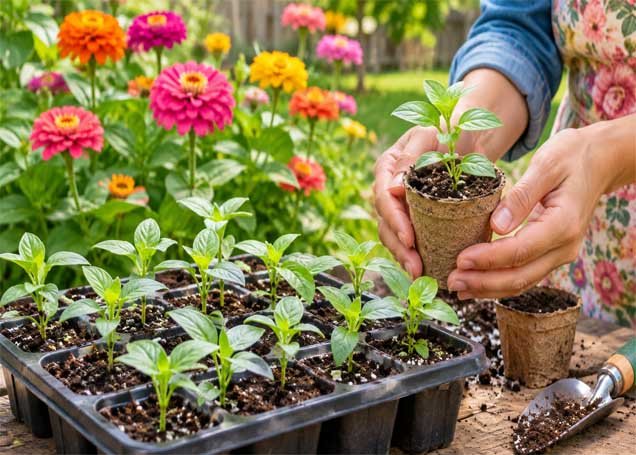
Growing zinnia seedlings is one of the easiest ways to bring bright, cheerful flowers into your summer garden. With their colorful blooms, relatively fast growth, and simple care requirements, zinnias are a favorite among beginners and experienced gardeners alike.
Whether you want to fill a backyard flower bed, grow flowers in containers, or create a beautiful cutting garden, starting zinnias from seed is an affordable, rewarding project.
The key to success is providing warmth, adequate light, well-drained soil, and careful watering during the early stages.
In this guide, you’ll learn how to start zinnia seeds indoors or outdoors, recognize healthy seedlings, prevent common problems, and transplant young plants into your garden at the right time.
What Are Zinnia Seedlings?
Zinnia seedlings are young zinnia plants that have recently germinated from seeds. They begin with a pair of seed leaves, called cotyledons, followed by true leaves that gradually develop the shape and characteristics of mature zinnia foliage.
Zinnias belong to the genus Zinnia, which includes several ornamental species. One of the most popular garden varieties is Zinnia elegans, valued for its colorful flowers and suitability for summer gardens.
Most commonly grown zinnias are warm-season annuals. They grow, flower, and produce seeds during a single growing season.
Healthy seedlings typically have upright stems, green leaves, and steady growth. Their exact appearance depends on the variety and growing conditions.
Zinnia Seedlings: Quick Growing Facts
| Growing Requirement | Recommendation |
|---|---|
| Botanical name | Zinnia spp. |
| Plant type | Warm-season annual |
| Germination temperature | Approximately 70–75°F |
| Germination time | Often 4–8 days under ideal conditions; sometimes longer |
| Seed planting depth | Approximately ¼ inch |
| Sunlight after transplanting | Full sun, ideally 6–8+ hours |
| Soil | Well-drained |
| Watering | Even moisture without waterlogging |
| Outdoor planting | After frost danger has passed and conditions are warm |
| Flowering | Often around 8–12 weeks from sowing, depending on variety |
The University of Minnesota Extension recommends warm germination conditions and careful moisture management for zinnia propagation
When Should You Start Zinnia Seedlings?
Timing is especially important because zinnias are sensitive to frost and prolonged cold conditions.
For an early start, you can sow zinnia seeds indoors approximately four to six weeks before your intended outdoor planting date.
However, starting too early may produce oversized seedlings that become difficult to maintain indoors.
For outdoor sowing, wait until the danger of frost has passed and the soil has warmed.
Best Planting Time in Different US Regions
| Region | General Timing |
|---|---|
| Southern United States | Often spring, once frost risk has passed |
| Midwestern United States | Usually mid-to-late spring |
| Northeastern United States | Often late spring |
| Pacific Northwest | Late spring or early summer in cooler areas |
| Warm, frost-free areas | Timing depends on local heat and growing conditions |
These are general guidelines, not fixed planting dates. The best time depends on your local last-frost date, elevation, and soil temperature.
For example, gardeners in Minnesota may need to wait longer than gardeners in Georgia before planting outdoors.
Beginner tip: Check your local forecast and regional Extension guidance instead of relying only on a calendar date.
How to Grow Zinnia Seedlings Indoors: Step by Step
Starting zinnia seeds indoors gives you greater control over temperature, moisture, and early growth.
Step 1: Choose Good-Quality Zinnia Seeds
Begin with seeds from a reputable supplier.
Choose a variety suited to your gardening goals. Compact zinnias work well in containers, while taller varieties are popular for cutting gardens.
Check the seed packet for mature plant height, spacing, and growing instructions.
Fresh, properly stored seeds generally offer better germination potential than old seeds kept in hot or humid conditions.
Step 2: Prepare Your Seed-Starting Containers
Use seed-starting trays, individual cell packs, or small pots with drainage holes.
Fill them with a clean, lightweight seed-starting mix.
Avoid using heavy garden soil indoors. It may compact easily, drain poorly, or introduce organisms that contribute to seedling disease.
Moisten the growing mix before planting so it feels evenly damp but not saturated.
Step 3: Plant the Zinnia Seeds
Make a small hole approximately ¼ inch deep in each cell.
Place one or two seeds in each container and cover them lightly with the seed-starting mix.
Gently press the surface to ensure good contact between the seed and the growing medium.
Water carefully so the seeds remain in place.
Label the tray with the zinnia variety and planting date.
Step 4: Provide Warmth for Germination
Place the seed tray somewhere warm.
A growing-medium temperature around 70–75°F is suitable for many zinnia varieties.
A humidity cover can help retain moisture during germination, but it should be removed when seedlings emerge.
Zinnia seeds may germinate within several days under favorable conditions.
If germination takes longer, check the temperature, seed age, and moisture level before assuming the seeds have failed.
Step 5: Give Seedlings Plenty of Light
Once seedlings emerge, provide bright light immediately.
A sunny window may work, but indoor seedlings often grow more consistently under a suitable grow light.
Insufficient light can cause seedlings to stretch toward the light source, producing thin, weak stems.
Position and adjust grow lights according to the manufacturer’s instructions to avoid overheating or inadequate coverage.
Step 6: Water Carefully
Young zinnia seedlings need moisture, but overly wet growing media can cause serious problems.
Check the mix regularly and water when the surface begins to dry.
Use a gentle stream of water or bottom watering to avoid disturbing delicate roots.
Never leave seed trays sitting continuously in standing water.
Good drainage and airflow are especially important for preventing fungal problems.
Step 7: Thin or Repot Seedlings
If multiple seeds germinate in one cell, keep the strongest seedling.
You can snip weaker seedlings at the soil surface to avoid disturbing the remaining roots.
If seedlings become crowded or outgrow their containers, transfer them carefully into larger pots.
Handle plants by their leaves when possible rather than squeezing their delicate stems.
Zinnias can be sensitive to root disturbance, so avoid unnecessary transplanting.
How to Recognize Healthy Zinnia Seedlings
Healthy seedlings generally show several characteristics.
Their leaves should be green and firm, although leaf color may vary slightly between varieties.
Stems should be strong enough to support the young plant without excessive stretching.
New true leaves should develop as the plant matures.
Roots should have access to moisture and oxygen without remaining constantly waterlogged.
Growth may slow temporarily after transplanting, but plants should resume development once they adjust.
What Do Zinnia Seedlings Look Like?
Newly emerged zinnias usually have two opposite seed leaves.
As the plant grows, pairs of true leaves appear. These leaves tend to be more pointed and textured than the original seed leaves.
Seedlings gradually develop a sturdier central stem and additional foliage before producing flower buds.
Learning to identify the early leaf shapes can help distinguish zinnias from nearby weeds when seeds are planted directly outdoors.
How to Prevent Leggy Zinnia Seedlings
Leggy seedlings have unusually long, thin stems and may lean or fall over.
The most common cause is inadequate light.
Other contributing factors include overcrowding and excessively warm conditions combined with poor lighting.
To encourage stronger growth, provide sufficient light, avoid overcrowding, and maintain appropriate temperatures.
If seedlings are severely stretched, starting a new batch may be more successful than trying to rescue weak plants.
When and How to Transplant Zinnia Seedlings Outdoors
Transplant zinnias only after frost danger has passed and outdoor conditions are consistently suitable for warm-season plants.
Seedlings should have several true leaves and a developed root system before transplanting.
Step 1: Harden Off Your Seedlings
Hardening off is the process of gradually introducing indoor-grown plants to outdoor conditions.
Begin by placing seedlings in a sheltered, shaded location for a short period.
Over approximately seven to ten days, gradually increase their exposure to outdoor light and wind.
Bring them indoors if temperatures become too cold or severe weather is expected.
This transition helps reduce transplant stress.
Step 2: Select a Sunny Garden Location
Zinnias grow best in full sun.
Choose a location that receives at least six hours of direct sunlight, preferably more.
Good air circulation is also important because crowded, humid conditions can encourage leaf diseases.
Avoid areas where water collects after heavy rainfall.
Step 3: Prepare the Soil
Loosen the soil and remove weeds.
If the soil is compacted or drains poorly, improve its structure with suitable organic matter.
Zinnias generally perform well in moderately fertile, well-drained soil.
Excessive nitrogen fertilizer may encourage leafy growth at the expense of flowers.
Step 4: Space the Seedlings Properly
Plant spacing depends on the variety.
Compact varieties may require less room, while taller varieties need additional space for healthy growth and airflow.
Many garden zinnias are spaced approximately 9–18 inches apart, but always follow the recommendations on the seed packet.
The Royal Horticultural Society notes that spacing around 12–16 inches is common for many zinnias grown in blocks.
Step 5: Transplant Gently
Dig a planting hole slightly larger than the seedling’s root ball.
Carefully remove the plant from its container, keeping the roots and surrounding mix together.
Place it at approximately the same depth it was growing in its original container.
Fill the hole with soil and press gently around the base.
Water thoroughly after planting to help the soil settle around the roots.
Can You Grow Zinnia Seedlings Directly Outdoors?
Yes. In many US gardens, direct sowing is an excellent option.
Zinnias grow relatively quickly, and direct sowing avoids the root disturbance associated with transplanting.
Wait until frost danger has passed and the soil is warm.
Prepare a weed-free garden bed, sow seeds at the recommended depth, and keep the surface evenly moist during germination.
Once seedlings develop, thin them to the correct spacing.
Direct sowing is particularly convenient for gardeners who have limited indoor growing space.
It can also be useful for planting additional batches of flowers later in the season.
How Often Should You Water Zinnia Seedlings?
Watering needs depend on temperature, container size, growing medium, and weather conditions.
Indoor seedlings in small trays may require frequent moisture checks because their containers dry quickly.
Outdoor seedlings may need regular watering until their roots become established.
The goal is to maintain sufficient moisture without keeping the soil constantly saturated.
Signs of Underwatering
- Dry growing medium
- Wilting leaves
- Slowed growth
- Seedlings that recover after appropriate watering
Signs of Overwatering
- Constantly soggy soil
- Yellowing leaves
- Poor root development
- Seedlings collapsing near the soil surface
These symptoms can have multiple causes, so always check the growing conditions before making changes.
Common Zinnia Seedling Problems and Solutions
Even though zinnias are beginner-friendly, young plants can experience problems.
1. Zinnia Seeds Are Not Germinating
Possible causes include old seeds, low temperatures, excessive moisture, or planting too deeply.
Check that the seed-starting mix is warm and lightly moist.
If the seeds remain dormant beyond the expected period, consider sowing a fresh batch.
2. Zinnia Seedlings Are Falling Over
Seedlings may collapse because of damping-off disease, weak stems, or physical damage.
Damping-off is associated with several soilborne organisms and is more likely under excessively wet or poorly ventilated conditions.
Use clean containers, fresh growing mix, proper spacing, and careful watering.
Seedlings severely affected by damping-off generally cannot be restored.
3. Zinnia Seedlings Have Yellow Leaves
Yellow leaves may result from excessive moisture, poor drainage, inadequate light, or nutrient problems.
First inspect the roots and growing medium.
Avoid adding fertilizer automatically because the underlying problem may not be nutrient deficiency.
4. Zinnia Seedlings Are Growing Slowly
Slow growth can result from cool temperatures, inadequate sunlight, overcrowded roots, or transplant stress.
Review the growing environment and correct obvious problems.
Zinnias generally grow more vigorously once warm conditions arrive.
5. Zinnia Leaves Have Spots or White Coating
Older zinnia plants can develop fungal diseases, including powdery mildew and leaf spots.
Reduce crowding, improve airflow, and avoid unnecessarily wetting foliage.
Remove heavily diseased plant material and consult your local Cooperative Extension office for help identifying persistent problems.
How to Grow Zinnia Seedlings in Containers
Zinnias are excellent candidates for container gardening, especially compact varieties.
Choose a container with adequate drainage holes.
Use a quality potting mix designed for containers rather than dense garden soil.
Place the container where plants receive plenty of sunlight.
Because containers dry faster than garden beds, monitor moisture regularly during hot weather.
Avoid overcrowding plants in a small pot.
A container that allows sufficient root development and airflow will support healthier growth.
How to Encourage More Zinnia Flowers
Once your seedlings become established plants, a few simple practices can encourage an attractive summer display.
Provide Full Sun
Zinnias flower most reliably when they receive abundant sunlight.
Shaded plants may produce fewer blooms and weaker stems.
Avoid Excessive Fertilizer
Too much nitrogen can encourage foliage at the expense of flowers.
Use fertilizer only when needed, based on soil conditions and plant performance.
Pinch Suitable Varieties
Some gardeners pinch the growing tip of young, established zinnia plants to encourage branching.
This is especially useful for certain taller cutting varieties.
However, pinching can delay the first flowers, and some compact varieties may not require it.
Remove Spent Flowers
Deadheading means removing faded flowers before they develop mature seeds.
Regular deadheading can encourage many zinnia varieties to continue blooming.
The University of Minnesota Extension recommends removing old flowers to promote additional blooms.
Best Zinnia Varieties for Beginners
Different zinnia varieties suit different garden spaces.
| Zinnia Type | Best Use |
|---|---|
| Benary’s Giant series | Tall cutting gardens |
| Profusion series | Compact beds and containers |
| Zahara series | Landscapes and colorful borders |
| Thumbelina types | Small spaces and containers |
| Queen series | Decorative flowers and cutting gardens |
Availability, mature size, and disease resistance can vary by cultivar.
Read the seed packet carefully before selecting plants for your space.
Are Zinnias Good for Pollinators?
Many zinnias attract butterflies, bees, and other flower-visiting insects.
However, not every cultivar offers the same amount of pollen or nectar.
Single-flowered varieties with accessible centers can be especially useful in pollinator-friendly gardens.
If supporting pollinators is a priority, choose varieties known to provide nectar and pollen, and combine them with other flowering plants.
A diverse garden with flowers blooming at different times can provide a more consistent food source for pollinators.
Frequently Asked Questions About Zinnia Seedlings
How long do zinnia seedlings take to grow?
Zinnia seeds may germinate in approximately 4–8 days under favorable warm conditions, although some take longer. Plants commonly begin flowering around 8–12 weeks after sowing, depending on the variety and growing environment.
Do zinnia seedlings need full sun?
New seedlings need strong light, while established outdoor zinnias generally perform best in full sun. Indoor seedlings can benefit from suitable grow lights when natural light is insufficient.
Can zinnia seedlings survive frost?
No. Zinnias are frost-sensitive annuals. Protect young plants from freezing temperatures and wait until frost danger has passed before planting outdoors.
Why are my zinnia seedlings so tall and thin?
The most common reason is inadequate light. Seedlings stretch toward a light source when they are not receiving enough illumination.
Should I start zinnias indoors or directly in the garden?
Both methods can work. Indoor sowing provides an earlier start in cooler climates, while direct sowing is simple and avoids transplant disturbance.
How deep should I plant zinnia seeds?
A common recommendation is approximately ¼ inch deep. Follow the instructions on your particular seed packet.
Can zinnias grow in pots?
Yes. Compact zinnia varieties are particularly suitable for containers with good drainage, quality potting mix, and adequate sunlight.
Why are my zinnia seedlings dying after sprouting?
Potential causes include damping-off disease, waterlogged growing media, insufficient light, temperature stress, or root damage. Check the growing conditions and look for symptoms before deciding how to respond.
Final Thoughts
Growing zinnia seedlings is a simple and rewarding way to start a colorful summer flower garden.
By providing warmth during germination, sufficient light after sprouting, careful watering, and a gradual transition to outdoor conditions, you can give your plants a strong beginning.
Whether you start seeds indoors or sow them directly into your garden, healthy zinnias can reward you with colorful blooms throughout the warm growing season.
Start with a few varieties, observe how they perform in your local conditions, and use what you learn to improve your garden each year.
References and Further Reading
- University of Minnesota Extension — Zinnia
- Royal Horticultural Society — How to Grow Zinnias
- Royal Horticultural Society — How to Sow Seeds Indoors
- Royal Horticultural Society — Zinnia Plant Guide
Read more Gardening Tips