
Table of Contents
Introduction
Looking for indoor plants low maintenance enough for a busy lifestyle? You’re in the right place. Many beautiful houseplants can thrive with basic care, making them excellent choices for beginners and people with limited time.
From snake plants and ZZ plants to pothos and spider plants, these easy-care houseplants can add greenery to your home without demanding constant attention.
In this guide, you’ll discover 12 low-maintenance indoor plants, their light and watering needs, and practical tips to help them grow successfully.
What Makes an Indoor Plant Low Maintenance?
When comparing indoor plants, low maintenance is often the first priority for beginners. The easiest houseplants generally tolerate minor care mistakes and adapt to ordinary household conditions.
Many low-maintenance houseplants offer these benefits:
- Less frequent watering than moisture-loving species
- Adaptability to common indoor light conditions
- Minimal pruning and manageable growth
- Simple fertilizing requirements
- Relatively easy everyday maintenance
However, not all easy-care plants need the same conditions. Aloe vera prefers bright light and relatively dry soil, while peace lilies need more consistent moisture.
The best easy indoor plants to care for are those that match your home’s available light, temperature, and watering routine. This is more effective than trying to make an unsuitable plant survive in difficult conditions.
Indoor Plants Low Maintenance: Choosing the Right Houseplants
If you’re searching for indoor plants low maintenance enough for everyday living, start by considering your home’s natural light. Snake plants, ZZ plants, and pothos are popular choices because they can tolerate a range of indoor conditions.
When comparing indoor plants low maintenance requirements, remember that watering needs vary between species. Succulents generally prefer their potting mix to dry more thoroughly, while peace lilies need more consistent moisture.
1. Snake Plant
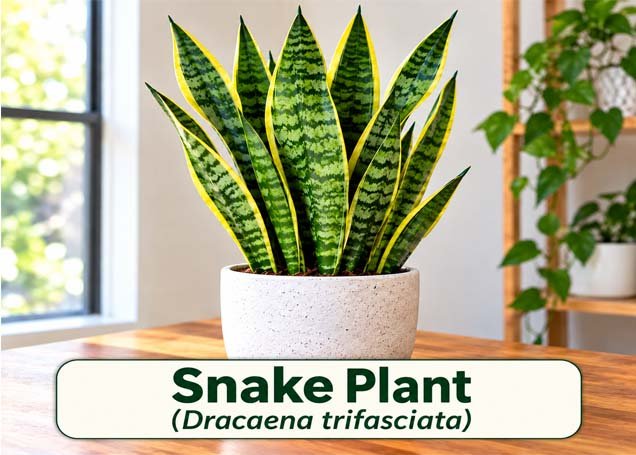
Botanical name: Dracaena trifasciata
Light: Low to bright indirect light
Water: Allow the potting mix to dry between waterings
Difficulty: Very easy
Snake plants are excellent low-maintenance choices for beginners because they tolerate occasional missed watering and adapt to different indoor lighting conditions.
They tolerate lower indoor light levels, although growth is generally better in brighter indirect light. Their thick leaves help them withstand periods of dry soil.
Snake plants are particularly suitable for bedrooms, home offices, and apartments where space is limited.
Snake Plant Care Tips
- Use a well-draining potting mix and a container with drainage holes.
- Let the soil dry before watering again.
- Avoid leaving the pot in standing water.
- Keep the plant away from prolonged exposure to harsh afternoon sunlight.
Best for: Beginners who prefer a plant that does not need frequent watering.
Among indoor plants, low maintenance needs make snake plants especially appealing to beginners who prefer less frequent watering.
2. Pothos
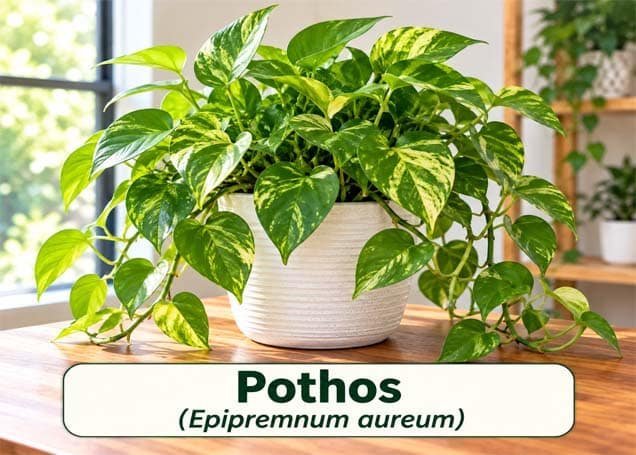
Botanical name: Epipremnum aureum
Light: Medium to bright indirect light; tolerates lower light
Water: Water when the upper portion of the soil has dried
Difficulty: Easy
Pothos is a popular trailing houseplant with attractive heart-shaped leaves. Its flexible growing habit makes it ideal for shelves, hanging baskets, and plant stands.
Several varieties feature green, yellow, cream, or white markings. Variegated varieties generally retain their best coloring in sufficient indirect light.
Pothos adapts to many indoor environments, making it a practical choice for beginners. However, lower light usually results in slower growth.
Pothos Care Tips
- Place the plant near a window with filtered or indirect light.
- Check the soil before watering rather than following a fixed schedule.
- Water thoroughly when needed, then allow excess water to drain.
- Trim excessively long vines to maintain the desired shape.
- Rotate the pot occasionally for more balanced growth.
Best for: Hanging baskets, shelves, and beginner-friendly indoor greenery.
3. ZZ Plant
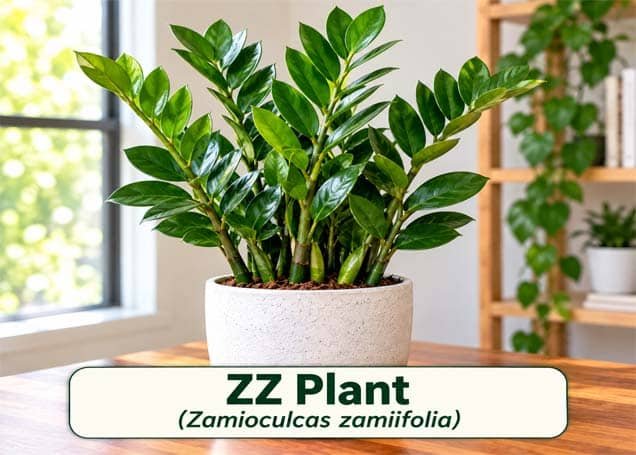
Botanical name: Zamioculcas zamiifolia
The ZZ plant is valued for its glossy, dark-green leaves and upright growth habit. It works especially well in modern apartments, offices, and rooms with moderate natural light.
Its underground rhizomes store water, allowing it to tolerate relatively dry conditions.
Although ZZ plants can survive in lower light, they still need some light to grow. A completely dark room is not a suitable permanent location.
ZZ Plant Care Tips
- Use a container with effective drainage.
- Allow the growing medium to dry before watering again.
- Avoid constantly damp soil, which can damage the roots and rhizomes.
- Provide indirect natural light for healthier growth.
- Remove damaged or yellowing foliage when necessary.
Best for: Busy households and people who occasionally forget to water.
For indoor plants, low maintenance is a major advantage of the ZZ plant, thanks to its ability to tolerate periods of dry soil.
4. Spider Plant
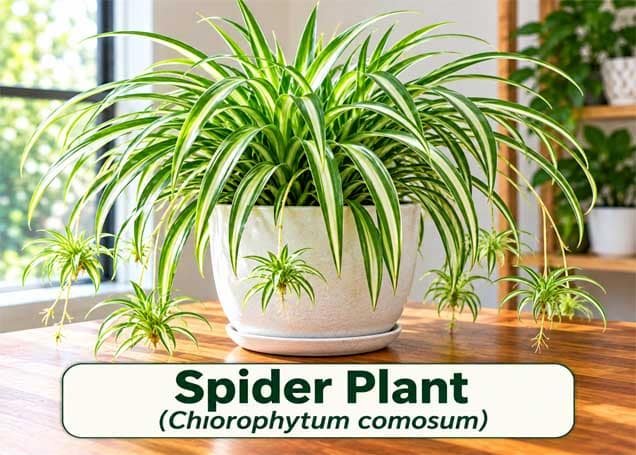
Botanical name: Chlorophytum comosum
Spider plants have long, arching leaves that often feature attractive green and white stripes. Mature plants may produce small plantlets on trailing stems.
Their cascading shape makes them excellent for hanging baskets, shelves, and elevated plant stands.
Spider plants are relatively adaptable, but they usually look their best with consistent indirect light and moderate watering.
Spider Plant Care Tips
- Provide bright, filtered light whenever possible.
- Water when the upper layer of potting mix starts to dry.
- Avoid leaving the container standing in water.
- Trim brown leaf tips if necessary.
- Repot when the roots become crowded.
Best for: Hanging displays and beginners who enjoy fast-growing foliage.
5. Cast Iron Plant
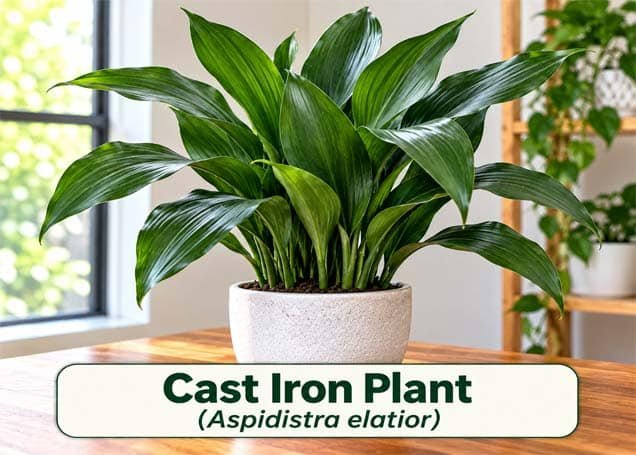
Botanical name: Aspidistra elatior
Light: Low to moderate indirect light
Water: Allow the upper soil to dry between waterings
Difficulty: Very easy
The cast iron plant earned its common name because of its reputation for tolerating challenging indoor conditions.
Its broad, dark-green leaves create a classic appearance, making it suitable for hallways, living rooms, and shaded corners that still receive some natural light.
Unlike faster-growing houseplants, cast iron plants grow slowly and usually require little pruning.
Cast Iron Plant Care Tips
- Keep the plant away from intense direct sunlight.
- Use well-draining soil.
- Check the potting mix before watering.
- Wipe dust from the leaves occasionally.
- Avoid unnecessary repotting.
Best for: Lower-light rooms and people who prefer slow-growing plants.
6. Chinese Evergreen
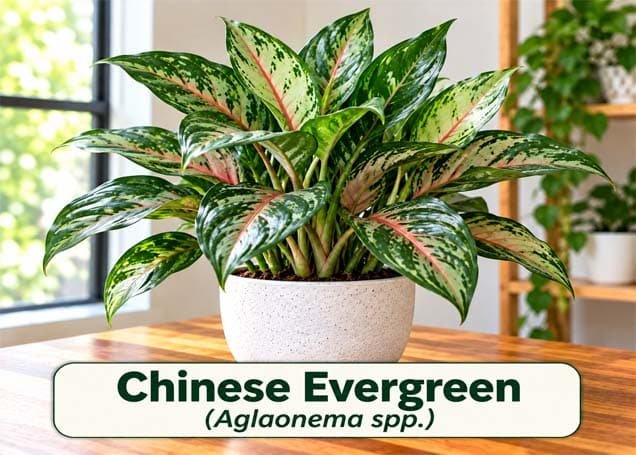
Botanical name: Aglaonema spp.
Light: Low to medium indirect light, depending on the variety
Water: Water when the upper soil begins to dry
Difficulty: Easy
Chinese evergreen is an attractive foliage plant available in many colors and patterns. Some varieties feature silver-green leaves, while others display pink, red, or cream markings.
Green varieties generally tolerate lower light better than highly colorful varieties, which often need brighter indirect light to maintain their appearance.
Chinese evergreen is a useful choice for bedrooms, offices, and living areas with filtered daylight.
Chinese Evergreen Care Tips
- Choose a location with suitable indirect light.
- Allow the upper potting mix to dry slightly before watering.
- Protect the plant from cold drafts.
- Avoid sudden temperature changes.
- Remove damaged leaves when needed.
Best for: Decorative foliage in rooms with moderate natural light.
7. Heartleaf Philodendron
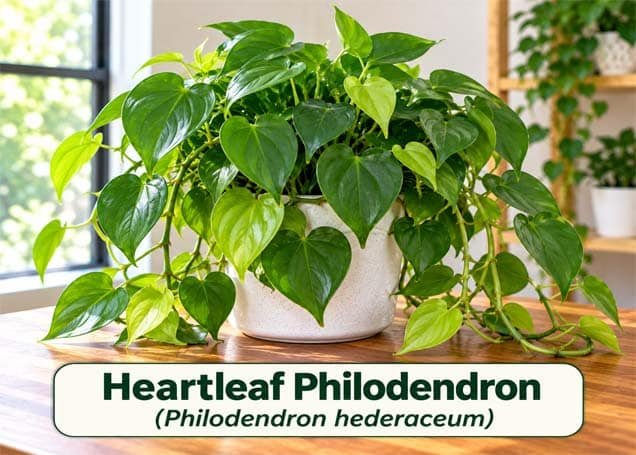
Botanical name: Philodendron hederaceum
Heartleaf philodendron is a climbing or trailing houseplant with soft, heart-shaped leaves.
Its vines can hang from a shelf, grow along a support, or trail from a hanging basket. This flexibility makes it particularly useful for decorating small spaces.
With appropriate light and occasional pruning, heartleaf philodendron can remain attractive without requiring complicated care.
Heartleaf Philodendron Care Tips
- Provide medium to bright indirect light.
- Check the upper soil before watering.
- Avoid waterlogged growing conditions.
- Trim long stems to control growth.
- Rotate the container occasionally.
Best for: Shelves, hanging baskets, and compact living spaces.
8. Aloe Vera
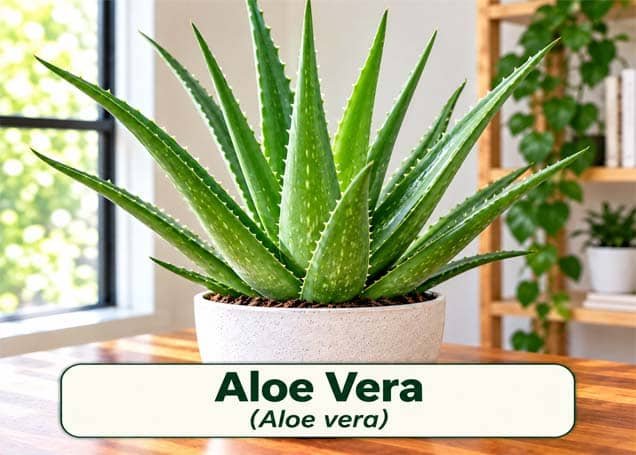
Botanical name: Aloe vera
Light: Bright light, with direct sunlight introduced gradually
Water: Water infrequently after the potting mix dries
Difficulty: Easy
Aloe vera is a succulent with thick, fleshy leaves that store water. Unlike many tropical houseplants, it prefers a bright location and relatively dry growing conditions.
A sunny window can be a suitable location, although plants moved from lower light should be gradually acclimated to stronger sunlight.
Aloe vera is an excellent option for people who want a compact plant that does not require frequent watering.
Aloe Vera Care Tips
- Use a fast-draining succulent potting mix.
- Choose a container with drainage holes.
- Allow the soil to dry thoroughly before watering again.
- Provide plenty of light.
- Avoid keeping the roots continuously moist.
Best for: Bright windowsills and people who prefer drought-tolerant plants.
9. Rubber Plant
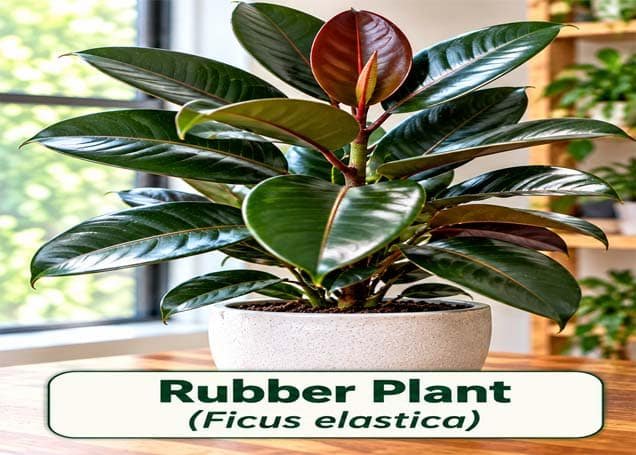
Botanical name: Ficus elastica
Light: Bright indirect light
Water: Water when the upper potting mix dries
Difficulty: Easy to moderate
Rubber plants are popular for their large, glossy leaves and bold appearance. Depending on the variety, the foliage may be dark green, burgundy, or variegated.
A healthy rubber plant can become a striking feature in a living room or home office.
Although rubber plants are relatively easy to maintain, they generally need brighter light and more consistent care than snake plants or ZZ plants.
Rubber Plant Care Tips
- Place the plant near a bright window with indirect light.
- Check the soil before watering.
- Avoid allowing the pot to remain waterlogged.
- Wipe dust from the large leaves occasionally.
- Rotate the plant to encourage balanced growth.
For more detailed instructions, read our Rubber Plant Care Guide.
Best for: Bright living rooms and attractive statement greenery
10. Peace Lily
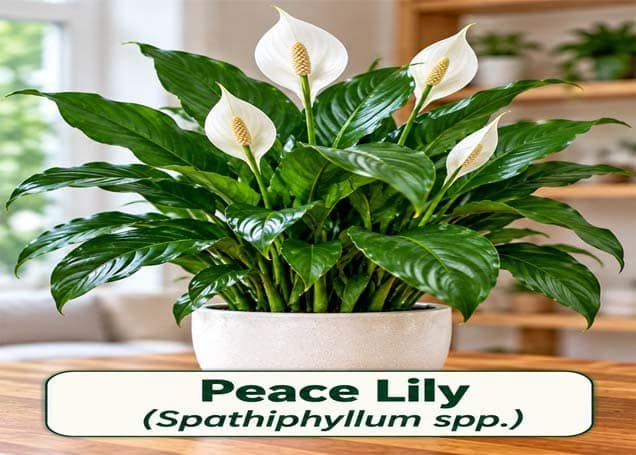
Botanical name: Spathiphyllum spp.
Light: Medium to bright indirect light; tolerates lower light
Water: Keep the growing medium lightly moist, not soggy
Difficulty: Easy to moderate
Peace lilies are appreciated for their glossy green foliage and elegant white spathes.
They can tolerate lower light levels, although brighter indirect light generally supports better growth and flowering.
Unlike snake plants and ZZ plants, peace lilies prefer more consistent moisture. Allowing them to become excessively dry can lead to noticeable wilting.
Peace Lily Care Tips
- Check the upper soil regularly.
- Water when the surface begins to dry, without keeping the pot constantly saturated.
- Provide indirect light.
- Avoid cold drafts and extreme temperature changes.
- Remove spent flowers and damaged leaves.
Best for: People who prefer flowering foliage plants and can monitor soil moisture regularly.
For more detailed growing instructions, explore our Peace Lily Care Guide, covering watering, lighting, flowering, and common plant problems.
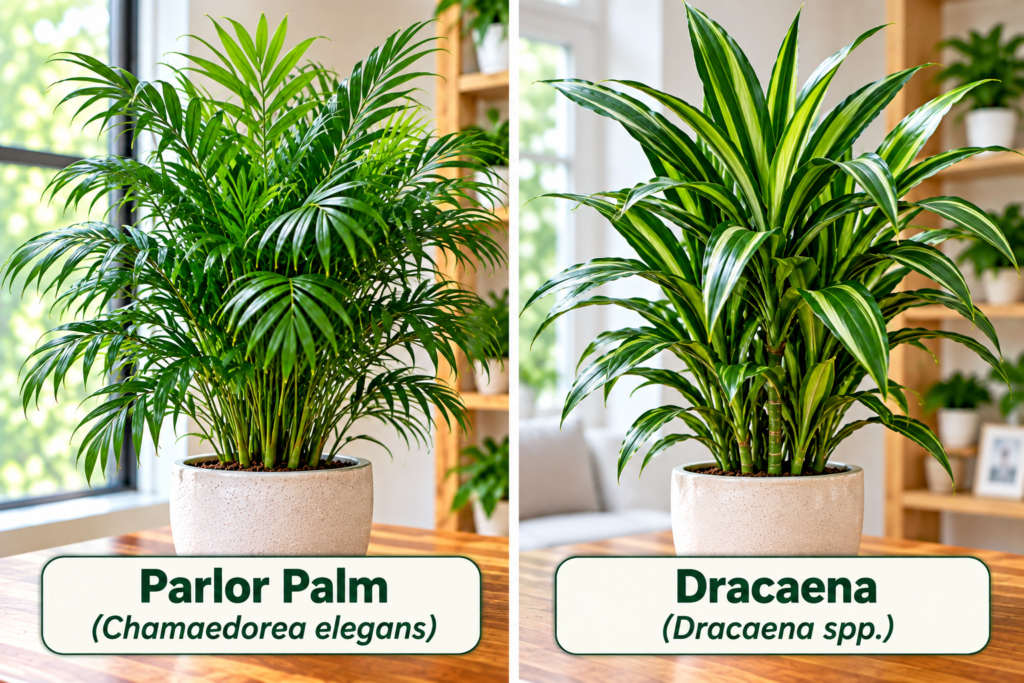
11. Parlor Palm
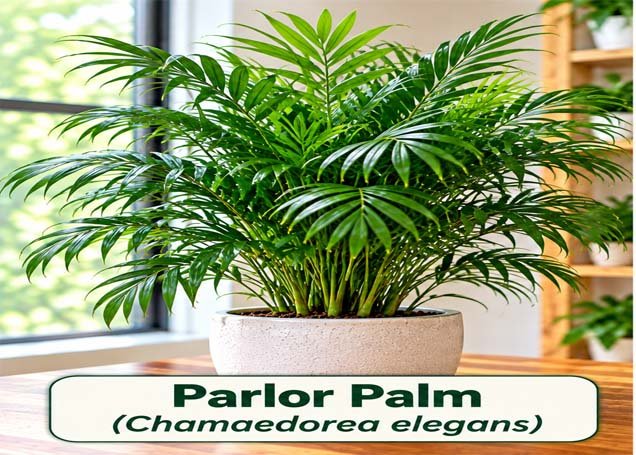
Botanical name: Chamaedorea elegans
Parlor palms bring a soft, tropical appearance to indoor spaces. Their delicate, feathery fronds look attractive in living rooms, bedrooms, and home offices.
They generally prefer indirect light and can adapt to moderately shaded indoor conditions.
Unlike many large palm species, parlor palms grow relatively slowly indoors, making them manageable for smaller homes.
Parlor Palm Care Tips
- Keep the plant in indirect natural light.
- Water when the upper potting mix begins to dry.
- Avoid constantly wet soil.
- Protect the palm from cold drafts.
- Remove fully brown fronds when necessary.
Best for: Apartments and rooms needing soft, tropical-looking greenery.
12. Dracaena
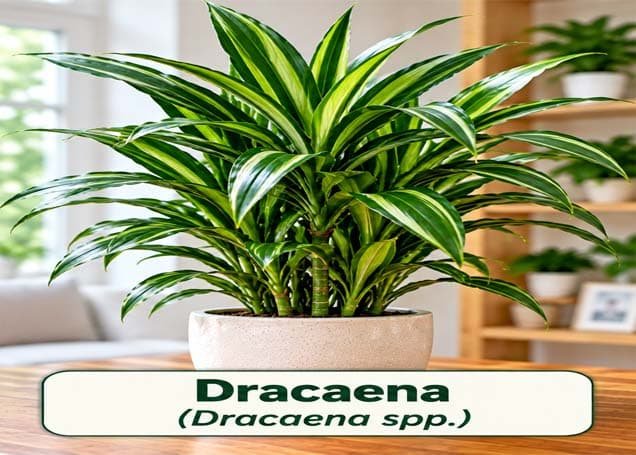
Botanical name: Dracaena spp.
Light: Medium to bright indirect light
Water: Allow the upper soil to dry before watering
Difficulty: Easy
Dracaena includes several popular houseplants with narrow, upright, or arching leaves.
Different species and cultivars offer green, cream, yellow, and red-edged foliage, making them versatile choices for indoor decoration.
Many dracaenas have an upright growth habit, allowing them to add height without requiring much floor space.
Dracaena Care Tips
- Provide suitable indirect light.
- Let the upper growing medium dry before watering.
- Avoid prolonged waterlogging.
- Protect the plant from extreme temperatures.
- Remove damaged leaves and rotate the pot occasionally.
Best for: Corners, offices, and rooms where vertical greenery is preferred.
Quick Comparison of Low Maintenance Indoor Plants
| Plant | Light | Water Need | Beginner Friendly |
| Snake Plant | Low–bright indirect | Low | Excellent |
| Pothos | Medium–bright indirect | Low–moderate | Excellent |
| ZZ Plant | Low–bright indirect | Low | Excellent |
| Spider Plant | Medium–bright indirect | Moderate | Excellent |
| Cast Iron Plant | Low–moderate | Low | Excellent |
| Chinese Evergreen | Low–medium | Moderate | Excellent |
| Heartleaf Philodendron | Medium–bright indirect | Moderate | Excellent |
| Aloe Vera | Bright | Low | Excellent |
| Rubber Plant | Bright indirect | Moderate | Good |
| Peace Lily | Medium–bright indirect | Moderate | Good |
| Parlor Palm | Low–bright indirect | Moderate | Excellent |
| Dracaena | Medium–bright indirect | Moderate | Excellent |
Watering needs vary with temperature, pot size, light exposure, humidity, and season. Always check the growing medium before watering.
When choosing indoor plants, low-maintenance preferences should be balanced with each species’ lighting, watering, and drainage requirements.
Best Indoor Plants Low Maintenance for Busy People
If you’re looking for indoor plants low maintenance enough for a busy schedule, consider snake plants, ZZ plants, and pothos. These houseplants are relatively forgiving when their basic light and watering requirements are met.
For people who travel frequently, choosing drought-tolerant plants can make indoor gardening easier. Snake plants and ZZ plants generally tolerate longer intervals between watering than moisture-loving houseplants.
Remember that indoor plants low maintenance doesn’t mean plants that need no attention. Every houseplant benefits from occasional inspection, proper drainage, and suitable lighting.
Caring for Low Maintenance Indoor Plants
Writing
Choosing low-maintenance indoor plants that suit your schedule is only the beginning. A few simple habits can help keep these houseplants healthy throughout the year.
1. Check the Soil Before Watering
Avoid watering every plant on the same fixed schedule.
A plant in a sunny room may use water faster than one growing in a cooler, shaded location. Small containers can also dry more quickly than larger pots.
Before watering, check the growing medium and consider the needs of the particular species.
For additional guidance, see our How to Water Houseplants: A Beginner’s Guide.
2. Provide Appropriate Natural Light
Low-maintenance indoor plants have different lighting requirements.
Snake plants and ZZ plants can tolerate lower light, while aloe vera needs a much brighter position.
Remember that low light does not mean complete darkness. Plants require light for photosynthesis, and a permanently windowless room generally needs suitable supplemental growing lights.
3. Choose Pots With Drainage Holes
Good drainage is essential for healthy houseplant roots.
Use containers with drainage holes so excess water can escape. If you prefer decorative pots without holes, place the plant in a separate nursery pot with drainage and remove any accumulated water from the outer container.
4. Avoid Excess Fertilizer
Most low-maintenance indoor plants do not require heavy feeding.
Apply a suitable houseplant fertilizer according to its label and the needs of the species, usually when the plant is actively growing.
Avoid fertilizing excessively in an attempt to accelerate growth. Too much fertilizer can damage roots and foliage.
5. Watch Your Plant’s Leaves
Houseplants often show visible changes when growing conditions are unsuitable.
Yellowing leaves, brown tips, wilting, leaf drop, or weak growth may indicate problems with watering, light, temperature, humidity, or pests.
Do not assume that every yellow leaf means overwatering. Check the plant’s overall environment before making changes.
Best Low-Light, Low-Maintenance Indoor Plants
If your home receives limited natural light, choosing the right low-maintenance indoor plants can make a difference.
Snake plants, ZZ plants, cast iron plants, and some Chinese evergreen varieties tolerate lower indirect light.
These are useful choices for people searching for indoor plants that are low-light and low-maintenance options.
However, low-light tolerance does not mean a plant can survive indefinitely in complete darkness. Place these houseplants where they receive suitable natural or artificial light.
Low-maintenance care and low-light tolerance are different qualities. Choose houseplants that match your room’s available natural light rather than assuming every easy-care plant grows well in shade.
Best Indoor Plants for People Who Forget to Water
For busy households, the easiest low-maintenance houseplants are often those that tolerate periods of dry soil.
Snake plants, ZZ plants, and aloe vera are good examples. Their water-storage adaptations allow them to handle less frequent watering than many tropical houseplants.
If you are searching for low-water indoor plants, begin with these species and choose containers with effective drainage.
Remember that even drought-tolerant plants still need water. Check the soil and adjust watering to the plant’s actual growing conditions.
Indoor Plants Low Maintenance Watering Tips
For indoor plants low maintenance care begins with understanding soil moisture. Check the potting mix before watering rather than following a strict weekly schedule.
Even indoor plants low maintenance varieties can develop problems when their roots remain in waterlogged soil. Choose containers with drainage holes and empty excess water from saucers.
Common Indoor Plant Mistakes to Avoid
Low-maintenance indoor plants are forgiving, but a few common mistakes can still affect their health.
- Watering without checking soil moisture
- Using containers without proper drainage
- Keeping plants in complete darkness
- Exposing shade-tolerant plants to intense direct sunlight
- Applying too much fertilizer
- Ignoring pests or damaged foliage
- Leaving water standing inside decorative pots
- Treating every plant as though it has identical care requirements
Learning the needs of each species is the simplest way to maintain healthy houseplants.
Indoor Plants Low Maintenance for Small Apartments
People living in apartments often prefer indoor plants low maintenance enough to fit into a busy routine. Compact ZZ plants, pothos, and snake plants can work well in smaller rooms when their lighting requirements are met.
Before buying indoor plants low maintenance options, check their mature size, pet safety, and available growing space.
Common Mistakes When Choosing Easy-Care Houseplants
One common mistake is assuming all easy-care houseplants have identical watering needs. Some prefer dry soil between waterings, while others need more consistent moisture.
When researching indoor plants low maintenance options, consider your home’s sunlight, temperature, and available space. A plant that thrives near a bright window may struggle in a dark corner.
Another mistake is choosing decorative containers without drainage holes. Even indoor plants low maintenance varieties can develop root problems when excess water cannot escape.
Start with one or two suitable plants and learn their individual requirements before expanding your indoor collection.
Frequently Asked Questions
What is the easiest indoor plant to keep alive?
Snake plants and ZZ plants are among the easiest indoor plants for beginners. They tolerate a range of indoor light conditions and do not require constantly moist soil. However, proper drainage and occasional watering are still essential.
What indoor plants need the least water?
Snake plants, ZZ plants, and aloe vera generally need less frequent watering than moisture-loving tropical houseplants. The exact interval depends on the plant, potting mix, container size, and growing conditions.
Can indoor plants survive without sunlight?
Houseplants need light for photosynthesis. Some species can grow under suitable artificial grow lights, but ordinary indoor plants cannot remain healthy indefinitely in complete darkness.
Which indoor plants are best for beginners?
Snake plants, pothos, ZZ plants, spider plants, cast iron plants, and heartleaf philodendrons are practical choices. The best option depends on the light available and how frequently you can check the plant.
Do low maintenance indoor plants need fertilizer?
Many houseplants benefit from occasional feeding during active growth. However, fertilizer requirements differ by species. Always follow the product instructions and avoid unnecessary applications.
What low maintenance indoor plants are suitable for apartments?
Snake plants, ZZ plants, pothos, heartleaf philodendrons, and parlor palms can work well in apartments. Upright plants use relatively little floor space, while trailing plants can be displayed on shelves or in hanging baskets.
Final Thoughts
Finding indoor plants low maintenance enough for your lifestyle does not have to be difficult. The key is choosing species suited to your home’s light, available space, and care routine.
Snake plants and ZZ plants are excellent choices for less frequent watering. Pothos and heartleaf philodendrons add attractive trailing foliage, while aloe vera suits bright indoor spaces.
For beginners, low-maintenance indoor plants provide an accessible way to enjoy indoor gardening without complicated care routines.
If your priority is indoor plants with low-maintenance care, begin by choosing the right species rather than following a complicated routine.
Start with one or two easy-care houseplants, learn their needs, and gradually expand your indoor plant collection.
References
For reliable plant-care information and further reading:
- Royal Horticultural Society (RHS) — Houseplant care, watering, light requirements, and growing conditions.
- Penn State Extension — Educational resources on houseplants and indoor gardening.
- University of Minnesota Extension — Research-based horticulture and houseplant guidance.
- Clemson Cooperative Extension Home & Garden Information Center — Houseplant growing and maintenance information.
Note: These are institutional resource links, not verified citations to specific plant-care articles.


