
Table of Contents
A small patio can become one of the most enjoyable spaces in your home, even when you have only a few square feet to work with. The secret is choosing a layout that fits your daily routine, furniture that doesn’t overwhelm the area, and materials that can handle outdoor conditions.
The best small patio designs make every inch useful without making the space feel crowded. A narrow townhouse patio might benefit from a built-in bench, while a compact apartment patio may work better with folding chairs and movable planters.
You don’t need an expensive renovation to create a welcoming outdoor retreat. Sometimes, changing the furniture arrangement, adding a little shade, or introducing vertical greenery makes a noticeable difference.
This guide covers 17 practical small patio design ideas, including affordable layouts, privacy solutions, compact furniture, and decorating tips for American homes.
If you’re planning a larger outdoor makeover, explore our backyard patio ideas for additional landscaping and seating inspiration.
How to Plan Small Patio Designs Before Decorating
Before shopping for furniture or choosing decorative accessories, spend a little time understanding your outdoor space.
A thoughtful plan can prevent expensive mistakes and help you make better use of a limited area.
Successful small patio designs begin with practical measurements and furniture that fits the available space. Whether you’re planning a compact courtyard, a townhouse backyard, or an apartment patio, the right layout can make a noticeable difference.
When comparing small patio designs, prioritize comfortable seating, clear walking routes, and suitable outdoor materials. A thoughtful arrangement often works better than filling every corner with decorative furniture.
Measure Your Available Patio Space
Start by measuring the patio’s length and width. Record the location of doors, steps, railings, drains, and any permanent fixtures.
Then measure the furniture you’re considering.
A chair may fit on paper but still be uncomfortable if there isn’t enough space to pull it out or walk around it.
For example, a 6-by-8-foot patio provides 48 square feet of space. That may be enough for two compact chairs and a small table, but a full outdoor sectional could make the area difficult to use.
Use painter’s tape or cardboard to mark furniture footprints before purchasing anything.
Choose One Main Purpose
Small patios work best when you prioritize one activity.
Ask yourself how you expect to use the space most often.
- Morning coffee and reading
- Outdoor dining for two
- Relaxing after work
- Growing container plants
- Entertaining a few guests
If dining matters most, choose a compact table with comfortable seating.
If relaxation is the priority, two lounge chairs may be more useful than a dining set.
Trying to fit a dining area, lounge, garden, and storage zone into a tiny patio often makes everything feel cramped.
Plan Furniture Placement and Walking Space
Consider how people will move between the house, patio furniture, and yard.
As a practical starting point, aim for approximately 30–36 inches of clear walking space along a frequently used route where the layout allows. This is a planning guideline, not a universal building-code requirement.
Allow extra space behind dining chairs so people can sit down and stand up comfortably.
For narrow patios, place furniture along a wall or railing rather than directly in the middle.
Consider Sunlight, Drainage, and Privacy
Observe your patio at different times of day.
A west-facing patio may receive strong afternoon sunlight, while a shaded courtyard may remain damp after rain.
Choose outdoor materials that suit those conditions.
Before adding planters, rugs, or screens, check that water can drain away from your home’s foundation and that doors and drainage outlets remain clear.
Privacy also matters, particularly in apartment buildings and closely spaced neighborhoods.
Portable planters, outdoor curtains, and freestanding screens can create a more comfortable atmosphere without requiring major construction.
Proper drainage is important when designing outdoor spaces. The U.S. Environmental Protection Agency’s Soak Up the Rain program provides useful information about managing rainwater around residential properties.
17 Brilliant Small Patio Designs
These small patio designs suit different budgets, outdoor layouts, and decorating styles.
Each idea focuses on a specific space-saving approach rather than simply adding more furniture or accessories.
1. Minimalist Patio With Two Comfortable Chairs
Sometimes the simplest layout works best.
Place two compact outdoor chairs facing a small side table. Keep the surrounding area open and use one or two planters for decoration.
This arrangement is particularly effective for patios measuring approximately 6 by 8 feet.
Choose chairs with slim frames rather than bulky armrests. Powder-coated aluminum and other weather-resistant materials can be practical choices, depending on your climate.
A neutral outdoor rug can help define the seating area without adding visual clutter.
Best for: Small townhouse patios, apartment courtyards, and quiet reading corners.
Design tip: Use matching chairs to create a balanced appearance, but prioritize comfort over perfect symmetry.
2. Compact Bistro Dining Patio
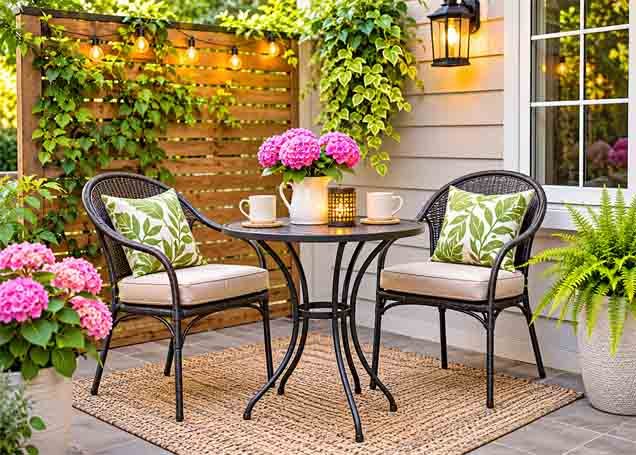
A bistro set is a practical solution when you want an outdoor dining space without a full-size table.
Look for a round or square table that comfortably accommodates two people.
Round tables can make movement easier in tight spaces because they have no sharp corners.
A folding bistro set is especially useful for renters or homeowners who occasionally need additional floor space.
Add a small lantern or weather-resistant centerpiece for a welcoming finish.
Best for: Morning coffee, casual meals, and compact apartment patios.
Design tip: Measure the space needed to pull out both chairs before choosing the table.
3. Small Patio With an L-Shaped Bench
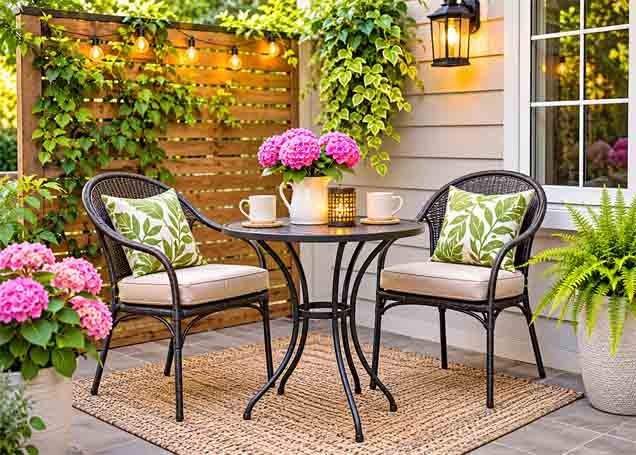
An L-shaped bench can make excellent use of a patio corner.
Instead of placing several individual chairs around the area, position seating along two adjoining edges.
This arrangement leaves more central floor space available.
If you’re building permanent seating, consider adding storage beneath the bench for outdoor cushions or gardening supplies.
Use cushions made for outdoor conditions, and provide ventilation and drainage where necessary.
Best for: Square patios and small outdoor entertaining spaces.
Design tip: A compact movable table offers more flexibility than a large fixed coffee table.
4. Modern Paver Patio With Clean Lines
Pavers can give a small patio a polished appearance without requiring elaborate decoration.
Rectangular or square pavers arranged in a simple pattern create a calm visual foundation.
For a contemporary look, choose a limited color palette and repeat similar materials throughout the space.
Proper base preparation, grading, and drainage are important for a durable installation.
If your patio already has a sound surface, you may be able to improve its appearance with cleaning and furnishings instead of rebuilding it.
Best for: Modern homes and compact backyard patios.
Design tip: Avoid mixing too many paving patterns in a small area.
5. Narrow Patio With Wall-Side Seating
A long, narrow patio can feel awkward when furniture is arranged across its width.
Position a slim bench or compact chairs along one side instead.
This creates a more useful walking route and makes the patio easier to navigate.
A narrow console-style outdoor table may provide enough space for drinks and small items without taking up much room.
Wall-mounted planters can introduce greenery, provided they are installed safely and the wall can support them.
Best for: Side-yard patios, narrow townhouses, and rectangular courtyards.
Design tip: Keep the main route between doors and steps unobstructed.
6. Small Backyard Patio With Vertical Planters
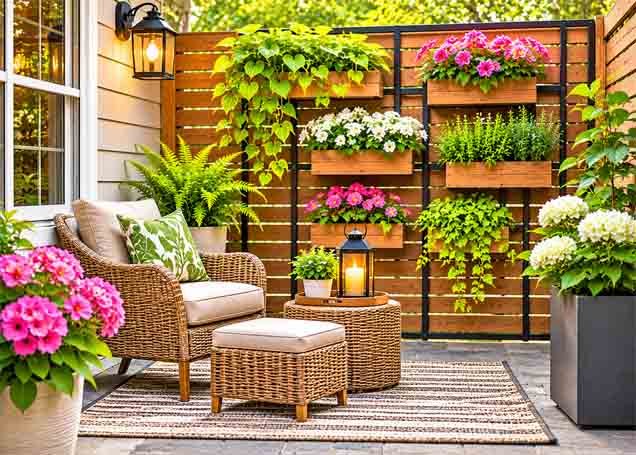
Plants can make a patio feel inviting, but large containers may consume valuable floor space.
Vertical gardening offers an alternative.
Use a freestanding plant rack, tiered shelving, or a suitable trellis to display several plants in a compact footprint.
Choose plants according to your USDA growing zone, local climate, and the amount of sunlight the patio receives.
For example, a sunny patio may support certain herbs and flowering annuals, while a shaded patio may suit shade-tolerant foliage plants.
Avoid attaching heavy planters to fences or railings without checking their load capacity.
Best for: Garden lovers with limited patio space.
Design tip: Group plants with similar watering and sunlight needs.
For patios exposed to strong sunlight, our guide to best plants for full sun and heat can help you choose suitable greenery.
Before selecting outdoor plants, check your location using the USDA Plant Hardiness Zone Map to understand which plants may survive winter in your region.
7. Cozy Patio With an Outdoor Rug
An outdoor rug can make a small patio feel more like an extension of your living room.
Choose a size that fits beneath the main seating area without interfering with doors or drainage.
Simple stripes or subtle patterns can help define the space.
Add two comfortable chairs, a compact table, and a few cushions for a relaxed atmosphere.
Make sure the rug is suitable for your patio surface and local weather. Lift and dry it when necessary to prevent trapped moisture.
Best for: Covered patios and small outdoor lounges.
Design tip: Use two or three coordinated colors rather than several competing patterns.
8. Small Patio With Folding Furniture
Folding furniture offers flexibility that permanent furniture cannot.
A folding table can serve as a dining surface when needed and be stored away afterward.
Stackable chairs are another useful option.
This approach works particularly well when the same patio is used for gardening, dining, and occasional entertaining.
Choose sturdy outdoor furniture with secure locking mechanisms.
Best for: Renters, multipurpose patios, and very small outdoor spaces.
Design tip: Plan where folded furniture will be stored before buying it.
9. Courtyard-Style Patio With Container Plants
A courtyard-inspired patio uses plants to create a sheltered, peaceful atmosphere.
Arrange containers around the perimeter rather than scattering them across the floor.
Vary plant heights to add depth.
A small ornamental tree in a suitable container can become a focal point, but consider its mature size, root space, and winter hardiness.
Use lightweight containers where weight is a concern, particularly on balconies or elevated structures.
Best for: Enclosed patios and homes with limited garden beds.
Design tip: Leave enough space between containers for watering and maintenance.
10. Small Patio With a Privacy Screen
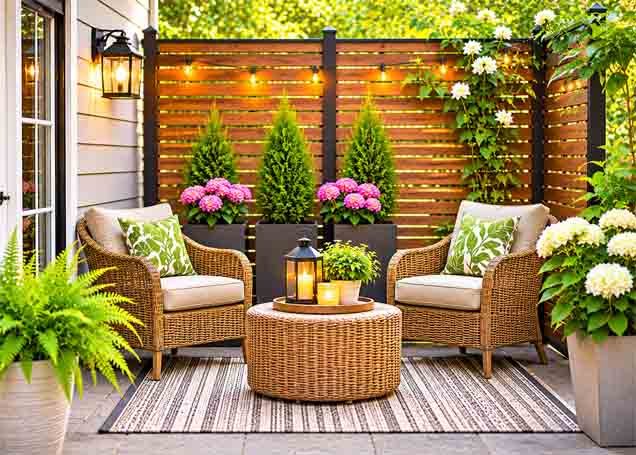
Privacy is often a challenge in compact outdoor spaces.
A decorative screen can block selected sightlines without enclosing the entire patio.
Wooden slat screens, outdoor lattice panels, and movable privacy dividers are popular options.
For a softer appearance, place tall planters beside the screen.
If you rent your home, consider a removable solution that doesn’t require drilling into the building.
Freestanding screens must be properly secured against wind, and permanent structures may require approval under local rules or HOA requirements.
Best for: Townhouses, apartment patios, and closely spaced backyards.
Design tip: Block the specific view that bothers you rather than surrounding the entire patio with tall panels.
11. Corner Patio With Built-In Seating
Corners are often underused in small patio designs.
A built-in corner bench turns that space into a practical seating area.
Pair the bench with a small table and one movable chair.
This allows you to accommodate an occasional guest without permanently filling the patio with furniture.
Choose durable construction materials and make sure the bench has a stable foundation.
Best for: Compact square patios and outdoor gathering areas.
Design tip: Keep the seating depth comfortable without extending too far into the walking area.
12. Budget-Friendly Gravel Patio
Gravel can be an attractive option for creating a casual patio, particularly when the ground conditions and intended use are suitable.
A well-prepared base, appropriate edging, and careful drainage planning are important.
Consider the type of furniture you plan to use. Some chairs and tables are less stable on loose gravel.
Gravel surfaces may also be difficult for certain mobility aids, so a firm, stable surface is preferable when accessibility is a priority.
Use container plants and simple seating to complete the design.
Best for: Informal backyard seating areas and budget-conscious projects.
Design tip: Compare the full installation and maintenance requirements before choosing gravel over pavers.
13. Small Patio With a Shade Sail
Shade can make a sunny patio more comfortable during hot weather.
A properly installed shade sail provides overhead coverage without taking up as much floor space as some freestanding umbrellas.
However, shade sails create significant loads in wind and require suitable anchor points.
Follow the manufacturer’s installation instructions and local requirements. Professional installation may be appropriate.
For renters, a compact movable umbrella may be a simpler alternative.
Best for: Patios exposed to strong afternoon sun.
Design tip: Position shade where you actually sit during the hottest part of the day.
14. Modern Patio With Modular Furniture
Modular furniture allows you to adjust seating arrangements as your needs change.
A small two-piece set may provide enough seating for everyday use.
When guests visit, you can reposition the pieces to create a more social arrangement.
Look for furniture with dimensions suited to your patio rather than assuming every modular set is compact.
Weather-resistant cushions and easy-to-clean surfaces help reduce maintenance.
Best for: Flexible entertaining spaces.
Design tip: Measure each module separately, including the space needed to move around it.
15. Small Apartment Patio With Portable Decor
Renters can create an attractive patio without making permanent alterations.
Start with portable furniture, lightweight planters, and outdoor accessories that can move with you.
A freestanding plant stand can add height without drilling into walls.
Battery-powered or suitable solar lighting may provide atmosphere without complicated wiring.
Always check lease terms and building rules before adding screens, floor coverings, or heavy containers.
Best for: Apartment residents and renters.
Design tip: Choose a few versatile pieces you can reuse in a future home.
16. Tiny Patio With Multi-Purpose Storage
Storage becomes especially valuable when outdoor space is limited.
A compact storage bench can provide seating while keeping selected items organized.
A narrow weather-resistant cabinet may work well against a wall.
Avoid using storage furniture to hold items that require special ventilation or safe indoor storage.
Keep doors, electrical equipment, and drainage areas accessible.
Best for: Small patios with limited nearby storage.
Design tip: Prioritize furniture that serves two practical purposes without becoming bulky.
17. Small Patio With a Compact Dining Nook
A dining nook can make a tiny patio feel purposeful and welcoming.
Position a compact table near a wall or corner and choose seating that can slide underneath when not in use.
A bench along one side may require less clearance than multiple chairs.
Add a few plants and understated outdoor lighting.
For evening dining, use lighting designed for outdoor conditions and follow electrical safety guidance.
Best for: Small families, couples, and casual outdoor meals.
Design tip: Choose a table shape based on the available circulation space, not appearance alone.
Small Patio Layout Ideas by Size

One of the easiest ways to improve small patio designs is to match furniture arrangements to actual dimensions.
The following examples provide starting points for planning.
| Patio Size | Approximate Area | Suggested Layout | Main Consideration |
|---|---|---|---|
| 6 × 8 ft | 48 sq ft | Two compact chairs and a side table | Keep entry and exit routes clear |
| 8 × 10 ft | 80 sq ft | Small bistro set with perimeter planters | Allow space to move chairs |
| 10 × 12 ft | 120 sq ft | Compact lounge seating or a dining area | Avoid overcrowding with multiple zones |
These examples are illustrative rather than guaranteed furniture layouts.
Actual usable space depends on doors, steps, railings, furniture dimensions, and accessibility requirements.
The best small patio designs balance comfort with practical space planning. Before choosing furniture, compare different layouts and consider how people will move around the patio. Even simple small patio designs can feel welcoming when seating, greenery, and lighting are arranged thoughtfully.
Best Layout for a 6×8 Patio
For a 6×8 patio, begin with two compact chairs and a small side table.
Place the chairs against the longer edge if that helps preserve a clear path from the door.
Avoid large coffee tables, oversized planters, and bulky sectional furniture.
A single tall planter may add more visual interest than several small containers scattered around the floor.
Best Layout for an 8×10 Patio
An 8×10 patio offers more flexibility.
A compact dining set can work well, particularly when chairs are easy to move.
Alternatively, create a small lounge with two chairs and a low table.
Keep planters around the perimeter to preserve usable floor space.
Best Layout for a 10×12 Patio
A 10×12 patio may accommodate a modest outdoor seating group or dining arrangement.
Choose one as the primary function.
If you want both lounging and dining, use flexible furniture instead of installing two complete furniture sets.
This prevents the space from feeling crowded.
Small Patio Ideas on a Budget
Attractive small patio designs don’t always require expensive furniture or construction.
Start by improving what you already have.
Refresh Existing Furniture
Clean outdoor chairs and tables before deciding to replace them.
Depending on the material and condition, suitable refinishing products may extend their useful life.
Replacing worn cushions can also improve comfort and appearance.
Use Container Plants
A few well-placed containers can soften hard patio surfaces.
Choose plants that suit the available sunlight and your local climate.
Group containers rather than placing them randomly around the patio.
This creates a more organized appearance and makes watering easier.
Improve Lighting
Outdoor lighting can make a patio more inviting after sunset.
Consider solar path lights, rechargeable lanterns, or properly rated outdoor string lights.
Follow manufacturer instructions and avoid creating tripping hazards with cords.
Choose One Focal Point
Instead of buying many decorative accessories, choose one feature that gives the patio character.
It might be a colorful planter, a small outdoor rug, or an attractive bistro set.
A single well-chosen focal point often makes a stronger impression than several unrelated decorations.
Budget Planning Table
| Budget Level | Suitable Improvements |
|---|---|
| Minimal spending | Rearrange furniture, clean surfaces, reuse planters |
| Modest refresh | Add cushions, container plants, or a small outdoor rug |
| Larger improvement | Replace furniture, add privacy screening, or upgrade the surface |
| Major renovation | Install new paving, permanent seating, or structural shade |
Actual costs vary by location, materials, labor, and the condition of the existing patio. Compare local estimates before beginning construction.
Small Patio Privacy Ideas for Apartments and Backyards
Privacy is a common concern when planning small patio designs, especially in densely populated neighborhoods.
Fortunately, you don’t always need a tall permanent fence.
Use Tall Container Plants
Tall plants can help soften views from neighboring properties.
Choose species suited to your local climate, light conditions, and container size.
Remember that container-grown plants need regular watering and may require winter protection.
Install a Removable Privacy Screen
Freestanding screens offer flexibility for renters and homeowners.
Choose a stable product designed for outdoor use.
In windy areas, secure the screen according to manufacturer guidance or choose a lower, less exposed option.
Add a Trellis With Climbing Plants
A trellis can create a green backdrop without using much floor space.
Select climbing plants carefully, considering mature size, maintenance, and whether the species is invasive in your area.
Consider Outdoor Curtains
Outdoor curtains can soften a covered patio and provide adjustable privacy.
They need suitable support and should be secured or removed when strong winds are expected.
Choose fabrics designed for outdoor conditions.
Practical tip: Before installing any privacy feature, sit in your usual chair and identify the exact sightline you want to block. This helps avoid unnecessary expense and overcrowding.
If you have room for permanent landscaping, consider our best privacy hedges guide for additional screening options.
Best Furniture for Small Patio Designs
Furniture selection has a major influence on how comfortable a compact patio feels.
| Furniture Type | Best Use | Space-Saving Advantage |
|---|---|---|
| Bistro table | Dining for two | Compact footprint |
| Folding chairs | Flexible seating | Easy to store |
| Storage bench | Seating and organization | Two functions in one piece |
| Slim outdoor loveseat | Relaxed seating | Fits along a wall |
| Nesting tables | Drinks and accessories | Can be stored together |
| Modular seating | Occasional entertaining | Adjustable arrangement |
Measure Before Buying
Check product dimensions rather than relying on photographs.
Pay attention to chair depth, armrest width, table height, and the clearance needed to open storage compartments.
Choose Weather-Appropriate Materials
Outdoor furniture should suit your local weather conditions.
Consider exposure to rain, strong sunlight, freezing temperatures, and humidity.
Even weather-resistant furniture may need cleaning, protective covers, or seasonal storage.
Keep Furniture Proportional
Oversized furniture can make a small patio uncomfortable.
Choose pieces that provide enough seating without blocking important routes.
In many cases, two comfortable chairs are more useful than a large sectional squeezed into the space.
Common Small Patio Design Mistakes
Avoiding a few common mistakes can improve the appearance and usability of your patio.
Buying Furniture Before Measuring
This often leads to cramped layouts and blocked walkways.
Measure the patio and mark furniture footprints before making a purchase.
Using Too Many Decorative Items
Small patios benefit from a restrained decorating approach.
Choose a consistent color palette and leave some open floor space.
Ignoring Drainage
Outdoor rugs, planters, and furniture should not prevent water from draining properly.
Avoid directing runoff toward the house.
Choosing Plants Without Considering Sunlight
A plant that thrives in full sun may struggle in a shaded courtyard.
Match plant choices to actual growing conditions.
Overlooking Privacy and Shade
A patio may look attractive but remain uncomfortable if it is exposed to neighboring windows or intense afternoon sun.
Consider these issues early in the planning process.
Forgetting About Maintenance
Some materials require more cleaning, sealing, pruning, or seasonal protection than others.
Choose a design you can realistically maintain.
Frequently Asked Questions About Small Patio Designs
What is the best design for a small patio?
The best design depends on how you plan to use the space. A compact bistro set works well for outdoor dining, while two comfortable chairs and a side table may be better for relaxing. Prioritize clear walking routes and appropriately sized furniture.
How do I make a small patio look bigger?
Use furniture with slim profiles, limit decorative clutter, and keep a consistent color palette. Vertical planters can add greenery without taking up much floor space. Leaving part of the patio open also helps create a more spacious appearance.
What furniture works best on a 6×8 patio?
Two compact chairs and a small side table are a practical starting point. Folding furniture may also work well. Measure the actual usable space, including door clearance and walking routes, before purchasing.
How can I decorate a small patio on a budget?
Start by cleaning existing surfaces and rearranging furniture. Add a few container plants, refresh cushions, or introduce a modest outdoor rug. Focus on improvements that make the patio more comfortable rather than buying many accessories.
How can I add privacy to a small patio?
Consider tall container plants, stable removable screens, trellises, or outdoor curtains where appropriate. Choose a solution that blocks unwanted views without creating unnecessary wind loads or obstructing access.
What plants work well around a small patio?
Suitable plants depend on your climate, USDA growing zone, sunlight, and available container space. Compact herbs, seasonal flowers, ornamental grasses, and shade-tolerant foliage plants may work in different conditions. Check mature size and maintenance needs before buying.
Can renters decorate a small apartment patio?
Yes, subject to lease and building rules. Portable furniture, movable planters, removable accessories, and suitable outdoor lighting can improve a patio without permanent construction.
Final Thoughts
The most successful small patio designs begin with a clear purpose and realistic measurements.
A compact outdoor space doesn’t need oversized furniture, expensive construction, or elaborate landscaping to feel inviting. Comfortable seating, thoughtful placement, appropriate materials, and a few well-chosen plants can make a noticeable difference.
Start with the feature you’ll use most often. Arrange the furniture, check the walking space, and add decorative details gradually.
With a practical plan, even a tiny patio can become a comfortable place to relax, dine, or enjoy time outdoors.