Table of Contents
A sunny backyard can be beautiful, but intense summer heat creates real challenges for gardeners. Flowers may wilt by afternoon, containers can dry out quickly, and plants that looked healthy in spring may struggle when temperatures rise.
Fortunately, choosing the best plants for full sun and heat can help you create a colorful, resilient garden without constantly replacing struggling flowers.
From cheerful zinnias and coneflowers to drought-tolerant yarrow and architectural yucca, many plants perform well in bright, sunny locations. The key is understanding that full sun, heat tolerance, and drought tolerance are not the same thing.
A plant may love sunshine but still require regular watering. Another may tolerate dry soil after establishment but struggle in humid climates.
In this guide, you’ll discover 21 beautiful plants for hot, sunny gardens across the United States, along with practical advice on USDA growing zones, watering, soil preparation, containers, and regional plant selection.
Quick Answer: What Are the Best Plants for Full Sun and Heat?
Some of the best plants for full sun and heat include:
- Zinnias: Colorful summer annuals for sunny flower beds.
- Purple coneflowers: Hardy perennials that attract pollinators.
- Black-eyed Susans: Cheerful, long-blooming garden favorites.
- Blanket flowers: Bright flowers for sunny, well-drained locations.
- Yarrow: A drought-tolerant perennial once established.
- Portulaca: A low-growing succulent annual for hot, dry containers.
- Angelonia: An attractive annual for hot summer flower beds.
- Little bluestem: An ornamental native grass for sunny landscapes.
For the best results, choose plants that match both your local climate and the conditions in your garden.
How to Choose the Best Plants for Full Sun and Heat
Choosing the best plants for full sun and heat starts with understanding your local climate, soil drainage, and watering conditions. The best plants for full sun and heat should tolerate at least six hours of direct sunlight while maintaining healthy growth during hot summer weather. For colorful borders, combine heat-tolerant perennials such as coneflowers, yarrow, and blanket flowers with flowering annuals like zinnias and portulaca. Always match each plant to your USDA hardiness zone and local growing conditions.
Best Plants for Full Sun and Heat: Comparison Table
Use this table to narrow down your choices before buying plants.
| Plant | Type | Approximate height | Water needs after establishment | Best use |
|---|---|---|---|---|
| Purple Coneflower | Perennial | 2–4 ft | Low–moderate | Pollinator gardens |
| Black-eyed Susan | Perennial/biennial | 1–3 ft | Low–moderate | Summer borders |
| Blanket Flower | Short-lived perennial | 1–3 ft | Low | Hot, dry borders |
| Coreopsis | Annual/perennial | 1–3 ft | Low–moderate | Long-lasting color |
| Yarrow | Perennial | 1–3 ft | Low | Water-wise gardens |
| Russian Sage | Perennial | 2–4 ft | Low | Dry, sunny borders |
| Autumn Joy Sedum | Perennial | 1.5–2 ft | Low | Late-season flowers |
| Lavender | Perennial/subshrub | 1–3 ft | Low | Dry, well-drained sites |
| Zinnia | Annual | 0.5–4 ft | Moderate | Summer flower beds |
| Portulaca | Annual | 3–8 in | Low | Containers and edging |
| Cosmos | Annual | 1–5 ft | Low–moderate | Cottage gardens |
| Marigold | Annual | 0.5–3 ft | Moderate | Borders and containers |
| Angelonia | Annual in most regions | 1–2 ft | Moderate | Hot, humid gardens |
| Celosia | Annual | 0.5–3 ft | Moderate | Colorful displays |
| Agastache | Perennial | 1–4 ft | Low–moderate | Pollinator gardens |
| Little Bluestem | Perennial grass | 2–4 ft | Low | Native landscapes |
| Pink Muhly Grass | Perennial grass | 2–3 ft | Low–moderate | Ornamental borders |
| Yucca | Perennial | Varies | Low | Architectural landscapes |
| Autumn Sage | Perennial/subshrub | 2–3 ft | Low–moderate | Warm-region gardens |
| Butterfly Weed | Perennial | 1–3 ft | Low | Native pollinator gardens |
| Texas Sage | Evergreen shrub | 3–8 ft | Low | Desert landscapes |
Heights and water requirements are general ranges, not guarantees. Species, cultivars, rainfall, soil, and local climate affect performance. Low-water ratings refer primarily to established plants growing in suitable conditions.
21 Best Plants for Full Sun and Heat
1. Purple Coneflower — Best for Pollinators
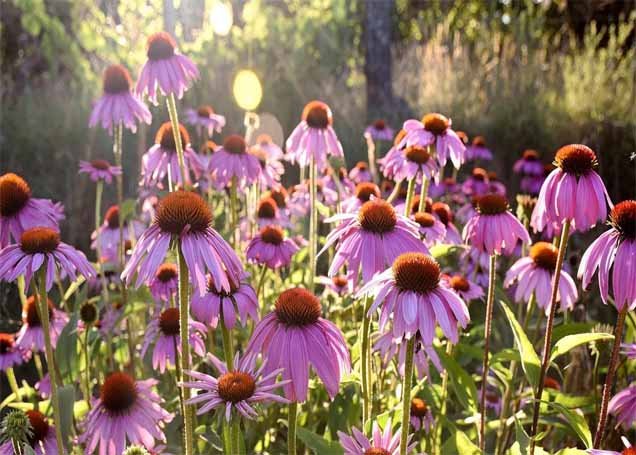
Botanical name: Echinacea purpurea
Purple coneflower is a popular North American perennial with pink-purple petals surrounding a prominent central cone. It brings natural beauty to sunny flower beds and attracts bees, butterflies, and other pollinators.
Coneflowers typically grow around 2–4 feet tall and look particularly attractive when planted in groups.
They prefer well-drained soil and generally perform best with at least six hours of direct sunlight. Established plants can tolerate periods of dry weather, although supplemental watering may be needed during prolonged drought.
Best growing conditions: Full sun, well-drained soil, and moderate moisture during establishment.
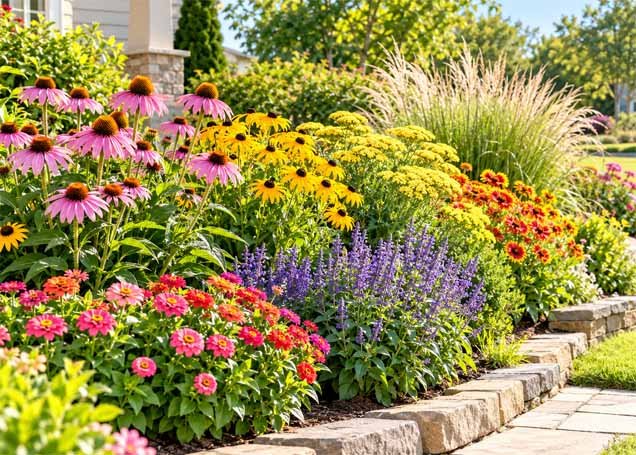
Garden idea: Combine purple coneflowers with black-eyed Susans and ornamental grasses for a colorful summer border.
2. Black-Eyed Susan — Best for Cheerful Summer Color

Botanical name: Rudbeckia hirta
Black-eyed Susans produce bright golden-yellow flowers with dark central disks. They are among the most recognizable full-sun flowers in American gardens.
These plants are excellent for informal borders, pollinator gardens, and naturalistic landscaping.
Depending on the growing conditions, black-eyed Susans may behave as annuals, biennials, or short-lived perennials.
They generally perform well in full sun and reasonably well-drained soil. While established plants tolerate some dry conditions, regular moisture helps maintain flowering during extended heat.
Best growing conditions: Full sun, average garden soil, and adequate drainage.
Garden idea: Pair them with purple coneflowers for a contrasting yellow-and-purple display.
3. Blanket Flower — Best for Hot, Dry Borders

Botanical name: Gaillardia species and hybrids
Blanket flowers are known for their bright red, orange, and yellow blooms. Their cheerful colors make them excellent additions to summer flower beds.
Many blanket flower varieties perform well in hot, sunny locations with well-drained soil.
They are especially useful where heavy irrigation is impractical, although newly planted specimens still require consistent moisture until established.
Blanket flowers may be short-lived perennials, particularly where winter drainage is poor.
Best growing conditions: Full sun, excellent drainage, and relatively lean soil.
Garden idea: Plant them beside yarrow and ornamental grasses for a low-water border.
4. Coreopsis — Best for Long-Lasting Yellow Flowers
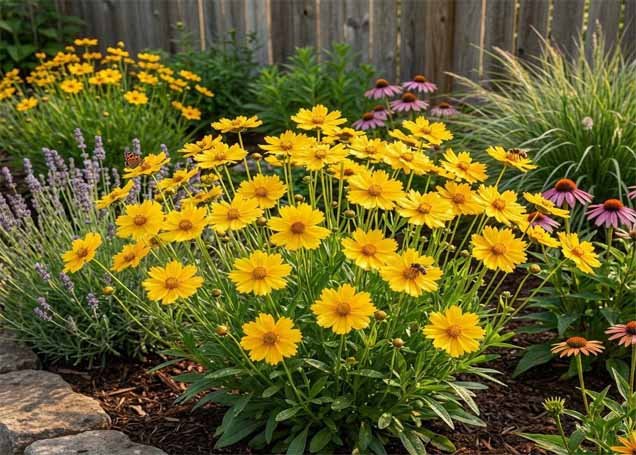
Botanical name: Coreopsis species
Coreopsis produces cheerful, daisy-like flowers in shades of yellow, orange, pink, and red, depending on the variety.
Many perennial coreopsis selections bloom over an extended period, making them attractive choices for sunny gardens.
Their fine foliage and relaxed growth habit work well in cottage-style landscapes.
Some species tolerate dry soil once established, but water requirements vary considerably between cultivars.
Best growing conditions: Full sun and well-drained soil.
Garden idea: Use coreopsis near pathways or at the front of a perennial border.
5. Yarrow — Best Low-Water Perennial
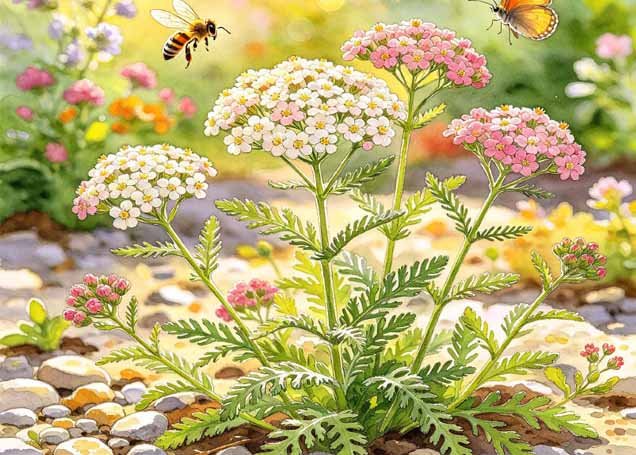
Botanical name: Achillea millefolium and cultivars
Yarrow is a hardy perennial with finely divided foliage and clusters of small flowers.
It is a useful option for gardeners looking for drought-resistant flowers in well-drained locations.
Once established, yarrow often performs well with relatively little supplemental irrigation. Excessively rich soil or frequent watering can encourage weak, floppy growth.
Flower colors include white, yellow, pink, red, and orange, depending on the cultivar.
Best growing conditions: Full sun, good drainage, and moderate-to-low fertility.
Garden idea: Combine yarrow with lavender and blanket flowers for a water-wise garden.
6. Russian Sage — Best for Airy Purple Flowers

Botanical name: Salvia yangii (formerly Perovskia atriplicifolia)
Russian sage produces airy blue-purple flowers above aromatic, silvery foliage.
Its upright, open growth habit makes it an excellent companion for more compact summer perennials.
Russian sage generally performs best in sunny locations with excellent drainage. Once established, it can tolerate dry conditions.
However, consistently wet soil may cause poor growth or root problems.
Best growing conditions: Full sun, well-drained soil, and good air circulation.
Garden idea: Plant Russian sage behind yellow coreopsis or black-eyed Susans.
7. Autumn Joy Sedum — Best for Late-Summer Interest

Botanical name: Hylotelephium ‘Herbstfreude’ (commonly sold as Autumn Joy Sedum)
Autumn Joy is a popular succulent perennial with fleshy foliage and broad flower clusters.
Its blooms typically develop from pink into deeper reddish tones as the season progresses.
Because its leaves store water, it can tolerate dry periods once established.
This perennial is particularly useful for extending visual interest into late summer and fall.
Best growing conditions: Full sun and well-drained soil.
Garden idea: Combine Autumn Joy with ornamental grasses for attractive late-season texture.
8. Lavender — Best for Fragrance and Dry Conditions

Botanical name: Lavandula species
Lavender is prized for its fragrant foliage, purple flower spikes, and Mediterranean appearance.
Many lavender varieties thrive in sunny, well-drained conditions, making them attractive options for hot, dry gardens.
However, lavender is not universally suitable for every hot climate.
High humidity, heavy clay soil, and poor drainage can cause problems, especially for English lavender.
In humid southeastern gardens, species and cultivar selection is particularly important.
Best growing conditions: Full sun, excellent drainage, and a climate suited to the selected lavender variety.
Garden idea: Create a fragrant border beside a sunny walkway.
Related reading: How to Plant Lavender
9. Zinnia — Best for Bright Summer Flowers

Botanical name: Zinnia elegans and other cultivated species
Zinnias are among the easiest ways to add bold summer color to a sunny garden.
Their flowers come in shades of pink, red, orange, yellow, purple, and white.
Zinnias grow well in warm weather and direct sunlight, but they should not be confused with plants that need almost no water.
They generally flower best when supplied with adequate moisture, particularly during prolonged heat.
Good spacing and air circulation can also help reduce fungal problems in humid climates.
Best growing conditions: Full sun, well-drained soil, and regular watering as needed.
Garden idea: Plant zinnias in groups of three or more colors for a bright summer display.
10. Portulaca — Best for Hot, Dry Containers
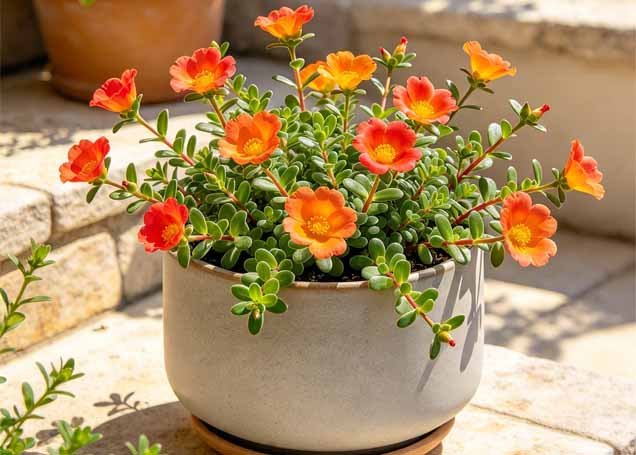
Botanical name: Portulaca grandiflora
Portulaca, also called moss rose, is a low-growing succulent annual with bright flowers.
It is particularly useful in hot, sunny containers, rock gardens, and border edges.
Its fleshy leaves help it tolerate dry conditions, and it performs best in soil that drains quickly.
Portulaca flowers often open most fully in bright sunlight.
Best growing conditions: Full sun, excellent drainage, and relatively dry soil between watering.
Garden idea: Use portulaca in a shallow container or along the edge of a sunny garden bed.
11. Cosmos — Best for Cottage-Style Gardens
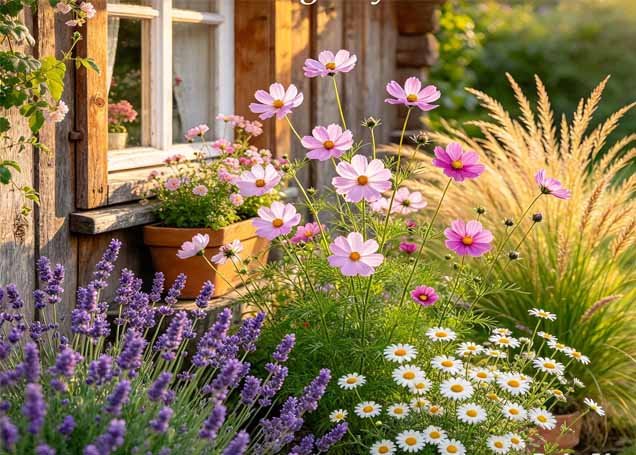
Botanical name: Cosmos bipinnatus and related species
Cosmos produces delicate, daisy-like flowers above feathery foliage.
It creates a relaxed, airy appearance that works beautifully in cottage gardens and informal borders.
Cosmos generally prefers full sun and well-drained soil. Overly rich soil may produce excessive foliage at the expense of flowers.
Although established plants can tolerate some dry weather, seedlings need reliable moisture.
Best growing conditions: Full sun and moderately fertile, well-drained soil.
Garden idea: Mix cosmos with zinnias for a colorful annual flower border.
12. Marigold — Best for Easy Summer Color

Botanical name: Tagetes species
Marigolds are familiar garden annuals with bright yellow, orange, and red flowers.
They are commonly grown in flower beds, containers, and vegetable gardens.
Marigolds appreciate full sun and warm conditions, but they still need water during prolonged dry periods.
Some varieties may slow their flowering during extreme summer heat and recover when temperatures moderate.
Best growing conditions: Full sun, well-drained soil, and consistent moisture without waterlogging.
Garden idea: Use compact marigolds to edge a sunny walkway or vegetable bed.
13. Angelonia — Best for Hot, Humid Summers
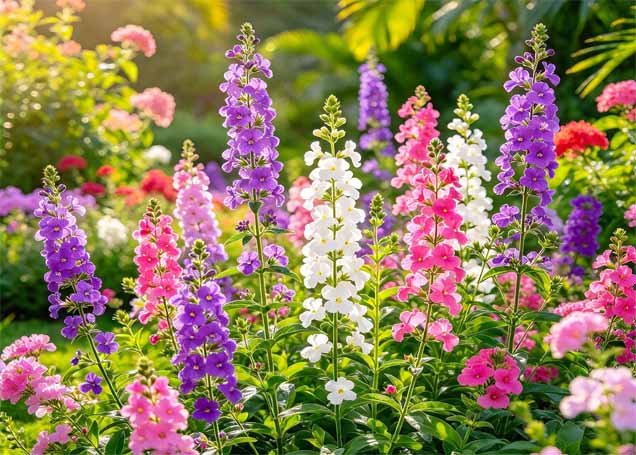
Botanical name: Angelonia angustifolia and hybrids
Angelonia, sometimes called summer snapdragon, produces upright flower spikes in purple, pink, white, and blue-toned shades.
It is an excellent option for gardeners who want flowers that perform well during hot summer weather.
Angelonia is particularly useful in warm, humid regions where some Mediterranean plants struggle.
It can be grown in beds or containers, although container plants require closer attention to watering.
Best growing conditions: Full sun, well-drained soil, and moderate moisture.
Garden idea: Pair angelonia with compact zinnias for a colorful summer container.
14. Celosia — Best for Unusual Flower Shapes

Botanical name: Celosia argentea and cultivated forms
Celosia stands out because of its striking flower shapes and vivid colors.
Some varieties produce upright, feathery plumes, while others form rounded, crested flower heads.
Celosia generally grows well in warm, sunny locations with fertile, well-drained soil.
It is heat-loving, but not necessarily drought-proof. Adequate moisture is important for healthy growth and flowering.
Best growing conditions: Full sun, good drainage, and consistent moisture.
Garden idea: Use celosia as a focal point in a colorful annual flower bed.
15. Agastache — Best for Bees and Hummingbirds

Botanical name: Agastache species and hybrids
Agastache, also known as hummingbird mint or hyssop, produces upright flower spikes that attract pollinators.
Depending on the species, flowers may be purple, pink, orange, or red.
Many Agastache varieties appreciate full sun and well-drained soil.
Some are particularly well suited to dry western gardens, while others perform better with more consistent moisture.
Choosing the correct species for your climate is essential.
Best growing conditions: Full sun, excellent drainage, and species-appropriate moisture.
Garden idea: Plant Agastache alongside coneflowers and native grasses.
16. Little Bluestem — Best Native Ornamental Grass
Botanical name: Schizachyrium scoparium
Little bluestem is a warm-season native grass with attractive upright foliage.
Its colors change through the growing season, often developing copper, orange, or reddish tones in autumn.
Once established, little bluestem can tolerate dry conditions and is useful in naturalistic landscapes.
It performs best in full sun and generally dislikes persistently wet soil.
Best growing conditions: Full sun, well-drained soil, and moderate-to-low fertility.
Garden idea: Combine it with purple coneflowers and black-eyed Susans for a prairie-inspired planting.
17. Pink Muhly Grass — Best for Soft, Cloud-Like Color
Botanical name: Muhlenbergia capillaris
Pink muhly grass is admired for its airy pink flower plumes that create a soft, cloud-like appearance in autumn.
It performs well in sunny locations and can tolerate some dry conditions after establishment.
However, its cold hardiness and winter survival vary by region.
Gardeners in colder northern states should confirm whether pink muhly grass is suitable for their location.
Best growing conditions: Full sun, good drainage, and a suitable regional climate.
Garden idea: Plant several clumps together for a dramatic late-season display.
18. Yucca — Best for Architectural Landscaping
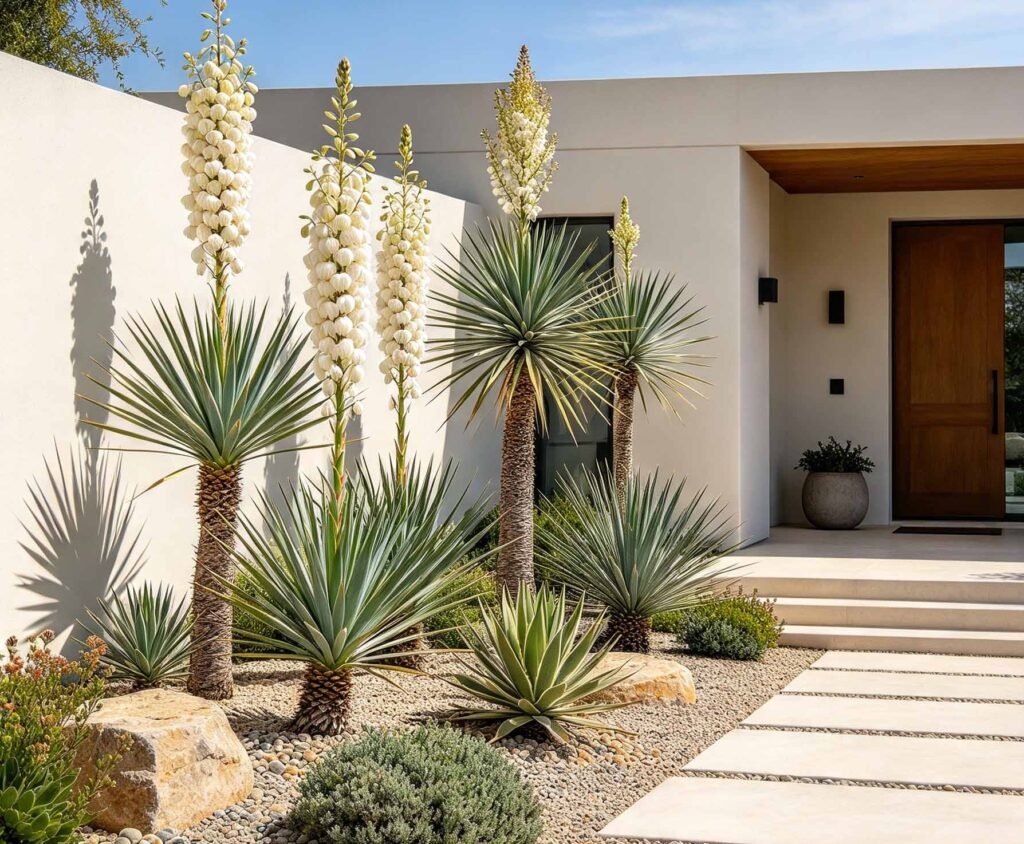
Botanical name: Yucca species
Yucca plants create strong visual structure with their sword-shaped leaves and distinctive growth forms.
Many species tolerate hot, dry conditions and work well in water-wise landscapes.
However, yucca species vary significantly in cold hardiness, mature size, and moisture requirements.
Some have sharply pointed leaves, so they should be placed away from narrow walkways and children’s play areas.
Best growing conditions: Full sun, excellent drainage, and species-appropriate climate conditions.
Garden idea: Use a suitable yucca as a focal point among ornamental grasses and low-growing perennials.
19. Autumn Sage — Best for Warm-Climate Pollinator Gardens

Botanical name: Salvia greggii
Autumn sage is a compact flowering shrub or subshrub valued for its colorful flowers.
It performs particularly well in many warm, sunny landscapes and attracts hummingbirds.
Flower colors include red, pink, coral, purple, and white.
Although established plants can tolerate some drought, occasional deep watering may improve flowering during prolonged dry periods.
Best growing conditions: Full sun, well-drained soil, and a climate suited to the selected cultivar.
Garden idea: Combine autumn sage with Agastache and ornamental grasses.
20. Butterfly Weed — Best Native Milkweed for Sunny Gardens

Botanical name: Asclepias tuberosa
Butterfly weed is a native perennial with bright orange flowers.
It is especially valuable in pollinator gardens because it serves as a host plant for monarch butterfly caterpillars and provides nectar for other insects.
Butterfly weed generally performs best in full sun and well-drained soil.
Once established, its deep root system helps it tolerate dry conditions.
It can be slow to emerge in spring, so mark its location to avoid accidentally disturbing it.
Best growing conditions: Full sun and well-drained soil.
Garden idea: Combine butterfly weed with little bluestem and coneflowers.
21. Texas Sage — Best for Hot, Dry Southwestern Landscapes

Botanical name: Leucophyllum frutescens
Texas sage, also called Texas ranger, is an evergreen shrub with silvery foliage and purple flowers.
It is especially well adapted to many hot, dry landscapes in the American Southwest.
Once established in suitable conditions, it requires relatively little supplemental irrigation.
However, Texas sage is not a universal choice for humid climates or areas with severe winter cold.
Heavy soil and excessive watering can cause problems.
Best growing conditions: Full sun, excellent drainage, and a hot, relatively dry climate.
Garden idea: Use Texas sage as a flowering foundation shrub or informal hedge in a water-wise landscape.
Best Plants for Full Sun and Heat in Different U.S. Regions
The United States includes several very different summer climates.
A plant that thrives in Arizona’s dry heat may struggle in Florida’s humidity. Likewise, a perennial that survives winter in Minnesota may not tolerate the prolonged summer heat of Texas.
Use the following table as a starting point.
| Region | Plants worth considering | Main challenge |
|---|---|---|
| Southwest | Texas Sage, Yucca, Autumn Sage, suitable Agastache | Dry heat and reflected sunlight |
| Southeast | Angelonia, Zinnia, Celosia, selected Coreopsis | Heat, humidity, fungal diseases |
| Midwest | Coneflower, Black-eyed Susan, Yarrow, Little Bluestem | Hot summers and cold winters |
| Northeast | Coneflower, Coreopsis, Sedum, suitable Yarrow | Winter hardiness and summer humidity |
| Pacific Northwest | Lavender in well-drained sites, Sedum, Yarrow, selected Coreopsis | Local rainfall and drainage differences |
These are regional suggestions rather than universal guarantees. Always check your USDA hardiness zone, soil drainage, rainfall, and local extension recommendations.
Hot and Dry vs. Hot and Humid: Why It Matters
Two gardens may both reach 95°F, yet require very different plants.
Hot and dry climates often have low humidity, strong sunlight, and rapid soil moisture loss. Plants such as Texas sage, suitable yuccas, and established yarrow may perform well when planted in appropriate soil.
Hot and humid climates present different challenges. Moisture may remain on leaves for longer, increasing the risk of some fungal diseases. Angelonia, zinnias with good disease resistance, and appropriate celosia varieties are often useful choices.
Do not assume that a plant described as heat-tolerant will thrive equally well in both climates.
Heat Tolerance vs. Drought Tolerance: What’s the Difference?
This is one of the most important distinctions when selecting the best plants for full sun and heat.
Heat tolerance means a plant can continue functioning under relatively high temperatures.
Drought tolerance means a plant can survive periods of limited water, particularly after its roots become established.
A plant can be heat-tolerant without being highly drought-tolerant.
For example, zinnias enjoy warm, sunny weather but typically flower best with adequate moisture. Yarrow and some established ornamental grasses can tolerate much drier conditions.
| Plant | Heat tolerance | Drought tolerance after establishment |
|---|---|---|
| Zinnia | Good | Limited–moderate |
| Angelonia | Good | Moderate |
| Yarrow | Good | Good |
| Portulaca | Good | Good |
| Texas Sage | Very good in suitable climates | Very good |
| Little Bluestem | Good | Good |
Ratings are qualitative comparisons for typical garden conditions, not standardized laboratory measurements.
If you want plants that survive with minimal irrigation, prioritize drought tolerance and local climate suitability rather than full-sun exposure alone.
Best Full Sun Flowers for Containers
Container gardens can brighten patios, balconies, decks, and entryways.
However, containers often dry out faster than garden beds, particularly when exposed to afternoon sunlight.
Good options to consider include:
Portulaca: Suitable for sunny containers with fast-draining potting mix. Avoid keeping the roots constantly wet.
Angelonia: Provides upright flower spikes and summer color. Water according to container size and weather.
Zinnia: Compact cultivars can create colorful container displays. Choose varieties with an appropriate mature height.
Marigold: Dwarf selections work well in pots and sunny borders.
Celosia: Compact cultivars add unusual flower shapes and strong color.
Five Tips for Growing Container Plants in Extreme Heat
- Choose containers with drainage holes.
- Use a quality potting mix rather than heavy garden soil.
- Check moisture frequently during hot, windy weather.
- Water the root zone thoroughly when needed.
- Move vulnerable containers away from intense reflected heat during extreme conditions.
Dark containers and pots placed directly against hot walls may experience especially high root-zone temperatures.
How to Prepare a Full Sun Garden Bed
Choosing suitable plants is only half the process. Soil preparation and planting technique also affect long-term performance.
Step 1: Measure Sun Exposure
A full-sun location generally receives at least six hours of direct sunlight daily.
Some plants bloom best with eight or more hours, while others appreciate limited afternoon protection in extremely hot regions.
Observe the planting area throughout the day rather than judging it only in the morning.
Step 2: Check Soil Drainage
Poor drainage is a common problem for plants that prefer dry conditions.
After rainfall, observe how long water remains in the planting area.
If your soil stays saturated, choose moisture-tolerant plants or improve the planting design rather than placing drought-adapted plants into unsuitable conditions.
Step 3: Group Plants by Water Needs
Place plants with similar moisture requirements together.
For example, a dry border containing yarrow, suitable lavender, and sedum can be managed differently from a bed filled with zinnias and celosia.
This practice is sometimes called hydrozoning.
Step 4: Plant at the Right Time
Avoid transplanting sensitive plants during the most intense afternoon heat whenever possible.
In warm regions, fall or spring planting may offer better establishment conditions for suitable perennials and shrubs.
For summer annuals, wait until the risk of frost has passed and the soil has warmed sufficiently.
Step 5: Mulch Appropriately
Organic mulch can help reduce evaporation and moderate soil temperature.
Keep mulch away from plant crowns and stems.
Some drought-adapted species prefer mineral mulch or relatively dry conditions around the crown, so match the mulch to the plant.
How Often Should You Water Plants in Full Sun?
There is no single watering schedule that works for every full sun garden.
Watering frequency depends on:
- Plant species and maturity.
- Soil type and drainage.
- Rainfall and humidity.
- Wind exposure.
- Container size.
- Root development.
Newly planted flowers generally need more frequent attention because their roots have not yet spread into the surrounding soil.
Established drought-tolerant perennials may need much less supplemental water.
A Practical Watering Method
Check the soil below the surface rather than relying only on how dry the top looks.
If the root zone is becoming dry and the plant needs water, irrigate thoroughly enough to moisten the active root area.
Avoid frequent, shallow sprinkling that wets only the surface.
Morning watering is often preferable because it reduces evaporation and allows foliage to dry.
During extreme heat, prioritize newly planted specimens and container plants, which are more vulnerable to rapid moisture loss.
Best Plants for Full Sun and Heat That Bloom All Summer
If your main goal is continuous color, combine plants with different flowering periods.
For example:
- Early to midsummer: Coreopsis, blanket flower, and some salvias.
- Midsummer: Zinnia, coneflower, angelonia, and black-eyed Susan.
- Late summer into fall: Autumn Joy Sedum, pink muhly grass, and selected Agastache varieties.
Actual flowering periods depend on your region, cultivar, and growing conditions.
For the longest display, mix annuals and perennials instead of relying on one species.
A Simple 10 × 10-Foot Full Sun Garden Plan
A small garden bed can still provide excellent summer color.
Consider a mixed planting using species suitable for your region:
| Position | Plant choice | Purpose |
|---|---|---|
| Back | Little Bluestem | Height and texture |
| Middle | Purple Coneflower | Summer flowers and pollinators |
| Middle | Black-eyed Susan | Yellow color |
| Front | Coreopsis | Lower-growing flowers |
| Front corners | Suitable Sedum | Late-season interest |
This is a conceptual layout, not a fixed plant-count or spacing prescription.
Check each cultivar’s mature width before buying. Avoid crowding plants just to achieve an immediately full appearance.
For additional landscaping inspiration, read Small Backyard Landscaping Ideas.
Seven Common Mistakes When Growing Plants in Full Sun
1. Assuming Every Full Sun Plant Is Drought-Tolerant
Some plants enjoy sunshine but still need regular water. Zinnias are a good example.
2. Ignoring Afternoon Heat
A south- or west-facing wall can create reflected heat that makes a planting location much hotter than the surrounding garden.
3. Planting Too Closely
Crowded plants compete for water and nutrients and may experience reduced air circulation.
4. Overwatering Drought-Adapted Plants
Lavender, some yuccas, and Texas sage may struggle in constantly wet soil.
5. Using the Same Plants in Every Climate
Choose species for your specific combination of temperature, humidity, rainfall, and winter conditions.
6. Forgetting About Establishment
Even drought-tolerant plants usually require regular watering while their root systems develop.
7. Choosing Plants Without Checking Local Invasiveness
Some ornamental plants can escape cultivation in certain regions.
Before planting, consult your state extension service or local invasive-plant guidance.
Frequently Asked Questions
What are the best plants for full sun and heat?
Good options include purple coneflower, black-eyed Susan, yarrow, blanket flower, portulaca, angelonia, and little bluestem. The best choice depends on your region, soil, and watering conditions.
Which flowers can survive hot summer sun?
Zinnias, angelonia, celosia, marigolds, and portulaca are popular warm-season choices. However, their water requirements differ, and some need regular moisture to bloom well.
What plants tolerate both full sun and drought?
Established yarrow, suitable yucca species, little bluestem, Texas sage in appropriate climates, and certain sedums can tolerate relatively dry conditions.
What are the best full sun plants for beginners?
Zinnias, marigolds, black-eyed Susans, and suitable coreopsis varieties are approachable options. Match the plant to your climate and provide appropriate watering.
Can lavender grow in extreme heat?
Many lavender varieties perform well in sunny, dry conditions with excellent drainage. However, high humidity and wet soil can cause problems, and some varieties are better suited to particular climates than others.
Do full sun plants need water every day?
Not necessarily. Watering depends on plant type, soil moisture, weather, and establishment. Container plants may need frequent watering during heat waves, while established drought-tolerant perennials may require much less.
What are the best full sun flowers for pots?
Compact zinnias, marigolds, angelonia, portulaca, and celosia are attractive options. Choose suitable container sizes and ensure proper drainage.
How many hours of sunlight do full sun plants need?
Full sun usually means at least six hours of direct sunlight per day. Some flowering plants perform best with eight or more hours, although extreme reflected heat can still cause stress.
Final Thoughts
Choosing the best plants for full sun and heat is about more than finding flowers that love sunshine.
A successful hot-weather garden combines suitable plants, healthy soil, thoughtful watering, and an understanding of your local climate.
For colorful annual displays, consider zinnias, angelonia, and celosia. For established low-water perennial borders, explore yarrow, blanket flower, sedum, and suitable ornamental grasses. In dry southwestern landscapes, Texas sage and climate-appropriate yuccas may be especially useful.
Most importantly, choose plants based on their actual growing requirements rather than assuming that every sun-loving flower is drought-tolerant.
With the right combinations, your sunny garden can remain colorful, attractive, and easier to maintain throughout the summer.
References and Further Reading
- University of Georgia Extension — Flowering Annuals for Georgia Gardens
- University of Georgia Extension — Flowering Perennials for Georgia Gardens
- University of Minnesota Extension — Water Wisely: Start in Your Own Backyard
- University of Minnesota Extension — Salvia
- University of Arizona Cooperative Extension — Choosing the Right Plants
- University of Arizona Cooperative Extension — Drought and Extreme Heat