

Table of Contents
Peace lilies are among the most recognizable indoor plants in American homes. Their glossy green leaves, elegant white blooms, and ability to tolerate lower light make them popular choices for living rooms, bedrooms, and offices.
Yet even this relatively forgiving houseplant can develop problems. One week, your peace lily looks healthy. The next, its leaves are drooping, the tips are turning brown, or the flowers have disappeared.
The good news? Most common peace lily problems can be traced to watering, light, drainage, or environmental conditions.
Peace lily care is much easier when you understand what the plant actually needs rather than following a rigid watering schedule.
This complete guide explains how to care for a peace lily indoors, encourage healthy blooms, identify common problems, and adjust your routine throughout the year. Whether you’ve just purchased your first peace lily or you’re trying to rescue a struggling plant, these practical tips will help you make better decisions.
Why Proper Peace Lily Care Matters
Proper peace lily care helps maintain healthy foliage, stronger roots, and more consistent flowering. Although peace lilies tolerate lower light than many flowering houseplants, they still need suitable watering, drainage, and indoor conditions. Understanding basic peace lily care also makes it easier to identify problems before they become serious.
What Is a Peace Lily?
The peace lily belongs to the genus Spathiphyllum, a group of tropical evergreen plants in the Araceae family.
Despite its name, a peace lily isn’t a true lily.
Its most recognizable feature is the elegant white structure commonly mistaken for a flower. This white, leaf-like structure is called a spathe. The actual tiny flowers grow on the central spike, known as the spadix.
Peace lilies are appreciated for their attractive foliage and their ability to grow indoors without direct sunlight.
Depending on the variety, a mature plant may grow approximately 1–4 feet tall and wide. Some compact cultivars remain much smaller, while large varieties can reach impressive sizes.
Peace Lily Care at a Glance
| Care Requirement | Recommended Conditions |
|---|---|
| Botanical name | Spathiphyllum spp. |
| Common name | Peace lily |
| Light | Bright, indirect light; tolerates lower light |
| Water | Keep soil lightly moist, allowing slight drying between waterings |
| Soil | Well-draining indoor potting mix |
| Temperature | Approximately 68–85°F during the day |
| Humidity | Moderate to high humidity preferred |
| Fertilizer | Diluted balanced fertilizer during active growth |
| Repotting | When roots become crowded |
| Propagation | Division |
| Flowers | White or greenish spathes surrounding a spadix |
| Pet safety | Toxic to cats and dogs |
Peace lilies can tolerate some variation in growing conditions, but consistent care helps maintain healthier leaves and more reliable flowering.
Peace Lily Care for Beginners
If you’re new to indoor gardening, start with a simple peace lily care routine. Check soil moisture regularly, provide bright indirect light, and avoid unnecessary fertilizing. A consistent peace lily care schedule should respond to the plant’s needs rather than follow fixed watering dates.
1. Provide Bright, Indirect Sunlight
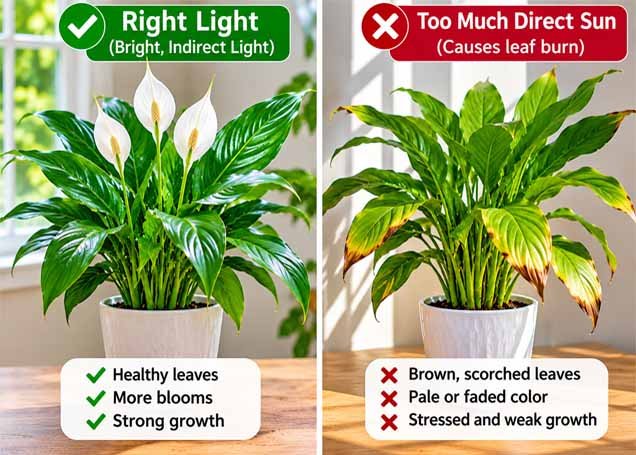
Light is one of the most important factors in successful peace lily care.
Although peace lilies are often marketed as low-light plants, surviving in low light is different from growing vigorously.
A peace lily may keep its foliage in a relatively dim room, but it generally grows and flowers better with bright, indirect light.
Best Window Locations
An east-facing window is often an excellent choice because it provides gentle morning light.
A north-facing window may also work, particularly in a bright room.
Near south- or west-facing windows, place the plant where it receives filtered light rather than intense afternoon sun.
A sheer curtain can help reduce harsh exposure.
Signs of Too Much Sunlight
- Pale or bleached-looking leaves
- Brown, scorched patches
- Dry leaf edges
- Rapid soil drying
Signs of Too Little Light
- Slow growth
- Few or no flowers
- Smaller new leaves
- Weak or stretched growth
If your peace lily isn’t flowering, insufficient light is one of the first conditions to investigate.
Care tip: Move a plant gradually when changing its light exposure. Sudden shifts from deep shade to strong sunlight can stress the foliage.
2. Water Your Peace Lily the Right Way
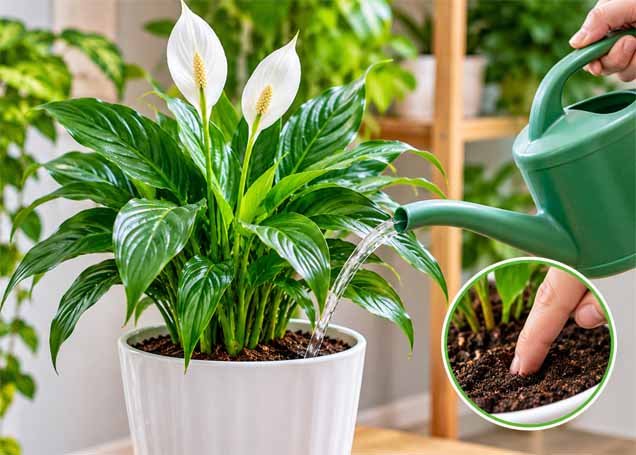
Watering mistakes are among the most common reasons peace lilies struggle indoors.
These plants prefer evenly moist soil, but their roots still need oxygen.
Waterlogged soil can damage roots, while repeated severe drying can cause dramatic wilting and brown leaf edges.
How Often Should You Water a Peace Lily?
There isn’t one schedule that works for every home.
A peace lily in a warm, bright room may need water more frequently than one growing in a cool room during winter.
Instead of watering automatically every Sunday, check the potting mix.
Insert a finger approximately one inch into the soil. If that upper layer feels somewhat dry, it’s usually time to assess whether the plant needs watering.
Water thoroughly until excess drains from the bottom, then empty the saucer.
Signs Your Peace Lily Needs Water
A thirsty peace lily may show:
- Drooping leaves
- Dry potting mix
- A noticeably lightweight pot
- Brown leaf edges after repeated drying
A plant that has become slightly dry may recover after watering. However, repeatedly waiting until the entire plant collapses can create unnecessary stress.
Signs of Overwatering
Overwatered peace lilies may develop:
- Yellowing leaves
- Persistently wet soil
- Weak or drooping foliage
- Slow growth
- Root deterioration
Remember that drooping alone doesn’t prove the plant needs more water.
Always check soil moisture first.
Should You Use Tap Water?
Many peace lilies grow successfully with ordinary tap water.
However, water quality varies across the United States. Some plants may develop leaf-tip problems associated with mineral accumulation or sensitivity to certain dissolved substances.
If brown tips persist despite otherwise suitable care, consider testing a different water source, such as filtered water or collected rainwater from a clean, appropriate source.
Don’t assume water quality is the cause until you’ve checked watering, fertilizer, and humidity.
Peace Lily Care and Watering Mistakes
Watering is one of the most important parts of peace lily care. Too much water can damage roots, while repeated severe drying may cause drooping leaves and brown tips. For better peace lily care, always check the soil before adding water.
3. Choose Well-Draining Soil
Healthy peace lily roots require a balance of moisture and air.
A dense potting mix that remains saturated for long periods can create root problems.
For indoor peace lily care, choose a good-quality potting mix designed for houseplants.
You can improve the structure of an overly dense mix with suitable materials such as perlite or fine orchid bark.
What Makes Good Peace Lily Soil?
An effective mix should:
- Retain some moisture
- Drain excess water
- Allow air to reach the roots
- Support the plant without compacting excessively
Avoid using heavy garden soil in indoor containers.
Garden soil may compact in pots and can introduce unwanted organisms.
Why Drainage Holes Matter
Always choose a container with drainage holes.
If you prefer a decorative pot without holes, keep the peace lily inside a separate draining nursery pot.
After watering, allow excess water to drain before returning it to the decorative container.
This simple habit can prevent many moisture-related problems.
4. Maintain Comfortable Humidity
Peace lilies originate from tropical environments and generally appreciate humid air.
However, that doesn’t mean you need to turn your living room into a greenhouse.
Many plants grow satisfactorily in normal indoor conditions, provided they aren’t exposed to extremely dry air.
How to Increase Humidity
A room humidifier is one of the most dependable options when indoor air becomes very dry.
You can also group compatible houseplants or choose a naturally more humid location with adequate light.
Avoid placing peace lilies directly beside heating vents, radiators, or air-conditioning outlets.
These locations can expose foliage to drying airflow and temperature changes.
Is Misting Necessary?
Misting isn’t essential.
Although it temporarily wets the foliage, it generally doesn’t provide a lasting increase in room humidity.
A humidifier and consistent watering routine are usually more effective.
If you use a humidifier, avoid excessive condensation and maintain appropriate ventilation.
5. Keep Your Peace Lily Warm
Temperature stability matters more than many beginners realize.
Peace lilies generally prefer warm indoor conditions, with daytime temperatures around 68–85°F.
They should be protected from temperatures below approximately 60°F.
Common Temperature Problems
In winter, a peace lily may experience cold stress when placed against chilly window glass.
During summer, a plant near an air-conditioning vent may be exposed to cold drafts.
Heating vents can create the opposite problem by drying leaves and soil.
Keep your peace lily in a location with relatively stable temperatures.
USA seasonal tip: If you live in a region with cold winters, such as Minnesota, Michigan, or New York, check your plant’s window placement when outdoor temperatures drop. A sunny windowsill can become surprisingly cold overnight.
6. Fertilize Carefully for Healthy Growth
Peace lilies aren’t heavy feeders.
In fact, applying too much fertilizer can damage their roots and contribute to brown leaf tips.
During spring and summer, when growth is active, use a balanced liquid houseplant fertilizer diluted according to the product instructions.
A conservative approach is to use approximately one-quarter of the label strength every six to eight weeks during active growth.
Avoid These Fertilizing Mistakes
Using too much fertilizer: Excess salts can accumulate in the potting mix.
Feeding a severely stressed plant: Fertilizer won’t solve root damage or improper watering.
Fertilizing heavily in winter: Growth often slows when natural light decreases.
Assuming fertilizer guarantees flowers: Light, plant maturity, and overall health also affect blooming.
If your peace lily looks healthy and continues producing new leaves, it may not need frequent feeding.
7. Encourage Your Peace Lily to Bloom
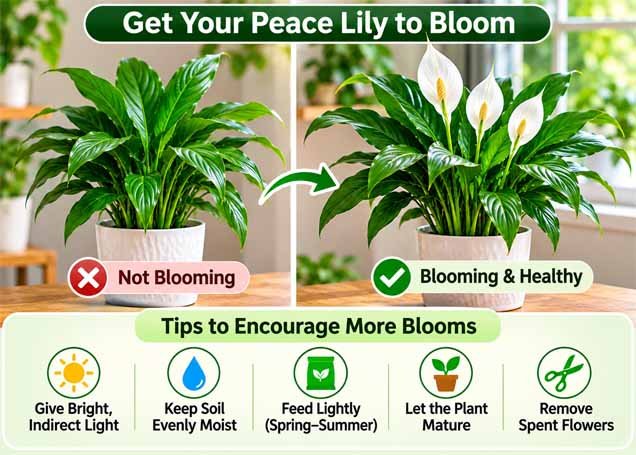
One of the most common questions about peace lily plant care is why a healthy plant doesn’t produce flowers.
A peace lily can have attractive green leaves without blooming regularly.
The most likely explanations include insufficient light, plant maturity, or unsuitable growing conditions.
How to Encourage Flowers
Improve indirect light. Move the plant to a brighter location without exposing it to harsh direct sunlight.
Maintain consistent watering. Avoid repeated cycles of severe drought and waterlogging.
Use fertilizer moderately. A balanced feeding routine may support healthy growth, but excessive fertilizer can be harmful.
Allow time for maturity. Young plants may not bloom as readily as established ones.
Avoid unnecessary repotting. Frequent disturbance isn’t helpful when the plant is otherwise healthy.
Why Are Peace Lily Flowers Turning Green?
The white spathe may gradually become green as it ages.
This is often a natural part of the flowering cycle rather than a disease.
Eventually, older blooms may turn brown and dry.
You can remove spent flower stalks near their base using clean pruning scissors.
How Long Do Peace Lily Flowers Last?
Individual blooms can remain attractive for several weeks, although their lifespan varies with plant variety and growing conditions.
Don’t expect every peace lily to flower continuously throughout the year.
Peace Lily Care for Better Flowering
Good peace lily care supports healthy growth and creates favorable conditions for flowering. If your plant produces leaves but no blooms, review its light exposure first. Peace lily care also includes moderate feeding and allowing the plant enough time to mature.
8. Repot Your Peace Lily Only When Needed
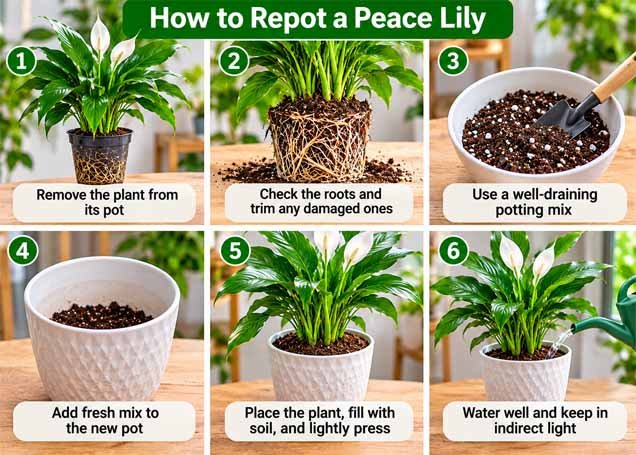
Peace lilies often tolerate being slightly root-bound.
This means they don’t necessarily need a larger pot every year.
Repotting becomes useful when the root system is crowded, or the existing potting mix no longer drains properly.
Signs Your Peace Lily Needs Repotting
- Roots emerging through drainage holes
- Roots circling tightly inside the container
- Soil drying unusually quickly
- Reduced growth despite suitable care
- A severely compacted root ball
How to Repot a Peace Lily
- Choose a pot approximately 1–2 inches wider than the existing container.
- Prepare fresh, well-draining potting mix.
- Carefully remove the plant from its current pot.
- Inspect the roots and remove clearly dead or damaged material.
- Place the plant at approximately its original planting depth.
- Fill around the roots without compacting the soil excessively.
- Water gently and return the plant to indirect light.
Avoid moving a small plant into a dramatically larger container.
Oversized pots can hold excess moisture for longer than the roots can use it.
Best Time to Repot
Spring is generally convenient because increasing daylight supports active growth.
However, a plant experiencing serious drainage or root problems may require attention sooner.
9. Prune Yellow Leaves and Spent Flowers
Pruning keeps a peace lily looking attractive and helps you monitor its health.
Older leaves naturally decline over time.
If a leaf has become completely yellow or brown, remove it with clean scissors near its base.
Avoid cutting healthy leaves unnecessarily.
Should You Cut Brown Tips?
You can carefully trim brown leaf tips for appearance.
However, the damaged tissue won’t become green again, and trimming doesn’t fix the underlying cause.
Investigate watering, humidity, fertilizer, and light conditions if browning continues.
Clean the Leaves
Peace lilies have broad leaves that collect dust.
Wipe them gently with a damp, soft cloth.
Clean foliage looks better and allows you to inspect for pests.
Avoid applying unnecessary leaf-shine chemicals.
10. Watch for Common Pests
Although peace lilies are relatively resilient, they can occasionally develop pest problems.
Common indoor plant pests include spider mites, mealybugs, scale insects, and fungus gnats.
Signs of Pest Problems
Look for:
- Fine webbing around leaves
- Cotton-like white clusters
- Sticky residue
- Small bumps attached to stems
- Unusual yellow spots
- Tiny insects around the potting mix
Inspect the undersides of leaves regularly.
If you notice pests, separate the affected plant from nearby houseplants while identifying the problem.
Gently cleaning the foliage may help with minor infestations. For persistent problems, consult university extension guidance for the specific pest and use only treatments appropriate for indoor plants.
Don’t apply random household chemicals to the leaves.
11. Adjust Peace Lily Care With the Seasons
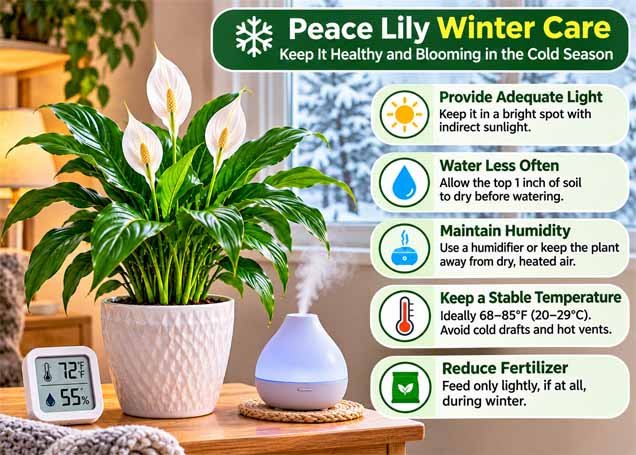
A peace lily’s needs change as daylight, temperature, and indoor humidity change.
Spring Peace Lily Care
Spring is a good time to assess growth, inspect roots, and consider repotting if necessary.
As daylight increases, the plant may produce new leaves more actively.
Summer Peace Lily Care
During warm weather, check soil moisture more frequently.
Protect the plant from strong afternoon sunlight and direct air-conditioning airflow.
Fall Peace Lily Care
As days become shorter, the potting mix may take longer to dry.
Adjust watering based on actual soil conditions.
Peace Lily Care Indoors in Winter
Winter requires special attention in many American homes.
Heating systems can reduce indoor humidity, while shorter days may slow plant growth.
Keep the peace lily away from cold drafts and heating vents.
Avoid overwatering simply because you followed a more frequent schedule during summer.
Seasonal Peace Lily Care Chart
| Season | Main Priority | Common Mistake |
|---|---|---|
| Spring | Support new growth | Repotting unnecessarily |
| Summer | Monitor watering and light | Exposure to strong afternoon sun |
| Fall | Adjust watering frequency | Continuing summer watering habits |
| Winter | Protect from dry air and cold | Overwatering in low light |
Why Is My Peace Lily Drooping?

Drooping peace lily leaves can look alarming.
Fortunately, drooping doesn’t always mean the plant is dying.
The most important step is to determine whether the soil is too dry or too wet.
Cause 1: Underwatering
If the potting mix is dry and the container feels unusually light, the plant may need water.
Water thoroughly and allow excess moisture to drain.
If the roots remain healthy, the leaves may regain firmness.
Cause 2: Overwatering
If the soil is already saturated, adding more water can make the problem worse.
Examine the drainage conditions and check whether water is collecting beneath the pot.
Persistent wilting in wet soil may indicate damaged roots.
Cause 3: Temperature Stress
Sudden exposure to cold drafts or intense heat may cause temporary wilting.
Move the plant to a stable location.
Cause 4: Repotting Stress
Some plants droop temporarily after their roots have been disturbed.
Provide appropriate light and moisture while monitoring recovery.
Peace Lily Care During Winter
Winter peace lily care requires attention to indoor heating, reduced daylight, and slower soil drying. Keep the plant away from cold windows and heating vents. Adjust your peace lily care routine according to actual soil moisture rather than continuing the summer watering schedule.
Drooping Peace Lily Troubleshooting Table
| What You Notice | Possible Explanation | First Action |
|---|---|---|
| Drooping with dry soil | Underwatering | Water thoroughly |
| Drooping with soggy soil | Excess moisture or root damage | Check drainage and roots |
| Drooping after repotting | Root disturbance | Maintain stable conditions |
| Drooping near a cold window | Temperature stress | Move to a warmer location |
| Drooping with yellow leaves | Several possible root or care problems | Inspect soil and root health |
Don’t automatically water a drooping peace lily without checking the soil first.
How to Care for a Peace Lily That Is Dying
If your peace lily is declining, start with a simple diagnosis.
Trying several treatments at once can make the situation more confusing.
Step 1: Check the Soil
Determine whether the potting mix is extremely dry, lightly moist, or waterlogged.
Step 2: Inspect the Roots
If the plant remains wilted despite moist soil, carefully remove it from the pot.
Healthy roots are generally firm.
Severely damaged roots may appear dark, soft, or deteriorated.
Remove clearly dead roots with clean tools if necessary.
Step 3: Check Light Conditions
A plant in a very dark room may struggle to maintain healthy growth.
Move it to bright, indirect light.
Step 4: Examine the Leaves
Look for pest activity, sun damage, yellowing, and brown tips.
Each symptom can provide clues, but none should be interpreted in isolation.
Step 5: Correct the Most Likely Problem
If drainage is poor, improve the potting conditions.
If the soil has become excessively dry, restore consistent moisture.
If sunlight is scorching the leaves, move the plant away from direct exposure.
Step 6: Give the Plant Time
Damaged leaves may not recover their original appearance.
Instead, watch for firm existing foliage and healthy new growth.
Recovery can take time, especially during winter.
Peace Lily Brown Tips: Causes and Solutions
Brown tips are one of the most frequently reported peace lily problems.
They don’t necessarily mean the entire plant is unhealthy.
Possible Causes
Dry soil: Repeated severe drying can damage leaf edges.
Excess fertilizer: Accumulated salts can stress the roots.
Low humidity: Very dry indoor air may contribute to browning.
Water quality: Some plants may react to dissolved minerals or other substances.
Root problems: Poor drainage can interfere with normal water uptake.
What Should You Do?
Check the soil moisture and drainage first.
Review your fertilizer schedule.
Then assess the plant’s location and indoor humidity.
Avoid assuming every brown tip has the same cause.
Why Are My Peace Lily Leaves Turning Yellow?
Yellow leaves may be caused by overwatering, insufficient light, natural aging, or root stress.
One older yellow leaf isn’t necessarily a reason for concern.
However, widespread yellowing deserves attention.
Yellow Leaves With Wet Soil
Check for poor drainage or damaged roots.
Yellow Leaves With Very Dry Soil
The plant may have experienced prolonged moisture stress.
Yellow Leaves in a Dark Room
Consider whether the plant receives enough light for healthy growth.
Yellowing of Older Leaves
Occasional loss of older foliage can be normal.
The overall pattern matters more than one isolated leaf.
Why Are My Peace Lily Flowers Turning Brown?
Peace lily flowers don’t last forever.
The white spathes gradually age, often becoming greenish before turning brown.
This is usually normal.
However, premature browning may be associated with harsh sunlight, moisture stress, or other unfavorable growing conditions.
If the rest of the plant looks healthy, remove the spent flower stalk and continue normal care.
If new flowers consistently deteriorate quickly, review watering and light conditions.
Can Peace Lilies Grow Outdoors in the USA?
Peace lilies are primarily grown as indoor plants in much of the United States.
They can grow outdoors in suitable warm, frost-free environments, but they need protection from intense direct sunlight.
In colder regions, outdoor exposure should be limited to appropriate warm-weather conditions.
Outdoor Peace Lily Care
Place the plant in a sheltered, shaded location with bright filtered light.
Monitor moisture carefully because outdoor pots may dry faster.
Protect it from strong winds and temperature extremes.
Bring container plants indoors before temperatures become too cold.
Avoid assuming that a plant grown indoors can immediately tolerate outdoor sunlight.
Gradually acclimate it to its new environment.
Is Peace Lily Toxic to Cats and Dogs?
Yes. Peace lilies are toxic to cats and dogs.
They contain insoluble calcium oxalate crystals that can cause irritation when chewed or swallowed.
Possible symptoms include mouth discomfort, drooling, vomiting, and difficulty swallowing.
Keep peace lilies away from pets and young children.
If a pet chews or swallows part of the plant, contact a veterinarian or animal poison-control service promptly.
Peace lilies are not true lilies and do not carry the same characteristic kidney-toxicity risk as certain Lilium species in cats. However, they still require appropriate precautions.
Common Peace Lily Care Mistakes to Avoid
Even experienced plant owners occasionally make mistakes.
Here are some worth watching for.
Watering on a fixed schedule: Check soil moisture instead.
Keeping the plant in deep shade: Low-light tolerance doesn’t guarantee flowering.
Using a pot without drainage: Waterlogged soil can damage roots.
Applying excessive fertilizer: More nutrients don’t automatically mean more flowers.
Ignoring winter conditions: Shorter days and heating systems change the growing environment.
Repotting too frequently: Peace lilies often prefer a slightly snug container.
Assuming every drooping plant is thirsty: Wet soil and root damage can also cause wilting.
A consistent, observant approach is usually more successful than constantly changing your care routine.
Frequently Asked Questions About Peace Lily Care
How do you take care of a peace lily indoors?
Place it in bright, indirect light, use well-draining potting mix, water when the upper soil begins to dry slightly, and protect it from extreme temperatures. Feed lightly during active growth.
How often should a peace lily be watered?
Watering frequency depends on temperature, light, humidity, and pot size. Check the soil rather than relying on a fixed schedule.
Can peace lilies survive in low light?
Yes, they tolerate relatively low light, but growth may slow and flowering may decrease. Bright, indirect light generally supports better results.
Why is my peace lily drooping even after watering?
Drooping despite moist soil may indicate root damage, poor drainage, temperature stress, or recent repotting. Check the roots and growing conditions before adding more water.
How do I care for a peace lily that is dying?
Start by checking soil moisture, drainage, roots, and light. Correct the most likely cause and monitor for healthy new growth.
How do I get my peace lily to bloom again?
Provide adequate indirect light, consistent watering, and moderate fertilizer during active growth. Mature, healthy plants are more likely to flower.
Should I cut brown tips off my peace lily?
You can trim brown tips for appearance, but the damaged tissue won’t turn green again. Investigate the underlying cause if browning continues.
Why are my peace lily flowers turning green?
Greenish spathes are often part of normal flower aging. Older blooms may eventually turn brown and can be removed.
Can I put my peace lily outside in summer?
Yes, in suitable warm weather, provided it receives shade or filtered light and is gradually acclimated. Protect it from cold nights and harsh direct sunlight.
What is the best fertilizer for peace lilies?
A balanced liquid houseplant fertilizer applied sparingly during active growth is generally suitable. Avoid excessive feeding.
Are peace lilies safe for pets?
No. Peace lilies are toxic to cats and dogs because they contain insoluble calcium oxalate crystals.
Long-Term Peace Lily Care Tips
Successful peace lily care depends on observing the plant and making small adjustments when necessary. Healthy new leaves, firm foliage, and steady growth are encouraging signs. With consistent peace lily care, your houseplant can remain attractive for years.
Final Thoughts
Successful peace lily care begins with a few consistent habits: provide bright, indirect light, maintain lightly moist but well-drained soil, and protect the plant from extreme temperatures.
When problems appear, examine the growing conditions before reaching for fertilizer or adding more water.
A drooping leaf, brown tip, or faded flower is often a useful clue. Understanding those signals helps you respond appropriately and keep your peace lily healthy for years.
References:
Clemson University Extension: Peace Lily