
Table of Contents
Indoor plants can make any room feel fresher and more welcoming. However, many people don’t have the time to water daily, check humidity, prune often, or move pots to chase the best sunlight.
The good news is you don’t need gardening experience to enjoy beautiful houseplants.
Many easy-care indoor plants can handle the occasional missed watering, normal household conditions, and imperfect lighting. Some are great for beginners because they grow slowly and don’t need much attention.
The most important step is picking a plant that fits your home’s conditions. Even the easiest plants still need light, water, good soil, and drainage. The Royal Horticultural Society (RHS) says easy-care houseplants can handle a wide range of household conditions. However, no houseplant can survive forever without light, since all plants need it for photosynthesis.
If you want indoor plants that don’t require daily care, here are 12 of the best low-maintenance options for beginners.
What Makes an Indoor Plant Low Maintenance?
A low-maintenance houseplant still needs some care. These plants are just more forgiving if things aren’t perfect.
They may tolerate:
- Occasional missed watering
- Low or medium indoor light
- Average household humidity
- Less frequent repotting
- Minor temperature changes
- Minimal pruning
- Beginner gardening mistakes
One of the most common mistakes new indoor gardeners make is giving plants too much attention, especially by overwatering.
Poor drainage and excessive watering can leave roots sitting in wet soil, which may eventually cause root problems. The RHS recommends containers with drainage holes so excess water can escape.
Picking the right plant and knowing when not to water can make indoor gardening much simpler.
1. Snake Plant
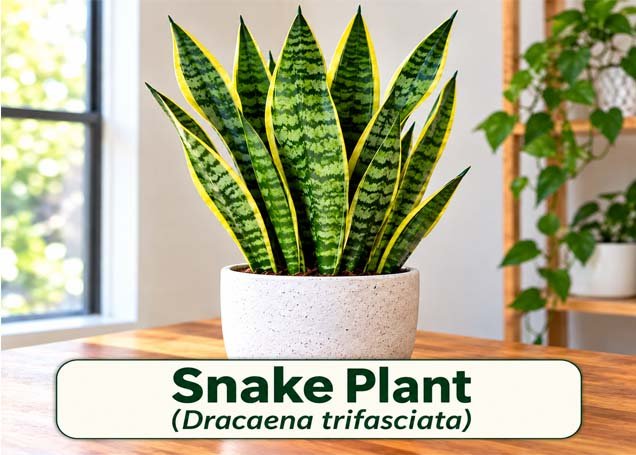
Botanical name: Dracaena trifasciata
Light: Low to High indirect light
Water: Dry between soaks
Difficulty: Very easy
Snake plant — A popular choice for those looking for a low-maintenance indoor plant.
With its long, upright leaves, it has a strong presence and fits well in bedrooms, workplaces, front rooms, hallways, or even small lofts.
Snake plants are already perfect for beginners because they don’t require their soil to stay wet all the time.
Snake plants are forgiving and straightforward to maintain, Penn State Extension says. They prefer well-drained soil and should be watered when the soil is dry. They tolerate low light but usually flourish in bright indirect light.
Snake Plant Care Tips
Indirect sunlight is ideal for your snake plant, if possible. But the soil must not be soggy, and make sure there are drainage holes in the pot
The biggest thing to look out for is overwatering.
If you occasionally forget to water your plants, this might be the plant for you, as a snake plant thrives with that care style.
2. Pothos
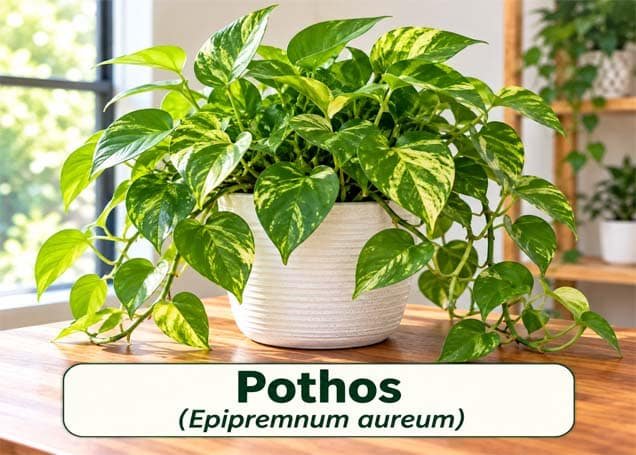
Botanical name: Epipremnum aureum
Light: Most pothos prefer low to medium indirect light; however, wide varieties and colors can tolerate lower light as well.
Water: Let the soil dry out and then water your pothos.
Difficulty: Easy
For beginners, pothos is another great houseplant. Its name sounds just like the hair product.
Pothos has lovely heart-shaped leaves that develop on long, trailing vines. You can let the vines hang down from a shelf or basket, or train them upward with a support.
Pothos is also great for decorating your home.
We can sit a pothos on a shelf and let the vines drape down, put it in a hanging pot next to a window, or grow it out on a plant stand.
Most pothos are at least part shade-tolerant, so they do well in bright to medium indirect light, but as Penn State Extension reports, some will adapt to lower-light situations.
Pothos prefer to be on the dry side when it comes to soil. Water too much, and the roots will rot.
Potho【Things your plant actually requests before watering】 If you can still dip your fingers into the soil and it comes out dry, don’t water. Because pothos leaves grow toward the light, turning the pot now and then helps it grow evenly—bright, indirect light.
3. ZZ Plant
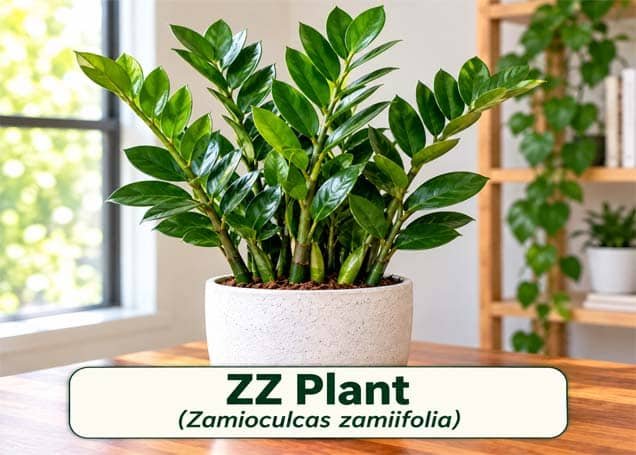
Botanical name: Zamioculcas zamiifolia
Sunlight: Low to bright indirect sun
Water: Let the potting mix dry out between waterings
Difficulty: Very easy
The ZZ plant’s smooth, shiny leaves can almost make it look plastic.
Thanks to its attractive look and relatively low maintenance, it has become popular in homes and offices. ZZ plants can endure dry soil by storing water in rhizomes in the root system.
RHS recommends watering a ZZ plant sparingly and allowing the soil to dry out between waterings. Also, don’t forget: overwatering can cause root rot.
This is what makes the ZZ plant ideal for busy people.
ZZ Plant Care Tips
Provide indirect light, and don’t confuse low light with no light.
More importantly, resist the urge to water it just because a few days have passed. Check the potting mix first.
4. Spider Plant
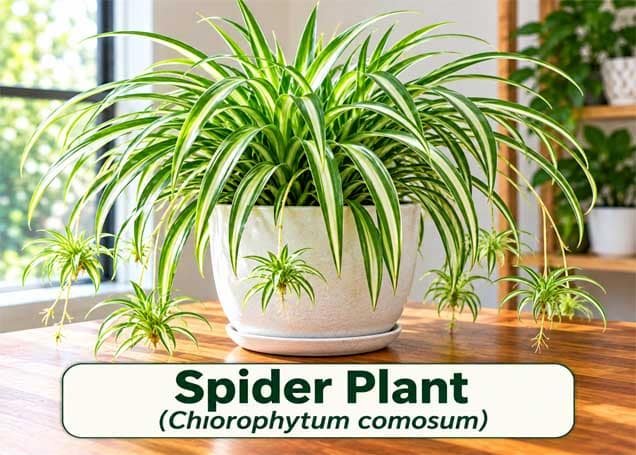
Botanical name: Chlorophytum comosum
Light: Indirect bright to medium light
Water: Moderate
Difficulty: Easy
They have long, slender, arching leaves that create a great-looking fountain effect.
The unusual appearance of the plant is due to it producing hanging tiny plantlets sometimes called ‘spiderettes’ when grown to maturity.
Spider plants work especially well in hanging baskets, on shelves, or on plant stands where their leaves have room to cascade.
The RHS even suggests spider plants as a houseplant for difficult growing conditions, such as lower light and temperature changes.
Spider Plant Care Tips
For stronger growth, keep your spider plant in a spot with plenty of indirect natural light.
Water when the top layer of soil begins to dry out, but don’t let the container sit in water.
You can remove brown or diseased foliage to keep it looking neat.
5. Cast Iron Plant
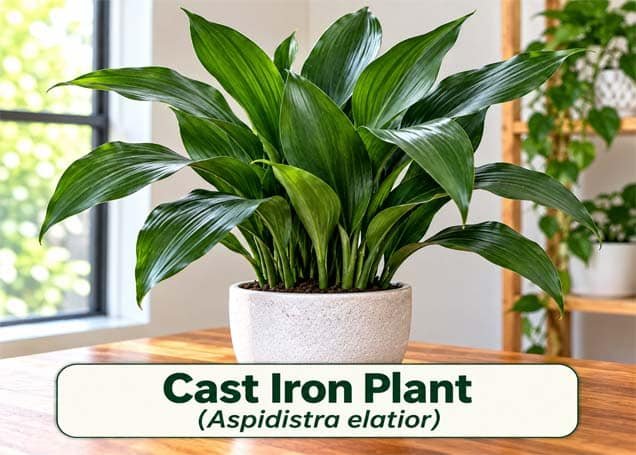
Botanical name: Aspidistra elatior
This houseplant can grow in low to moderate indirect light.
Water: Moderate to low
Difficulty: Very easy
Its common name hints at this plant’s notoriety.
The cast iron plant has earned its place among the hardiest houseplants because it can tolerate conditions that more finicky plants would struggle to endure.
It grows large, dark–green leaves and has a simple yet elegant look.
This makes the plant especially useful in places where you want green without creating a whole new Plant Care Routine.
According to the RHS, cast iron plants tend to like average domestic humidity and typically need little repotting.
Cast Iron Plant Care Tips
Never overwater, and avoid direct sunlight.
You don’t need to worry if you are not seeing new leaves weekly, as the plant is comparatively slow-growing. Slow growth is not a sign that your plant is unhealthy.
6. Chinese Evergreen
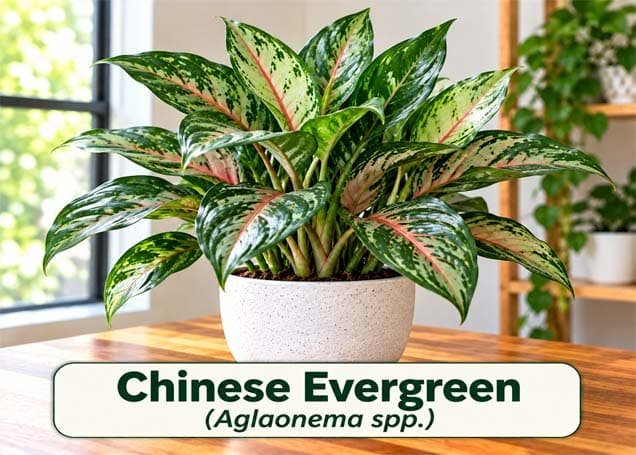
Botanical name: Aglaonema spp.
Light — Low to medium indirect light
Water: At the start of drying of the upper soil
Difficulty: Easy
Chinese evergreen, another easy plant with interesting foliage.
The leaves can be green, silver, cream, pink, or red, depending on the species.
With natural light not being particularly bright, Chinese evergreens can be useful.
The RHS states that Aglaonema prefers low to medium indirect light and is among the most tolerant houseplants in lower-light conditions. Brighter indirect light can help the wide colorful, or variegated varieties.
Chinese Evergreen Care Tips
It is best to let the top layer of the planting mix dry out before watering again.
Avoid cold draughts and temperature shocks.
Another thing to keep in mind: if you have children who tend to eat everything or household pets, Aglaonema can be toxic if ingested; therefore, choose the site appropriately.
7. Heartleaf Philodendron
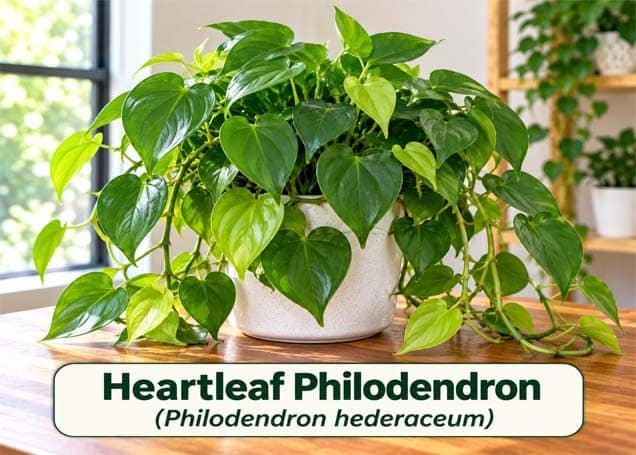
Botanical name: Philodendron hederaceum
Light: Place in medium to bright indirect light.
Water: Water again when the top two inches of soil are dry.
Difficulty: Easy
The heartleaf philodendron grows trailing stems and has heart-shaped leaves.
Because it trails, this plant looks great on bookshelves, in hanging baskets, or on tall stands and shelves.
You can let the vines hang down or provide a support for them to climb.
Keep your plant in a spot with good indirect light, and avoid letting the soil stay constantly wet.
Why Beginners Like It
Some plants need a lot of trimming, but the heartleaf philodendron is easy to care for and doesn’t need much pruning.
If its vines are much longer than you would like, use pruning shears to trim them. Pruning about once per season will also help keep it nice and full.
8. Aloe Vera
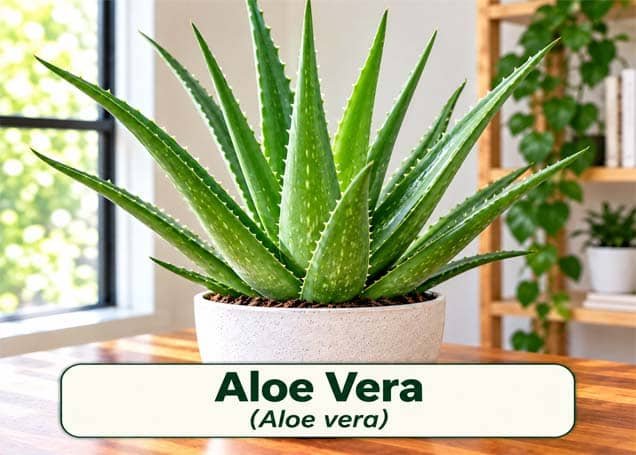
Botanical name: Aloe vera
Light: Bright light
Water: Infrequent
Difficulty: Easy
If you want an easy-to-care-for plant that doesn’t need as much attention as moss, aloe vera is a great choice.
Aloe is different from tropical plants because it stores water in its thick, fleshy leaves instead of needing constant moisture.
So, you don’t have to water aloe very often.
In fact, giving aloe too much water is the most common mistake people make.
Aloe Vera Care Tips
Use a fast-draining potting soil medium and a container with drainage holes.
Keep your aloe near a bright window and let the soil dry out well before you water it again.
Aloe grows best in bright places, so avoid putting it in dark corners.
9. Rubber Plant
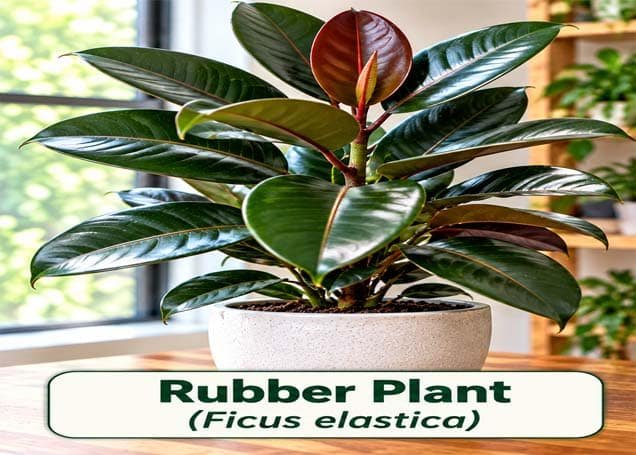
Botanical name: Ficus elastica
Light: Bright indirect light
Water: Moderate
Difficulty: Easy to moderate
Rubber Plants are statement plants for your interior.
They are also a lot of fun, with broad, shiny leaves that create a tropical effect and require a little daily care.
Leaves can be deep green, burgundy, or a mix of both, depending on the variety.
Rubber plants generally prefer bright indirect light.
Allow the topsoil to dry out before watering; the RHS advises. Excess moisture can cause root problems, so a good drainage system is also required.
Rubber Plant Care Tips
Place your plant next to a bright window, but avoid prolonged exposure to strong, direct sunlight.
From time to time, wipe those big leaves to remove dust that makes your beauties look less than their best.
10. Peace Lily
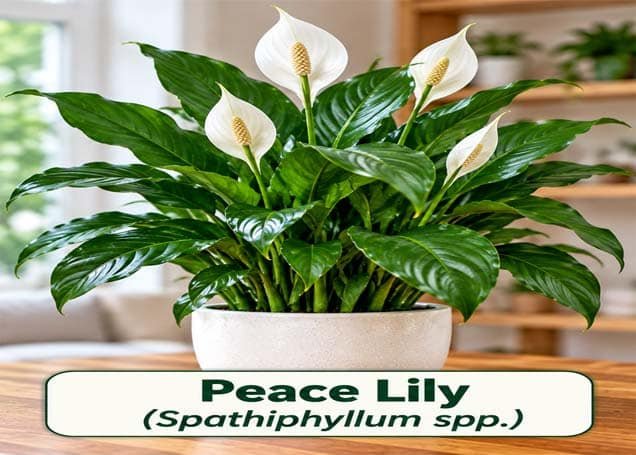
Botanical name: Spathiphyllum spp.
Light: Moderate to bright indirect light; low light will be tolerated
Water: Moderate
Difficulty: Easy to moderate
Popular houseplants, peace lilies are valued for their glossy, dark-green leaves and unusual white, flower-like spathe.
They can take lower light levels, but grow and flower better in good indirect light.
Unlike snake plants and ZZ plants, peace lilies prefer more consistently moist soil.
According to the RHS, the growing medium should be moist rather than soggy, and you only need to water when the top layer begins to dry.
Peace Lily Care Tips
30 — Avoid Watering on a Set Schedule. Check the growing medium first.
Peace lilies are more moisture-loving plants than some of the drought-tolerant plants on this list!
They are dangerous if consumed, so keep them safely arranged in households with animals or younger kids.
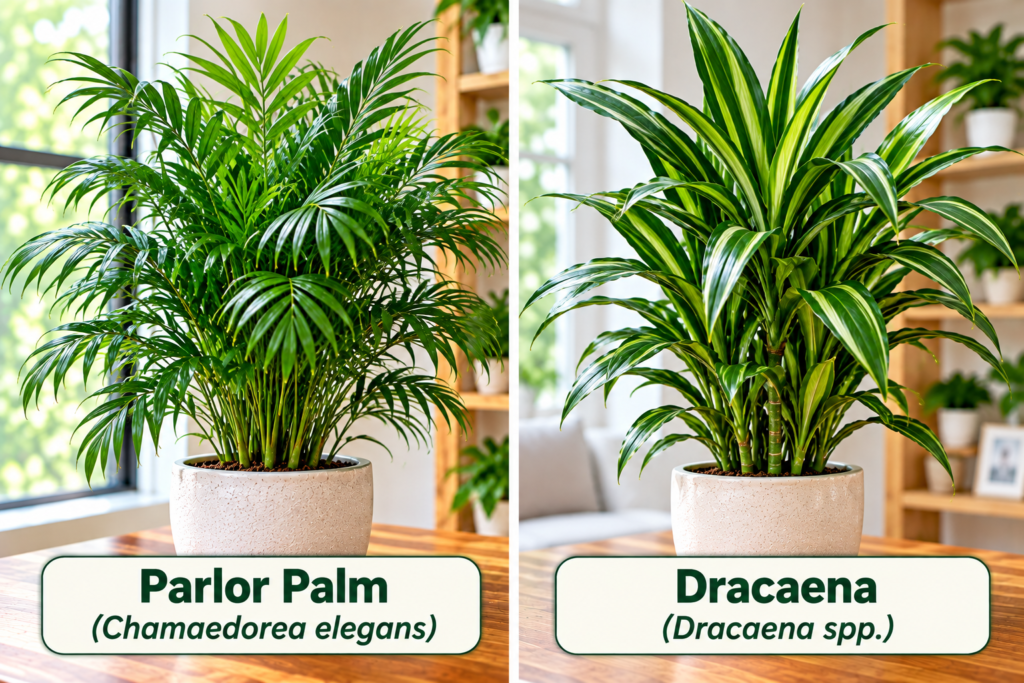
11. Parlor Palm
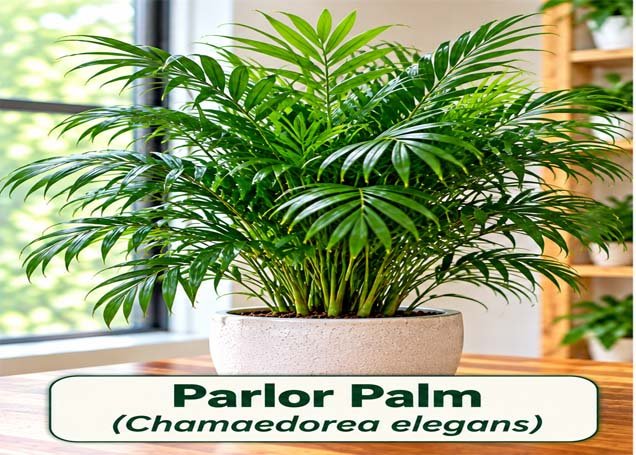
Botanical name: Chamaedorea elegans
Light: High indirect light to bright indirect light
Water: Moderate
Difficulty: Easy
Want to bring a touch of the tropics into your home but don’t want to own a huge indoor tree?
Consider getting a parlor palm.
This palm features soft, feathery fronds that can accentuate a living room, bedroom, or home office.
The Royal Horticultural Society includes the parlor palm on its list of houseplants particularly suited to lower light and shifting indoor conditions.
Parlor Palm Care Tips
Indirect light is ideal.
Check the soil frequently, but don’t let it stay overly wet. Protect the plant from strong drafts and rapid temperature fluctuations.
12. Dracaena
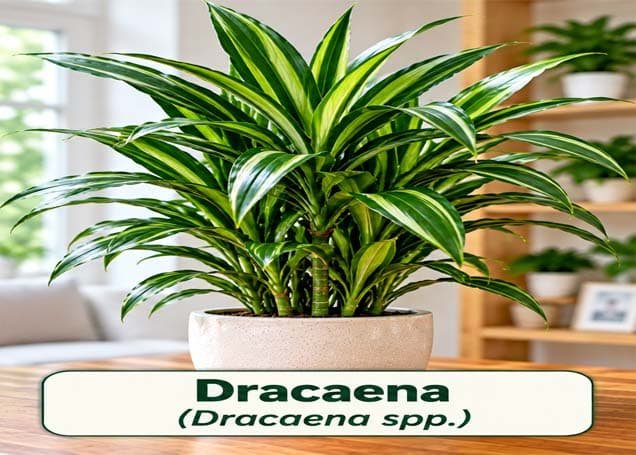
Botanical name: Dracaena spp.
Light: Indirect medium to bright light
Water: Moderate
Difficulty: Easy
Dracaena is a popular indoor plant, and it comes in many attractive colors, shapes, and sizes.
This includes long green leaves or leaves with cream/yellow or reddish margins.
Their vertical growth habit makes them especially effective for growing greenery in tighter spaces because you can only see a minimal amount of the floor space.
Most dracaena varietals will do better with indirect sunlight. Some varieties can withstand less light, but will likely grow more slowly.
Dracaena Care Tips
Never keep the potting medium wet.
If the plant starts to lean towards a window, rotate the container occasionally.
When necessary, prune away wilting or fully yellow foliage.
Quick Comparison of Low Maintenance Indoor Plants
| Plant | Light | Water Need | Beginner Friendly |
| Snake Plant | Low–bright indirect | Low | Excellent |
| Pothos | Medium–bright indirect | Low–moderate | Excellent |
| ZZ Plant | Low–bright indirect | Low | Excellent |
| Spider Plant | Medium–bright indirect | Moderate | Excellent |
| Cast Iron Plant | Low–moderate | Low | Excellent |
| Chinese Evergreen | Low–medium | Moderate | Excellent |
| Heartleaf Philodendron | Medium–bright indirect | Moderate | Excellent |
| Aloe Vera | Bright | Low | Excellent |
| Rubber Plant | Bright indirect | Moderate | Good |
| Peace Lily | Medium–bright indirect | Moderate | Good |
| Parlor Palm | Low–bright indirect | Moderate | Excellent |
| Dracaena | Medium–bright indirect | Moderate | Excellent |
Caring for Low Maintenance Indoor Plants
After choosing an easy plant, a few simple habits will help your indoor garden thrive with minimal effort.
1. Never Water on a Fixed Schedule
Sometimes you will be told to water a plant “once per week”.
Treat those numbers as a general guide, not something you have to follow exactly.
How quickly soil dries depends on pot size, plant size, temperature, humidity, the season, airflow, and how much light the plant gets.
Instead, check the soil before watering.
If your plant prefers dry soil between waterings, wait until the soil feels dry before watering again.
According to the RHS, plants in cooler rooms will usually need watering less often than those in hot rooms.
2. Allow Your Plants to Get Some Natural Light
“Low light” does not mean “No Light”.
Plants require light to photosynthesize.
Sure, a snake plant or ZZ plant can sit farther from a window than aloe, but anchoring a living plant in an utterly dark room isn’t sustainable.
Even easy-to-care-for plants can’t survive total darkness forever, RHS guidance warns.
If your plant is pale, weak, and going all leggy, it could be a light issue.
3. Use Pots With Drainage Holes
Drainage: This is one of the most crucial aspects of growing plants indoors.
Excess water must be able to get away from the roots rather than staying in place after watering.
The RHS recommends pots with holes at the bottom, and watering enough to let excess water drain from the base of the plant.
If you want to use an attractive ornamental pot without drainage, keep the plant in its original nursery pot (with holes) and set it inside the ornamental container.
4. Don’t Over-Fertilize
Plants are better nourished than a year ago. More fertilizer does not mean healthier plants.
Apply an appropriate houseplant fertilizer following label directions during active growth on vulnerable indoor plants.
However, different plants have different needs.
Do not apply extra fertilizer in a desperate attempt to speed up growth.
Watch Your Plant’s Leaves
When the growing conditions are wrong, plants tend to give telling signs.
Yellowing leaves, browning edges, wilting, leaf drop, and weak growth can signal that something is wrong.
But beware of using one symptom to diagnose a whole problem.
Yellowing, for example, may signal multiple environmental problems.
According to RHS, light, watering, humidity – temperature – pests etc.”][90824=”become a problem”]A triumph: The RHSSARA recommends that owners assess the light, watering, humidity, temperature, pest problems etc of a houseplant when it begins to struggle.[/90824]
Top Low-Temperature Maintenance Houseplants
Lesson 1: Start with low-light plants. If your home gets little to no natural light, start by planting low-light plants.
Good options include:
Snake plant, ZZ plant, cast iron plant, Chinese evergreen, parlor palm, and some pothos types.
But remember the important distinction:
Darkness does not equal low light.
At a minimum, you need to provide natural or appropriate supplemental light, even if the plant can tolerate some shade.
The Best Indoor Plants for People Who Forget to Water
Not everyone who has issues with plants does so because they are bad at gardening.
They forget watering day.
If that seems familiar, think about more drought-tolerant plants, including:
Some examples: ZZ plant, snake plant, aloe vera, and cast iron.
In fact, for these plants, forgetfulness often matters less than overwatering.
Common Indoor Plant Mistakes to Avoid
Even low maintenance plants can struggle when their basic requirements aren’t met.
Some common mistakes include:
- Watering automatically without checking the soil
- Using pots without adequate drainage
- Keeping low-light plants in complete darkness
- Placing shade-loving foliage in harsh direct sunlight
- Fertilizing excessively
- Ignoring pests
- Repotting unnecessarily
- Allowing water to remain in decorative outer pots
- Assuming every houseplant needs the same amount of water
Learning to observe your plants is more useful than following a rigid care calendar.
Frequently Asked Questions
What is the easiest indoor plant to keep alive?
Snake plants and ZZ plants are two particularly forgiving choices for beginners. Both tolerate a range of indoor lighting conditions and don’t require constantly moist soil. Snake plants are specifically recognized for their easy-care characteristics and tolerance of infrequent watering.
What indoor plants need the least water?
Snake plants, ZZ plants, aloe vera, and other drought-tolerant houseplants generally require less frequent watering than moisture-loving tropical plants.
Always check the growing medium rather than assuming a fixed number of days between watering.
Can indoor plants survive without sunlight?
Plants need light for photosynthesis. Some houseplants tolerate low levels of natural light, but a permanently dark, windowless environment isn’t suitable for ordinary houseplants without an appropriate supplemental light source.
Which indoor plants are good for beginners?
Snake plant, pothos, ZZ plant, spider plant, Chinese evergreen, cast iron plant, and parlor palm are all good plants to investigate when starting an indoor garden.
Your best choice depends primarily on the amount of light and space available in your home.
Do low maintenance indoor plants need fertilizer?
They may benefit from appropriate feeding during active growth, but fertilizer requirements vary by species. Follow the instructions for your specific plant and fertilizer rather than assuming that more fertilizer will create faster or healthier growth.
Final Thoughts
Keeping houseplants doesn’t mean using a watering can every morning and walking from room to room.
The key is selecting species that fit your home environment and match your lifestyle.
Based on this: If missing watering and prolonged waiting is your thing -> Snake Plant or ZZ Plant. For trailing greenery on your shelf, pothos or heartleaf philodendron can fit the spot. Aloe vera is worth considering if you have a sunny window and want something drought-tolerant. If you’re working with lower natural light, consider a cast iron plant, Chinese evergreen, snake plant, or parlor palm.
Width or two thin heads in seldom fill out your complete domestic right away. Watch how fast their soil dries, how they respond to the light available, and adjust. Low maintenance does NOT mean no maintenance.
It simply means you have a green home without making plant care your job.
References
Royal Horticultural Society (RHS) — Easy Care Houseplants; How to Grow Houseplants; Choosing the Best Houseplants; Low-Light Tolerant Houseplants.
Penn State Extension — Low Light Houseplants; Snake Plant: A Forgiving, Low-Maintenance Houseplant; Pothos as a Houseplant.
These horticultural resources were used for guidance on lighting, watering, drainage, and individual plant-care requirements.