
Table of Contents
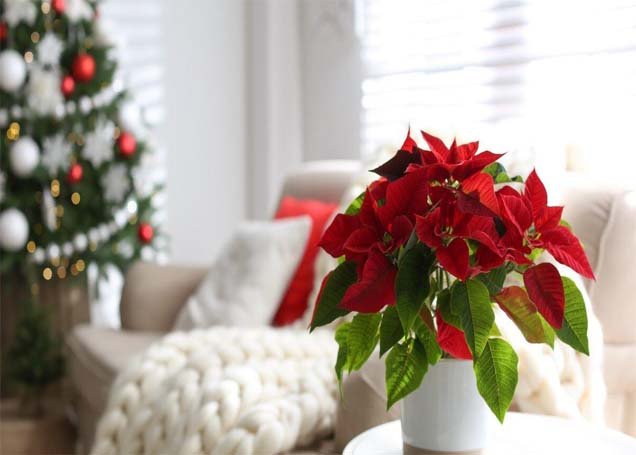
A consistent poinsettia care routine helps keep this popular Christmas plant healthy and colorful throughout the holiday season.
Poinsettias bring a splash of festive color to American homes every holiday season. Their brilliant red, pink, white, or cream-colored leaves make them a favorite for Christmas decorating. But keeping these beautiful plants healthy indoors requires more than simply placing them on a table and watering occasionally.
The good news? Poinsettia care is relatively simple once you understand the plant’s needs.
Whether you recently purchased your first Christmas poinsettia or want to keep last year’s plant growing, this guide explains how to care for a poinsettia, prevent common problems, and encourage colorful bracts again next winter.
Poinsettia Care at a Glance
| Care Requirement | Best Practice |
|---|---|
| Botanical name | Euphorbia pulcherrima |
| Light | Bright natural light |
| Watering | When soil surface feels dry |
| Temperature | Around 65–70°F indoors |
| Soil | Well-draining indoor potting mix |
| Humidity | Moderate household humidity |
| Fertilizer | During active growth, not while blooming |
| Bloom season | Winter holiday season |
| Main problems | Leaf drop, yellowing, overwatering, drafts |
Poinsettias are tropical plants native to Mexico. Although their colorful parts resemble flower petals, they are actually modified leaves called bracts. The true flowers are the small yellow structures at the center.
Understanding this distinction helps explain why poinsettias remain decorative for weeks even when their actual flowers are tiny.
How to Care for Christmas Cactus
1. Give Your Poinsettia Plenty of Bright Light
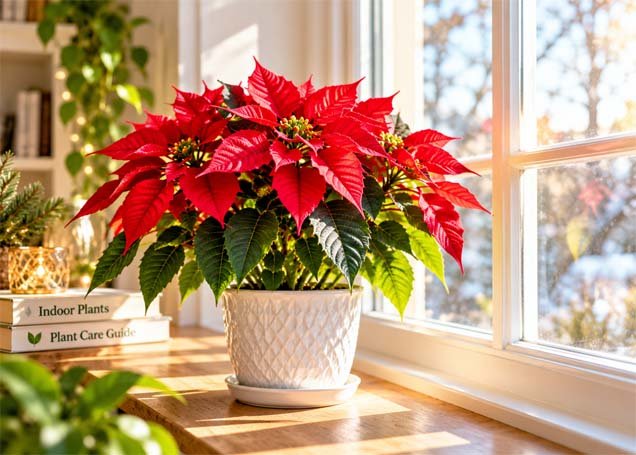
Proper poinsettia care begins with choosing a bright indoor location that protects the plant from harsh environmental conditions.
Proper lighting is one of the most important parts of poinsettia care.
Place your poinsettia near a bright east-, west-, or south-facing window. During winter, the plant benefits from several hours of strong natural daylight.
However, avoid suddenly moving a greenhouse-grown poinsettia into intense sunlight, especially behind hot glass.
Best lighting tips:
- Choose a bright window with reliable daylight.
- Keep leaves from touching cold windowpanes.
- Rotate the pot occasionally for balanced growth.
- Avoid dim corners for extended periods.
- Move decorative plants back toward the window after holiday gatherings.
Common mistake: Keeping a poinsettia in a dark hallway throughout December. Low light can contribute to weak growth and early leaf loss.
2. Water Your Poinsettia the Right Way
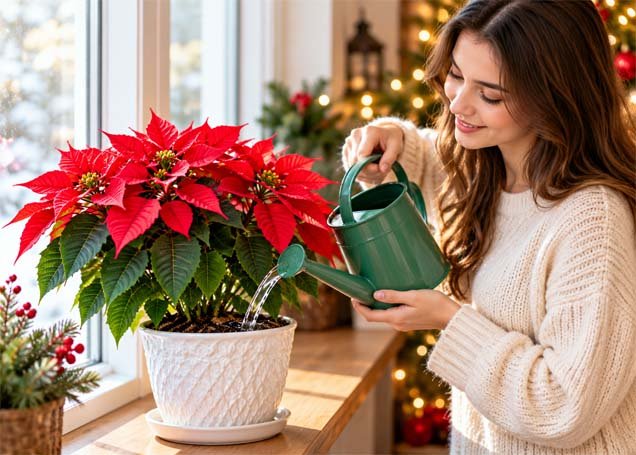
One of the most common questions is: How often should you water a poinsettia?
There is no universal schedule because watering frequency depends on pot size, indoor temperature, light, and soil moisture.
Instead of watering every few days automatically, check the soil.
How to Water a Poinsettia
- Touch the soil surface with your finger.
- If it feels dry, move the plant to a sink or protected area.
- Water slowly until excess moisture drains through the bottom.
- Allow the pot to drain completely.
- Return the plant to its decorative location.
If your Christmas poinsettia comes wrapped in decorative foil, remove the wrapping before watering or ensure it cannot trap water around the pot.
Signs of Overwatering
- Yellowing leaves
- Persistently wet soil
- Wilting despite moist soil
- Premature leaf drop
Signs of Underwatering
- Dry, lightweight potting mix
- Drooping leaves
- Dry leaf edges
- Leaves falling after severe wilting
Poinsettia care tip: Keep the soil moderately moist, but never leave the roots standing in water.
3. Maintain the Right Indoor Temperature
Poinsettias prefer comfortable indoor temperatures.
For most homes, 65–70°F is an excellent target. The plant may tolerate slightly cooler nighttime conditions, but sudden cold exposure can damage its foliage.
Avoid placing your poinsettia:
- Beside exterior doors that open frequently
- Against freezing window glass
- Directly above heating vents
- Near fireplaces or space heaters
- In areas with strong air-conditioning drafts
Cold damage is especially important when transporting a poinsettia during winter.
If outdoor temperatures are low, protect the plant during the short trip from the store to your vehicle and into your home.
Even a healthy poinsettia may begin dropping leaves after exposure to sudden temperature changes.
4. Choose Well-Draining Soil and the Right Pot
Healthy roots are essential for successful poinsettia plant care.
Use a good-quality indoor potting mix that holds some moisture but drains freely.
A suitable mix can contain peat or coir, composted organic material, and perlite.
The exact ingredients matter less than proper drainage and a structure that does not remain waterlogged.
Good drainage is essential for poinsettia care because waterlogged soil can damage the roots and cause leaf problems.
What Type of Pot Is Best?
Choose a container with drainage holes.
A decorative outer planter is fine, but the inner growing pot should be removable so you can empty excess water.
Avoid transferring a healthy flowering poinsettia into a much larger container immediately after purchase.
Repotting is usually better when active growth resumes in spring.
When Should You Repot?
Consider repotting if:
- Roots are tightly circling the container.
- The plant dries out unusually quickly.
- The potting mix has deteriorated.
- The plant has outgrown its original pot.
Select a container only slightly larger than the existing root ball.
5. Provide Comfortable Humidity
Poinsettias are tropical plants, so very dry indoor air can create additional stress.
Indoor humidity is another factor to consider when developing a poinsettia care routine for heated homes.
During winter, heating systems often lower indoor humidity.
You can improve the growing environment by placing the plant away from hot air vents or grouping it with other houseplants.
A room humidifier may help if your home is exceptionally dry.
However, humidity does not replace correct watering.
Wet soil combined with poor drainage can still damage roots even when the surrounding air is dry.
For everyday poinsettia care, consistent light, moisture, and temperature are usually more important than trying to maintain a precise humidity percentage.
6. Fertilize Only When the Plant Needs It
A seasonal poinsettia care schedule should include appropriate feeding during active growth rather than unnecessary fertilization during holiday display.
A newly purchased poinsettia generally does not need fertilizer while displaying its colorful holiday bracts.
Commercial growers typically supply nutrients during production.
Additional fertilizer during the holiday display period is unlikely to improve its appearance.
If you decide to keep your poinsettia after Christmas, begin feeding when active new growth appears.
Use a balanced houseplant fertilizer according to the manufacturer’s instructions.
Avoid applying fertilizer to extremely dry soil or using stronger concentrations than recommended.
Simple rule: Focus on watering and light during the holidays; reserve routine fertilizing for the growing season.
7. Prevent Poinsettia Leaves From Turning Yellow or Falling Off
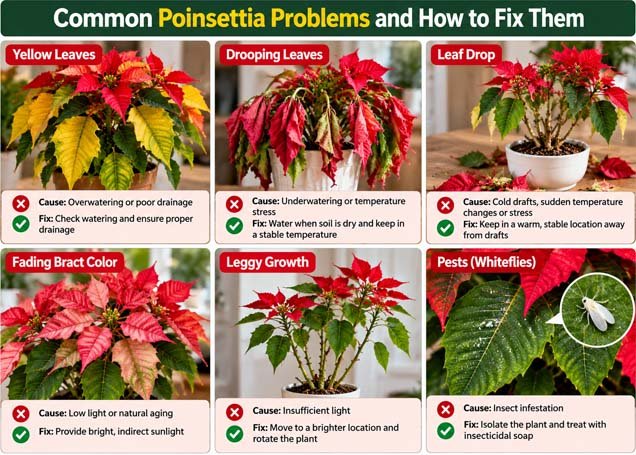
Understanding common poinsettia care mistakes makes it easier to prevent yellow leaves, wilting, and premature leaf drop.
Leaf drop is one of the most frustrating problems for poinsettia owners.
Fortunately, many cases can be traced to environmental stress.
Poinsettia Problem-Solving Table
| Problem | Possible Cause | What to Do |
|---|---|---|
| Yellow leaves | Excess moisture or root stress | Check drainage and watering |
| Sudden leaf drop | Cold drafts or temperature changes | Move to a stable location |
| Drooping leaves, dry soil | Underwatering | Water thoroughly and drain |
| Drooping leaves, wet soil | Overwatering or damaged roots | Let soil dry appropriately and inspect roots |
| Fading bract color | Natural aging or poor conditions | Improve light and maintain stable care |
| Weak, stretched stems | Insufficient light | Move to a brighter position |
| Whiteflies or sticky leaves | Insect infestation | Isolate and inspect the plant |
Why Is My Poinsettia Losing Leaves?
First, examine the soil.
If it is consistently saturated, watering may be the problem.
If the soil is dry and the plant is wilting, insufficient moisture may be responsible.
Next, consider the plant’s location.
A poinsettia positioned beside a cold front door can lose leaves even when its watering routine is correct.
Some leaf loss also occurs naturally as the holiday display ages.
Avoid making several drastic changes at once. Correct the most likely problem and monitor the plant.
8. Keep Your Poinsettia Healthy After Christmas
Many people throw away their poinsettias when the holiday season ends.
However, you can maintain a poinsettia as a houseplant throughout the year.
January–February: Maintain Basic Care
Continue providing bright light, appropriate watering, and protection from drafts.
Some colorful bracts may remain attractive for several weeks.
March–April: Prepare for New Growth
As the old bracts fade, inspect the plant and remove dead or damaged material.
If the plant has become tall and leggy, spring is a suitable time for pruning.
Wear gloves when pruning because poinsettias release a milky sap that can irritate sensitive skin.
May–June: Repot and Encourage Growth
When active growth resumes, repot if necessary.
Provide sufficient light and begin fertilizing according to the product instructions.
July–August: Maintain a Bushy Shape
Healthy plants may grow rapidly during summer.
Selective pinching can encourage branching and produce a fuller appearance.
Avoid pruning too late in the season if you plan to encourage winter coloration.
September: Prepare for Indoor Conditions
If your poinsettia spent summer outdoors, move it inside before temperatures become too cold.
Inspect for insects and provide a bright indoor location.
9. Encourage Your Poinsettia to Turn Red Again
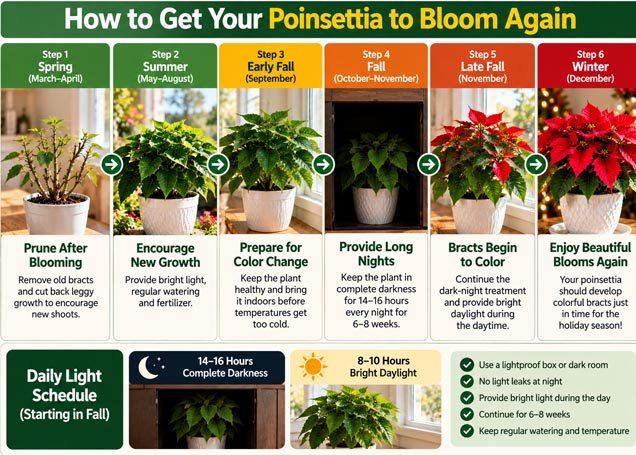
Year-round poinsettia care involves adjusting light exposure and maintaining healthy growth before the autumn reblooming period.
One of the most interesting parts of long-term poinsettia care is encouraging the plant to develop colorful bracts again.
Poinsettias respond to long, uninterrupted nights.
This process is called photoperiodism.
To prepare a poinsettia for Christmas color, growers generally provide extended periods of complete darkness each night beginning in early fall.
For home gardeners, a practical method is:
- Begin the treatment around late September or early October.
- Provide approximately 14–16 hours of uninterrupted darkness each night.
- Give the plant bright daylight during the remaining hours.
- Maintain suitable temperatures and regular watering.
- Continue consistently for several weeks until the bracts develop color.
Even brief exposure to artificial light during the dark period can interfere with the process.
A lightproof box or completely dark closet can be used, provided the plant receives adequate daylight afterward.
Can a Poinsettia Rebloom Every Year?
Yes, it is possible.
However, reblooming takes patience and consistent control of light exposure.
Commercial growers use carefully managed greenhouse conditions, so home-grown plants may not develop the same compact shape or abundant color.
Even if your poinsettia does not turn red again, it can remain an attractive green houseplant.
Poinsettia Care Calendar for USA Homes
| Season | Main Care Task |
|---|---|
| Winter | Bright light, stable temperatures, careful watering |
| Spring | Pruning, repotting, new growth |
| Summer | Active growth, feeding, occasional shaping |
| Early fall | Bring indoors before cold weather |
| Fall | Begin uninterrupted long-night treatment |
| Holiday season | Enjoy colorful bracts and maintain steady care |
In colder parts of the United States, including Minnesota, Michigan, and New England, protect poinsettias from frost and freezing conditions.
In warmer regions, outdoor growing may be possible for longer periods, but the plant still needs protection from unusually cold weather.
Are Poinsettias Safe Around Pets?
Poinsettias are often described as extremely poisonous, but that reputation is exaggerated.
They are not considered highly toxic. However, chewing the leaves or stems may cause stomach irritation in cats, dogs, or people.
The milky sap can also irritate skin.
Keep poinsettias out of reach of curious pets and small children, and contact a veterinarian if a pet develops symptoms after chewing the plant.
How to Choose a Healthy Poinsettia at the Store
Good poinsettia care begins before the plant reaches your home.
Look for:
- Full, evenly colored bracts
- Healthy green lower leaves
- Firm stems
- Soil that is not waterlogged
- No obvious insects
- Small yellow flowers that are not completely spent
Avoid plants displayed beside cold exterior doors or exposed to freezing temperatures.
A healthy plant is more likely to remain attractive throughout the Christmas season.
Frequently Asked Questions About Poinsettia Care
How often should I water my poinsettia?
Water when the soil surface feels dry. Check regularly rather than following a rigid calendar, and allow excess water to drain away.
Do poinsettias need direct sunlight?
They need bright daylight. A bright window works well during winter, but avoid exposing a newly purchased plant to sudden, intense heat or sunlight.
How long do poinsettias last indoors?
With good care, poinsettias can remain decorative for six to eight weeks or longer. Some varieties hold their colorful bracts for several months.
Why are my poinsettia leaves turning yellow?
Yellow leaves may indicate overwatering, poor drainage, insufficient light, or temperature stress. Check soil moisture and the plant’s environment first.
Can I keep a poinsettia alive all year?
Yes. With the right light, watering, occasional pruning, and growing-season fertilizer, you can keep poinsettias as houseplants.
How do I make my poinsettia red again?
Provide several weeks of long, completely uninterrupted nights beginning in early fall, combined with bright daytime light.
Should I fertilize my Christmas poinsettia?
Usually not while it is displaying holiday bracts. Begin routine feeding when the plant resumes active growth.
Can poinsettias grow outdoors?
Yes, in suitable warm conditions. Protect them from frost and cold weather.
Final Thoughts
Successful poinsettia care comes down to a few simple habits: bright light, careful watering, comfortable temperatures, and good drainage.
If you only want your poinsettia to look beautiful during Christmas, these basics are usually enough.
If you want to keep it for another year, add spring pruning, summer growth care, and a consistent autumn darkness schedule.
With patience, your Christmas poinsettia can become more than a temporary holiday decoration—it can be a rewarding houseplant that brings seasonal color year after year.


