
Table of Contents
Learning how to care for Christmas cactus is easier than you might expect. Unlike desert cacti that thrive in intense sunshine and dry soil, Christmas cactus prefers filtered light, well-draining potting mix, and more consistent moisture. With the right conditions, this attractive houseplant can produce colorful flowers during the holiday season and remain healthy for many years.
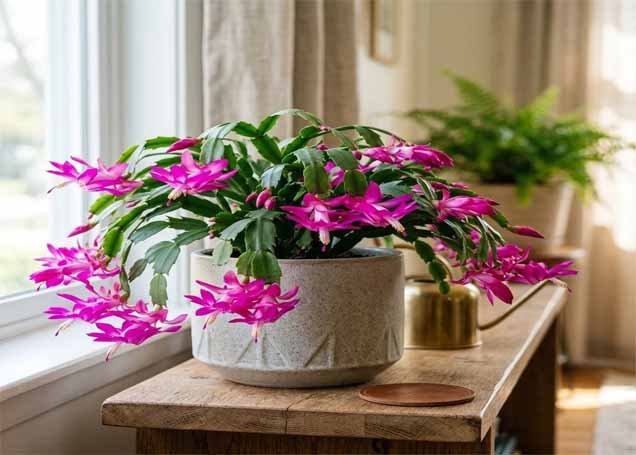
Christmas cactus is especially popular in American homes because it grows well indoors and adds beautiful winter color when many outdoor plants are dormant. Its cascading green stems and pink, red, white, or purple-toned flowers look lovely on a bright windowsill or plant stand.
However, successful Christmas cactus care involves more than watering occasionally. Light exposure, nighttime temperature, seasonal changes, and soil drainage all influence the plant’s growth and flowering.
In this guide, you’ll learn how to care for Christmas cactus indoors, encourage repeat blooms, identify common problems, and follow a practical month-by-month care routine.
Christmas Cactus Care at a Glance
| Care Requirement | Recommended Conditions |
|---|---|
| Common name | Christmas cactus |
| Botanical name | Schlumbergera × buckleyi (traditional Christmas cactus) |
| Light | Bright, indirect sunlight |
| Watering | Water when the upper potting mix begins to dry |
| Soil | Loose, well-draining, organic-rich potting mix |
| Temperature | Generally comfortable indoor temperatures; cooler nights help flowering |
| Humidity | Moderate humidity; avoid excessively dry conditions |
| Fertilizer | Diluted balanced houseplant fertilizer during active growth |
| Blooming season | Usually late fall through winter, depending on the type and conditions |
| Propagation | Stem-segment cuttings |
Quick tip: If you remember only three Christmas cactus care rules, prioritize bright indirect light, good drainage, and cool, uninterrupted nights before the flowering season.
1. Give Your Christmas Cactus Bright, Indirect Light
One of the first things to understand when learning how to care for Christmas cactus is that it is a tropical forest cactus rather than a desert cactus.
In its native environment, related Schlumbergera plants grow in sheltered conditions where trees and surrounding vegetation filter strong sunlight.
That means a Christmas cactus generally performs best in bright but indirect light.
Best Window for Christmas Cactus Indoors
In many USA homes, an east-facing window is an excellent location because it provides gentle morning sunlight.
A north-facing window may also work if the room is bright enough. Near a south- or west-facing window, protect the plant from harsh afternoon sunlight with a sheer curtain or a position slightly farther from the glass.
Watch the stems for clues:
- Pale, reddish, or stressed-looking segments: The plant may be receiving too much direct sunlight.
- Weak growth and few flowers: The location may be too dark.
- Healthy green segments: Light conditions may be suitable, although flowering also depends on temperature and day length.
During summer, a Christmas cactus can spend time outdoors in a protected, partially shaded location after temperatures are reliably warm.
Avoid suddenly moving a plant from indoor shade into intense sunlight. Gradual adjustment helps prevent stress.
2. Water Christmas Cactus When the Soil Begins to Dry

Many beginners wonder how often to water a Christmas cactus.
The answer depends on the season, room temperature, pot size, humidity, and potting mix.
Instead of following a fixed weekly schedule, check the soil before watering.
How to Water Christmas Cactus Correctly
- Touch the upper inch of the potting mix.
- If it feels dry, check whether the pot is noticeably lighter.
- Water thoroughly until excess water drains from the bottom.
- Allow the container to drain completely.
- Empty any standing water from the saucer or decorative outer pot.
The goal is to keep the roots supplied with moisture without leaving them constantly wet.
According to the University of Minnesota Extension, holiday cacti need well-drained soil and should not sit in excess water.
Christmas Cactus Watering by Season
| Season | Watering Approach |
|---|---|
| Spring | Check regularly as new growth begins |
| Summer | Water as needed; warm conditions may dry soil faster |
| Fall | Monitor moisture carefully during bud formation; avoid waterlogging |
| Winter | Adjust watering to indoor conditions and plant activity |
A plant in a warm, dry room may need water more frequently than one in a cool room.
Signs of Overwatering
Overwatering can lead to root problems even when the stems initially look healthy.
Possible warning signs include:
- Persistently wet soil
- Limp or wilted segments despite moist soil
- Yellowing or dropping stem sections
- An unpleasant smell from the potting mix
- Declining roots
If the plant looks wilted but the soil is still wet, do not automatically add more water. Check drainage and root health first.
Signs of Underwatering
A severely dry Christmas cactus may develop wrinkled, thin, or drooping stem segments.
Check the soil and water appropriately, then allow time for recovery. Avoid repeated small splashes that fail to moisten the root zone evenly.
For a broader comparison of watering techniques, see our How to Water Succulents guide. Remember that Christmas cactus usually needs different moisture management from desert succulents.
3. Choose the Best Soil and Pot for Christmas Cactus
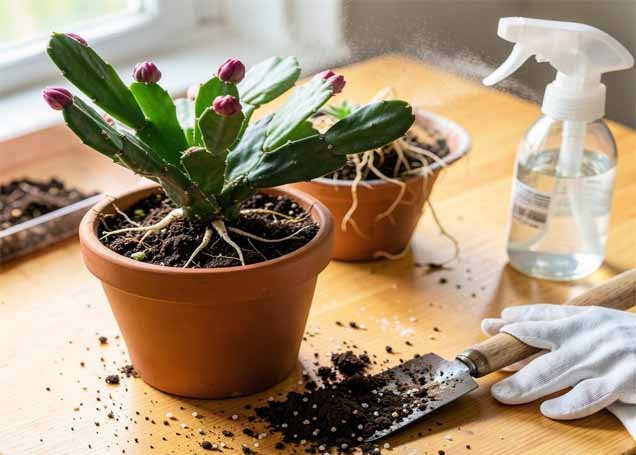
Good drainage is essential when deciding how to care for Christmas cactus indoors.
The plant needs moisture, but its roots also require air. Heavy, compacted soil can stay wet too long and increase the risk of root rot.
Best Potting Mix for Christmas Cactus
A suitable mix should be:
- Loose and airy
- Rich enough to retain some moisture
- Fast-draining
- Resistant to becoming heavily compacted
A practical option is a quality indoor potting mix amended with perlite and a suitable coarse component for better aeration.
The University of Minnesota Extension provides a holiday cactus mix using potting soil, peat moss, and sand or perlite.
You do not need to copy one exact recipe. What matters most is that the finished mix holds some moisture without remaining soggy.
What Type of Pot Is Best?
Choose a container with drainage holes.
Terracotta pots can dry more quickly, while plastic or glazed ceramic containers may retain moisture longer.
Either can work when watering is adjusted accordingly.
Avoid placing a nursery pot inside a decorative container where drained water collects unnoticed.
When Should You Repot a Christmas Cactus?
Christmas cactus often flowers well when somewhat pot-bound.
Healthy plants do not necessarily need annual repotting. Consider repotting when the potting mix breaks down, drainage becomes poor, or roots are severely crowded.
Repotting after flowering or during active growth is generally preferable to disturbing a plant covered in developing buds.
Select a container only slightly larger than the existing one. An oversized pot can retain excess moisture around a relatively small root system.
4. Maintain Comfortable Temperatures and Humidity
Christmas cactus grows well in ordinary indoor conditions, but temperature becomes especially important when you want flowers.
During routine growth, moderate household temperatures are usually suitable.
For flower initiation, cooler nights can make a substantial difference.
University of Minnesota Extension guidance describes daytime temperatures around 65–70°F and cooler evenings around 55–65°F as useful conditions for holiday cacti.
Avoid Sudden Temperature Changes
Keep your plant away from:
- Heating vents
- Cold drafts
- Frequently opened exterior doors
- Direct blasts from air-conditioning units
- Hot radiators and fireplaces
Rapid changes in temperature, light, or humidity may cause developing flower buds to drop.
Does Christmas Cactus Need High Humidity?
Christmas cactus is adapted to more humid conditions than many desert cacti.
However, it does not require a constantly wet environment.
If your indoor air becomes very dry during winter, grouping compatible houseplants or using a room humidifier may help maintain a more comfortable environment.
Do not compensate for dry air by keeping the roots waterlogged.
USA Growing Tip: In colder states, winter heating may dry indoor air considerably. In warmer states, strong afternoon sunlight through windows can still overheat plants even during cooler months.
5. Fertilize During Active Growth, Not All Year
Feeding is another important part of how to care for Christmas cactus, particularly when the plant is actively producing new stem segments.
A balanced houseplant fertilizer can support healthy growth.
The University of Minnesota Extension recommends monthly feeding from June through August using a balanced houseplant fertilizer at half strength.
Simple Christmas Cactus Fertilizing Routine
Spring: Observe new growth and begin feeding when the plant is actively growing, following the product instructions.
Summer: Feed moderately during active growth.
Fall: Reduce or stop routine feeding as you prepare the plant for flowering, according to the chosen care program.
Winter: Avoid unnecessary fertilization during a rest period or when the plant is not actively growing.
Too much fertilizer can contribute to salt buildup in the potting mix and damage roots.
Never apply extra fertilizer simply because a plant has failed to bloom. Light and temperature conditions may be the real issue.
6. Learn How to Make a Christmas Cactus Bloom
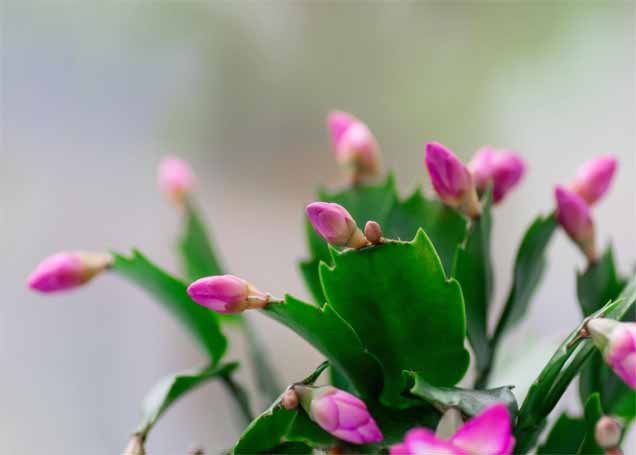
If your Christmas cactus grows plenty of green segments but rarely produces flowers, the problem may be its autumn environment rather than poor overall health.
Christmas cactus flowering is influenced by shorter days, longer nights, and cooler temperatures.
This is one of the most valuable details to understand when learning how to care for Christmas cactus year-round.
Step-by-Step Christmas Cactus Blooming Guide
Step 1: Begin preparing in early fall.
Choose a bright location where the plant can experience cooler nights without frost exposure.
Step 2: Provide long, uninterrupted nights.
Where nighttime temperatures are around 60–65°F, the University of Minnesota Extension recommends at least 12 hours of complete darkness nightly for approximately six weeks.
Evening lamps and other artificial lighting can interrupt the darkness period.
Step 3: Maintain cooler nighttime conditions.
Temperatures around 55–65°F can help support bud formation, although the exact response depends on temperature and day length.
Do not expose the plant to freezing conditions.
Step 4: Avoid excessive watering.
Continue monitoring the soil. Reduce watering when growth slows, but do not let the plant become severely dehydrated.
Step 5: Watch for developing buds.
Once buds appear, provide bright indirect light and stable conditions.
Step 6: Keep the plant’s environment consistent.
Avoid frequent relocation, sudden heating changes, or strong drafts while the buds develop.
Why Is My Christmas Cactus Not Blooming?
Common reasons include:
- Too much artificial light during autumn evenings
- Night temperatures that remain too warm
- Insufficient light during the day
- Poor overall plant health
- A recently stressed or repotted plant
- Mistaking a Thanksgiving cactus or Easter cactus for a Christmas cactus
A healthy plant may not flower on an exact calendar date. Bloom timing varies with the type of holiday cactus and growing conditions.
7. Prune and Propagate Christmas Cactus Correctly
Christmas cactus can develop long, cascading stems over time.
Occasional pruning encourages branching and helps maintain a fuller shape.
When to Prune Christmas Cactus
A convenient time is after flowering.
Remove damaged sections and shorten selected stems where two segments meet.
Avoid removing too much healthy growth at once.
How to Propagate Christmas Cactus from Cuttings

Propagation is a simple way to create additional plants from a healthy Christmas cactus.
- Select a healthy stem with two to four joined segments.
- Separate the cutting carefully at a segment joint.
- Allow the cut end to dry briefly before planting.
- Insert the lower segment into a lightly moist, well-draining propagation mix.
- Keep the cutting in bright, indirect light.
- Maintain gentle moisture without saturating the soil.
- Check for rooting and new growth over the following weeks.
Rooting speed varies with temperature, moisture, and the condition of the cutting.
The University of Minnesota Extension describes stem-segment propagation as a practical method for holiday cacti.
Should You Propagate in Water or Soil?
Both methods are used by home gardeners, but rooting directly in an airy propagation medium avoids the additional step of transferring water-grown roots into soil.
For beginners, a small container with drainage holes and a suitable propagation mix is a practical choice.
8. Identify Common Christmas Cactus Problems Early
Even with careful attention, houseplants sometimes show signs of stress.
The most effective response is to examine the soil, roots, light exposure, and recent environmental changes before taking action.
Christmas Cactus Problems and Solutions
| Problem | Possible Cause | What to Do |
|---|---|---|
| Wrinkled segments | Soil too dry or damaged roots | Check soil moisture and root condition |
| Limp stems with wet soil | Overwatering or root rot | Improve drainage and inspect roots |
| Red or pale stems | Excessive sunlight or other stress | Move to bright, filtered light |
| Flower buds dropping | Temperature, light, or humidity changes | Maintain a stable environment |
| No flowers | Warm nights or interrupted darkness | Improve fall flowering conditions |
| Poor growth | Low light, unhealthy roots, or depleted mix | Review light, drainage, and nutrition |
| Small flying insects near soil | Fungus gnats associated with moist potting mix | Avoid persistently wet soil and inspect the pot |
Why Is My Christmas Cactus Turning Red?
Reddish stem segments may appear when the plant receives stronger light than it prefers.
First evaluate direct sun exposure and recent changes in placement.
If the plant is otherwise healthy, adjust the light gradually and monitor new growth.
Why Is My Christmas Cactus Drooping?
Drooping can occur with either insufficient water or root damage from prolonged wetness.
That is why checking the potting mix is more useful than watering immediately.
Why Are Christmas Cactus Buds Falling Off?
Bud drop is often associated with sudden environmental changes.
Avoid relocating the plant repeatedly after buds form, and protect it from drafts and heating vents.
For additional general houseplant inspiration, explore our 12 Low-Maintenance Indoor Plants guide.
9. Follow a Month-by-Month Christmas Cactus Care Calendar
A seasonal schedule makes it easier to understand how to care for Christmas cactus throughout the year.
The calendar below is designed for typical indoor growing conditions in the United States. Exact timing varies by climate, indoor temperature, and whether your plant is a true Christmas cactus or another holiday cactus.
| Month | Christmas Cactus Care Task |
|---|---|
| January | Enjoy remaining flowers; monitor soil moisture and avoid drafts |
| February | Allow a gentle rest after flowering; reduce watering if growth slows |
| March | Inspect roots and potting mix; repot if necessary |
| April | Watch for new growth and adjust watering |
| May | Maintain bright indirect light and regular moisture checks |
| June | Support active growth with appropriate diluted fertilizer |
| July | Continue growing-season care; protect from intense sun |
| August | Maintain healthy growth and inspect for pests |
| September | Begin planning cooler nights and uninterrupted darkness |
| October | Continue flower-bud induction conditions |
| November | Watch for buds; keep the environment stable |
| December | Enjoy flowers and maintain consistent care |
Spring Care: March to May
Spring is a good time to assess the plant after its winter flowering period.
Check whether the soil drains properly and whether the plant needs a slightly larger container.
As growth resumes, watering needs may increase.
Summer Care: June to August
During summer, focus on healthy stem development.
Provide filtered light, appropriate watering, and moderate feeding.
If you move the plant outdoors, protect it from strong sun, heavy rain, and extreme temperatures.
Fall Care: September to November
Fall is especially important for future flowers.
Shorter days and cooler nights help trigger flower-bud development.
Avoid artificial light interruptions during the planned darkness period.
Winter Care: December to February
Once buds and flowers appear, maintain stable indoor conditions.
After flowering finishes, allow a gentler rest period and adjust watering to the plant’s activity.
Christmas Cactus vs. Thanksgiving Cactus: What’s the Difference?

Many plants sold as Christmas cactus in American stores are actually Thanksgiving cactus or related hybrids.
The two are closely related and have similar care requirements, but their stem shapes and flowering patterns can differ.
| Feature | Christmas Cactus | Thanksgiving Cactus |
|---|---|---|
| Botanical identity | Schlumbergera × buckleyi | Schlumbergera truncata |
| Stem edges | More rounded, scalloped edges | More pointed, tooth-like projections |
| Typical flowering | Often later in the holiday season | Often earlier in late fall |
| Light needs | Bright, indirect light | Bright, indirect light |
| Watering | Moisture with good drainage | Moisture with good drainage |
| Bloom triggers | Short days and cooler nights | Short days and cooler nights |
The traditional Christmas cactus has more rounded stem segments, while Thanksgiving cactus generally has sharper projections along the segment edges.
Bloom timing alone is not a reliable identification method because growing conditions can shift flowering dates.
Both types can make excellent long-lived indoor plants.
Best Places to Display a Christmas Cactus Indoors
Christmas cactus can fit beautifully into many home decorating styles.
Try placing it:
- On a bright east-facing windowsill
- On a plant stand near filtered sunlight
- On a shelf where cascading stems have room to grow
- In a decorative pot with a separate draining nursery container
- Near other indoor plants that appreciate similar light conditions
Avoid using a location solely because it looks attractive. The plant still needs suitable light and temperature conditions.
If you are arranging plants in a compact apartment, our Low Light Indoor Plants guide offers additional ideas for rooms with limited sunlight. Remember that Christmas cactus itself generally prefers brighter indirect light.
Frequently Asked Questions About Christmas Cactus Care
How do you care for a Christmas cactus indoors?
Place it in bright, indirect light, water when the upper potting mix begins to dry, use a draining container, and avoid sudden temperature changes. Provide cooler nights and longer uninterrupted darkness in fall to encourage flowering.
How often should I water my Christmas cactus?
Water according to soil moisture rather than a fixed schedule. Check the upper inch of potting mix and water thoroughly when needed, allowing excess water to drain away.
Does Christmas cactus need direct sunlight?
Christmas cactus generally prefers bright, indirect sunlight. Strong afternoon sun may stress or damage its stem segments.
What is the best room for a Christmas cactus?
A bright room with filtered natural light and stable temperatures is ideal. An east-facing window is often a suitable choice.
How do I get my Christmas cactus to bloom again?
Provide cool nights and long, uninterrupted periods of darkness during fall. Keep the plant healthy and avoid sudden environmental changes once buds develop.
Should I water Christmas cactus while it is blooming?
Yes, continue monitoring soil moisture. Water when needed, but do not leave the potting mix saturated or allow water to collect in the saucer.
Can a Christmas cactus live for many years?
Yes. With appropriate care, holiday cacti can be very long-lived houseplants, sometimes remaining in families for generations.
Why does my Christmas cactus have leaves that look wrinkled?
The flattened green structures are stem segments rather than true leaves. Wrinkling can indicate insufficient moisture or root problems, so inspect the soil and roots before changing your watering routine.
Can I put my Christmas cactus outside in summer?
Yes, when weather conditions are suitable. Place it in a protected, partially shaded location and bring it indoors before temperatures become dangerously cold.
When should I repot my Christmas cactus?
Repot when the potting mix deteriorates, drainage becomes poor, or roots are excessively crowded. A healthy Christmas cactus may remain in the same pot for several years.
Final Thoughts: How to Care for Christmas Cactus Successfully
Understanding how to care for Christmas cactus comes down to balancing moisture, light, drainage, and seasonal temperature changes.
Give your plant bright indirect sunlight, check the soil before watering, use a well-draining potting mix, and avoid sudden environmental changes.
If you want beautiful holiday flowers, pay particular attention to cool nights and uninterrupted darkness during fall.
With a little observation and consistent care, a Christmas cactus can become a dependable indoor plant that adds color to your home for many holiday seasons.
References and Further Reading
- University of Minnesota Extension — Holiday Cacti
- Clemson Cooperative Extension — Indoor Cacti
- South Dakota State University Extension — A Cactus for Every Holiday
- Mississippi State University Extension — How to Care for Holiday Cacti
This guide is intended for general indoor plant care. Adjust watering and temperature management to your home’s conditions and the specific type of holiday cactus you grow.


