

Table of Contents
Not every home has large, sunny windows. Apartments with north-facing rooms, shaded bedrooms, and offices with limited daylight can make growing houseplants challenging. Fortunately, many beautiful low-light indoor plants can tolerate these conditions while adding greenery and character to your living space.
The secret is choosing plants that naturally tolerate reduced light rather than placing sun-loving plants in dark corners. Snake plants, ZZ plants, pothos, and cast iron plants are excellent starting points, especially for beginners.
Whether you want the best indoor plants for low light, easy-care greenery for a small apartment, or tall indoor plants for a shaded living room, this guide covers 15 practical choices and explains how to keep them healthy.
What Are Low Light Indoor Plants?
Low light indoor plants are houseplants capable of surviving and growing under lower light intensities than plants that require bright indirect light or direct sunlight.
According to the University of Maryland Extension, low indoor light is commonly described as approximately 25–100 foot-candles. North-facing windows and some artificially lit rooms may provide these conditions.
However, low light does not mean no light.
Every green plant needs sufficient light for photosynthesis. A plant may tolerate a dim location while growing much more slowly than it would in brighter indirect light.
A useful rule is to observe the plant rather than rely entirely on the room’s appearance. If new growth becomes weak, stems stretch, or leaves lose their color, the plant may need more light.
15 Best Low Light Indoor Plants for Your Home
1. Snake Plant — Best for Beginners

Botanical name: Dracaena trifasciata (formerly Sansevieria trifasciata)
Snake plants are among the most dependable low light indoor plants for beginners. Their tall, upright leaves create a modern appearance without requiring frequent attention.
These plants tolerate low light, although moderate indirect light generally supports stronger growth. Their thick leaves also help them withstand periods of dry soil.
Care requirements
- Light: Low to bright indirect light
- Water: Allow the potting mix to dry substantially before watering
- Soil: Well-draining indoor potting mix
- Best location: Bedroom, office, or living room
Snake plants are particularly useful for people looking for tall indoor plants that occupy relatively little floor space.
Growing tip: Avoid keeping the roots constantly wet. Overwatering is a more common problem than underwatering.
2. ZZ Plant — Best for Low-Maintenance Homes

Botanical name: Zamioculcas zamiifolia
The ZZ plant is another excellent choice for rooms with limited natural light. Its glossy green leaflets and upright stems make it attractive in modern homes and offices.
Its underground rhizomes store water, allowing it to tolerate occasional missed watering.
The University of Connecticut notes that ZZ plants tolerate low natural light, although growth becomes slower in dim conditions.
Care requirements
- Light: Low to medium indirect light
- Water: Let the potting mix dry well between waterings
- Soil: Free-draining potting mix
- Best location: Office, shaded living room, or hallway with sufficient light
Growing tip: A ZZ plant in a darker room generally uses less water than one growing in brighter light. Always check the soil before watering.
3. Golden Pothos — Best Trailing Plant

Botanical name: Epipremnum aureum
Golden pothos is one of the most versatile indoor plants for low light. Its trailing vines and heart-shaped leaves make it suitable for bookshelves, hanging baskets, and small apartments.
Although pothos can tolerate reduced light, its growth may slow, and yellow variegation may become less noticeable in dim conditions.
Care requirements
- Light: Low to bright indirect light
- Water: Water when the upper portion of the soil feels dry
- Soil: Well-draining general-purpose potting mix
- Best location: Bookshelf, hanging planter, or office
Growing tip: Choose a mostly green variety for darker rooms. Highly variegated varieties usually benefit from brighter indirect light.
How to Clean Indoor Plant Leaves
4. Cast Iron Plant — Best for Shaded Corners

Botanical name: Aspidistra elatior
The cast iron plant earned its common name because of its ability to tolerate challenging indoor conditions.
Its broad, dark green leaves grow from the base of the plant, creating a graceful, upright appearance.
Cast iron plants are particularly suitable for people searching for good indoor low light plants that do not require constant maintenance.
Care requirements
- Light: Low to medium indirect light
- Water: Allow the upper soil layer to dry between waterings
- Soil: Well-drained potting mix
- Best location: Shaded living room or north-facing room
Growing tip: Protect the foliage from intense direct sunlight, which may scorch the leaves.
5. Chinese Evergreen — Best Decorative Foliage

Botanical name: Aglaonema species
Chinese evergreen plants are valued for their patterned leaves and adaptability to indoor environments.
Green-leaved varieties often tolerate lower light better than brightly colored cultivars, which may require more light to maintain their coloration.
Care requirements
- Light: Low to medium indirect light
- Water: Water after the upper soil begins to dry
- Soil: Well-draining indoor potting mix
- Best location: Bedroom, office, or living room
Growing tip: If your room is particularly dim, choose a predominantly green cultivar rather than a pink or red variety.
6. Peace Lily — Best for Elegant Foliage and Flowers

Botanical name: Spathiphyllum species
Peace lilies are popular low light indoor plants because of their glossy leaves and elegant white flower-like spathes.
They tolerate low light, but flowering is usually more reliable when they receive adequate bright, indirect light.
Care requirements
- Light: Low to medium indirect light
- Water: Keep the soil lightly moist, not waterlogged
- Soil: Moisture-retentive but well-draining mix
- Best location: Bedroom or living room
Growing tip: Drooping foliage may indicate a watering problem, but check the soil before adding water.
7. Heartleaf Philodendron — Best for Hanging Baskets

Botanical name: Philodendron hederaceum
Heartleaf philodendron is a climbing or trailing plant with attractive, heart-shaped foliage.
It is a useful option for indoor plants in low light, especially where a hanging basket or shelf can display its vines.
Care requirements
- Light: Low to bright indirect light
- Water: Let the top layer of soil dry slightly
- Soil: Airy, well-draining potting mix
- Best location: Hanging basket or bookshelf
Growing tip: If the stems become unusually long with large spaces between leaves, move the plant into brighter indirect light.
8. Parlor Palm — Best Small Indoor Palm
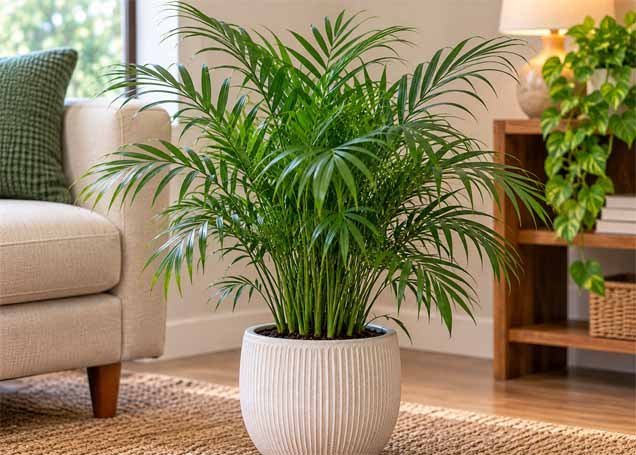
Botanical name: Chamaedorea elegans
The parlor palm adds soft, feathery greenery to a room without requiring strong direct sunlight.
Its compact growth habit makes it suitable for small apartments, desks, and living room corners.
Care requirements
- Light: Low to medium indirect light
- Water: Water when the upper soil begins to dry
- Soil: Well-draining potting mix
- Best location: Living room or shaded window area
Growing tip: Keep it away from heating vents and excessively dry drafts.
9. Dracaena ‘Janet Craig’ — Best Upright Floor Plant

Botanical name: Dracaena fragrans ‘Janet Craig’
This dracaena cultivar has long, arching, dark green leaves and a strong upright appearance.
It is especially useful when you want taller greenery without placing a plant in direct sunlight.
Care requirements
- Light: Low to medium indirect light
- Water: Allow the upper soil to dry between waterings
- Soil: Well-draining potting mix
- Best location: Living room or office corner
Growing tip: Use room-temperature water and avoid letting the pot stand in excess water.
10. Lady Palm — Best for a Tropical Look

Botanical name: Rhapis excelsa
Lady palm features fan-shaped leaves supported by slender stems. It creates a tropical appearance while tolerating lower indoor light levels.
Established plants can make attractive floor specimens in larger rooms.
Care requirements
- Light: Low to medium indirect light
- Water: Keep moderately moist during active growth, without waterlogging
- Soil: Well-draining potting mix
- Best location: Living room or sheltered indoor corner
Growing tip: Wipe dust from the leaves periodically to keep the foliage clean.
11. Kentia Palm — Best for Spacious Rooms

Botanical name: Howea forsteriana
Kentia palm is an elegant indoor palm with arching green fronds.
It tolerates relatively low light, but it generally grows better in moderate indirect light.
Because it can become large over time, it works well in spacious living rooms and entryways.
Care requirements
- Light: Low to medium indirect light
- Water: Allow the upper soil to dry slightly
- Soil: Well-draining potting mix
- Best location: Living room or large indoor space
Growing tip: Avoid frequent repotting unless the plant needs a larger container.
12. Bamboo Palm — Best for Soft Green Foliage

Botanical name: Chamaedorea seifrizii
Bamboo palm produces clusters of slender stems topped with feathery green foliage.
It is a useful choice for adding a tropical appearance to a room with filtered natural light.
Care requirements
- Light: Low to medium indirect light
- Water: Water when the upper soil begins to dry
- Soil: Well-draining potting mix
- Best location: Living room or office
Growing tip: Check the undersides of leaves occasionally for spider mites, particularly in dry indoor conditions.
13. Homalomena — Best for Lush Green Leaves

Botanical name: Homalomena species
Homalomena plants have broad, attractive leaves and a compact, bushy appearance.
They can tolerate lower light, although they often perform better with steady, moderate indirect light and consistent moisture.
Care requirements
- Light: Low to medium indirect light
- Water: Keep lightly moist, allowing the surface to begin drying
- Soil: Airy, moisture-retentive mix
- Best location: Warm bedroom or living room
Growing tip: Protect the plant from cold drafts and sudden temperature changes.
14. Dieffenbachia — Best for Large Patterned Leaves

Botanical name: Dieffenbachia species
Dieffenbachia is valued for its broad, patterned leaves, which can make a strong decorative statement indoors.
Some green-dominant cultivars tolerate lower light, but brighter indirect light usually supports better growth and clearer foliage patterns.
Care requirements
- Light: Low to medium indirect light
- Water: Let the upper soil dry slightly
- Soil: Well-draining indoor potting mix
- Best location: Living room with filtered light
Growing tip: Avoid exposing the foliage to strong direct afternoon sunlight.
Safety Tip: Dieffenbachia contains calcium oxalate crystals that can cause irritation and swelling if chewed or swallowed. Keep this plant out of reach of children and pets. Wear gloves when pruning or handling damaged leaves, and wash your hands afterward.
15. Green Arrowhead Plant — Best for Compact Greenery

Botanical name: Syngonium podophyllum
Green arrowhead plants have distinctive arrow-shaped leaves and can develop climbing or trailing growth as they mature.
Green varieties generally adapt to lower light better than highly variegated cultivars.
Care requirements
- Light: Low to medium indirect light
- Water: Water after the upper soil begins to dry
- Soil: Well-draining potting mix
- Best location: Shelf, desk, or hanging planter
Growing tip: Rotate the container occasionally to encourage balanced growth.
The University of Minnesota Extension identifies these types of plants among its low-light houseplant recommendations.
Comparison Table: Best Indoor Plants for Low Light
Choosing the right plant depends on your available light, preferred size, and watering habits.
| Plant | Low-light tolerance | Watering needs | Best use |
|---|---|---|---|
| Snake plant | High | Low | Bedroom |
| ZZ plant | High | Low | Office |
| Golden pothos | High | Moderate | Hanging basket |
| Cast iron plant | High | Low–moderate | Shaded corner |
| Chinese evergreen | High, green varieties | Moderate | Living room |
| Peace lily | High, less flowering | Moderate | Decorative foliage |
| Heartleaf philodendron | High | Moderate | Shelf |
| Parlor palm | High | Moderate | Small spaces |
| Janet Craig Dracaena | High | Low–moderate | Floor plant |
| Lady palm | Moderate–high | Moderate | Large room |
| Kentia palm | Moderate–high | Moderate | Living room |
| Bamboo palm | Moderate | Moderate | Office |
| Homalomena | Moderate | Moderate | Warm room |
| Dieffenbachia | Moderate | Moderate | Decorative foliage |
| Green arrowhead plant | Moderate | Moderate | Desk or shelf |
These ratings are general comparisons, not guarantees of performance. Actual watering needs depend on pot size, temperature, soil, humidity, and light intensity.
How to Care for Low Light Indoor Plants
1. Understand Your Room’s Light
Before selecting low light houseplants, observe how much daylight reaches the intended location.
North-facing windows generally receive less direct sunlight than south-facing windows in the United States. However, nearby buildings, trees, window coverings, and seasonal changes also influence available light.
A room that looks bright to your eyes may still provide insufficient light for some plants.
2. Avoid Overwatering
Overwatering is a frequent problem when growing low light indoor plants.
Because growth and water use often decrease in dim conditions, the potting mix may remain wet longer.
Check soil moisture before watering rather than following a rigid weekly schedule.
Use pots with drainage holes and empty excess water from decorative saucers.
3. Choose Appropriate Potting Soil
Most common low light houseplants grow best in a potting mix that provides both moisture retention and drainage.
For plants such as snake plants and ZZ plants, use a particularly free-draining mix.
For moisture-loving plants such as peace lilies, a slightly more moisture-retentive mix may be appropriate.
Avoid using dense outdoor garden soil in indoor containers.
4. Clean the Leaves Regularly
Dust can accumulate on houseplant leaves and reduce the amount of light reaching the leaf surface.
Gently wipe broad leaves with a soft, damp cloth.
For detailed instructions, read our guide to cleaning indoor plant leaves.
5. Adjust Care During Winter
Winter brings shorter days and lower light levels across much of the United States.
Indoor plants may grow more slowly and require less frequent watering.
Keep plants away from cold windows, heating vents, and sudden temperature changes.
If natural daylight becomes insufficient, a suitable indoor grow light can provide supplemental illumination.
Best Low Light Indoor Plants for Different Rooms
Low Light Indoor Plants for Bedrooms
Snake plants, ZZ plants, and Chinese evergreens are practical choices for bedrooms with limited natural light.
Select plants based on the actual light available rather than assuming a bedroom is automatically suitable for low-light species.
Low Light Indoor Plants for Offices
Offices with windows or adequate artificial lighting can accommodate ZZ plants, pothos, snake plants, and heartleaf philodendrons.
A completely dark office is not suitable for long-term plant growth without supplemental lighting.
Low Light Indoor Plants for Apartments
Small apartments benefit from compact or trailing plants that use vertical space.
Golden pothos, heartleaf philodendron, parlor palm, and green arrowhead plants can fit on shelves, plant stands, or tables.
For more apartment-friendly options, explore our low-maintenance indoor plants guide.
Tall Indoor Plants for Low Light
If you need tall indoor plants for low-light spaces, consider Janet Craig dracaena, Kentia palm, lady palm, or a mature snake plant.
These plants create height without requiring a large collection of smaller containers.
Remember that even shade-tolerant floor plants need sufficient natural or artificial light.
Common Mistakes When Growing Indoor Plants in Low Light
One common mistake is confusing low-light tolerance with the ability to grow in complete darkness. Plants need light to produce energy, and prolonged insufficient lighting can cause weak growth.
Another mistake is watering too frequently. A plant in a dim room often uses water more slowly, increasing the risk of persistently wet soil.
Choosing heavily variegated plants for very dark locations can also be disappointing. Many variegated cultivars need brighter light to maintain their distinctive leaf patterns.
Finally, avoid moving plants abruptly from low light into strong direct sunlight. Gradual adjustment helps prevent leaf damage.
Are Low Light Indoor Plants Safe for Pets?
Not all low light houseplants are safe for cats and dogs.
Common choices such as pothos, philodendron, peace lily, snake plant, ZZ plant, Chinese evergreen, and dieffenbachia can be harmful if chewed or swallowed.
Parlor palm, cast iron plant, and kentia palm are generally considered more pet-friendly choices, although any plant material can cause digestive upset.
Check the exact species using the ASPCA Toxic and Non-Toxic Plants database before bringing a plant into a home with pets.
Frequently Asked Questions About Low Light Indoor Plants
What are the best indoor plants for low light?
Snake plants, ZZ plants, cast iron plants, golden pothos, and Chinese evergreens are among the most reliable choices. They tolerate reduced natural light, although sufficient indirect light supports healthier growth.
What indoor plants can grow without sunlight?
Some indoor plants can grow without direct sunlight, provided they receive sufficient indirect daylight or suitable artificial light. No ordinary green houseplant can grow indefinitely in complete darkness.
What is a good indoor plant for low light?
A ZZ plant is an excellent beginner-friendly choice because it tolerates low light and occasional dry soil. Snake plants and cast iron plants are also practical options.
Can low light indoor plants survive in a windowless room?
Yes, certain plants can grow in windowless rooms if they receive adequate artificial lighting. A room with no useful natural or artificial light will not support healthy long-term growth.
How often should I water low light indoor plants?
There is no universal watering schedule. Check the potting mix and water according to the plant’s needs. Snake plants and ZZ plants generally prefer more drying between waterings than peace lilies.
Which indoor plants are best for dark corners?
Cast iron plants, ZZ plants, and snake plants are good candidates for relatively dim corners. However, the corner must still receive enough light for the plant to survive and grow.
Final Thoughts
The best low light indoor plants combine attractive foliage with realistic care requirements.
For beginners, snake plants and ZZ plants are excellent starting points. Golden pothos and heartleaf philodendrons work beautifully on shelves, while cast iron plants and dracaenas can add greenery to shaded corners.
The most important lesson is that low-light tolerance is not the same as thriving in darkness. Match each plant to the available light, check soil moisture before watering, and watch for signs that the plant needs a brighter position.
With thoughtful placement and consistent care, even an apartment or office with limited daylight can support a beautiful collection of indoor plants.
References
These sources support the plant selection and growing guidance in this article.


