
Table of Contents
A shady backyard can become one of the most beautiful parts of your landscape. Instead of struggling to grow sun-loving flowers beneath trees or along north-facing walls, choose plants that naturally prefer filtered light and cooler growing conditions.
The best perennials for shade offer much more than green foliage. Some produce delicate spring flowers, others create dramatic leaf textures, and several native species provide valuable resources for pollinators.
Whether you’re designing a woodland border, filling a small shaded flower bed, or creating a low-maintenance landscape, choosing the right plants makes all the difference.
In this guide, we’ll explore 15 excellent perennials for shade, including flowering varieties, native woodland plants, and dependable foliage favorites. You’ll also learn how to choose plants for full shade, partial shade, dry soil, and moist locations across the United States.
What Are Perennials for Shade?
Perennials are plants that live for more than two growing seasons under suitable conditions. Herbaceous perennials often die back during winter and return from their roots or underground stems in spring.
Shade-loving perennials are adapted to growing with less direct sunlight than typical full-sun flowers.
However, shade tolerance varies among plants. Some grow well beneath deciduous trees, while others need morning sunshine or bright filtered light to flower reliably.
Full Shade vs. Partial Shade
Partial shade generally describes locations receiving a few hours of direct sunlight or filtered light during part of the day.
Full shade usually means little direct sunlight, although the area may still receive substantial indirect daylight.
Dappled shade occurs when sunlight filters through overhead branches.
Deep shade refers to especially dark locations, such as beneath dense evergreen trees or between closely spaced buildings.
These categories are useful starting points, but actual light levels change with the season, tree canopy, and location.
Most flowering perennials for shade bloom more reliably in bright or partial shade than in extremely dark conditions.
15 Best Perennials for Shade
These plants offer a combination of attractive foliage, flowers, wildlife value, and practical landscaping uses.
Choose varieties suited to your local climate, soil conditions, and available growing space.
1. Hostas (Hosta spp.)
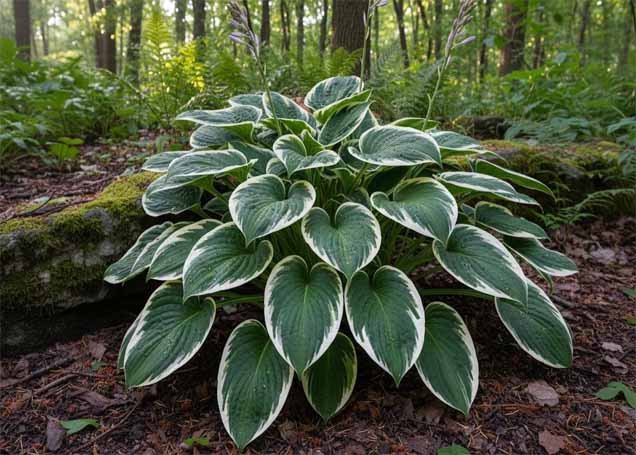
Hostas are among the most recognizable perennials for shade in American gardens.
Their broad leaves come in shades of green, blue-green, gold, and cream. Some varieties have dramatic variegated patterns that brighten dark garden beds.
Although hostas are primarily grown for foliage, many produce lavender or white flowers during summer.
Best conditions: Partial to full shade, fertile soil, and consistent moisture with good drainage.
Why gardeners love them: Hostas offer bold texture, numerous sizes, and attractive foliage combinations.
Morning sunlight may improve the color of some golden-leaved cultivars, while strong afternoon sun can damage sensitive foliage.
Slugs and deer can be problems in certain locations.
2. Astilbe (Astilbe spp. and hybrids)

Astilbes bring soft, feathery flower plumes to partially shaded gardens.
Their flowers may be pink, white, red, lavender, or peach, depending on the cultivar.
Fine-textured foliage provides contrast against broad-leaved hostas.
Best conditions: Partial shade and consistently moist, well-drained soil.
Why gardeners love them: Their upright flower plumes add height and summer color to woodland-style borders.
Astilbes are not ideal for dry shade. Prolonged drought can cause browning foliage and reduced flowering.
3. Bleeding Heart (Lamprocapnos spectabilis)
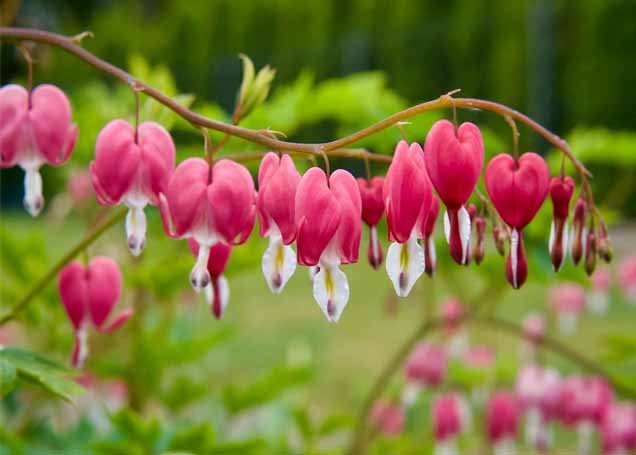
Bleeding heart is a classic spring-flowering perennial with arching stems and distinctive heart-shaped flowers.
The blossoms are usually pink and white, although white-flowered cultivars are also available.
Its delicate foliage creates a graceful appearance in woodland gardens.
Best conditions: Partial to substantial shade, organically rich soil, and adequate moisture.
Why gardeners love it: Bleeding heart provides memorable spring flowers before many summer perennials begin blooming.
The foliage may naturally disappear during summer dormancy, especially in hot weather. Plant hostas or other later-emerging perennials nearby to fill the resulting space.
Bleeding heart is toxic if ingested, so consider children and pets when planning the garden.
4. Coral Bells (Heuchera spp.)
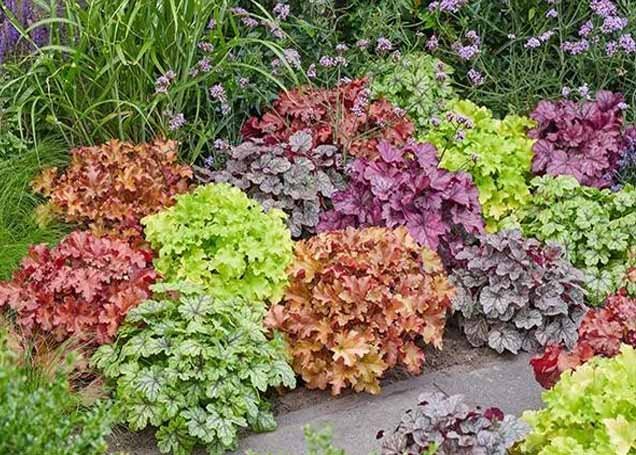
Coral bells are colorful foliage perennials that can brighten partially shaded beds.
Depending on the species and cultivar, leaves may be green, burgundy, bronze, purple, silver, or lime-colored.
Small flowers rise above the foliage on slender stems.
Best conditions: Partial shade, well-drained soil, and moisture appropriate to the species.
Why gardeners love them: Their colorful foliage remains attractive even when the plants are not flowering.
American alumroot (Heuchera americana) is native to eastern North America and is particularly useful in woodland-style landscapes.
Cultivars differ in sun tolerance and winter performance, so check individual plant labels.
5. Foamflower (Tiarella cordifolia)
Foamflower is a charming native woodland perennial with small, airy flower spikes.
Its white or pale pink spring flowers rise above attractive foliage that can form spreading patches.
Best conditions: Shade to partial shade, moist soil, and woodland conditions.
Why gardeners love it: Foamflower provides delicate spring flowers and attractive ground-level foliage.
It works beautifully beside ferns, native violets, and woodland phlox.
In suitable climates, some foliage may remain attractive beyond the main growing season.
6. Wild Columbine (Aquilegia canadensis)
Wild columbine is a North American native perennial with distinctive red and yellow flowers.
The nodding blossoms have long spurs and are especially attractive to hummingbirds.
Best conditions: Partial shade, well-drained soil, and conditions that are not persistently waterlogged.
Why gardeners love it: Its unusual spring flowers add color and wildlife value.
Wild columbine often performs well in naturalistic plantings and may self-seed where conditions are favorable.
It is a particularly good option for gardeners seeking native flowering perennials for shade.
7. Woodland Phlox (Phlox divaricata)

Woodland phlox produces clusters of pale blue, lavender, or occasionally white flowers in spring.
It is native to eastern North America and naturally grows in woodland habitats.
Best conditions: Dappled to partial shade and reasonably moist, well-drained soil.
Why gardeners love it: Woodland phlox creates a soft carpet of spring flowers along shaded paths and woodland borders.
This species is different from tall garden phlox, which generally requires more sunlight.
Woodland phlox is one of the most appealing shade perennials for gardeners interested in native spring flowers.
8. Virginia Bluebells (Mertensia virginica)
Virginia bluebells are beloved for their clusters of bell-shaped spring flowers.
The buds begin pinkish and open into blue blossoms, creating a beautiful display in woodland gardens.
Best conditions: Partial to full woodland shade and moist, organically rich soil.
Why gardeners love them: They provide a spectacular early-season display and complement other native woodland plants.
Virginia bluebells are spring ephemerals. Their foliage naturally disappears after flowering and seed development.
Plant them with later-growing companions to avoid empty spaces during summer.
9. Solomon’s Seal (Polygonatum biflorum)
Solomon’s seal is a graceful native perennial with arching stems and paired leaves.
Small, pale, bell-shaped flowers hang beneath the stems during spring.
Best conditions: Partial to full shade and woodland soil with suitable drainage and moisture.
Why gardeners love it: The arching stems create elegant structure without requiring brightly colored flowers.
Solomon’s seal works especially well in naturalistic borders with ferns and foamflowers.
Allow room for gradual spreading over time.
10. Japanese Forest Grass (Hakonechloa macra)
Japanese forest grass is an ornamental grass valued for its cascading foliage.
Green and golden cultivars create movement and texture in shaded landscapes.
Best conditions: Partial shade, with protection from intense afternoon sun, and moist but well-drained soil.
Why gardeners love it: Its arching leaves soften pathways, garden edges, and containers.
This plant is primarily grown for foliage rather than showy flowers.
Golden cultivars may need some filtered light to develop their best color.
11. Christmas Fern (Polystichum acrostichoides)
Christmas fern is a native evergreen fern that grows naturally in eastern North American woodlands.
Its dark green fronds provide year-round texture in suitable climates.
Best conditions: Partial to full shade, woodland soil, and good drainage.
Why gardeners love it: Christmas fern provides evergreen structure and pairs well with flowering woodland perennials.
Although ferns do not produce flowers, they are valuable perennial companions in shade gardens.
This species can be useful for shaded slopes and woodland plantings.
12. White Wood Aster (Eurybia divaricata)
White wood aster is a native perennial that produces small white flowers during late summer and fall.
Its branching stems create an informal, airy appearance.
Best conditions: Partial to substantial shade and well-drained woodland soil.
Why gardeners love it: It brings flowers to shaded gardens later in the season, when many spring woodland plants have finished blooming.
White wood aster can spread naturally and is well suited to informal native plantings.
It is a useful choice for gardeners seeking shade hardy perennials with late-season interest.
13. Golden Ragwort (Packera aurea)
Golden ragwort is a native perennial with bright yellow spring flowers.
Its rounded basal leaves can create attractive ground-level coverage.
Best conditions: Partial shade and moist soil, although established plants may tolerate some variation.
Why gardeners love it: Golden ragwort provides cheerful spring color and can spread into colonies.
It is especially useful in naturalistic woodland gardens and moist borders.
Because it spreads, give it space or manage its growth in small planting beds.
14. Wild Ginger (Asarum canadense)
Wild ginger is a low-growing native woodland perennial valued for its heart-shaped leaves.
Its unusual flowers develop near the ground and are often hidden beneath the foliage.
Best conditions: Partial to full shade and moist, organically rich soil.
Why gardeners love it: Wild ginger forms an attractive ground layer beneath taller woodland plants.
It is an excellent foliage companion for hostas, ferns, and spring-flowering natives.
Despite its common name, this plant is not the same as culinary ginger and should not be treated as an edible substitute.
15. Dwarf Crested Iris (Iris cristata)
Dwarf crested iris is a compact native perennial with delicate blue-violet flowers.
It blooms during spring and gradually spreads through underground rhizomes.
Best conditions: Partial shade, well-drained soil, and suitable woodland moisture.
Why gardeners love it: Its low height makes it useful along shaded paths, in woodland borders, and at the front of perennial beds.
Dwarf crested iris can add spring color without overwhelming smaller planting areas.
It is especially attractive when planted in informal groups.
Perennials for Shade Comparison Table
Use this table to compare popular shade garden plants before choosing varieties for your yard.
| Plant | Preferred Light | Main Feature | Moisture Preference |
|---|---|---|---|
| Hosta | Partial to full shade | Bold foliage | Moderate, consistent |
| Astilbe | Partial shade | Summer flower plumes | Consistently moist |
| Bleeding heart | Partial to substantial shade | Spring flowers | Moderate to moist |
| Coral bells | Partial shade | Colorful foliage | Moderate, well-drained |
| Foamflower | Shade to partial shade | Spring flowers | Moist |
| Wild columbine | Partial shade | Hummingbird-friendly flowers | Moderate, well-drained |
| Woodland phlox | Dappled to partial shade | Blue spring flowers | Moderate to moist |
| Virginia bluebells | Woodland shade | Blue spring flowers | Moist |
| Solomon’s seal | Partial to full shade | Arching foliage | Moderate |
| Japanese forest grass | Partial shade | Cascading foliage | Moderate to moist |
| Christmas fern | Partial to full shade | Evergreen fronds | Moderate, well-drained |
| White wood aster | Partial to substantial shade | Fall flowers | Dry to moderate |
| Golden ragwort | Partial shade | Yellow spring flowers | Moist |
| Wild ginger | Partial to full shade | Groundcover foliage | Moderate to moist |
| Dwarf crested iris | Partial shade | Blue-violet spring flowers | Moderate, well-drained |
These are general growing preferences. Check individual species and cultivars, local climate, and drainage before planting.
Best Flowering Perennials for Shade
If colorful flowers are your main goal, select shade-loving perennials with different blooming periods.
For spring, consider bleeding heart, wild columbine, foamflower, woodland phlox, Virginia bluebells, and dwarf crested iris.
For summer, astilbe can provide flower color where soil moisture is sufficient.
For late-season blooms, white wood aster adds delicate flowers when many other woodland plants are fading.
Combining these plants can help create a shade garden with seasonal interest rather than relying on one short flowering period.
Remember that even flowering perennials for shade may produce fewer blossoms in extremely low light.
Best Full Shade Perennials
Some plants are better adapted to low-light woodland environments than others.
Good candidates for relatively shady sites include:
- Christmas fern
- Wild ginger
- Solomon’s seal
- Foamflower
- Virginia bluebells
- Selected hosta varieties
However, full shade does not mean complete darkness.
Plants still need enough available light for photosynthesis. Areas beneath dense evergreen trees or enclosed between buildings can be especially challenging.
For very dark sites, consider improving the landscape with mulch, pathways, or other nonplant features rather than forcing flowering plants into unsuitable conditions.
Best Partial Shade Perennials
Partial shade offers more planting flexibility than deep shade.
Popular options include astilbe, coral bells, wild columbine, woodland phlox, Japanese forest grass, and dwarf crested iris.
Some partial shade perennials flower best with gentle morning sunlight and protection from strong afternoon heat.
Before planting, observe whether your garden receives morning or afternoon sun.
This matters particularly in hot southern and southwestern regions.
Low Maintenance Shade Perennials
Low maintenance does not mean maintenance-free.
Plants still need suitable soil, water during establishment, and occasional inspection.
For appropriately matched sites, Christmas fern, Solomon’s seal, wild ginger, white wood aster, and some hosta varieties can become relatively dependable garden plants.
The easiest way to reduce maintenance is to select perennials that naturally suit the planting conditions.
For example, astilbe may require considerable attention in a dry location, even though it performs well in consistently moist shade.
Native Perennials for Shade in the USA
Native perennials can be excellent additions to regional woodland landscapes.
In eastern North America, options include wild columbine, woodland phlox, Virginia bluebells, foamflower, white wood aster, Christmas fern, and wild ginger.
These plants can contribute to local biodiversity when planted within their appropriate native ranges.
However, a species native to Pennsylvania may not be native to Arizona, California, or Florida.
Always check regional recommendations before choosing plants specifically for native habitat gardening.
Native plants also require appropriate growing conditions; they are not automatically drought tolerant or maintenance-free.
For additional shade garden ideas, explore our Garden Plants for Shade guide.
How to Grow Perennials for Shade Successfully
The best perennials for shade need more than low light. Healthy soil, appropriate moisture, and thoughtful planting are equally important.
1. Observe Sunlight Throughout the Day
Watch your planting area during morning, midday, and afternoon.
Tree canopies can create changing light patterns, while buildings may produce more consistent shade.
Choose plants based on actual conditions rather than assuming every shaded location is the same.
2. Check Your USDA Hardiness Zone
USDA Plant Hardiness Zones estimate typical annual extreme minimum winter temperatures.
They help identify which perennial species may survive local winters.
However, hardiness zones do not describe summer heat, humidity, soil moisture, or shade.
Check the zone range for each species or cultivar before purchasing.
3. Understand Dry Shade
Dry shade commonly occurs beneath established trees, where roots compete for water.
Plants such as Christmas fern, white wood aster, and some native woodland species may adapt to certain dry-shade conditions after establishment.
Even drought-tolerant plants need adequate moisture while developing roots.
4. Improve Soil Carefully
Many woodland perennials appreciate soil containing organic matter.
Avoid unnecessary deep digging around established trees because it can damage their roots.
Where appropriate, use compost or leaf mulch near the soil surface.
5. Water During Establishment
New perennials generally need careful watering during their first growing season.
Adjust watering to rainfall, drainage, temperature, and species requirements.
Avoid keeping poorly drained soil continuously saturated.
6. Apply Mulch Properly
Organic mulch can help moderate soil temperature, retain moisture, and suppress weeds.
Keep mulch away from plant crowns and stems.
7. Avoid Excessive Fertilizer
Shade perennials do not automatically require frequent fertilizer.
Use a soil test to identify actual nutrient needs rather than applying fertilizer without a reason.
8. Maintain Plants Seasonally
Remove damaged or diseased material when appropriate.
Leave selected healthy stems and seed heads during winter if they contribute to wildlife habitat and garden structure.
For additional seasonal maintenance guidance, see our How to Prune Flowers article.
How to Design a Beautiful Shade Perennial Garden
A successful shade garden combines plants with different heights, textures, and seasonal characteristics.
Layer Tall and Short Plants
Place taller plants such as Solomon’s seal or larger hostas behind low-growing foamflower, wild ginger, or dwarf crested iris.
This creates visual depth without blocking smaller plants.
Mix Foliage Shapes
Broad hosta leaves contrast beautifully with fine fern fronds and delicate astilbe foliage.
These combinations keep the garden interesting even when flowers are absent.
Plan for Spring Ephemerals
Virginia bluebells and traditional bleeding hearts may disappear from view after their spring display.
Plant later-emerging hostas or other suitable perennials nearby to fill those spaces.
Create a Natural Woodland Border
Combine native flowering plants with ferns, leaf mulch, and gently curving paths.
Avoid crowding plants too closely; consider their mature spread.
Add Shade-Tolerant Shrubs
Perennials look especially attractive when combined with suitable woody plants.
Explore our Shade Loving Shrubs article for complementary landscaping choices.
For small outdoor spaces, our Small Backyard Landscaping Ideas guide offers additional inspiration.
Common Mistakes When Growing Shade Perennials
Planting Sun-Loving Flowers in Deep Shade
Plants that require full sun may become weak, flower poorly, or fail to thrive in low-light conditions.
Assuming All Shade Is the Same
Bright shade, partial shade, and deep shade create different growing environments.
Ignoring Tree Root Competition
Large trees can absorb significant amounts of soil moisture.
A shaded planting bed may actually be drier than a sunny one.
Planting Moisture-Loving Species in Dry Soil
Astilbe and Virginia bluebells generally prefer reliable moisture.
They may struggle in dry soil without appropriate care.
Removing Spring Ephemerals Too Early
The foliage of some woodland plants naturally dies back after spring.
Do not assume the plant has died simply because it disappears during summer.
Overcrowding the Garden
Many shade perennials gradually spread or form larger clumps.
Allow enough room for mature growth and airflow.
Choosing Plants Without Checking Regional Suitability
The United States includes many different climates.
A perennial that thrives in a cool northern garden may struggle in a hot, humid or arid region.
Frequently Asked Questions About Perennials for Shade
What are the best perennials for shade?
Hostas, astilbes, coral bells, foamflowers, woodland phlox, Solomon’s seal, and Christmas ferns are popular choices. The best option depends on light levels, soil moisture, climate, and available space.
What perennial flowers grow in full shade?
Some woodland perennials, including Virginia bluebells and foamflower, can grow in substantial shade. However, most flowering plants bloom better where they receive adequate filtered light.
What are the best low maintenance shade perennials?
Christmas fern, Solomon’s seal, wild ginger, and selected hosta varieties can be relatively low maintenance when planted in suitable conditions.
Can shade perennials grow under trees?
Yes, but tree roots may compete for water and nutrients. Choose plants adapted to woodland conditions and avoid damaging established tree roots during planting.
What perennials bloom in shade all summer?
Few shade perennials flower continuously throughout summer. Astilbe varieties provide summer blooms, while combining plants with different flowering periods can extend seasonal color.
Are hostas good for full shade?
Many hostas grow well in partial to full shade, although foliage color and flowering can vary with light exposure and cultivar.
What perennials grow in dry shade?
White wood aster, Christmas fern, and certain woodland plants can tolerate some dry-shade conditions once established. Plant selection should reflect the site’s actual soil moisture and local climate.
When should you plant shade perennials?
Spring and fall are common planting seasons in many U.S. regions. The best timing depends on local climate, frost patterns, plant availability, and weather conditions.
Do shade perennials come back every year?
Perennials can return for multiple growing seasons when planted within suitable hardiness zones and maintained under appropriate conditions. Longevity varies by species.
Final Thoughts: Choosing the Best Perennials for Shade
Creating a beautiful shade garden begins with choosing plants that naturally suit the available light and soil conditions.
The best perennials for shade combine attractive foliage, seasonal flowers, and dependable growth. Hostas and coral bells provide colorful leaves, astilbes add summer flower plumes, and native woodland plants such as foamflower, wild columbine, and Virginia bluebells bring seasonal interest.
Start with a few compatible plants, allow room for mature growth, and observe how your garden changes through the seasons.
With thoughtful planning, shade loving perennials can transform a difficult backyard corner into a welcoming garden filled with texture, flowers, and natural beauty.
References and Further Reading
- Penn State Extension — Native Plants for Mid-Atlantic Landscapes: Shade to Part Shade, Dry to Moist Soil
- Penn State Extension — Native Plants for Mid-Atlantic Landscapes: Shade to Part Shade, Wet to Moist Soil
- Penn State Extension — Underplanting Trees: Respect the Roots
- Penn State Extension — The Timeless Beauty of Bleeding Hearts in the Garden
- Penn State Extension — Phlox in the Home Garden
- University of Minnesota Extension — Slugs in Home Gardens
- NC State Extension — Woodland Phlox (Phlox divaricata)