Table of Contents
A shady backyard does not have to look empty, dull, or difficult to landscape. With the right plants, even areas beneath mature trees or beside north-facing walls can become attractive garden spaces filled with colorful foliage, seasonal flowers, and natural texture.
Choosing the best shade loving shrubs starts with understanding how much sunlight your yard receives. Some shrubs thrive in dappled woodland light, while others prefer several hours of morning sunshine. Soil moisture, drainage, local climate, and mature plant size also influence which varieties will succeed.
Whether you’re looking for flowering shrubs for shade, evergreen foliage, or native plants that support wildlife, there are excellent options for many American gardens.
This guide explores 15 shade loving shrubs, explains their growing requirements, and offers practical advice for creating a beautiful, low-maintenance shade garden.
What Are Shade Loving Shrubs?
Shade loving shrubs are woody plants that grow successfully in locations receiving less direct sunlight than typical full-sun garden beds.
However, shade tolerance varies considerably among species.
Some shrubs naturally grow beneath forest canopies, where they receive filtered sunlight throughout the day. Others tolerate partial shade but produce fewer flowers or develop thinner growth when planted in deeply shaded locations.
Understanding these differences helps gardeners select plants that match their yards rather than relying on the label “shade tolerant” alone.
Full Shade vs. Partial Shade
Partial shade: Generally means approximately three to six hours of direct sunlight, often with protection from intense afternoon sun.
Full shade: Generally means fewer than three hours of direct sunlight daily, although the location may still receive substantial indirect light.
Dappled shade: Occurs when sunlight filters through tree branches, creating shifting patches of light.
Deep shade: Describes very low-light locations, such as beneath dense evergreens or between closely spaced buildings.
Full shade does not necessarily mean complete darkness. Very few flowering shrubs perform well where almost no usable daylight reaches their leaves.
Before buying shade loving shrubs, observe your planting area at different times of day.
15 Best Shade Loving Shrubs for American Gardens
The following plants offer a range of flowers, evergreen leaves, wildlife value, and landscape uses. Some tolerate relatively deep shade, while others perform best in partial shade.
Their mature sizes and growing conditions vary, so always check the specific cultivar and local recommendations before planting.
1. Mountain Laurel (Kalmia latifolia)
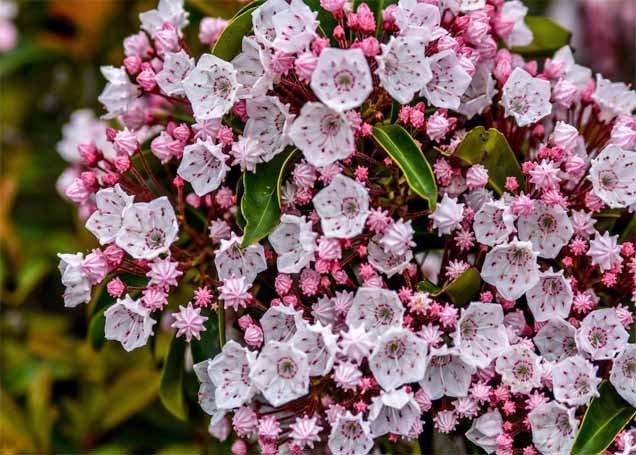
Mountain laurel is one of the most beautiful native evergreen shrubs for shaded gardens in suitable parts of the eastern United States.
Its glossy green leaves remain attractive throughout the year, while clusters of pink, white, or patterned flowers appear in late spring or early summer.
Mountain laurel naturally grows in woodland environments and generally performs well in light to partial shade. It prefers acidic, organically rich, well-drained soil with consistent moisture.
Best growing conditions:
- Light to partial shade
- Acidic, well-drained soil
- Cool, protected locations
- Woodland borders and naturalistic landscapes
Mountain laurel grows slowly and can become a substantial shrub over time. Compact cultivars are available for smaller gardens.
Avoid planting it in poorly drained clay or extremely hot, exposed sites.
Important: Mountain laurel is toxic if ingested, so consider household and pet safety when choosing its location.
2. Oakleaf Hydrangea (Hydrangea quercifolia)

Oakleaf hydrangea is a standout choice among flowering shrubs for shade.
This North American native produces large clusters of white flowers that often develop pinkish or tan tones as they age. Its distinctive oak-shaped leaves can turn rich shades of burgundy, red, and purple in fall.
Oakleaf hydrangeas generally perform well in partial shade, especially where they receive morning sun and protection from strong afternoon heat.
Best growing conditions:
- Partial shade or filtered sunlight
- Well-drained soil with organic matter
- Consistent moisture during establishment
- Woodland edges and mixed shrub borders
Many varieties grow several feet tall and wide, although compact cultivars are available.
Oakleaf hydrangeas usually flower on old wood. Avoid routine late-winter pruning that could remove developing flower buds.
3. Summersweet (Clethra alnifolia)
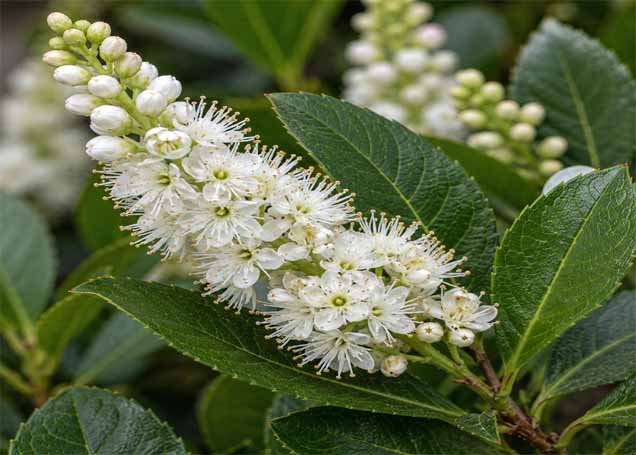
Summersweet, also called sweet pepperbush, is an excellent native flowering shrub for moist, partially shaded gardens.
Its fragrant white or pink flower spikes appear in summer, attracting bees, butterflies, and other pollinators.
Unlike many shrubs that struggle in damp soil, summersweet tolerates moisture and can perform well in rain gardens and low-lying landscape areas.
Best growing conditions:
- Partial shade
- Moist, acidic soil
- Woodland edges and rain gardens
- Locations protected from prolonged drought
Summersweet is particularly useful when you want summer flowers in a location that does not receive full-day sunshine.
It can spread gradually by suckers, so allow enough space for its natural growth.
4. Virginia Sweetspire (Itea virginica)
Virginia sweetspire is a versatile native shrub known for its arching stems, fragrant white flowers, and attractive fall foliage.
It performs well in partial shade and can tolerate a range of soil moisture conditions once established.
The flowers appear in elongated clusters during late spring or early summer. In fall, the foliage may develop red, orange, or burgundy tones.
Best growing conditions:
- Partial shade
- Moist to moderately well-drained soil
- Mixed borders and naturalized plantings
- Rain garden edges
Compact cultivars are especially useful in smaller yards.
For gardeners searching for low maintenance shrubs for shade, Virginia sweetspire can be a practical option when planted in suitable conditions.
5. Mapleleaf Viburnum (Viburnum acerifolium)
Mapleleaf viburnum is one of the more useful native shrubs for woodland shade in eastern North America.
Its leaves resemble small maple leaves, and its clusters of pale flowers develop into berries that can benefit wildlife.
The foliage often changes to attractive pink, red, or purple shades in autumn.
Best growing conditions:
- Partial to fairly deep shade
- Dry to moderately moist woodland soil
- Naturalistic gardens
- Understory plantings beneath deciduous trees
Mapleleaf viburnum generally remains smaller than many other viburnums, making it useful for woodland edges and informal borders.
It is a strong candidate when looking for shrubs that grow in shade beneath established trees, provided the site offers sufficient moisture during establishment.
6. Spicebush (Lindera benzoin)
Spicebush is a deciduous native shrub commonly found in eastern North American woodlands.
It produces small yellow flowers in early spring, often before its leaves emerge. Its aromatic foliage can turn golden yellow in fall.
Spicebush is also a host plant for spicebush swallowtail butterflies.
Best growing conditions:
- Partial shade or filtered woodland light
- Moist, fertile soil
- Woodland gardens
- Naturalized wildlife borders
Spicebush is typically better suited to medium or large planting areas than very narrow foundation beds.
Male and female plants are separate, and female plants require suitable pollination to produce fruit.
7. Inkberry Holly (Ilex glabra)
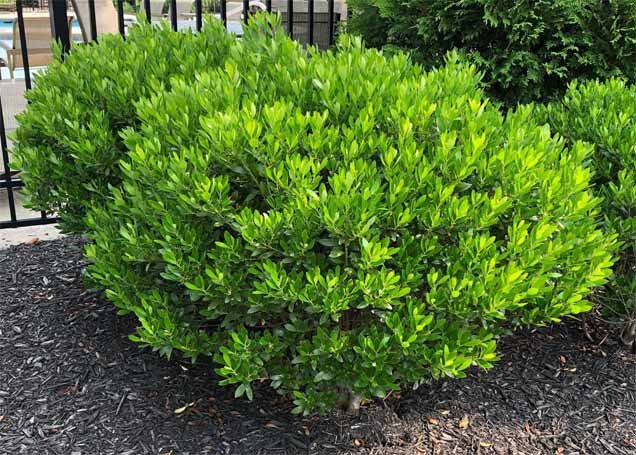
Inkberry holly is a broadleaf evergreen shrub native to eastern North America.
Its small, glossy leaves provide year-round greenery, making it a useful alternative to some nonnative evergreen foundation plants.
Inkberry generally prefers full sun to partial shade rather than deep shade.
Best growing conditions:
- Partial shade with reasonable light
- Acidic soil
- Moist but adequately drained conditions
- Foundation beds and informal hedges
Different cultivars vary considerably in height and shape.
Inkberry is especially useful for homeowners who want evergreen shrubs for shade in a location receiving morning sun or bright filtered light.
Male and female plants are separate, so fruit production depends on compatible plants.
8. Rosebay Rhododendron (Rhododendron maximum)
Rosebay rhododendron is a large native evergreen shrub found in woodland habitats of eastern North America.
It has broad, leathery leaves and produces clusters of pale pink or white flowers.
This species is well adapted to sheltered woodland conditions but needs the right soil environment.
Best growing conditions:
- Partial to substantial woodland shade
- Acidic, well-drained soil
- Consistent moisture
- Cool, protected locations
Rosebay rhododendron can grow quite large, so it is generally best for spacious gardens rather than tight foundation beds.
Its evergreen foliage creates a strong visual backdrop throughout the year.
Like other rhododendrons, it contains toxic compounds and should not be ingested.
9. Northern Bush Honeysuckle (Diervilla lonicera)
Northern bush honeysuckle is a native deciduous shrub that deserves more attention in American shade gardens.
Despite its common name, it is not one of the invasive Asian bush honeysuckles.
It produces small yellow flowers and can adapt to a variety of growing conditions, including some relatively dry woodland sites.
Best growing conditions:
- Partial shade
- Well-drained soil
- Naturalized borders
- Slopes and woodland edges
This shrub can be useful where larger flowering shrubs would overwhelm the available space.
It is particularly appealing for gardeners interested in native, relatively low-maintenance plantings.
10. American Hazelnut (Corylus americana)
American hazelnut is a native, multi-stemmed shrub that provides natural structure and wildlife value.
It can tolerate partial shade and some woodland conditions, although nut production is generally better where it receives more sunlight.
Its spring catkins add seasonal interest, while the foliage creates an informal screen during the growing season.
Best growing conditions:
- Partial shade to sun
- Moderately moist, well-drained soil
- Naturalized landscapes
- Wildlife-friendly garden borders
American hazelnut can become a large, spreading shrub and may form colonies through suckering.
It is not usually the best choice for a tiny planting bed, but it can work beautifully in larger shade garden landscapes.
11. American Witch Hazel (Hamamelis virginiana)
American witch hazel is a large deciduous shrub or small understory tree valued for its unusual fall flowers.
Its narrow, yellow, ribbon-like petals appear late in the growing season, sometimes after much of the foliage has dropped.
It tolerates partial shade and can grow in woodland environments.
Best growing conditions:
- Partial shade
- Moist, well-drained soil
- Woodland gardens
- Large mixed borders
Witch hazel is a useful choice for gardeners seeking late-season interest, but it needs sufficient room to reach its mature size.
12. Blackhaw Viburnum (Viburnum prunifolium)
Blackhaw viburnum is a native deciduous shrub or small tree with spring flowers, attractive foliage, and wildlife-friendly fruit.
It can tolerate partial shade, although flowering and fruiting are often better with more sunlight.
Best growing conditions:
- Partial shade
- Well-drained soil
- Woodland edges
- Large informal borders
Blackhaw viburnum can grow much larger than compact ornamental shrubs.
Before planting, consider its eventual height and width and the amount of space available.
13. Smooth Hydrangea (Hydrangea arborescens)
Smooth hydrangea is a native flowering shrub well suited to many eastern U.S. landscapes.
Its rounded flower clusters provide summer interest, and numerous garden cultivars are available.
Smooth hydrangeas generally appreciate partial shade, especially protection from intense afternoon sun in warmer regions.
Best growing conditions:
- Partial shade
- Moist, well-drained soil
- Mixed flower and shrub borders
- Locations with reliable water availability
Unlike oakleaf hydrangeas, smooth hydrangeas typically bloom on new wood.
They can be useful for gardeners seeking flowering shrubs for shade with a relatively straightforward pruning schedule.
14. Mountain Sweet Pepperbush (Clethra acuminata)
Mountain sweet pepperbush is a native deciduous shrub associated with moist woodland environments in parts of the southeastern United States.
It produces fragrant white summer flowers and has attractive exfoliating bark on older stems.
This species can be a good choice for naturalistic woodland gardens where adequate moisture is available.
Best growing conditions:
- Partial shade
- Moist, organically rich soil
- Woodland slopes and borders
- Sheltered southeastern landscapes
It can become a substantial shrub, so check mature dimensions before choosing a planting location.
15. Yellowroot (Xanthorhiza simplicissima)
Yellowroot is a low-growing native woody shrub that can work well in informal woodland plantings.
It is valued for its delicate foliage, spreading habit, and ability to form colonies in suitable conditions.
Yellowroot is particularly useful where a gardener wants a natural-looking shrub layer rather than a formal specimen plant.
Best growing conditions:
- Partial shade to shade
- Moist to moderately dry woodland soil
- Naturalized borders
- Woodland groundcover-style plantings
Because it spreads by underground stems, it may not be suitable for tightly controlled planting designs.
However, its relatively low growth makes it useful beneath taller shrubs and trees.
Shade Loving Shrubs Comparison Table
Use this quick guide to compare the best shrubs for shade before planning your landscape.
| Shrub | Preferred Light | Main Attraction | Best Landscape Use |
|---|---|---|---|
| Mountain laurel | Light to partial shade | Evergreen foliage, spring flowers | Woodland borders |
| Oakleaf hydrangea | Partial shade | Summer flowers, fall foliage | Mixed borders |
| Summersweet | Partial shade | Fragrant summer flowers | Moist gardens |
| Virginia sweetspire | Partial shade | Flowers, fall color | Borders and rain gardens |
| Mapleleaf viburnum | Shade to partial shade | Fall color, wildlife fruit | Woodland understory |
| Spicebush | Partial shade | Early flowers, wildlife value | Naturalized gardens |
| Inkberry holly | Sun to partial shade | Evergreen foliage | Foundation plantings |
| Rosebay rhododendron | Woodland shade | Evergreen foliage, flowers | Large woodland gardens |
| Northern bush honeysuckle | Sun to partial shade | Compact growth, yellow flowers | Naturalized borders |
| American hazelnut | Sun to partial shade | Wildlife value, nuts | Large naturalized areas |
| American witch hazel | Sun to partial shade | Unusual fall flowers | Large woodland borders |
| Blackhaw viburnum | Sun to partial shade | Spring flowers, fruit | Informal screens |
| Smooth hydrangea | Partial shade | Summer flowers | Flowering borders |
| Mountain sweet pepperbush | Partial shade | Fragrant flowers, bark | Moist woodland gardens |
| Yellowroot | Shade to partial shade | Low-growing foliage | Woodland ground layer |
Important: These light recommendations describe general suitability, not guaranteed performance in every garden. Cultivars, soil conditions, climate, and local light intensity can change plant performance.
Best Flowering Shrubs for Shade
If your goal is colorful blooms, focus on shrubs that flower reliably in partial shade rather than expecting heavy flowering in extremely dark locations.
Some of the most attractive options include:
- Oakleaf hydrangea for large summer flower clusters
- Summersweet for fragrant midsummer blooms
- Mountain laurel for distinctive late-spring flowers
- Smooth hydrangea for summer color
- Virginia sweetspire for graceful white flower clusters
- Rosebay rhododendron for woodland flower displays
When selecting flowering shrubs for shade, remember that plants may bloom less heavily in very low light.
Bright shade or morning sunshine often provides a useful balance between flower production and protection from afternoon heat.
Best Evergreen Shrubs for Shade
Evergreen shrubs help maintain visual structure after deciduous plants lose their leaves.
Mountain laurel and rosebay rhododendron are particularly useful in acidic woodland soils.
Inkberry holly offers another evergreen option for brighter partially shaded locations.
However, evergreen does not automatically mean drought tolerant. Many broadleaf evergreens require adequate soil moisture, especially during establishment.
In colder regions, protection from drying winter winds can also be important.
Choose evergreen shrubs for shade based on your local winter conditions, available light, and soil characteristics.
Low Maintenance Shrubs for Shade
A low-maintenance shade garden begins with matching the plant to the site.
A shrub that naturally tolerates the available light and soil conditions usually requires fewer corrective interventions than one struggling in an unsuitable location.
Consider mapleleaf viburnum for woodland settings, northern bush honeysuckle for appropriate naturalized borders, and Virginia sweetspire for locations with sufficient moisture.
Yellowroot can also be useful in informal woodland areas where its spreading growth is welcome.
Remember that even low maintenance shrubs for shade require watering during establishment, occasional inspection, and enough space to mature.
How to Choose Shade Loving Shrubs for Your Yard
Choosing the right plant involves more than selecting attractive flowers or leaves.
1. Measure the Available Sunlight
Observe your planting location throughout the day.
A bed receiving four hours of morning sun is different from a narrow space that remains dark all day.
For very low-light areas, prioritize plants with documented woodland shade tolerance.
2. Check Your USDA Hardiness Zone
USDA Plant Hardiness Zones help estimate whether a perennial plant can tolerate typical winter minimum temperatures in your location.
However, hardiness zones do not measure summer heat, humidity, soil drainage, or sunlight.
Always check the recommended zone range for the specific species or cultivar.
3. Evaluate Soil Moisture
Shade beneath mature trees is often dry because tree roots compete for water.
By contrast, shaded areas near drainage features may remain moist for long periods.
Summersweet is generally better suited to consistently moist conditions, while mapleleaf viburnum can be useful in some drier woodland environments.
4. Consider Soil Acidity
Mountain laurel, rhododendrons, and inkberry generally prefer acidic soils.
A soil test can help determine whether your planting area matches their requirements.
Avoid making major soil amendments without understanding the existing soil conditions.
5. Allow for Mature Size
Some shade tolerant shrubs eventually reach the size of small trees.
Before planting, consider mature height, width, access paths, windows, and nearby structures.
Compact cultivars can be useful for small residential landscapes.
6. Consider Native Plants
Native shrubs can provide habitat, food, and seasonal resources for wildlife.
However, a plant native to one part of the United States may not be native or appropriate in another.
Check local extension recommendations and regional native-plant resources before purchasing.
How to Plant Shrubs in a Shady Garden
Good planting practices help shade garden shrubs establish strong root systems.
Choose an Appropriate Location
Select a location that matches the plant’s light, soil, and moisture needs.
Avoid planting moisture-loving shrubs in dry soil beneath dense tree roots unless you can provide suitable growing conditions.
Prepare the Planting Area
Remove competing weeds and examine the soil for drainage problems.
Avoid unnecessarily damaging established tree roots when preparing a woodland planting bed.
Plant at the Correct Depth
Set the shrub so that its root flare or the top of its root ball is appropriately positioned for the species and site.
Planting too deeply can contribute to long-term plant health problems.
Water During Establishment
Newly planted shrubs generally need careful watering while their root systems develop.
Watering frequency should respond to rainfall, soil type, drainage, and weather rather than a rigid calendar.
Apply Mulch Properly
An appropriate layer of organic mulch can help conserve moisture and reduce weed competition.
Keep mulch away from direct contact with stems and trunks.
For broader planting inspiration, explore our Gardening Tips for Beginners guide.
Shade Garden Landscaping Ideas
Shade loving shrubs can transform underused outdoor areas into layered, visually appealing landscapes.
Create a Woodland Border
Combine taller shrubs such as spicebush or rosebay rhododendron with smaller woodland plants.
Use natural-looking groups rather than rigid rows for an informal effect.
Add Evergreen Structure
Plant appropriate evergreens where year-round foliage is needed.
Mountain laurel or inkberry can provide structure in suitable conditions.
Combine Flowers and Foliage
Pair flowering shrubs with plants valued for leaf texture and seasonal color.
For example, oakleaf hydrangea offers summer blooms and colorful fall foliage.
Use Shrubs Around Shady Paths
Lower-growing plants such as yellowroot can help soften the edges of woodland paths where their spreading habit is appropriate.
Design for Wildlife
Native shrubs such as spicebush, viburnums, and summersweet can contribute to wildlife-friendly landscapes.
Include a variety of plant types that provide resources across different seasons.
For additional inspiration, visit our Garden Plants for Shade guide and Small Backyard Landscaping Ideas.
Common Mistakes When Growing Shrubs in Shade
Even the best shade loving shrubs may struggle if their basic needs are overlooked.
Planting Partial-Shade Shrubs in Deep Shade
Plants that tolerate several hours of filtered light may fail to flower or develop properly in extremely dark locations.
Ignoring Tree Root Competition
Mature trees can absorb significant amounts of water from the surrounding soil.
Monitor moisture carefully when establishing shrubs beneath trees.
Overwatering Poorly Drained Soil
Not all shade-loving plants tolerate waterlogged roots.
Choose species suited to your drainage conditions.
Choosing Plants Without Checking Mature Size
A shrub that looks compact at the nursery may become much larger over time.
Pruning at the Wrong Time
Some flowering shrubs bloom on old wood, while others flower on new growth.
Incorrect pruning can remove next season’s flower buds.
For practical pruning guidance, read our How to Prune Flowers article.
Using Invasive Shrubs
Some widely sold ornamental shrubs can spread aggressively in particular regions.
Check your state’s invasive-plant guidance before choosing unfamiliar species.
Frequently Asked Questions About Shade Loving Shrubs
What shrubs grow best in full shade?
Mapleleaf viburnum, yellowroot, and certain woodland rhododendrons can tolerate substantial shade in suitable conditions. However, very deep shade may reduce flowering and growth, even in shade-tolerant plants.
What are the best flowering shrubs for shade?
Oakleaf hydrangea, summersweet, Virginia sweetspire, mountain laurel, and smooth hydrangea are attractive options for partially shaded gardens. Their suitability depends on local climate and soil conditions.
Are there evergreen shrubs that grow in shade?
Yes. Mountain laurel and rosebay rhododendron tolerate woodland shade, while inkberry holly generally prefers brighter partial shade. All require suitable soil and climate conditions.
Which shrubs grow in dry shade?
Mapleleaf viburnum and northern bush honeysuckle can be useful in certain drier woodland settings. However, newly planted shrubs still need appropriate moisture while establishing.
What are the best low maintenance shrubs for shade?
Virginia sweetspire, mapleleaf viburnum, and northern bush honeysuckle can be relatively low maintenance when matched with appropriate growing conditions.
Can hydrangeas grow in shade?
Many hydrangeas grow well in partial shade. However, flowering may decline in deep shade, and requirements differ among species and cultivars.
Do shade loving shrubs need fertilizer?
Not necessarily. Fertilizer should be based on soil conditions and plant needs. A soil test is a better starting point than applying fertilizer routinely.
Can shade loving shrubs grow under large trees?
Some can, but competition for water and nutrients may be significant. Choose plants suited to woodland conditions and avoid damaging existing tree roots during planting.
What is the difference between shade tolerant and shade loving shrubs?
Shade tolerant shrubs can grow with reduced sunlight, although they may perform better in brighter conditions. Shrubs described as shade loving are generally adapted to lower-light environments, but their actual requirements still vary.
Final Thoughts: Choosing the Best Shade Loving Shrubs
A beautiful shade garden is possible when plants are selected for the conditions they will actually experience.
The best shade loving shrubs combine suitable light tolerance with the right soil moisture, mature size, and climate adaptability.
For colorful flowers, consider oakleaf hydrangea, summersweet, or Virginia sweetspire. For evergreen structure, mountain laurel and rosebay rhododendron can be excellent choices in suitable acidic woodland soils. For wildlife-friendly naturalized areas, explore spicebush, mapleleaf viburnum, and other regionally appropriate native shrubs.
Start by evaluating your garden’s light and soil conditions, then choose a few well-matched species rather than filling every space immediately.
With thoughtful planning, shade loving shrubs can turn an overlooked corner of your yard into an inviting landscape that looks attractive through multiple seasons.
References and Further Reading
- Penn State Extension — Native Plants for Mid-Atlantic Landscapes: Shade to Part Shade
- Penn State Extension — Evergreen Shrubs and Trees for Pennsylvania
- NC State Extension — Summersweet (Clethra alnifolia)
- NC State Extension — Inkberry Holly (Ilex glabra)
- Penn State Extension — Trees and Shrubs: Species and Varieties
- University of Minnesota Extension — Shoreland Trees and Shrubs