Table of Contents
Starting with plants can feel surprisingly complicated. One plant wants bright sunlight, another prefers shade, some need frequent watering, and others can suffer when watered too often.
The good news is that you don’t need expert gardening skills to get started.
The best plants for beginners are generally forgiving, adaptable, and relatively easy to understand. They give you time to learn basic skills such as checking soil moisture, recognizing light conditions, repotting, and noticing when a plant needs attention.
This guide covers 15 beginner-friendly plants, including indoor houseplants, herbs, flowers, and easy vegetables. Whether you have a sunny backyard, a small patio, or just a bright windowsill, there is something here you can grow.
What Makes a Plant Good for Beginners?
An easy plant isn’t necessarily a plant you can completely ignore.
Every living plant needs appropriate light, water, temperature, nutrients, and growing conditions.
However, beginner-friendly plants tend to have one or more helpful characteristics:
- They tolerate occasional care mistakes.
- Their watering requirements are relatively straightforward.
- They adapt to common home or garden conditions.
- They don’t require complicated pruning.
- They’re readily available.
- Problems are usually easy to recognize.
- They can grow successfully in containers.
The best choice still depends on your growing space.
A tomato plant may be easy to grow on a sunny patio but impossible to grow successfully in a dark bedroom. Likewise, a pothos can make an excellent indoor plant but isn’t appropriate for every outdoor climate.
So start by choosing the right plant for the right place.
Best Indoor Plants for Beginners
If this is your first experience growing plants, houseplants can be a convenient starting point. You can observe them every day and learn how they respond to light and water.
1. Pothos
Botanical name: Epipremnum aureum
Pothos is one of the most popular beginner houseplants.
Its heart-shaped leaves grow along trailing vines, making it attractive on shelves, bookcases, and hanging planters.
Pothos can adapt to different indoor light levels, although it generally grows best with bright indirect light. Variegated varieties may lose some coloration when kept in very low light.
Basic Care
Light: Medium to bright indirect light; tolerates lower light
Water: Allow the upper portion of the potting mix to dry before watering again
Soil: Well-draining houseplant mix
Difficulty: Very easy
The vines can be trimmed if they become too long, and cuttings are relatively easy to propagate.
For someone buying their first houseplant, pothos is difficult to overlook.
2. Snake Plant
Botanical name: Dracaena trifasciata
Snake plants are known for upright, sword-shaped foliage.
They are particularly useful for beginners because they tolerate relatively dry potting mix and a broad range of indoor lighting conditions.
Their biggest enemy is often excessive watering rather than neglect.
Basic Care
Light: Low to bright indirect light
Water: Allow the potting mix to dry substantially between waterings
Soil: Fast-draining potting mix
Difficulty: Very easy
University of Minnesota Extension notes that snake plants tolerate low light but perform better in brighter conditions.
If you sometimes forget to water your plants, a snake plant can be much more forgiving than moisture-loving species.
3. ZZ Plant
Botanical name: Zamioculcas zamiifolia
ZZ plants have thick stems and glossy green leaves that look almost polished.
They store water in underground structures called rhizomes, allowing them to tolerate dry periods.
Basic Care
Light: Low to bright indirect light
Water: Let the potting mix dry between waterings
Soil: Well-draining potting mix
Difficulty: Very easy
Avoid keeping the roots constantly wet.
A ZZ plant growing in low light may use water quite slowly, so always check the soil rather than watering automatically every week.
4. Spider Plant
Botanical name: Chlorophytum comosum
Spider plants are excellent starter plants because they grow relatively quickly under favorable conditions and often produce small plantlets on long arching stems.
Their green-and-white foliage looks especially attractive in hanging baskets.
Basic Care
Light: Bright indirect light; tolerates somewhat lower light
Water: Water when the upper soil begins drying
Soil: General well-draining potting mix
Difficulty: Easy
Spider plants are also fun for beginners because the small plantlets can be propagated into new plants.
5. Heartleaf Philodendron
Botanical name: Philodendron hederaceum
Heartleaf philodendron is another attractive trailing plant.
Its heart-shaped green leaves make it suitable for shelves, hanging containers, or climbing supports.
Basic Care
Light: Medium to bright indirect light; tolerates lower light
Water: Let the upper portion of soil dry somewhat
Soil: Loose, well-draining potting mix
Difficulty: Easy
Like pothos, it provides relatively clear feedback. Drooping, slow growth, or changes in leaf appearance can encourage you to examine watering and light conditions.
6. Aloe Vera
Botanical name: Aloe vera
Aloe vera is a succulent with thick leaves that store water.
This means it doesn’t need the constantly moist conditions required by some tropical plants.
Basic Care
Light: Plenty of bright light
Water: Water thoroughly and allow the growing medium to dry before watering again
Soil: Fast-draining cactus or succulent mix
Difficulty: Easy
One common beginner mistake is caring for aloe like a moisture-loving houseplant.
Don’t give it small amounts of water every day.
Instead, use the same general approach explained in our How to Water Succulents guide: thoroughly water when needed and then allow the soil to dry appropriately.
7. Cast Iron Plant
Botanical name: Aspidistra elatior
The name says a lot about this plant.
Cast iron plants earned a reputation for tolerating conditions that many other houseplants dislike.
They have long, dark-green leaves and can handle relatively low indoor light.
Basic Care
Light: Low to medium indirect light
Water: Allow the upper soil to dry somewhat
Soil: Well-draining potting mix
Difficulty: Easy
Growth can be slow, particularly in low light, but that isn’t necessarily a problem.
If your home doesn’t receive strong natural light, this plant deserves consideration.
Easy Herbs for Beginner Gardeners
If you’d rather grow something you can use in the kitchen, herbs can make gardening particularly rewarding.
Most culinary herbs need substantially more sunlight than low-light houseplants, so put them in an appropriately sunny location.
8. Basil
Botanical name: Ocimum basilicum
Basil is one of the most rewarding herbs for new gardeners.
Seeds germinate relatively quickly under suitable conditions, plants grow rapidly in warm weather, and you can harvest leaves throughout the growing season.
Basic Care
Light: Full sun
Water: Keep the soil consistently moist but not waterlogged
Soil: Fertile, well-draining soil
Difficulty: Easy
Harvesting the tips regularly can encourage bushier growth and delay flowering.
Basil also grows well in containers, making it useful for patios and balconies.
9. Mint
Botanical name: Mentha spp.
Mint grows so enthusiastically that controlling it can sometimes be more difficult than growing it.
That’s exactly why beginners often have success with it.
Basic Care
Light: Full sun to partial shade, depending on climate
Water: Regular moisture
Soil: Moist, well-draining soil
Difficulty: Easy
There is one important warning:
Grow mint in a container.
Many mints spread aggressively through underground stems and can quickly move into areas where you don’t want them.
A pot makes it much easier to manage.
10. Chives
Botanical name: Allium schoenoprasum
Chives are compact perennial herbs with slender green leaves and attractive flowers.
They don’t require much space and can grow well in containers.
Basic Care
Light: Full sun
Water: Regular moisture
Soil: Fertile, well-drained soil
Difficulty: Easy
Once established, you can harvest leaves as needed while allowing enough foliage to remain for continued growth.
Easy Vegetables for Beginners
Growing your first vegetable and eventually harvesting something you planted yourself is one of the most satisfying parts of gardening.
Start with crops that are relatively straightforward.
11. Lettuce
Botanical name: Lactuca sativa
Lettuce is an excellent first crop, particularly during cooler weather.
It doesn’t require the long growing season that crops such as tomatoes and peppers need.
Leaf lettuce is especially convenient because you can harvest individual outer leaves while allowing the center to continue growing.
Basic Care
Light: Full sun to partial shade depending on temperature
Water: Consistent moisture
Soil: Fertile, well-draining soil
Difficulty: Easy
Lettuce can also be grown in relatively shallow containers, making it useful when garden space is limited.
12. Radishes
Botanical name: Raphanus sativus
If patience isn’t your strongest gardening skill, try radishes.
Many varieties mature relatively quickly, so you can see results much sooner than with long-season vegetables.
Basic Care
Light: Full sun
Water: Consistent moisture
Soil: Loose, well-drained soil
Difficulty: Very easy
Seeds are usually sown directly where the plants will grow.
Loose soil is important because the edible root needs room to develop properly.
13. Green Beans
Botanical name: Phaseolus vulgaris
Beans are another satisfying crop for beginners.
The seeds are large enough to handle easily, germination can be quick in warm soil, and plants can produce generously under favorable conditions.
There are two major growth types:
Bush beans remain relatively compact.
Pole beans climb and need a trellis or another support.
For a first garden, bush beans can be particularly straightforward.
Basic Care
Light: Full sun
Water: Consistent moisture
Soil: Well-draining garden soil
Difficulty: Easy
Harvest pods regularly once production begins.
14. Tomatoes
Botanical name: Solanum lycopersicum
Tomatoes require more attention than radishes or lettuce, but they’re still one of the most rewarding plants for beginners.
The secret is starting with a manageable variety.
If you’re growing in a container, choose a variety described as:
- Determinate
- Dwarf
- Patio
- Bush
- Container suitable
Tomatoes need substantial direct sunlight, consistent watering, fertile growing media, and usually some type of support.
Basic Care
Light: At least 6–8 hours of direct sun
Water: Maintain relatively consistent soil moisture
Soil: Fertile and well-draining
Support: Cage, stake, or trellis
Difficulty: Easy to moderate
If you’re growing on a patio or balcony, read our complete How to Grow Tomatoes in Pots guide. It covers container size, planting depth, watering, fertilizer, support, and harvesting.
15. Zucchini
Botanical name: Cucurbita pepo
Zucchini plants grow quickly in warm weather and can produce an impressive amount of food from relatively few plants.
They do require space.
Even one zucchini plant can become surprisingly large.
Basic Care
Light: Full sun
Water: Consistent moisture
Soil: Fertile, well-draining soil
Difficulty: Easy
Check plants regularly once fruits begin developing because zucchini can grow very quickly.
Harvesting fruits while they’re still a useful size can also encourage continued production.
Best Flowering Plants for Beginners
If your main goal is color rather than food, several annual flowers are straightforward from seed or transplants.
Marigolds
Botanical name: Tagetes spp.
Marigolds are among the classic beginner flowers.
They grow quickly in warm weather, tolerate sunny conditions, and provide bright yellow, orange, or red flowers.
They’re also commonly planted near vegetable gardens.
Light: Full sun
Water: Regular watering while establishing; avoid waterlogged soil
Difficulty: Easy
Zinnias
Botanical name: Zinnia elegans
Zinnias produce colorful flowers throughout warm weather and can be grown directly from seed.
They prefer sunny locations and good airflow.
Light: Full sun
Water: Water the root zone when needed
Difficulty: Easy
Removing old flowers can encourage continued blooming.
Sunflowers
Botanical name: Helianthus annuus
Sunflowers are particularly satisfying for new gardeners because their seeds are large, seedlings are easy to recognize, and some varieties grow remarkably quickly.
Different varieties range from compact plants suitable for containers to giants that can become several feet tall.
Light: Full sun
Water: Regular moisture while establishing
Difficulty: Easy
Choose a variety appropriate for your available space.
Indoor or Outdoor Plants: Where Should a Beginner Start?
There isn’t one correct answer.
Choose according to the space you actually have.
If you live in an apartment with bright windows but no outdoor area, start with:
- Pothos
- Snake plant
- ZZ plant
- Spider plant
- Aloe vera
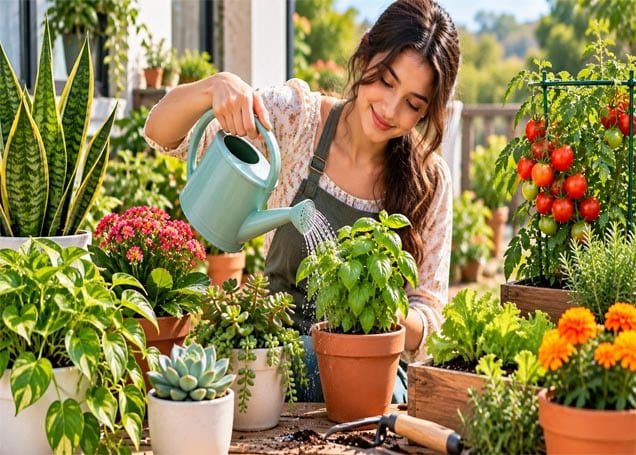
If you have a sunny balcony, consider:
- Basil
- Lettuce
- Radishes
- Compact tomatoes
- Marigolds
If you have a backyard with full sun, you can experiment with:
- Tomatoes
- Beans
- Zucchini
- Zinnias
- Sunflowers
Don’t choose a plant first and then try to force your home to suit it.
Look at your growing conditions first, then choose the plant.
How to Choose Your First Plant
Before buying anything, answer four questions.
How Much Light Do You Have?
Watch the intended location during the day.
Is it receiving direct sunlight, bright indirect light, or very little natural light?
This immediately eliminates many unsuitable plants.
For example, a tomato plant needs substantial direct sunlight, while a snake plant can tolerate considerably lower indoor light.
If your home has limited natural light, our guide to Low Light Houseplants can help you choose a more suitable species.
How Often Do You Want to Water?
Be realistic.
If you frequently forget plant care, don’t begin with a species that requires consistently moist soil.
Snake plants, ZZ plants, and many succulents can tolerate longer drying periods.
If you enjoy checking plants regularly, herbs and vegetables may suit you better.
How Much Space Do You Have?
Always research mature plant size.
A tiny tomato seedling can become a large plant.
A zucchini can spread across a substantial portion of a garden bed.
A trailing pothos may eventually produce several feet of vines.
Choose something that will still fit your space several months from now.
Do You Want Something Decorative or Edible?
For decoration, start with pothos, snake plants, spider plants, marigolds, or zinnias.
For food, try basil, lettuce, radishes, beans, or compact tomatoes.
There is no reason you can’t eventually grow both.
Five Gardening Skills Every Beginner Should Learn
Instead of trying to memorize the requirements of hundreds of plants, learn a few fundamental skills.
1. Learn How to Check Soil Moisture
Don’t automatically water because it’s Saturday.
Check the soil.
Some plants prefer the soil to dry substantially, while others perform better with more consistent moisture.
Our How to Water Houseplants guide explains this process in more detail.
2. Understand Light
“Low light,” “bright indirect light,” and “full sun” are not interchangeable.
Vegetables such as tomatoes generally need several hours of direct sun, while many tropical houseplants prefer bright but indirect light.
Matching a plant to the correct light conditions solves many problems before they start.
3. Use Containers With Drainage
For most conventional potted plants, drainage holes make watering much easier.
They allow excess water to escape instead of collecting around the root system.
4. Don’t Overfertilize
More fertilizer doesn’t automatically mean faster or healthier growth.
Too much can damage plants.
Follow the product label and understand the requirements of the species you’re growing.
5. Observe Before You React
A yellow leaf doesn’t always mean “add fertilizer.”
Drooping doesn’t always mean “add water.”
A struggling plant can be responding to:
- Too much water
- Too little water
- Insufficient light
- Excessive sunlight
- Temperature stress
- Pests
- Nutrient problems
- Root problems
Look at the entire growing environment before trying to fix the problem.
Common Beginner Gardening Mistakes
Buying Too Many Plants at Once
Ten plants mean ten sets of requirements to learn.
Start with two or three.
Once you’re comfortable caring for those, expand your collection.
Watering Everything on the Same Day
Your snake plant and basil probably don’t need water at the same time.
Treat plants individually.
Choosing Plants Based Only on Appearance
That beautiful plant at the garden center may require conditions your home cannot provide.
Read the label first.
Using Pots Without Drainage
This makes moisture management harder, particularly for beginners.
Choose pots with drainage holes whenever practical.
Moving Plants Constantly
Plants need time to adjust to a location.
Don’t move a plant every two days because it hasn’t immediately produced new growth.
Expecting Perfection
Leaves age.
Plants sometimes develop brown tips.
Insects occasionally appear.
Seeds don’t always germinate.
Gardening is a learning process, and observing what happens is part of becoming a better gardener.
A Simple Beginner Garden Plan
If you’ve never grown anything before, don’t create a huge garden immediately.
Try this:
Indoor Beginner Setup
Start with:
1 pothos + 1 snake plant + 1 spider plant
These three will help you learn about different watering patterns, growth habits, and indoor light.
Balcony Beginner Setup
Try:
1 basil + 1 lettuce container + 1 compact tomato
This gives you three different edible plants without requiring a full garden.
Backyard Beginner Setup
Start with:
Radishes + bush beans + tomatoes + marigolds
You’ll experience fast-growing root crops, legumes, fruiting vegetables, and flowers within one small garden.
Next season, expand based on what you enjoyed growing most.
Frequently Asked Questions
What is the easiest plant for a beginner?
There isn’t one universal easiest plant because growing conditions matter. For indoor gardeners, pothos, snake plants, and ZZ plants are good starting choices. Outdoors, radishes, bush beans, marigolds, and zinnias are relatively straightforward under suitable conditions.
What is the easiest houseplant to keep alive?
Snake plants and ZZ plants are particularly forgiving because they tolerate relatively dry soil and a range of indoor light conditions. Pothos is another popular beginner option.
What vegetables should a beginner grow first?
Lettuce, radishes, bush beans, zucchini, and tomatoes can all be beginner-friendly when planted in suitable conditions. Radishes and lettuce are particularly useful because they can produce results relatively quickly.
What plants are easiest to grow in pots?
Many plants grow well in containers, including pothos, snake plants, aloe, basil, lettuce, radishes, compact tomatoes, marigolds, and some dwarf sunflower varieties.
The key is choosing an appropriately sized container with good drainage.
How many plants should a beginner start with?
Two to five plants is plenty for most beginners.
Starting small gives you enough variety to learn without turning plant care into a chore.
What plants should beginners avoid?
Rather than having a universal “avoid” list, postpone plants whose requirements don’t match your growing conditions or the amount of care you can provide.
If your apartment has very little natural light, for example, don’t start with sun-loving tomatoes simply because you like tomatoes.
Should beginners start plants from seeds or buy plants?
Both approaches work.
Buying young plants is often easier because the difficult germination and early seedling stages have already happened.
Seeds are inexpensive and provide more variety, but they require additional attention to light, moisture, temperature, and timing.
For your first garden, you can use both—buy a tomato transplant while sowing easy crops such as radishes or beans directly from seed.
Final Thoughts
The best plants for beginners aren’t necessarily the plants labeled “easy” at a store. They’re the plants that match your light, space, climate, and care routine.
For indoor gardening, pothos, snake plants, ZZ plants, spider plants, and aloe vera are excellent places to begin.
If you want edible plants, consider basil, lettuce, radishes, bush beans, or a compact tomato variety.
And if you simply want colorful flowers, marigolds, zinnias, and sunflowers can make a first garden incredibly rewarding.
Start small.
Learn how your soil feels when wet and dry. Notice how plants respond to different light conditions. Learn when to water—and, just as importantly, when to leave the watering can alone.
Once you can successfully care for a few plants, adding new varieties becomes much easier.
Your first garden doesn’t need to be perfect. It just needs to grow.
Sources & Further Reading
For your published IdeaSproutly article, I recommend adding a short reference section using authoritative gardening resources such as university Cooperative Extension programs:
- University of Minnesota Extension — Houseplants: practical information about selecting and caring for indoor plants.
- University of Illinois Extension — Houseplants: guidance on watering, light, containers, and common indoor-plant care.
- University of Maryland Extension — Vegetable Gardening: research-based information about growing vegetables at home.
- Iowa State University Extension and Outreach — Yard and Garden: practical guidance for indoor and outdoor gardeners.