
Table of Contents
A sudden cold night can undo months of careful gardening. Your tomatoes may look healthy in the afternoon, but by morning, their leaves could be wilted or damaged. Tender flowers, young seedlings, and container plants are especially vulnerable when temperatures drop unexpectedly.
Fortunately, learning how to protect plants from frost doesn’t require an expensive greenhouse or complicated equipment. With the right covers, a little preparation, and an understanding of which plants need help, you can reduce frost damage and extend your growing season.
Whether you’re gardening in Minnesota, North Carolina, Texas, or another part of the United States, these 11 practical methods will help you prepare before the next cold night.
Knowing how to protect plants from frost is especially important during unpredictable spring and fall weather. A sudden temperature drop can affect tender vegetables, flowering plants, and young seedlings. Preparing suitable covers before a frost warning gives gardeners a better chance of reducing cold damage.
Quick Answer: How to Protect Plants From Frost
The simplest way to protect plants from frost is to cover vulnerable plants before sunset with breathable frost cloth, garden fleece, or a lightweight blanket. Secure the covering near the ground to retain warmth from the soil. Move sensitive potted plants into a protected location, water dry soil earlier in the day when appropriate, and uncover plants when temperatures rise.
For severe or prolonged freezes, ordinary frost covers may not provide enough protection. Plant species, cover thickness, wind, and the duration of cold weather all matter.
What Temperature Causes Frost Damage to Plants?
Frost becomes a concern when plant surfaces reach freezing temperatures, approximately 32°F (0°C) or below.
However, frost can form even when the official air temperature is slightly above freezing. On clear, calm nights, plant leaves and other exposed surfaces may cool faster than the surrounding air.
According to the National Weather Service, a frost advisory may be issued when conditions favor frost formation, often with forecast air temperatures in the mid-30s Fahrenheit.
Different plants respond differently to cold. A tomato plant can suffer serious damage from temperatures that a mature kale plant tolerates.
Frost Temperature Guide
| Temperature | General Conditions | Recommended Action |
|---|---|---|
| 36–40°F | Frost may be possible in colder garden microclimates | Monitor forecasts and exposed tender plants |
| 33–35°F | Increased frost risk on clear, calm nights | Cover sensitive plants before evening |
| 32°F | Freezing point of water | Protect frost-sensitive plants |
| 28–31°F | More serious freeze risk | Use suitable covers and move containers indoors |
| Below 28°F | Hard-freeze conditions | Expect greater risk; covers alone may be insufficient |
These are general planning ranges, not guaranteed plant-survival thresholds. Exposure time, plant maturity, local conditions, and species all influence the outcome.
For official alerts, consult the National Weather Service cold-weather guidance.
Frost vs. Freeze: What’s the Difference?
Gardeners often use frost and freeze interchangeably, but they describe different conditions.
Frost refers to ice crystals forming on exposed surfaces when those surfaces cool below freezing and enough moisture is present.
A freeze occurs when air temperature reaches 32°F or lower. A freeze can damage plants even when no visible frost appears.
A hard freeze generally involves temperatures around 28°F or lower. It creates a greater risk for sensitive vegetation, especially when the cold persists.
The distinction matters because a simple cover may help during a light frost but offer limited protection during an extended freeze.
11 Essential Ways to Protect Plants From Frost
1. Cover Plants With Frost Cloth Before Sunset
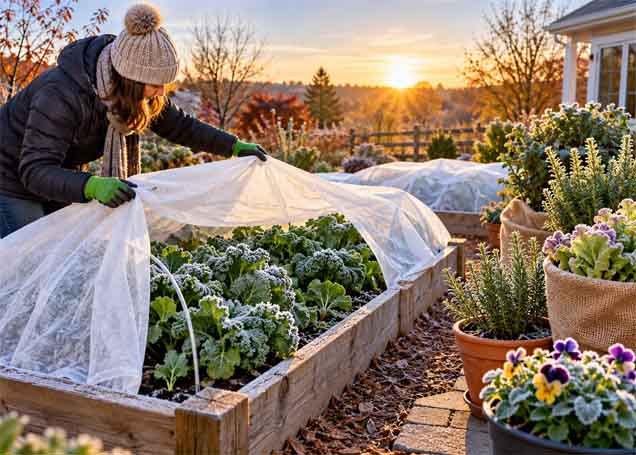
One of the most effective ways to protect plants from frost is to use a purpose-made frost cloth.
Also called garden fleece or floating row cover, this lightweight fabric helps reduce heat loss around plants while allowing some air and moisture movement.
For the best results:
- Place the cover over vulnerable plants before evening temperatures fall.
- Use a fabric suitable for the expected weather.
- Extend the covering toward the ground.
- Secure its edges against wind.
- Avoid crushing delicate stems and flowers.
For larger plants, install hoops or simple supports to keep the material from resting heavily on foliage.
A frost cloth works best when it can help retain warmth from the soil beneath the plant.
Gardening tip: Check the product’s fabric weight and light-transmission information. Not every frost cloth provides the same level of protection.
2. Use Blankets or Old Bedsheets for Emergency Frost Protection
If a frost warning arrives unexpectedly, you may already have suitable materials at home.
Lightweight blankets, old bedsheets, and breathable fabric can provide temporary protection for small garden plants.
Choose a material that covers the plant without breaking stems. For delicate plants, place supports beneath heavier fabric.
Secure the edges near the ground, rather than wrapping only the leaves.
Remove ordinary household covers after temperatures rise the following morning, particularly when sunlight begins warming the area.
Wet, heavy fabric can damage fragile plants, so check the covering after rain or overnight condensation.
Budget tip: Reusable bedsheets can be a practical temporary option for gardeners searching for a cheap way to cover plants from frost.
3. Move Potted Plants Into a Sheltered Location

Container plants often need extra attention because their roots are more exposed to temperature changes than roots growing in the ground.
If a frost warning is expected, move suitable potted plants into a protected space.
Possible locations include:
- An enclosed porch
- A suitable garage
- A greenhouse
- A sheltered indoor room
- A protected shed, provided temperatures remain appropriate for the plant
A garage or shed is not automatically frost-free. Check the expected temperature inside before relying on it.
For containers too heavy to move, group them in a sheltered location and insulate the pots with suitable materials.
Protecting the root zone is particularly important for perennial container plants.
Remember: Tender tropical houseplants may need to come indoors well before freezing temperatures arrive.
4. Water Dry Garden Soil Before a Frosty Night
Soil moisture can influence how much heat the ground stores and releases overnight.
Moist soil generally holds and transfers heat differently from very dry soil. When conditions are appropriate, watering dry ground earlier in the day may help moderate temperature changes around plants.
However, this is not a reason to saturate every garden bed.
Avoid unnecessary watering when the soil is already moist, drainage is poor, or a plant is vulnerable to root problems.
Water the soil rather than deliberately soaking the foliage.
Important: Do not attempt commercial-style overhead sprinkler freeze protection as an improvised home-garden method. That technique requires carefully managed equipment and continuous operation under specific conditions.
5. Add Mulch Around Vulnerable Roots
Mulch helps moderate soil temperature fluctuations and protects roots from rapid environmental changes.
Organic options include shredded leaves, clean straw, and other suitable garden mulches.
For established garden beds, apply mulch at a depth appropriate for the plants and growing conditions.
Keep mulch away from tree trunks and vulnerable plant crowns.
Perennial winter mulching is slightly different from protecting tender annuals against a single cold night. In colder climates, protective winter mulch is often best applied after the soil begins freezing, helping reduce repeated freeze-thaw cycles.
For more seasonal soil preparation, see our How to Winterize Your Garden guide.
6. Protect Raised Garden Beds With Row Covers
Raised beds warm quickly in spring, but their exposed sides can also experience significant temperature changes.
A floating row cover is a useful option for protecting cool-season vegetables and young plants.
Install hoops over the bed if the plants need extra growing space. Stretch the row-cover material across the supports and anchor the edges securely.
Check that the covering will not blow loose during windy weather.
According to the University of Minnesota Extension, row covers come in different weights, and heavier materials generally provide more cold protection while allowing less sunlight through.
During sunny weather, monitor temperatures under the cover. Remove or ventilate it when necessary to prevent overheating.
For practical guidance, read the University of Minnesota Extension guide to extending the growing season.
7. Use Temporary Plant Covers for Individual Seedlings
Small seedlings can sometimes be protected with temporary covers sized for individual plants.
Garden cloches, ventilated plant protectors, or suitable temporary containers may help reduce exposure during a brief frost.
Use covers that are stable and provide enough room for the plant.
Avoid leaving airtight containers over plants in direct sunlight. Temperatures can rise quickly, even when the outdoor air feels cool.
Remove temporary covers when conditions improve.
For newly transplanted seedlings, frost protection works best alongside proper hardening-off and planting at the appropriate time.
8. Create a Windbreak for Exposed Plants
Cold winds can increase moisture loss and place additional stress on vulnerable plants.
A temporary windbreak may help in exposed gardens, especially around containers and newly planted shrubs.
You can use existing fences, garden structures, or suitable temporary barriers to reduce direct wind exposure.
Position the barrier so it doesn’t fall onto the plants or block necessary drainage.
A windbreak does not prevent all frost damage. Its main benefit is reducing exposure to cold, drying winds, rather than guaranteeing warmer overnight temperatures.
In windy regions, combine shelter with appropriate root protection and frost covers.
9. Harvest Frost-Sensitive Vegetables Before a Freeze
Sometimes the most reliable frost protection is harvesting crops before severe cold arrives.
Warm-season vegetables are particularly vulnerable.
Tomatoes, peppers, basil, cucumbers, and squash generally need more protection than established cool-season crops.
If a hard freeze is approaching and your growing season is ending, harvest mature produce rather than depending entirely on garden covers.
Green tomatoes may continue ripening indoors under suitable conditions.
For tender herbs, harvest usable leaves before the cold damages them.
Practical rule: If a plant is near the end of its productive season and a prolonged freeze is forecast, harvesting may be more worthwhile than attempting to save it outdoors.
10. Choose Cold-Tolerant Plants for Fall Gardening
The easiest plants to protect are often those naturally suited to cooler weather.
Cold-tolerant crops can make fall gardening less stressful, although even hardy vegetables have limits.
Kale, certain cabbages, spinach, and other cool-season crops may tolerate light frost better than tomatoes or peppers.
Their tolerance depends on the variety, maturity, prior exposure to cold, and weather conditions.
When planning a fall vegetable garden, check local planting dates and select varieties suited to your USDA growing region.
This approach reduces the amount of emergency protection needed later in the season.
11. Check Frost Warnings and Prepare an Overnight Protection Plan
If you’re wondering how to protect plants from frost without spending too much money, start with the plants most sensitive to cold. Simple measures such as breathable covers, sheltered containers, and careful weather monitoring can make a meaningful difference during a short frost event.
Knowing how to protect plants from frost is most useful when you have enough time to act.
Check local forecasts during spring and fall, particularly when overnight temperatures are expected to approach freezing.
Pay attention to National Weather Service frost advisories, freeze watches, and freeze warnings.
Prepare a simple routine:
- Identify your most vulnerable plants.
- Move portable containers into appropriate shelter.
- Cover sensitive outdoor plants before evening.
- Secure the covering against wind.
- Check conditions the next morning.
- Remove or ventilate covers when safe.
A few minutes of preparation can prevent avoidable damage during an unexpected cold spell.
Best Frost Covers for Plants: Which Material Should You Use?
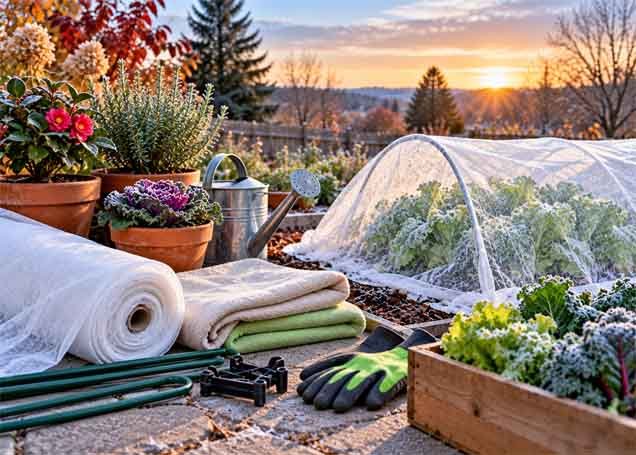
Not every garden cover performs the same way.
The best choice depends on the expected temperature, plant size, duration of cold weather, and whether the cover must remain in place during daylight.
| Cover Type | Best Use | Advantages | Limitations |
|---|---|---|---|
| Lightweight frost cloth | Light frost and short cold spells | Breathable and reusable | Limited protection during severe freezes |
| Heavyweight frost blanket | Colder nights and vulnerable garden crops | Greater insulation | Reduced light; may require daytime removal |
| Floating row cover | Vegetable rows and raised beds | Covers multiple plants efficiently | Must be anchored securely |
| Old bedsheet | Emergency overnight protection | Inexpensive and readily available | Can become heavy when wet |
| Garden cloche | Individual small plants | Easy to position | Can overheat in sunshine |
| Plastic sheeting on supports | Temporary enclosed protection in certain setups | Blocks wind and moisture | Condensation, overheating, and direct-contact risks |
Is Frost Cloth Better Than Plastic?
For most home gardeners protecting foliage during a light frost, breathable frost cloth is the easier choice.
Plastic can be useful in some carefully managed structures, but it should not rest directly against sensitive leaves. It may trap condensation and overheat plants during sunny weather.
Use a frame if plastic is part of a temporary garden structure, and provide ventilation when needed.
For general overnight protection, a suitable fabric cover is usually simpler to manage.
How to Cover Plants for Frost: Step-by-Step
If you’re wondering how to cover plants for frost without damaging them, follow this method.
Step 1: Check the forecast. Identify the expected minimum temperature, duration, and wind conditions.
Step 2: Choose the plants. Prioritize tender vegetables, seedlings, flowering annuals, and vulnerable containers.
Step 3: Select an appropriate cover. Choose frost cloth, garden fleece, or another suitable temporary material.
Step 4: Install supports if needed. Protect delicate foliage from heavy fabric.
Step 5: Cover plants before sunset. This allows the cover to retain some warmth from the ground.
Step 6: Secure the edges. Anchor the cover close to the soil without damaging stems.
Step 7: Check plants the next morning. Remove or ventilate the cover as temperatures rise.
Avoid leaving unsuitable coverings in place throughout a sunny day.
Which Vegetables Need Frost Protection?
Some vegetables tolerate light frost, while others may be damaged by a brief cold spell.
The following table provides a practical starting point.
| Vegetable | General Frost Sensitivity | Recommended Approach |
|---|---|---|
| Tomatoes | Very sensitive | Cover before frost; harvest before severe freezes |
| Peppers | Very sensitive | Cover or move container-grown plants |
| Basil | Very sensitive | Harvest or bring suitable pots indoors early |
| Cucumbers | Very sensitive | Protect during light frost; harvest before a hard freeze |
| Summer squash | Very sensitive | Cover for short cold spells; harvest mature produce |
| Lettuce | Varies by type and maturity | Use row cover during colder conditions |
| Spinach | Generally cold-tolerant | Protect during unusually severe cold |
| Kale | Generally cold-tolerant | Often needs less protection during light frost |
| Cabbage | Generally cold-tolerant | Protect young or vulnerable plants as needed |
| Broccoli | Moderately cold-tolerant | Monitor young plants and developing heads |
This table is a general guide, not a guarantee. Always consider the cultivar and your local conditions.
How to Protect Potted Plants From Frost
Potted plants need special attention because cold air surrounds the container and can affect the root system.
For small containers, moving the plants to a protected location is often the simplest solution.
If they must remain outside:
- Group containers near a sheltered wall.
- Keep them away from exposed, windy positions.
- Insulate suitable containers with burlap or other appropriate materials.
- Avoid leaving pots in standing water.
- Monitor the temperature of the protected area.
- Bring tropical or especially tender plants indoors when necessary.
Remember that a covered outdoor pot can still freeze during prolonged cold.
A plant that survives winter in the ground may not survive equally well in an exposed container.
What to Do Tonight Before Frost: Emergency Checklist
If the forecast predicts frost tonight, use this quick checklist.
| Time | Action |
|---|---|
| Afternoon | Review the latest forecast and identify tender plants |
| Before sunset | Move portable containers to shelter |
| Before dark | Install frost cloth or suitable temporary covers |
| Evening | Secure covers and check that vulnerable plants are protected |
| Next morning | Inspect weather conditions and ventilate or remove covers |
| Following days | Watch for delayed cold damage and adjust protection |
For a brief light frost, this routine may be enough to reduce damage.
For an extended freeze, prioritize plants that can be moved into a reliably protected location.

What to Do After Frost Damage
Even well-protected plants can suffer damage when temperatures fall lower than expected.
If you notice wilted, discolored, or damaged foliage after a cold night, don’t immediately remove every affected stem.
Wait Before Pruning
Cold injury may take time to become fully visible.
Pruning too early can remove living tissue or encourage vulnerable new growth before cold weather has passed.
For woody plants and perennials, wait until the extent of damage becomes clearer and the appropriate pruning season arrives.
Check Soil Moisture
Cold weather does not automatically mean plants need extra water.
Check the soil before watering. Avoid keeping damaged plants excessively wet.
Avoid Heavy Fertilization
Do not try to force rapid new growth immediately after frost damage.
Wait until conditions improve and the plant shows signs of recovery.
Evaluate the Plant’s Condition
Some plants recover from damaged leaves. Others, particularly tender annuals after a hard freeze, may not survive.
Give potentially hardy plants time before deciding whether to replace them.
Common Frost Protection Mistakes to Avoid
Understanding how to protect plants from frost also means knowing which common mistakes to avoid. Even a good frost blanket may provide limited protection if it is installed too late, left unsecured, or used during a prolonged freeze without additional precautions.
Covering Plants Too Late
Waiting until frost has already formed reduces the opportunity to retain warmth from the soil.
Install covers before temperatures fall sharply.
Leaving Plastic Against Leaves
Plastic touching foliage can contribute to cold damage and moisture problems.
Use suitable supports and monitor enclosed structures.
Forgetting to Vent Covers
A cover that protects plants overnight may trap too much heat during the following sunny day.
Ventilate or remove it when appropriate.
Ignoring Container Roots
Wrapping only the leaves does not fully protect a container plant’s exposed root system.
Consider both foliage and root protection.
Assuming All Plants Need the Same Treatment
Tomatoes, kale, lavender, citrus, and houseplants have very different cold tolerances.
Identify the plant before choosing a protection method.
Expecting Frost Cloth to Stop Every Freeze
A lightweight cover may help during a light frost but cannot guarantee survival during a prolonged hard freeze.
Plan accordingly when severe weather is forecast.
Regional Frost Protection Tips Across the United States
Northeast and Upper Midwest
Gardeners in states such as Minnesota, Wisconsin, Michigan, and New York often face significant spring and fall temperature changes.
Use local frost-date information when planning tender crops. Floating row covers can help extend the season, but they are not a substitute for suitable planting dates.
Southeast
In states such as Georgia, North Carolina, and South Carolina, unexpected cold spells can affect plants that have been growing during mild weather.
Pay attention to sudden temperature drops and protect tender containers before a freeze.
Texas and the South-Central States
Temperature changes can be abrupt, and a mild afternoon may be followed by a much colder night.
Monitor local weather alerts rather than relying on a fixed calendar date.
Pacific Northwest
Frost risk varies greatly between coastal, inland, and elevated locations.
Garden microclimates, drainage, and exposure can make a noticeable difference.
Southwest and Desert Regions
Dry air and clear nights can produce sharp temperature drops, particularly in desert and high-elevation gardens.
Tender plants may require overnight protection even after a warm day.
Across all regions, your local National Weather Service forecast and county extension guidance are more useful than a single nationwide frost date.
Frequently Asked Questions
What is the best way to protect plants from frost?
For a short period of light frost, covering vulnerable plants with appropriate frost cloth before sunset is often an effective method. Move sensitive containers into a protected location whenever possible. Severe freezes may require additional measures.
Can I use bedsheets to protect plants from frost?
Yes. Lightweight bedsheets can provide temporary overnight protection. Secure the material near the ground and use supports for delicate plants. Remove the covering when temperatures rise.
At what temperature should I cover my plants?
Consider covering frost-sensitive plants when frost is forecast, even if the reported air temperature is slightly above 32°F. Plant surfaces may become colder than the official air reading.
Is it better to cover plants with plastic or cloth?
Breathable frost cloth is generally easier for home gardeners to use directly over or around plants. Plastic requires careful support and ventilation and should not touch vulnerable foliage.
Should I water plants before frost?
If the soil is unusually dry, watering earlier in the day may be helpful under suitable conditions. Do not overwater or assume that wetting leaves will prevent frost damage.
Can frost cloth stay on plants all day?
It depends on the material, weather, and plant. Some lightweight row covers can remain in place for longer periods, while heavy blankets and other temporary coverings should generally be removed or ventilated when temperatures rise.
Will plants recover after frost damage?
Some plants recover, particularly when roots and growing points remain alive. Tender annuals may be permanently damaged after a severe freeze. Wait until the full extent of injury becomes visible before making major pruning decisions.
How can I protect plants from frost cheaply?
Old bedsheets, sheltered container placement, and reusable garden covers can reduce costs. The best inexpensive method depends on plant size and the expected severity of cold weather.
Do raised garden beds need frost protection?
Raised beds may need protection when they contain frost-sensitive vegetables or seedlings. Floating row covers installed over hoops are a practical option.
Can mulch protect plants from frost?
Mulch helps moderate soil temperature and protect roots, but it does not replace a cover for tender leaves and flowers during a frost event.
Final Thoughts
Learning how to protect plants from frost starts with understanding your plants and paying attention to local weather.
For most gardeners, the most useful combination is straightforward: cover vulnerable plants before a cold night, move sensitive containers to shelter, protect exposed roots where appropriate, and check conditions the following morning.
No single technique guarantees protection against every freeze. But with the right preparation, you can reduce unnecessary losses and keep your garden productive longer.
For broader seasonal preparation, read our How to Winterize Your Garden: 15 Essential Steps Before Winter guide.
Sources and Further Reading
- National Weather Service: Understanding Cold Weather Alerts
- National Weather Service: Frost and Freeze Information
- University of Minnesota Extension: Extending the Growing Season
- University of Minnesota Extension: Mulch Perennials and Bulbs After the Soil Freezes
- University of Georgia Extension: Winter Landscape Protection