Table of Contents
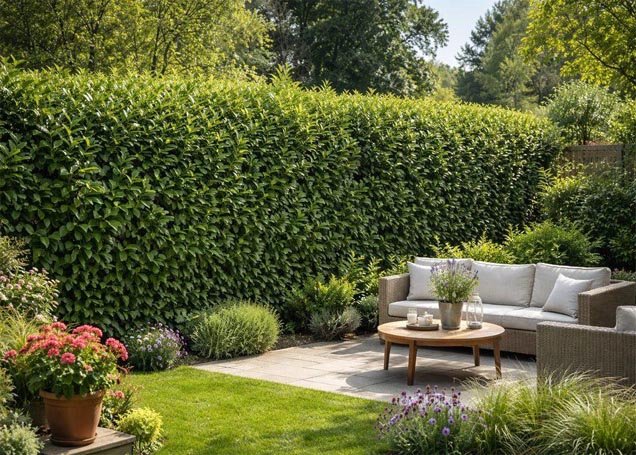
Imagine enjoying your morning coffee on the patio without feeling exposed to neighboring windows or a busy street. The right privacy hedges can transform an open backyard into a comfortable outdoor retreat while adding greenery, structure, and seasonal beauty.
Unlike a traditional fence, living privacy hedges can provide wildlife habitat, soften hard landscaping, and create a natural backdrop for outdoor seating areas. But not every hedge plant is suitable for every property.
Some evergreen varieties provide screening throughout winter. Others grow quickly but require frequent pruning. Certain popular privacy bushes may even become invasive in parts of the United States.
This guide explores 15 of the best privacy hedges for American backyards, including fast-growing evergreens, compact shrubs, flowering options, and native alternatives. You’ll also learn how to choose the right plants for your USDA growing zone, calculate spacing, and avoid costly planting mistakes.
Quick Answer: What Are the Best Privacy Hedges?
The best privacy hedges depend on your climate, available space, and desired height.
For year-round screening, Emerald Green Arborvitae, Green Giant Arborvitae, American Holly, and certain junipers are strong candidates. For smaller yards, Hicks Yew, Inkberry Holly, and compact arborvitae varieties may be more manageable.
If you prefer a natural landscape, mixed plantings of native trees and shrubs can create attractive privacy screens while reducing the risks associated with planting one species throughout an entire boundary.
Privacy Hedges Comparison Table
| Privacy hedge plant | Approximate mature height | Best use | Winter privacy |
|---|---|---|---|
| Emerald Green Arborvitae | 10–15 ft | Narrow screening | Yes |
| Green Giant Arborvitae | 40–50 ft | Large yards | Yes |
| American Holly | 15–30 ft | Natural evergreen screens | Yes |
| Eastern Redcedar | 40–50 ft | Large native screens | Yes |
| Inkberry Holly | 5–8 ft | Medium-height hedges | Yes |
| Hicks Yew | 10–12 ft | Narrow, formal hedges | Yes |
| Wax Myrtle | 6–15 ft | Southern coastal gardens | Usually |
| Nellie R. Stevens Holly | 15–25 ft | Tall evergreen screening | Yes |
| Skip Laurel | Around 10 ft | Dense screening in suitable regions | Yes |
| Rocky Mountain Juniper cultivars | 12–20 ft | Very narrow spaces | Yes |
| Sweetbay Magnolia | 12–30 ft | Natural mixed screens | Varies |
| Blackhaw Viburnum | 12–15 ft | Native mixed screens | No |
| American Beautyberry | 3–8 ft | Seasonal privacy | No |
| Red Chokeberry | 2–10 ft | Native shrub borders | No |
| Common Witchhazel | 8–20 ft | Woodland-style screening | No |
Sizes are approximate, not recommended maintained hedge heights. Actual growth depends on cultivar, climate, soil, and pruning. Plant selection data are based primarily on University of Maryland Extension’s mixed-screen guidance.
15 Best Privacy Hedges for American Backyards
1. Emerald Green Arborvitae — Best for Narrow Evergreen Privacy Hedges
Botanical name: Thuja occidentalis ‘Smaragd’
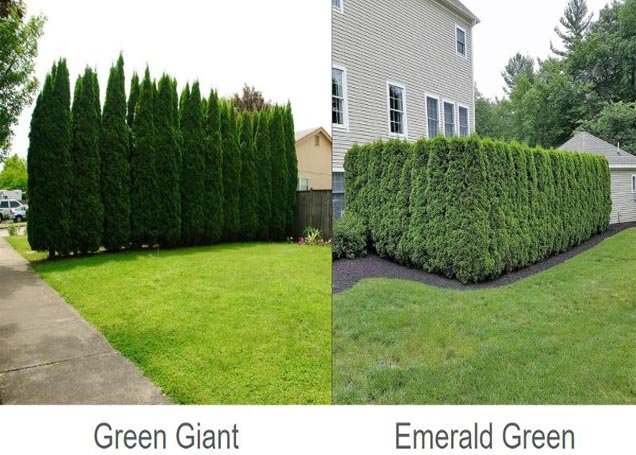
Emerald Green Arborvitae is one of the most recognizable choices for residential privacy hedges. Its upright, narrow form and rich green foliage make it especially attractive along backyard boundaries.
Unlike large spreading evergreens, this cultivar generally stays around 3–4 feet wide at maturity, making it useful where horizontal space is limited.
Why homeowners choose it: Its naturally symmetrical shape creates a tidy evergreen privacy screen without the broad footprint of a large conifer.
Consider before planting: Arborvitae can experience browsing damage from deer. It also needs suitable moisture and drainage, especially during establishment.
Best for: Narrow suburban backyards, property lines, and formal evergreen borders.
2. Green Giant Arborvitae — Best for Large, Fast-Growing Privacy Screens
Botanical name: Thuja ‘Green Giant’
Green Giant Arborvitae is a popular choice when homeowners need tall privacy trees rather than a short decorative hedge.
This vigorous evergreen can eventually reach approximately 40–50 feet tall and 12–18 feet wide. Its mature dimensions make it much more suitable for spacious properties than narrow urban gardens.
Green Giant is often included in lists of fast-growing privacy trees because it can establish a substantial visual barrier under favorable conditions.
However, growth rate is not a reason to ignore mature size. Planting it too close to a house, driveway, or neighboring property can create maintenance problems later.
Best for: Large backyards, wide property boundaries, and tall evergreen screening.
3. American Holly — Best Native Evergreen Privacy Hedge
Botanical name: Ilex opaca
American Holly provides dense evergreen foliage and a traditional woodland appearance. Its glossy leaves and attractive branching make it useful in natural-looking privacy screens.
Depending on site conditions, it can grow into a substantial tree, so it should not be treated as a small foundation shrub.
American Holly is especially useful where a homeowner wants privacy hedges that blend with other native landscape plants.
Female plants may produce colorful berries when appropriate pollination conditions are met, adding seasonal interest and supporting wildlife.
Best for: Naturalistic landscapes, mixed evergreen screens, and properties with sufficient space.
4. Eastern Redcedar — Best for Hardy Native Screening
Botanical name: Juniperus virginiana
Eastern Redcedar is a North American native evergreen that can provide substantial year-round screening.
Its dense foliage makes it useful for larger privacy screens, while its natural form fits well into informal landscapes.
Because mature plants can reach 40–50 feet tall and spread considerably, Eastern Redcedar works best where it has room to develop.
Avoid treating this large evergreen as a tightly clipped shrub unless you have selected a suitable cultivar and planned for long-term maintenance.
Best for: Rural properties, natural boundaries, and spacious yards.
5. Inkberry Holly — Best for Medium-Height Native Privacy Shrubs
Botanical name: Ilex glabra
Inkberry Holly is a broadleaf evergreen shrub that typically grows around 5–8 feet tall and wide.
Its rounded shape and relatively fine foliage make it a useful alternative to some traditional hedge plants.
Inkberry is particularly valuable for homeowners seeking native privacy shrubs in suitable eastern U.S. regions.
For a consistent hedge, choose cultivars with the mature height and branching pattern you need. Some selections remain more compact than the species.
Best for: Medium-height privacy, foundation borders, and native shrub plantings.
6. Hicks Yew — Best for Formal Hedges in Partial Shade
Botanical name: Taxus × media ‘Hicksii’
Hicks Yew offers dense, dark-green foliage and an upright form. It is a useful choice for homeowners who prefer traditional, neatly maintained privacy hedges.
It can grow approximately 10–12 feet tall while remaining relatively narrow.
Unlike many sun-loving screening plants, yew can tolerate partial shade, although performance still depends on site conditions.
Important: Yew is toxic if ingested. Avoid using it where children or pets may chew the plant.
Best for: Formal hedges, sheltered locations, and partially shaded boundaries.
7. Wax Myrtle — Best for Southern Privacy Hedges
Botanical name: Morella cerifera
Wax Myrtle is an excellent candidate for informal screening in suitable southeastern and coastal regions.
It can reach approximately 6–15 feet tall and often develops a broad, natural shape. Its foliage is typically evergreen in warmer parts of its range.
Wax Myrtle works particularly well in mixed privacy hedges because it creates a softer appearance than tightly clipped conifers.
Its mature spread may be substantial, so leave enough room for growth.
Best for: Southern gardens, coastal landscapes, and natural evergreen screening.
8. Nellie R. Stevens Holly — Best for Tall Broadleaf Evergreen Screening
Botanical name: Ilex × ‘Nellie R. Stevens’
Nellie R. Stevens Holly combines dense evergreen leaves with a tall, substantial growth habit.
Plants can reach approximately 15–25 feet tall and 8–12 feet wide, making them useful for screening taller views.
This holly is often a better fit for a wide boundary than for a narrow planting strip.
Its foliage creates an attractive background for patios, outdoor seating, and flowering shrubs.
Best for: Tall privacy screens and medium-to-large backyards.
9. Skip Laurel — Best for Dense Evergreen Foliage
Botanical name: Prunus laurocerasus ‘Schipkaensis’
Skip Laurel has glossy broadleaf evergreen foliage that can form a thick visual barrier.
Its mature dimensions are approximately 10 feet tall and 7 feet wide under suitable conditions.
It can tolerate some shade, making it useful in locations where certain conifers struggle.
However, cherry laurel suitability and invasiveness concerns vary by region. Check local extension guidance before planting, and remember that plant parts can be toxic if ingested.
Best for: Dense screening in regions where the plant is appropriate and permitted.
10. Rocky Mountain Juniper — Best for Very Narrow Privacy Screens
Botanical name: Juniperus scopulorum cultivars
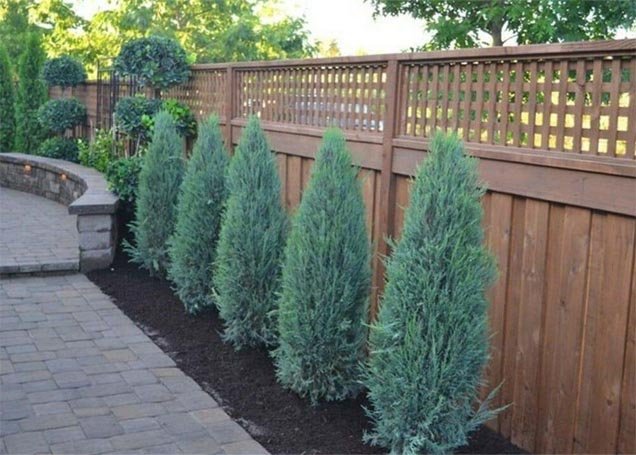
Columnar Rocky Mountain Junipers, including ‘Blue Arrow’ and ‘Skyrocket’, offer upright evergreen screening with a small footprint.
Some selections reach approximately 12–20 feet tall but only 2–3 feet wide.
That makes them attractive for narrow spaces where broader hedge plants would eventually overwhelm the planting area.
Their columnar shape creates a more architectural appearance than an informal shrub border.
Best for: Narrow side yards, vertical accents, and space-conscious evergreen privacy screens.
11. Sweetbay Magnolia — Best for Beautiful Mixed Privacy Hedges
Botanical name: Magnolia virginiana
Sweetbay Magnolia brings ornamental appeal to a privacy planting with attractive foliage and fragrant flowers.
Depending on the climate, it may be deciduous, semi-evergreen, or more persistently evergreen.
That means its winter screening performance is not identical across the United States.
Sweetbay Magnolia is especially effective when combined with evergreen shrubs that maintain coverage after leaf drop.
Best for: Mixed privacy screens, natural gardens, and landscapes with adequate moisture.
12. Blackhaw Viburnum — Best Native Deciduous Privacy Shrub
Botanical name: Viburnum prunifolium
Blackhaw Viburnum is a native shrub or small tree that offers spring flowers, attractive foliage, and seasonal interest.
It can reach approximately 12–15 feet tall and 8–12 feet wide.
Although it does not provide the same winter screening as evergreen privacy hedges, its branching structure can still soften unwanted views.
Combine Blackhaw with evergreen plants if year-round privacy is essential.
Best for: Wildlife-friendly mixed borders and seasonal screening.
13. American Beautyberry — Best for Colorful Seasonal Privacy
Botanical name: Callicarpa americana
American Beautyberry is valued for its distinctive clusters of purple berries and relaxed shrub form.
Typically growing around 3–8 feet tall, it is better suited to medium-height seasonal screening than tall, permanent privacy walls.
Its leaves drop in winter, so it should not be the only plant used where year-round privacy is needed.
Planting it alongside evergreens can add color and biodiversity to a mixed hedge.
Best for: Natural backyard borders, seasonal screening, and wildlife gardens.
14. Red Chokeberry — Best for Native Shrub Borders
Botanical name: Aronia arbutifolia
Red Chokeberry offers spring flowers, red fruit, and attractive autumn foliage.
Its height can vary considerably, from approximately 2–10 feet depending on growing conditions and plant selection.
As a deciduous shrub, it is best used where seasonal privacy is acceptable or as part of a layered planting.
Best for: Native landscapes, mixed shrub screens, and decorative property boundaries.
15. Common Witchhazel — Best for Natural Woodland Privacy
Botanical name: Hamamelis virginiana
Common Witchhazel offers a distinctive option for homeowners who prefer natural screening instead of a formal hedge.
It can grow approximately 8–20 feet tall with a broad, spreading habit.
Its unusual flowers and branching structure add interest to woodland-style gardens.
Because it is deciduous, Common Witchhazel works best alongside evergreen species when privacy is required throughout winter.
Best for: Woodland edges, informal mixed screens, and larger natural landscapes.
Small Backyard Landscaping Ideas
Fast-Growing Privacy Shrubs vs. Low-Maintenance Hedges
Fast-growing privacy shrubs sound appealing when you want to block a view quickly. However, rapid growth often means more frequent pruning and greater long-term space requirements.
| Your priority | Better starting options | Important trade-off |
|---|---|---|
| Fast, tall screening | Green Giant Arborvitae | Requires substantial space |
| Narrow evergreen privacy | Emerald Green Arborvitae | Slower to form a tall screen |
| Native medium-height hedge | Inkberry Holly | Needs suitable regional conditions |
| Southern informal screening | Wax Myrtle | Can spread widely |
| Formal hedge in partial shade | Hicks Yew | Toxic if ingested |
| Seasonal color and wildlife | Blackhaw Viburnum | Loses leaves in winter |
The best bushes for privacy are not necessarily the fastest-growing plants. A shrub that fits your space naturally may require less trimming and fewer replacements over time.
Evergreen vs. Deciduous Privacy Hedges: Which Should You Choose?
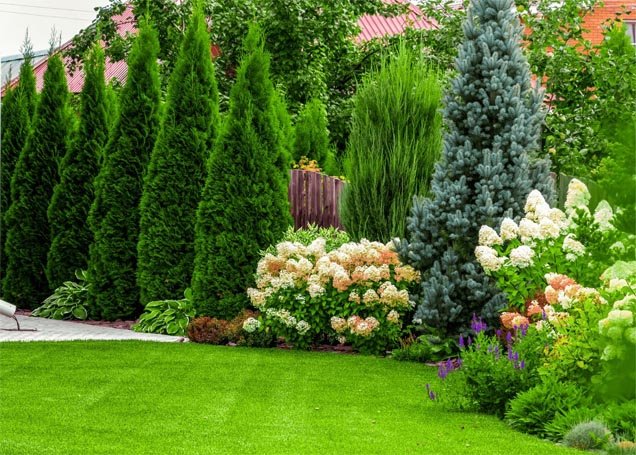
Evergreen privacy hedges retain foliage throughout the year, making them the usual choice for screening neighboring windows, patios, and streets.
Deciduous hedges lose their leaves during the dormant season. However, they can provide flowers, berries, autumn color, and habitat benefits.
Choose evergreen hedges when:
- You need privacy throughout winter.
- You want to screen a neighboring window or outdoor seating area.
- You prefer a consistent green background.
Choose deciduous or mixed hedges when:
- You mainly use the backyard in spring and summer.
- Seasonal flowers and wildlife value are important.
- You have enough space for a layered landscape.
University of Maryland Extension recommends mixed screens because diversity can reduce the risk that a single pest, disease, or environmental problem creates a large gap in the planting.
How to Choose Privacy Hedges for Your USDA Growing Zone
Before buying hedge plants, confirm your USDA Plant Hardiness Zone and evaluate the actual conditions of your yard.
A plant that performs well in a humid southeastern garden may struggle in a dry western landscape or a colder northern location.
| U.S. region | Useful plants to investigate | Important considerations |
|---|---|---|
| Northeast | American Holly, suitable yews, arborvitae | Winter exposure, deer, snow |
| Midwest | Arborvitae, suitable junipers, native deciduous shrubs | Cold, wind, summer drought |
| Southeast | Wax Myrtle, American Holly, Inkberry Holly | Heat, humidity, drainage |
| Southwest | Locally adapted junipers and drought-tolerant native shrubs | Water availability, intense sun |
| Pacific Northwest | Regionally appropriate conifers and mixed native screens | Mature size, rainfall, local invasiveness |
These are regional starting points, not universal planting recommendations. Check the specific cultivar’s hardiness range, local climate, soil, and available space before purchasing.
How Far Apart Should You Plant Privacy Hedges?
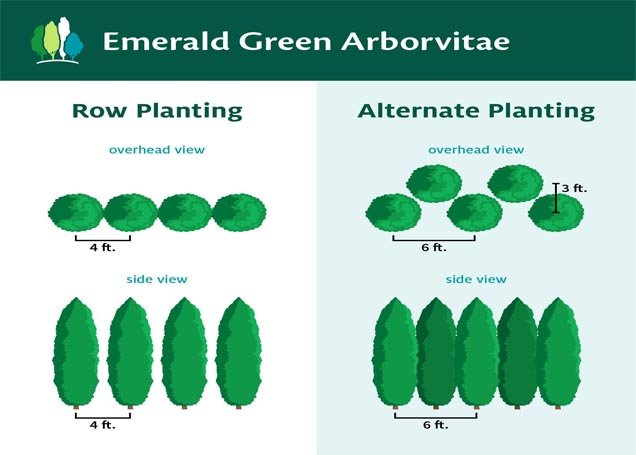
Correct spacing is one of the most important decisions when establishing privacy hedges.
Planting too far apart can leave visible gaps for years. Planting too closely can create crowding, reduced airflow, and competition for water and nutrients.
Spacing should depend on:
- The plant’s expected mature width.
- Whether you want a clipped hedge or an informal screen.
- The size of the plants at purchase.
- Your preferred maintenance level.
- The amount of space available behind and in front of the hedge.
Do not use one universal spacing distance for every hedge species.
Privacy Hedge Spacing Calculator
For a simple straight planting row, estimate the number of plants using:
Number of plants ≈ hedge length ÷ planned center-to-center spacing
Round up to a whole plant. Then adjust the layout to maintain appropriate setbacks at both ends.
| Hedge length | 3-foot spacing | 4-foot spacing | 6-foot spacing |
|---|---|---|---|
| 25 feet | 9 plants | 7 plants | 5 plants |
| 50 feet | 17 plants | 13 plants | 9 plants |
| 100 feet | 34 plants | 25 plants | 17 plants |
These are arithmetic examples, not species-specific planting recommendations. Actual spacing must follow the mature dimensions and horticultural guidance for the selected plant.
For example, narrow Emerald Green Arborvitae and broad Green Giant Arborvitae should not automatically be planted at the same spacing.
How to Plant Privacy Hedges Step by Step
Step 1: Measure the Property Boundary
Measure the planting area and identify fences, sidewalks, utility lines, drainage structures, and nearby buildings.
Consider where the hedge will grow—not just where the young plants will fit today.
Step 2: Check Sunlight and Soil Drainage
Observe how many hours of direct sunlight the location receives.
Also check whether the soil remains wet after rainfall or dries rapidly during hot weather.
Matching a plant to the site’s existing conditions is usually more effective than trying to force an unsuitable plant to survive.
Step 3: Select Appropriate Hedge Plants
Choose species suited to your climate and desired privacy height.
If you are considering several varieties, make sure they have compatible moisture, light, and maintenance needs.
Step 4: Mark the Planting Positions
Use a measuring tape and temporary markers to establish consistent spacing.
Check the layout from your patio, windows, and other locations where privacy matters most.
Step 5: Prepare the Planting Holes
Prepare each planting hole according to the root ball and local extension recommendations.
Avoid burying the root flare or planting too deeply.
Step 6: Water Thoroughly
Water the plants after planting to settle the soil around the roots.
Newly planted shrubs generally require more frequent watering than established plants, but the schedule should be adjusted for rainfall, soil texture, and drainage.
Step 7: Mulch and Monitor
Apply an appropriate layer of organic mulch around the root zone without piling it against the stems.
Continue monitoring moisture and signs of transplant stress during the first growing seasons.
The University of Minnesota Extension provides detailed guidance on planting and transplanting trees and shrubs.
Privacy Hedges for Small Backyards: What Actually Works?
Small backyard privacy ideas require more careful planning than large-property screening.
A tall hedge may seem attractive in a nursery, but its mature width can consume valuable lawn or patio space.
For compact yards, consider these approaches:
Use narrow-growing cultivars. Emerald Green Arborvitae and columnar Rocky Mountain Junipers are worth evaluating where space is limited.
Screen only the problem area. Instead of planting along the entire fence, place a short hedge where it blocks the most direct view from a neighboring window.
Combine plants with existing structures. A carefully placed shrub border can soften a fence while providing additional screening at eye level.
Avoid oversized plants. Green Giant Arborvitae may be excellent for a large property, but its mature spread can overwhelm a narrow backyard.
The most successful privacy hedges solve a specific visibility problem without making the garden feel crowded.
Are Privet Hedges a Good Choice?
The keyword privet hedge is popular, but homeowners should be cautious.
Several Ligustrum species traditionally used for privacy hedges are invasive in parts of the United States. Their seeds can spread into surrounding natural areas, where the shrubs compete with native vegetation.
University of Maryland Extension advises against planting privet species in Maryland and identifies several invasive types.
Before purchasing privet hedge plants, check your state extension service and invasive-plant regulations.
For many eastern U.S. landscapes, suitable native holly, wax myrtle, or mixed shrub plantings may be better alternatives.
This is particularly important when selecting hedge plants near woodlands, streams, or natural areas.
7 Common Privacy Hedge Mistakes to Avoid
1. Choosing Plants Based Only on Growth Rate
Fast-growing plants may provide screening sooner, but they can also become too tall or wide.
Always check mature dimensions.
2. Planting Too Close to a Fence
Allow enough room for the mature hedge and future maintenance access. Keep branches from obstructing neighboring property or public walkways.
3. Ignoring Winter Privacy
Deciduous shrubs can look dense in summer but become transparent after leaf drop.
Use evergreens where year-round screening is essential.
4. Planting One Species Everywhere
A single pest or disease problem can damage an entire uniform hedge.
Mixed privacy hedges can provide greater resilience.
5. Overwatering Newly Planted Shrubs
Water is essential during establishment, but persistently saturated soil can damage roots.
Check soil moisture and drainage rather than watering automatically.
6. Pruning the Top Wider Than the Bottom
An excessively wide hedge top can shade the lower branches, resulting in thin growth near the ground.
For clipped hedges, maintain a slightly wider base so sunlight reaches the lower foliage.
7. Ignoring Local Invasive Species Guidance
A plant sold in a nursery is not automatically appropriate for every U.S. state.
Verify regional recommendations before planting.
Privacy Hedge Maintenance Calendar
| Season | Recommended tasks |
|---|---|
| Spring | Inspect winter damage, mulch, assess pruning needs |
| Summer | Monitor watering, inspect pests, trim appropriate species |
| Fall | Evaluate plant health, prepare for cold weather, plant where climate permits |
| Winter | Check snow and wind damage, plan improvements |
Different species require different pruning schedules. Flowering shrubs may need pruning after bloom, while some evergreens benefit from selective trimming during active growth.
Avoid assuming every hedge should be cut at the same time.
For further guidance, see the University of Minnesota Extension’s pruning trees and shrubs guide.
Frequently Asked Questions About Privacy Hedges
What are the best privacy hedges for year-round screening?
Evergreen plants such as Emerald Green Arborvitae, American Holly, suitable junipers, and Inkberry Holly can provide year-round screening. The best choice depends on mature size, local climate, and available space.
What are the fastest growing privacy hedges?
Green Giant Arborvitae is a popular vigorous evergreen screening plant. However, growth varies by climate and growing conditions, and its large mature size makes it unsuitable for some smaller yards.
What are the best privacy hedges for a small backyard?
Narrow cultivars such as Emerald Green Arborvitae and columnar Rocky Mountain Junipers may be appropriate. Choose plants according to their mature width rather than their size at purchase.
How long does it take for privacy hedges to grow?
Establishment and screening time depend on the species, starting plant size, soil, sunlight, moisture, and spacing. Some hedges become useful screens within several growing seasons, while slower-growing species may take longer.
Are evergreen privacy hedges better than fences?
Neither is universally better. Fences can provide immediate screening, while living hedges offer greenery and habitat value but require time, space, watering, and maintenance.
Can privacy hedges grow in shade?
Some species, including Hicks Yew and certain hollies, tolerate partial shade. However, shade tolerance varies, and insufficient light can reduce hedge density.
How close can I plant privacy hedges to my property line?
There is no universal distance. Allow for the plant’s mature width, maintenance access, and any local property or homeowners association requirements.
Are privacy hedges expensive to maintain?
Maintenance costs depend on plant selection, watering requirements, pruning frequency, and hedge length. Choosing plants that naturally fit the available space can reduce long-term maintenance.
Final Thoughts: Choosing the Best Privacy Hedges
The best privacy hedges combine effective screening with realistic maintenance and long-term landscape compatibility.
For narrow suburban gardens, Emerald Green Arborvitae may be a practical starting point. Larger properties can accommodate substantial evergreen screens such as Green Giant Arborvitae or Eastern Redcedar. Homeowners interested in native landscaping can combine hollies, viburnums, and other regionally appropriate shrubs.
Whatever you choose, remember that privacy hedges are living plants—not instant fences. Plan for their mature dimensions, provide suitable growing conditions, and allow time for them to establish.
With thoughtful planning, a living hedge can make your backyard more private, comfortable, and beautiful for years to come.
References
- University of Maryland Extension — Plants for Mixed Privacy Screens
- University of Minnesota Extension — Planting and Transplanting Trees and Shrubs
- University of Minnesota Extension — Pruning Trees and Shrubs
- University of Maryland Extension — Privet and Invasiveness
- Royal Horticultural Society — Choosing Hedge Plants