

Table of Contents
The lemon button fern is a charming little houseplant with rounded green leaflets, delicate arching fronds, and a compact growing habit. It brings a fresh, natural look to bookshelves, desks, bathrooms, and small indoor spaces without requiring a large planter.
But there’s one challenge. Although this fern is often described as easy to grow, its leaves can turn brown or yellow when watering, humidity, or lighting conditions aren’t quite right.
Fortunately, lemon button fern care becomes much easier once you understand how the plant responds to its environment.
In this guide, you’ll learn how to care for a lemon button fern, including the right amount of water, ideal lighting, soil requirements, temperature, humidity, pruning, and repotting. We’ll also cover common problems, terrarium growing, and how this plant differs from a true button fern.
What Is a Lemon Button Fern?
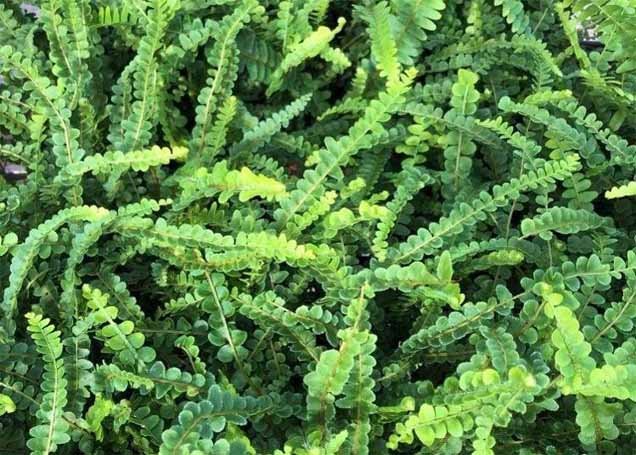
The lemon button fern is a compact cultivated form of Nephrolepis cordifolia, commonly sold as Nephrolepis cordifolia ‘Duffii’. It belongs to the same broader group of ferns as the familiar Boston fern.
Its most recognizable feature is its small, rounded leaflets arranged along slender fronds. Mature plants usually remain much more compact than a typical Boston fern, making them suitable for smaller indoor spaces.
The name “lemon” refers to the mild citrus-like fragrance sometimes noticed when its foliage is gently brushed or handled. The scent may be subtle and isn’t equally noticeable on every plant.
Unlike flowering houseplants, lemon button ferns reproduce through spores rather than flowers or seeds.
Lemon Button Fern Quick Care Guide
| Care Requirement | Recommended Conditions |
|---|---|
| Botanical name | Nephrolepis cordifolia ‘Duffii’ |
| Common name | Lemon button fern |
| Light | Bright, indirect light |
| Water | Keep soil lightly and consistently moist, not waterlogged |
| Soil | Loose, moisture-retentive, well-draining potting mix |
| Humidity | Moderate to high humidity preferred |
| Temperature | Approximately 60–80°F (16–27°C) |
| Fertilizer | Diluted balanced houseplant fertilizer during active growth |
| Growth habit | Compact, arching fronds |
| Propagation | Division of established clumps |
| Best location | Bright bathroom, kitchen, or room away from direct afternoon sun |
These are general indoor-care guidelines. Your home’s temperature, humidity, pot size, and light exposure will affect how frequently the plant needs attention.
1. Give Your Lemon Button Fern Bright, Indirect Light
Light is one of the most important parts of successful lemon button fern care.
In its preferred conditions, the plant receives enough light to support steady growth without prolonged exposure to harsh direct sunlight.
A spot near an east-facing window is often a good choice. Gentle morning sunlight is generally easier on the foliage than strong afternoon sun.
North-facing windows may also work if the room receives sufficient daylight. In darker homes, a suitable LED grow light can help maintain healthy growth.
Signs Your Fern Is Getting Too Much Light
- Brown or scorched-looking leaflets
- Faded foliage
- Dry leaf edges despite reasonably moist soil
- Fronds that deteriorate on the window-facing side
If these symptoms appear, move the plant a little farther from the window or filter the sunlight with a sheer curtain.
Signs of Insufficient Light
A lemon button fern receiving too little light may develop slower growth, weak fronds, or gradually declining foliage.
Move it to a brighter location, but avoid making a sudden change from deep shade to intense sunlight.
Practical tip: Rotate the pot occasionally so different sides receive similar light exposure.
2. Water Your Lemon Button Fern Consistently
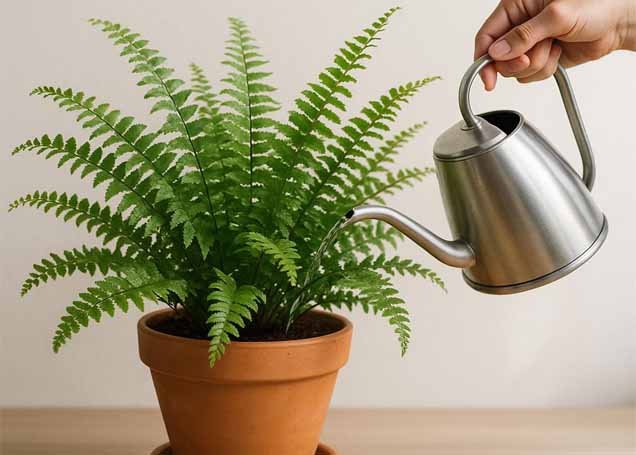
Many indoor fern problems begin with inconsistent watering.
A lemon button fern generally prefers soil that stays lightly moist. It doesn’t appreciate sitting in saturated potting mix, but allowing the root ball to become completely dry can also damage its delicate foliage.
Instead of following a fixed calendar, check the soil before watering.
How to Water a Lemon Button Fern
- Touch the upper portion of the potting mix.
- If the surface is beginning to dry while the soil beneath remains slightly moist, check whether watering is needed.
- Water thoroughly until a little excess drains from the bottom.
- Empty any collected water from the saucer.
- Check again after several days rather than automatically watering on a fixed schedule.
The correct interval depends on the season and growing conditions.
A fern in a warm, bright room may need water more frequently than one growing in a cooler room during winter.
Overwatering vs. Underwatering
| Symptom | Possible Cause | What to Check |
|---|---|---|
| Crispy brown tips | Dry soil, low humidity, or salt buildup | Soil moisture and fertilizer history |
| Yellowing fronds | Excess moisture, aging foliage, or low light | Drainage and root condition |
| Sudden wilting | Very dry soil or damaged roots | Moisture throughout the pot |
| Persistent wet soil | Poor drainage or oversized pot | Drainage holes and potting mix |
| Brown patches | Sun exposure or environmental stress | Window location and recent changes |
Remember that several problems can produce similar symptoms. Always check the soil and roots before deciding that watering is the cause.
3. Choose the Right Soil and Pot
Healthy roots need moisture and oxygen.
The ideal potting mix should hold enough water to prevent rapid drying while allowing excess moisture to drain.
A practical indoor fern mix can include:
- A good-quality indoor potting mix
- Fine orchid bark or another suitable material for structure
- Perlite to improve drainage
The exact proportions are less important than the finished mix’s behavior. It should remain evenly moist without becoming dense or soggy.
Choosing a Container
Use a pot with drainage holes.
Decorative pots without drainage can still be used as outer containers, provided the fern remains in a separate nursery pot that drains properly.
Avoid leaving standing water at the bottom of the decorative container.
A very large pot can retain more moisture than the plant’s roots can use. When repotting, choose a container only slightly larger than the current root system.
Helpful reminder: A healthy fern doesn’t need to be repotted simply because several months have passed. Look for crowded roots, declining soil structure, or water running through unusually quickly.
4. Maintain Comfortable Humidity
Lemon button ferns generally appreciate more humidity than many drought-tolerant houseplants.
Indoor air can become especially dry during winter when heating systems are running. Air conditioning may also reduce humidity.
Dry conditions can contribute to crispy leaf edges, particularly when the potting mix dries too quickly.
How to Improve Humidity
Use a humidifier. A small room humidifier is one of the more reliable ways to increase humidity around indoor plants.
Group compatible houseplants. Grouping plants may create a slightly more humid local environment, although the effect varies.
Choose a suitable room. A bathroom with adequate natural or artificial growing light may provide favorable conditions.
Keep the fern away from vents. Direct airflow from heaters and air conditioners can dry foliage and soil rapidly.
Misting can temporarily wet the leaves, but it doesn’t provide dependable, long-lasting humidity control.
If you use a humidifier, monitor the room to avoid excessive moisture and condensation.
5. Keep Temperatures Stable
A lemon button fern performs best in comfortable indoor temperatures without dramatic fluctuations.
A practical target is approximately 60–80°F (16–27°C).
Avoid placing the plant directly beside:
- Heating vents
- Frequently opened exterior doors during freezing weather
- Air conditioners blowing directly on the foliage
- Cold window glass
- Fireplaces or radiators
In colder parts of the United States, winter placement deserves special attention.
A windowsill that works during spring may become too cold during winter nights. Move the fern slightly away from the glass if necessary.
During summer, watch for excessive heat near sunny windows.
Stable conditions usually matter more than maintaining one exact temperature.
6. Fertilize Lightly During Active Growth
Lemon button ferns don’t require heavy feeding.
Too much fertilizer can leave salts in the potting mix, potentially stressing roots and contributing to damaged leaf tips.
During periods of active growth, a diluted balanced houseplant fertilizer may be helpful.
Follow the product label, and consider beginning at a reduced concentration rather than applying a strong solution.
Avoid fertilizing a severely stressed plant until you’ve addressed its underlying problem.
Common Fertilizing Mistakes
Feeding too frequently: Repeated applications can cause salts to accumulate.
Fertilizing very dry soil: This can increase the risk of root stress.
Continuing the same schedule through winter: Many indoor ferns grow more slowly during shorter, darker days.
Assuming every yellow leaf indicates nutrient deficiency: Watering, root health, light, and natural leaf aging should be checked first.
If you suspect fertilizer buildup, review your feeding schedule and water quality. Flushing a freely draining pot with clean water may help remove accumulated soluble salts, but avoid doing this when the potting mix is already excessively wet.
7. Prune Brown Fronds and Keep the Plant Tidy
Pruning helps maintain a neat appearance and makes it easier to inspect your lemon button fern.
Remove completely dead or badly damaged fronds with clean scissors.
Cut close to the base without damaging healthy emerging growth.
If only a small tip has turned brown, you can trim the damaged portion for appearance. The brown tissue won’t turn green again, but removing it doesn’t correct the underlying cause.
Should You Remove Yellow Fronds?
A few older fronds turning yellow may be part of normal leaf replacement.
However, widespread yellowing, especially when combined with persistently wet soil or declining growth, deserves investigation.
Check the potting mix and roots before making major changes to your care routine.
Cleaning the Foliage
Dust can collect on indoor fern leaves.
Gently rinse the foliage with lukewarm water when needed, allowing excess water to drain. Avoid harsh leaf-shine products, which aren’t necessary for healthy fern growth.
8. Repot and Propagate Your Lemon Button Fern
A healthy lemon button fern can gradually develop a fuller clump.
Repotting is useful when the roots become crowded or the potting mix has deteriorated.
Spring is often a convenient time because indoor plants typically receive increasing daylight.
How to Repot
- Water lightly beforehand if the root ball is very dry.
- Remove the plant carefully from its container.
- Examine the roots and remove clearly dead material.
- Choose a pot slightly larger than the existing root system.
- Add fresh, well-draining potting mix.
- Position the plant at approximately its previous soil level.
- Water gently and return it to bright, indirect light.
Avoid burying the crown too deeply.
How to Propagate a Lemon Button Fern
Division is a practical propagation method for an established, healthy plant.
Carefully separate a mature clump into sections, making sure each division has healthy roots and foliage.
Plant the divisions in suitable potting mix and keep them in stable conditions while they establish.
Don’t divide a small or struggling fern simply to produce more plants. Wait until it has developed enough healthy growth to recover.
9. Adjust Care With the Seasons
Lemon button fern care changes slightly throughout the year, especially in homes with seasonal heating and cooling.
Spring
Check whether the plant needs fresh potting mix or a larger container.
As daylight increases, watch for new growth and resume light feeding if appropriate.
Summer
Monitor soil moisture more frequently during warm weather.
Protect the fern from intense afternoon sunlight and drying air-conditioning vents.
Fall
As daylight decreases, reassess watering frequency.
The soil may remain moist longer than it did during summer.
Winter
Keep the fern away from cold drafts and heating vents.
Avoid overwatering when growth slows, but don’t allow the entire root ball to become excessively dry.
If indoor humidity drops, consider a humidifier.
Seasonal Care Table
| Season | Main Priority | Common Mistake |
|---|---|---|
| Spring | Encourage healthy new growth | Repotting unnecessarily |
| Summer | Monitor moisture and heat | Allowing rapid soil drying |
| Fall | Adjust watering | Following the summer schedule unchanged |
| Winter | Protect from dry air and cold | Overwatering in low light |
Why Is My Lemon Button Fern Dying?
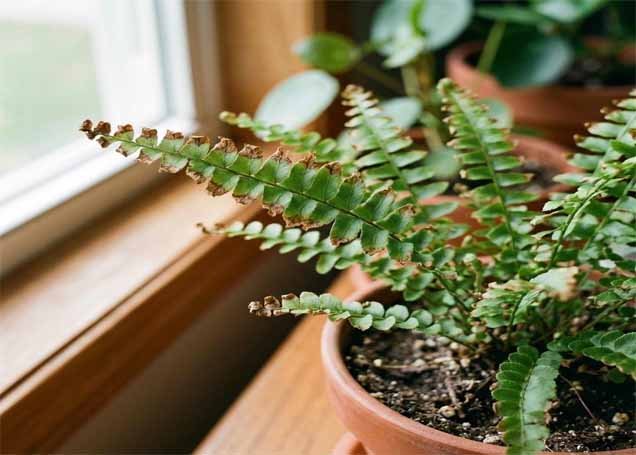
If your lemon button fern is dying, don’t immediately assume it needs more water.
Fern decline can result from several different problems, and the symptoms often overlap.
Brown and Crispy Leaves
Possible causes include:
- Soil becoming excessively dry
- Very low indoor humidity
- Fertilizer salt accumulation
- Excessive direct sunlight
- Temperature stress
Start by checking soil moisture and the plant’s location.
If the roots and remaining fronds look healthy, adjusting the environment may allow new growth to recover.
Yellow Leaves
Yellowing may be associated with:
- Persistently saturated soil
- Poor drainage
- Insufficient light
- Natural aging of older fronds
- Root problems
If the soil stays wet for an unusually long time, remove the nursery pot from its decorative container and check for standing water.
Fern Wilting Despite Wet Soil
This can indicate that the roots aren’t functioning properly.
Check whether the potting mix is compacted or waterlogged. If the plant continues to decline, carefully inspect the root system.
Healthy roots are generally firm, while severely damaged roots may be soft or deteriorated.
No New Growth
Slow growth isn’t always a sign of disease.
Short winter days, cooler conditions, or insufficient light can reduce growth.
If the existing foliage remains healthy, observe the plant before making several care changes at once.
Quick Troubleshooting Checklist
Before repotting your fern, ask:
- Does the pot have drainage holes?
- Is the soil consistently soggy or extremely dry?
- Is the plant exposed to harsh sunlight?
- Is a heating or cooling vent blowing on it?
- Has fertilizer been applied too frequently?
- Have you recently moved or repotted it?
Correct the most likely issue first. Changing everything simultaneously makes it harder to identify what actually helped.
Can You Grow a Lemon Button Fern in a Terrarium?
A lemon button fern terrarium can be an attractive way to display this compact houseplant.
Its small leaflets and preference for moist conditions make it a possible choice for a roomy terrarium.
However, terrariums require careful moisture management.
An enclosed container can retain humidity while also trapping excessive moisture around the roots.
Terrarium Growing Tips
Choose a container large enough for the fern’s mature growth.
Use a suitable planting medium and avoid adding more water than the enclosed environment requires.
Provide bright, indirect light, never intense direct sunlight through glass. A glass container in direct sun can overheat quickly.
Watch for condensation that persists heavily, mold growth, or deteriorating foliage.
If the environment remains excessively wet, increase ventilation and reassess watering.
For beginners, a ventilated or partially open terrarium may be easier to manage than a completely sealed container.
Button Fern vs. Lemon Button Fern: What’s the Difference?
Despite their similar common names, these plants aren’t identical.
A lemon button fern is generally sold as Nephrolepis cordifolia ‘Duffii’.
The plant commonly called button fern is often Pellaea rotundifolia, a different fern with its own growing characteristics.
| Feature | Lemon Button Fern | Button Fern |
|---|---|---|
| Common botanical identification | Nephrolepis cordifolia ‘Duffii’ | Pellaea rotundifolia |
| Appearance | Small rounded leaflets on compact fronds | Rounded, button-like leaflets on slender stems |
| Moisture preference | Generally prefers consistently light moisture | Often prefers a somewhat different watering balance |
| Light | Bright, indirect light | Bright, indirect light |
| Best care approach | Avoid drying out completely or becoming waterlogged | Follow species-specific watering guidance |
Don’t assume that every plant labeled “button fern” requires identical care.
Checking the botanical name on the nursery label can prevent confusion.
Is Lemon Button Fern Safe for Cats?
Pet owners frequently ask whether lemon button fern is cat safe.
The ASPCA lists the related Boston fern, Nephrolepis exaltata, as non-toxic to cats and dogs. However, that listing shouldn’t automatically be treated as species-specific confirmation for Nephrolepis cordifolia ‘Duffii’.
For an accurate safety decision, confirm the plant’s botanical identification and consult your veterinarian or a reliable veterinary poison-control resource.
Even plants considered non-toxic can cause digestive upset when pets chew or swallow plant material.
Keeping houseplants out of reach of curious pets is a sensible precaution.
Common Lemon Button Fern Care Mistakes
Even experienced plant owners sometimes struggle with ferns.
Here are mistakes worth avoiding.
Using a pot without drainage: Excess water can remain around the roots.
Placing the plant in strong afternoon sunlight: Delicate foliage may become stressed.
Allowing repeated severe drying: Consistent moisture is important.
Overfertilizing: More fertilizer doesn’t automatically produce healthier fronds.
Ignoring winter conditions: Heating systems and shorter days can change watering needs.
Confusing fern species: A true button fern and lemon button fern shouldn’t be treated as interchangeable plants.
Correcting these habits is usually more helpful than purchasing numerous plant-care products.
Frequently Asked Questions
How often should I water a lemon button fern?
Water when the potting mix begins to dry near the surface while remaining slightly moist underneath. The frequency depends on light, temperature, humidity, and container size. Avoid relying on a fixed weekly schedule.
Does a lemon button fern need direct sunlight?
No prolonged direct sunlight is necessary. Bright, indirect light is generally preferred. Gentle morning sunlight may be tolerated, but intense afternoon sun can damage foliage.
Why are my lemon button fern tips turning brown?
Brown tips may result from dry soil, low humidity, fertilizer salts, or excessive sunlight. Check growing conditions before assuming one specific cause.
Can a lemon button fern grow in a bathroom?
Yes, provided the bathroom receives enough suitable light and has reasonable ventilation. Bathrooms without adequate light may require a grow light.
Is lemon button fern easy to care for?
It can be manageable for beginners who are willing to monitor soil moisture and provide appropriate light. Its moisture needs make it less forgiving than many drought-tolerant houseplants.
How big does a lemon button fern get?
It generally stays compact compared with larger Boston ferns. Mature size varies with the plant’s genetics, growing conditions, and container.
Can I grow lemon button fern outdoors?
It may grow outdoors in suitable warm, sheltered conditions, but cold tolerance varies and freezing weather can damage it. Check local conditions before planting outdoors or leaving a container outside.
How do I make my lemon button fern fuller?
Provide consistent moisture, adequate indirect light, and suitable humidity. Remove dead fronds and allow healthy new growth to develop. Avoid heavy fertilization as a shortcut.
Can I propagate lemon button fern in water?
Division of an established clump is generally a more dependable approach than trying to root individual fronds in water. Fern fronds aren’t equivalent to stem cuttings from many common houseplants.
Explore More Indoor Plant Care Guides
Want to grow more beautiful houseplants? Explore our Low Light Indoor Plants guide to discover plants for rooms with limited natural light.
You can also read our Spider Plant Care Guide for practical watering, lighting, and maintenance tips.
For more beginner-friendly options, explore our 12 Low-Maintenance Indoor Plants.
Final Thoughts
Lemon button fern care doesn’t have to be complicated. The most important habits are providing bright, indirect light, keeping the potting mix lightly moist, and protecting the plant from harsh temperature changes.
Pay attention to the leaves. Brown tips, yellow fronds, and slow growth can provide clues about conditions that need adjusting.
With patience and a consistent routine, a lemon button fern can become a long-lasting addition to your indoor plant collection.