
Table of Contents
Weeds can quickly turn a healthy, attractive lawn into a frustrating maintenance problem. They compete with grass and garden plants for sunlight, water, nutrients, and space. Some weeds appear for only a few weeks, while others return year after year through deep roots, underground stems, or large numbers of seeds.
The good news is that you do not need a perfectly weed-free yard to have a beautiful lawn. The most effective approach is to identify your weeds, remove or control them at the right time, and improve lawn conditions so new weeds have fewer opportunities to grow.
If you’re wondering how to get rid of weeds, this guide covers the major methods—from hand pulling and mulching to improving turf health and using herbicides appropriately. You’ll also learn why weeds keep coming back and how to prevent future problems.
Why Do Weeds Grow in Lawns and Yards?
Weeds are opportunistic plants. When they find bare soil, thin grass, excess moisture, compacted ground, or other favorable growing conditions, they can establish quickly.
A few weeds don’t necessarily mean something is seriously wrong with your lawn. Weed seeds can arrive through wind, animals, soil movement, lawn equipment, or other sources.
However, a large or recurring weed problem can sometimes indicate underlying lawn conditions that need attention.
Common factors that can encourage weeds include:
- Thin or damaged turf
- Bare patches of soil
- Mowing grass too short
- Soil compaction
- Poor drainage
- Excessive or insufficient watering
- Improper fertilization
- Lawn diseases or insect damage
- Heavy foot traffic
- Grass that is poorly suited to the site
For example, repeatedly cutting a lawn too short can weaken some turfgrasses and allow more sunlight to reach the soil surface. Weed seedlings may then establish more easily.
Instead of focusing only on killing visible weeds, think about why those weeds are succeeding. Correcting the underlying problem is one of the most important parts of long-term weed management.
Identify the Weed Before Trying to Remove It
Before choosing a control method, determine what type of weed you are dealing with. Different weeds have different life cycles and respond differently to control methods.
Most lawn weeds fall into three broad categories.
Broadleaf Weeds
Broadleaf weeds usually have wider leaves than grasses.
Common examples include:
- Dandelion
- White clover
- Chickweed
- Plantain
- Ground ivy
Some broadleaf weeds are annuals, while others are perennials that can survive for several years.
Grassy Weeds
Grassy weeds resemble lawn grass, which can make them harder to recognize.
Examples may include:
- Crabgrass
- Goosegrass
- Annual bluegrass
Because desirable turfgrass and grassy weeds can look similar, correct identification is particularly important before using a herbicide.
Sedge-Like Weeds
Sedges may resemble grasses at first glance, but they belong to a different plant group.
Nutsedge is a common example. It often grows faster than surrounding turf and may stand noticeably taller shortly after mowing.
Trying to control nutsedge as though it were an ordinary broadleaf weed may produce disappointing results.
Correct identification helps you select a method that actually matches the plant.
1. Pull Weeds by Hand
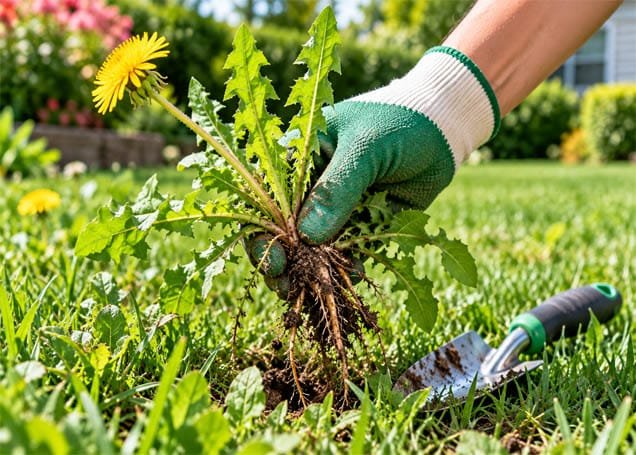
Hand pulling is one of the simplest ways to remove a small number of weeds.
It works especially well when weeds are young, and the soil is slightly moist. Moist soil generally makes roots easier to remove without breaking.
When pulling a weed, grip it close to the soil and remove as much of the root system as possible.
This is especially important for perennial weeds.
For weeds with a taproot, such as dandelions, removing only the leaves may not solve the problem. If enough of the root remains alive, the plant may regrow.
A hand weeder or narrow digging tool can make deep-rooted weeds easier to remove.
Hand weeding is particularly useful:
- In small lawns
- Around flower beds
- Near vegetable gardens
- Around young plants
- For isolated weeds
- When you want to minimize herbicide use
Whenever practical, try to remove weeds before they produce mature seeds.
2. Remove Weeds When They Are Young
Timing can make weed control considerably easier.
A young weed with a small root system is generally easier to remove than a mature plant that has already flowered, produced seeds, or developed extensive underground growth.
Walk through your yard regularly during the growing season and watch for new weeds.
A few minutes of early removal can prevent a small problem from turning into dozens of mature plants.
Pay particular attention to:
- Bare soil
- Lawn edges
- Driveway cracks
- Areas around fences
- Garden-bed borders
- Recently disturbed soil
- Thin areas of turf
Early intervention is one of the simplest weed-management habits homeowners can develop.
3. Mow Your Lawn at the Proper Height
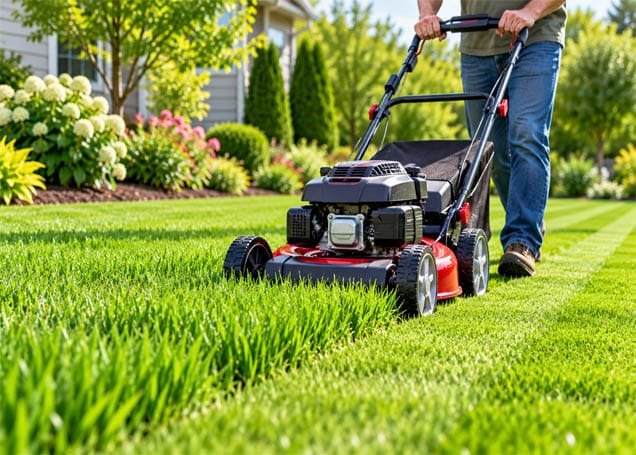
Mowing is not just about appearance. Proper mowing can help turf compete with weeds.
Grass needs enough leaf area to capture sunlight and maintain a strong root system. Cutting it excessively short can stress the turf and create conditions where weeds have more opportunities to establish.
The correct mowing height depends on your grass species.
Rather than choosing one mowing height for every lawn, identify your turfgrass and follow recommendations appropriate for that species and your region.
As a general practice, avoid removing too much of the grass blade at a single mowing.
Also keep mower blades sharp. Dull blades tear grass rather than cutting it cleanly, which can leave the lawn looking ragged and contribute to plant stress.
Healthy, appropriately maintained turf creates greater competition for weed seedlings.
4. Fill Bare Spots in the Lawn
Bare soil invites weeds.
When grass disappears because of foot traffic, pet activity, drought, disease, construction, or other damage, weed seeds have less competition.
Repair thin or bare areas rather than leaving them exposed.
Depending on your grass type and climate, lawn repair might involve:
- Seeding
- Overseeding
- Sodding
- Plugging
- Sprigging
Before repairing the area, try to determine why the grass disappeared.
If the real problem is deep shade, poor drainage, compacted soil, or constant traffic, adding more seed may only provide temporary results.
When possible, correct the underlying condition, then restore the turf.
5. Use Mulch to Suppress Weeds in Garden Beds
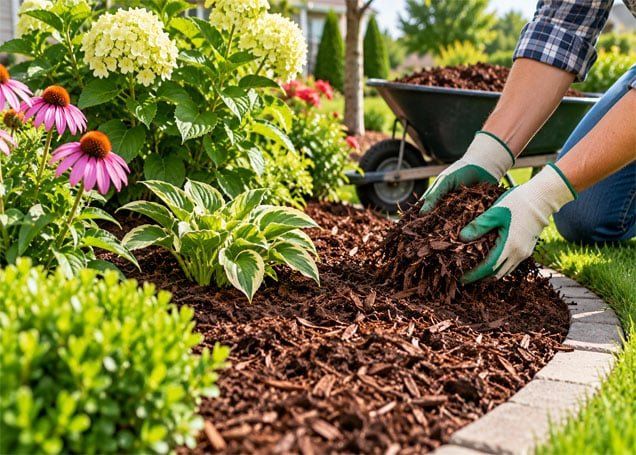
Mulch is one of the most useful tools for controlling weeds around landscape plants.
A layer of mulch reduces the light reaching the soil surface, making it harder for many weed seeds to germinate and grow successfully.
Common organic mulch materials include:
- Wood chips
- Shredded bark
- Pine straw
- Leaves
- Compost-based materials
Mulch also offers additional landscape benefits. Depending on the material and site, it can help moderate soil temperature, reduce moisture loss, and improve the appearance of planting beds.
Avoid piling mulch directly against tree trunks or plant stems. Excessive mulch around trunks can hold unwanted moisture against the bark and create other plant-health problems.
Use mulch thoughtfully rather than piling it as deep as possible.
6. Water Your Lawn Properly
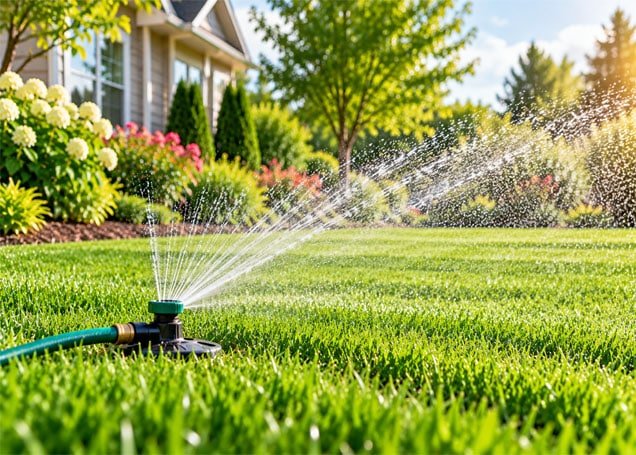
Water management plays an important role in lawn health and weed competition.
Frequent, unnecessary watering can create favorable conditions for certain weeds while encouraging shallow turf roots. On the other hand, prolonged drought stress can thin the lawn and create openings for weeds.
Your watering schedule should depend on:
- Grass species
- Soil type
- Temperature
- Rainfall
- Season
- Local watering restrictions
Avoid using a fixed schedule without considering actual soil and weather conditions.
Check the lawn before irrigating. If rain has already supplied sufficient moisture, additional watering may not be necessary.
Also inspect sprinkler coverage. Some sections may receive too much water while others remain dry.
A healthy lawn with an appropriate watering routine can generally compete better with unwanted plants.
7. Improve Compacted Soil
Compacted soil can restrict air and water movement and limit healthy root development.
Compaction commonly occurs in areas with:
- Heavy foot traffic
- Children playing frequently
- Repeated equipment use
- Vehicles
- Dense or heavy soils
Some weeds tolerate compacted conditions better than turfgrass, so that recurring weeds may clue you into site conditions.
Core aeration can help relieve soil compaction in appropriate lawns by removing small plugs of soil.
However, aeration timing matters. The best period depends on whether you have cool-season or warm-season turfgrass.
Addressing compaction can improve the growing environment for grass, helping the lawn compete more effectively over time.
8. Fertilize According to Your Lawn’s Needs
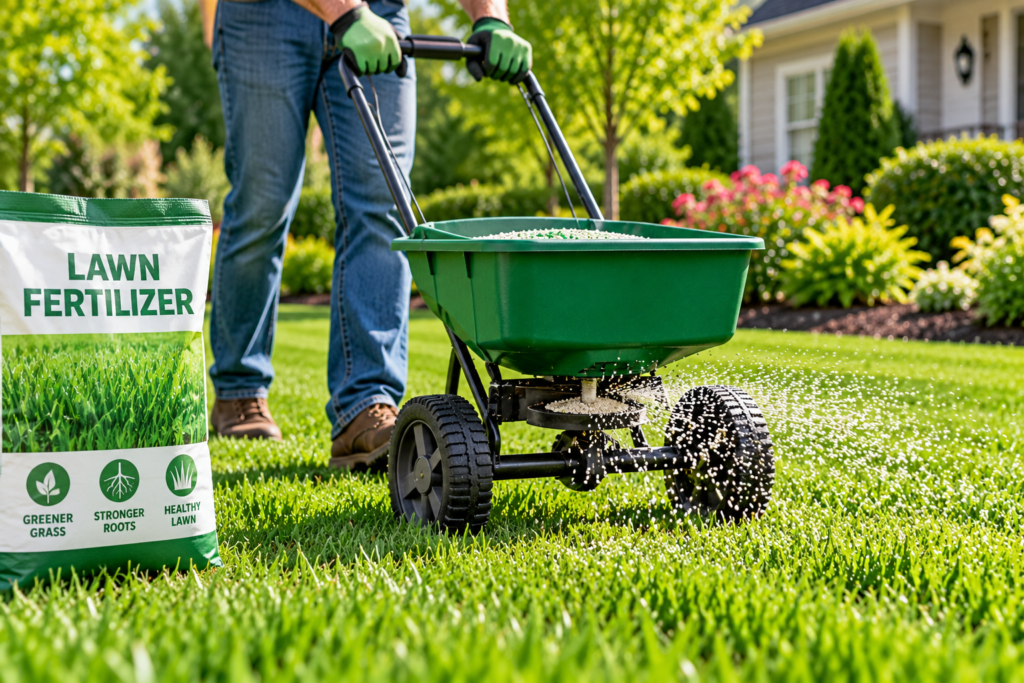
Fertilizer can help grass grow, but more fertilizer does not automatically produce a healthier lawn.
Too much fertilizer can waste money, contribute to nutrient runoff, damage turf, or encourage excessive growth. Too little of a needed nutrient can also reduce turf vigor.
A soil test can provide useful information about soil conditions and nutrient needs.
Many U.S. homeowners can access soil-testing information through state university Cooperative Extension programs.
Base your fertilization program on:
- Grass species
- Soil-test recommendations
- Growing season
- Local climate
- Product directions
The goal is not maximum growth. The goal is healthy turf that can compete with weeds.
9. Consider Pre-Emergent Weed Control
Pre-emergent herbicides are designed to prevent certain weeds from becoming established from seed.
They are commonly associated with annual grassy weeds such as crabgrass.
Timing is critical.
A pre-emergent treatment applied after the target weed has already emerged generally will not control those existing plants.
Application timing varies by location and weather conditions, so a single calendar date does not work across the entire United States.
Homeowners should follow local extension recommendations and the specific product label.
Another important consideration is lawn seeding. Some pre-emergent products can interfere with the germination of desirable grass seed and weed seed.
If you plan to seed or overseed, check product restrictions carefully before application.
10. Use Post-Emergent Herbicides Carefully
Post-emergent herbicides target weeds that are already growing.
Homeowners should understand two major categories.
Selective Herbicides
Selective herbicides control certain plants while causing less injury to specified desirable plants when used according to label directions.
For example, some products are formulated to control certain broadleaf weeds in compatible turfgrass.
Nonselective Herbicides
Nonselective herbicides can damage many kinds of green plants, including desirable lawn grass and ornamentals.
They therefore require particularly careful application.
Before applying any herbicide:
- Identify the weed.
- Identify your turfgrass.
- Confirm the product is labeled for the target weed and site.
- Read the entire label.
- Follow application-rate instructions.
- Observe weather restrictions.
- Keep people and pets away as directed by the label.
- Avoid drift onto desirable plants.
- Follow all local regulations.
Do not assume that applying more product will produce better results. Using pesticides contrary to label directions can damage plants and create unnecessary environmental and safety risks.
11. Be Careful With Homemade Weed Killers
Online gardening advice often recommends homemade weed-control mixtures containing household ingredients.
“Natural” does not automatically mean harmless or suitable for every lawn.
Some homemade treatments can damage desirable grass, affect nearby plants, or alter soil conditions. Others may burn the visible foliage without controlling the underground portions of perennial weeds.
For lawn areas where you want grass to remain healthy, be particularly cautious with nonselective homemade mixtures.
Physical removal, improved lawn management, mulching in beds, and appropriately labeled products are generally more predictable approaches.
12. Control Weeds in Driveway and Patio Cracks
Weeds often appear in cracks between:
- Driveways
- Sidewalks
- Pavers
- Patios
- Retaining-wall joints
These weeds may establish where dust and organic material collect and provide enough growing medium for seeds.
For a small number of weeds, hand removal is straightforward.
Pull the entire plant when possible and clean accumulated soil and debris from cracks to reduce opportunities for new seedlings.
Long-term repairs to damaged joints or cracks may also reduce places where seeds can become established.
13. Prevent Weeds in Flower Beds
Flower beds require a different approach from lawns because desirable plants are growing close to the weeds.
Useful strategies include:
- Hand weeding
- Mulching
- Dense planting where appropriate
- Removing weeds before seed production
- Monitoring bed edges
- Avoiding unnecessary soil disturbance
Disturbing soil can bring buried weed seeds closer to the surface, where conditions may be better for germination.
When you see young weeds, remove them early rather than waiting until they are large and intertwined with ornamental plants.
14. Stop Weeds From Producing Seeds
One weed can potentially contribute many seeds to the soil seed bank, depending on the species.
This is why preventing flowering and seed production is an important long-term strategy.
If you do not have time to complete a major weeding project, prioritize weeds that are approaching seed production.
Removing those plants can help reduce future additions to the soil’s weed-seed population.
Keep in mind that weed seeds already present in soil may remain capable of germination for varying periods, so improvement often requires persistence rather than a single treatment.
15. Clean Lawn and Garden Equipment
Weed seeds and plant fragments can sometimes move around a property on equipment, soil, shoes, or other materials.
After working in a heavily weedy area, clean visible plant material and soil from appropriate garden tools and equipment before moving to another area.
This is especially useful when dealing with invasive plants or weeds that can reproduce from plant fragments.
This simple habit can complement your broader weed-management strategy.
Why Do Weeds Keep Coming Back?
Many homeowners remove weeds only to see them return weeks or months later.
There are several possible reasons.
Roots Were Left Behind
Some perennial weeds can regenerate from surviving roots, rhizomes, tubers, or other underground structures.
Seeds Are Already in the Soil
Soil can contain a reserve of weed seeds from previous seasons. Removing today’s weeds does not eliminate every seed already present.
New Seeds Arrive
Wind, animals, water, soil movement, and human activity can introduce additional seeds.
The Lawn Is Too Thin
Thin turf leaves space and resources available for weeds.
The Underlying Problem Remains
If you don’t correct poor drainage, compaction, shade, improper mowing, or another lawn problem, weeds adapted to those conditions may keep appearing.
Long-term weed management there fore requires more than repeated removal.
How to Prevent Weeds From Returning
Prevention is usually easier than rescuing a lawn after weeds become widespread.
A practical weed-prevention routine includes:
- Identify your turfgrass species.
- Mow at the appropriate height.
- Water according to actual lawn needs.
- Repair bare spots promptly.
- Address compacted or poorly drained soil.
- Fertilize based on turf needs and soil conditions.
- Remove weeds before they produce seeds.
- Use mulch in landscape beds.
- Monitor the yard regularly.
- Use herbicides only when appropriate and according to the label.
Think of weed prevention as part of overall lawn care, not a separate task.
When Is the Best Time to Get Rid of Weeds?
No single month is best for weed control across the United States.
Florida, Texas, California, Minnesota, and New York can have very different climates and turfgrass growing seasons.
The ideal timing also depends on the weed’s life cycle.
Annual weeds complete their life cycle within a relatively short period, while perennial weeds can survive from year to year.
In general, controlling weeds while they are young and actively growing is often easier than waiting until they are mature.
For pre-emergent products, apply them before the target weed establishes. For other methods, ideal timing varies by species, weather, and control strategy.
Your state’s Cooperative Extension service can provide recommendations tailored to your region.
Should You Remove Every Weed From Your Lawn?
A perfectly weed-free lawn is not necessary for every homeowner.
Your goal may be to maintain a healthy, attractive yard while keeping weeds below a level you find troublesome.
This approach can reduce unnecessary treatments and help you focus on the issues that most affect lawn health.
If only three dandelions are growing in an otherwise healthy lawn, hand removal may make more sense than treating the entire property.
Match the solution to the size and type of problem.
When Should You Call a Lawn-Care Professional?
Some weed situations can be managed easily at home, but professional help may be useful when:
- Weeds cover a large percentage of the lawn.
- You cannot identify the weed.
- The same problem returns despite proper lawn care.
- Invasive plants are spreading rapidly.
- Turf is dying for an unknown reason.
- Drainage or soil problems are severe.
- You are unsure about pesticide selection or application.
You can also contact your local Cooperative Extension office for plant identification and science-based lawn-care guidance.