
Table of Contents
Watering houseplants sounds simple, but it is one of the most important parts of keeping indoor plants healthy. Give a plant too much water, and its roots may struggle. Give it too little, and the leaves can wilt, dry out, or stop growing.
The tricky part is that no single watering schedule works for every houseplant. A pothos growing near a bright window may need water more often than a snake plant sitting in a lower-light room. The season, pot size, soil, humidity, temperature, and plant type can all affect how quickly the soil dries.
So, how do you water houseplants correctly?
For most indoor plants, the best approach is to check the soil first and water thoroughly when the plant actually needs it, rather than automatically watering on the same day every week.
This beginner-friendly guide explains how to water houseplants, how often to check them, the signs of too much or too little water, and simple watering habits that can help your indoor plants thrive.
How to Water Houseplants the Right Way
For many common houseplants, you can follow this simple process:
- Check the soil before watering.
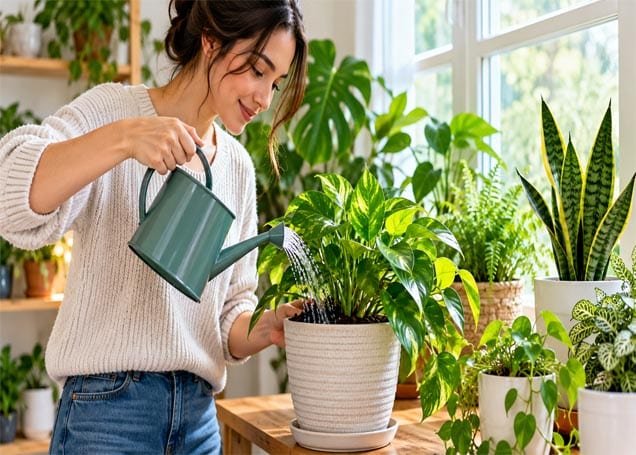
- Water slowly and evenly over the soil.
- Continue until excess water begins draining from the bottom of the pot.
- Allow the pot to finish draining.
- Empty excess water from the saucer or decorative outer pot.
The goal is to moisten the plant’s root zone without leaving the roots sitting in water for long periods.
One of the biggest mistakes beginners make is giving their plants a small splash of water frequently. This may wet only the top portion of the soil while deeper roots remain relatively dry.
A thorough watering followed by an appropriate drying period is generally better for many popular indoor plants.
However, different plants have different moisture requirements, so always consider the particular plant you are growing.
How Often Should You Water Houseplants?
There is no universal answer such as “water every seven days.”
Instead of following a strict calendar, check your plants regularly and water according to their needs.
Some plants prefer their soil to dry considerably between waterings, while others perform better when the soil stays more consistently moist.
How frequently a plant needs water can depend on:
- Plant species
- Amount of sunlight
- Indoor temperature
- Humidity
- Pot size
- Pot material
- Soil mixture
- Plant size
- Root system
- Season and growth rate
For example, a plant in bright light may use water more quickly than the same type of plant in lower light.
Similarly, indoor heating during winter can dry the air, but slower growth and reduced light can also mean some plants use less water. This is why checking the actual soil is more reliable than blindly following a schedule.
Check the Soil Before You Water
One of the easiest ways to determine whether many houseplants need water is the finger test.
Push your finger about 1 to 2 inches into the potting mix.
If the soil still feels noticeably moist, the plant may not need water yet. If it feels dry at the depth appropriate for that particular plant, it may be time to water.
Remember that the top of the soil can look dry while the soil underneath remains moist.
Try the Pot-Weight Method
Another useful technique is lifting the pot.
After watering a plant, carefully notice how heavy the container feels. Check it again several days later.
As the soil loses moisture, the pot becomes lighter.
With experience, the difference can help you recognize when your plant is approaching watering time.
This works particularly well with smaller and medium-sized containers that are easy to lift safely.
What Is the Best Way to Water Indoor Plants?
For most traditional potted houseplants, watering from the top is simple and effective.
Use a watering can or another container that allows you to control the flow.
Pour water slowly over the soil instead of dumping a large amount in one spot.
Move around the surface of the pot so the potting mix receives water more evenly.
Keep watering until you see some water drain through the holes at the bottom.
This helps moisten more of the root zone.
Avoid Watering Only One Spot
Repeatedly pouring water into exactly the same location can cause uneven moisture distribution.
Some parts of the root ball may stay dry while others remain very wet.
Watering slowly around the soil surface helps reduce this problem.
Why Drainage Holes Matter
Drainage is extremely important for most houseplants.
A pot with drainage holes allows excess water to escape instead of accumulating around the roots.
Without adequate drainage, saturated soil may remain wet for too long. Roots need both moisture and oxygen, and prolonged waterlogged conditions can contribute to root problems.
When possible, choose containers with drainage holes.
If you keep a nursery pot inside a decorative planter, remove the inner pot for watering when practical. Let excess water drain before putting it back.
Never assume that more water automatically means a healthier plant.
Should You Empty the Saucer After Watering?
Yes, in most cases, you should avoid leaving a houseplant sitting in a saucer full of water for extended periods.
After watering, let the excess drain, then empty the saucer.
If your plant is inside a decorative cachepot without drainage, check the bottom after watering. Water can collect there without being visible from above.
This simple habit can help prevent the soil from staying unnecessarily saturated.
Bottom Watering Houseplants
Bottom watering is another method you may encounter.
Instead of pouring water onto the soil surface, place the pot in a shallow container of water and let moisture move upward through the drainage holes.
After the soil has absorbed enough moisture, remove the pot and let excess water drain.
Bottom watering can be useful when potting mix has become difficult to wet evenly or for plants where you prefer to keep foliage dry.
However, it doesn’t need to replace top watering entirely. Occasional thorough top watering can also help flush accumulated soluble salts from the potting mix.
What Is the Best Water for Houseplants?
For many common houseplants, ordinary tap water works well.
However, water quality varies across the United States. Some plants can be more sensitive than others to minerals or chemicals in water.
If you repeatedly notice unexplained brown leaf tips despite otherwise appropriate care, consider the plant species, humidity, fertilizer use, watering practices, and local water quality.
Depending on the plant and your water supply, filtered or rainwater may sometimes be useful.
But beginners generally don’t need to complicate houseplant watering. Start with good watering technique and learn each plant’s needs.
What Time of Day Should You Water Houseplants?
Morning is a convenient time to water indoor plants because you can check them easily and deal with drainage before getting busy with the rest of your day.
However, the plant’s actual moisture level is more important than following an exact clock.
If a plant clearly needs water later in the day, you don’t necessarily need to wait until the following morning.
The priority is appropriate moisture—not a rigid watering time.
Factors That Affect How Often Houseplants Need Water
Understanding why soil dries at different rates can make watering much easier.
1. Light
Plants receiving brighter light often photosynthesize and grow more actively, which can increase their water use.
A plant near a bright window may therefore need watering more frequently than one growing farther from a window.
Always consider your plant’s specific light requirements.
2. Temperature
Warm conditions can increase water loss from both plants and potting mix.
In a warmer room, you may need to check soil moisture more frequently.
3. Humidity
Dry indoor air can influence how quickly plants lose moisture.
Humidity levels often change with the seasons and with heating or air conditioning.
However, humidity is only one factor, so don’t use it alone to decide when to water.
4. Pot Size
Small pots generally hold less potting mix and can dry relatively quickly.
Large containers hold more soil and may retain moisture longer.
This means two similar plants in different-sized pots may not need water at the same time.
5. Pot Material
Container material also makes a difference.
Unglazed terracotta is porous and lets moisture evaporate through its walls, so the soil may dry more quickly.
Plastic and glazed ceramic pots generally retain moisture longer.
6. Potting Mix
A loose, well-draining potting mix may dry faster than a dense mixture that holds more water.
The appropriate mix depends on the plant.
Succulents, for example, typically need a much faster-draining growing medium than plants adapted to consistently moist environments.
7. Season
Your houseplants’ water use can change throughout the year.
During periods of active growth and stronger light, plants may use water more quickly.
During slower growth or lower-light periods, the soil may take longer to dry.
Instead of thinking, “I watered every five days in July, so I’ll do the same in January,” continue checking the soil.
Signs Your Houseplant May Need Water
Plants can show several signs when they become too dry.
Depending on the species, these may include:
- Wilting or drooping leaves
- Dry potting mix
- Leaves feeling less firm than usual
- Crispy or dry leaf edges
- Soil pulling away from the sides of the container
- A pot that feels unusually light
However, wilting does not always mean a plant needs more water.
Overwatered plants can also droop.
That’s why you should check the soil before reaching for your watering can.
If the soil is very dry, the issue may be a lack of water. If it is already wet, adding more water could make the problem worse.
Signs You May Be Overwatering Houseplants
Overwatering isn’t simply about how much water you pour into a pot at one time. A major problem occurs when the root zone remains saturated for too long.
Possible warning signs include:
- Soil staying wet for a long time
- Yellowing leaves
- Drooping despite wet soil
- Soft or declining growth
- Unpleasant smell from persistently wet potting mix
- Fungus gnats becoming common around moist soil
These signs can have multiple causes, so don’t diagnose a plant based on one symptom alone.
Check the soil, drainage, light conditions, pot size, and recent watering history together.
Overwatering vs. Underwatering
Beginners sometimes struggle to tell the difference because both can cause drooping.
A simple first step is checking the soil.
If the plant is drooping and the soil is very dry: it may need water.
If the plant is drooping while the soil remains wet, don’t automatically add more water. Investigate drainage, root health, light, temperature, and other possible problems.
Learning to check the soil before reacting is one of the most valuable houseplant-care habits you can develop.
Do All Houseplants Need the Same Amount of Water?
No.
This is one of the most important things to understand about watering houseplants.
Different plants have evolved under very different conditions.
Snake Plant
Snake plants can tolerate their potting mix drying substantially between waterings. Keeping them constantly wet can cause problems.
Pothos
Pothos generally prefers to be watered after the upper portion of its soil has dried rather than being kept continuously saturated.
ZZ Plant
ZZ plants store water in thick underground structures and generally tolerate drying between waterings.
Spider Plant
Spider plants usually appreciate more regular moisture than drought-tolerant plants, although the soil should not remain waterlogged.
Peace Lily
Peace lilies often prefer more consistent moisture than snake plants or ZZ plants. They can droop noticeably when they become too dry.
Succulents
Many succulents prefer a thorough watering followed by a substantial drying period. A fast-draining potting mix and a container with drainage are particularly important.
The lesson is simple: learn each plant’s watering preferences instead of treating your entire indoor collection the same way.
Should You Mist Houseplants?
Misting and watering are not the same thing.
Spraying leaves with a small amount of water does not provide the root system with the moisture it needs.
If a plant needs water, water the potting mix properly.
Misting also does not create a long-lasting increase in room humidity. Plants that require higher humidity may benefit more from suitable room conditions or a humidifier when appropriate.
If you mist foliage for cleaning or other plant-specific reasons, make sure the plant tolerates wet leaves and that air circulation is adequate.
How to Water Houseplants While on Vacation
If you’re leaving home for a few days, many established houseplants may be fine with appropriate watering before you leave.
But don’t automatically soak every plant excessively.
Before traveling:
- Check each plant individually.
- Water those that actually need it.
- Move plants away from unusually hot conditions if appropriate.
- Make sure pots can drain.
- Consider asking someone to check plants during a longer trip.
For longer vacations, self-watering systems may help some plants, but test any system before leaving home.
You don’t want to discover after your trip that it supplied far too much or too little water.
Common Houseplant Watering Mistakes
Even experienced plant owners occasionally water incorrectly. Avoiding a few common mistakes can make indoor gardening much easier.
Watering on a Fixed Schedule
“Every Sunday is watering day” sounds organized, but your plants may not cooperate with your calendar.
Check them on a schedule if it helps you remember, but water based on soil moisture and plant needs.
Giving a Tiny Amount Every Day
Frequent small sips may fail to wet the entire root zone.
For many common houseplants, thorough watering followed by an appropriate drying period works better.
Letting Pots Sit in Water
Always pay attention to drainage.
Empty saucers and decorative pots when excess water collects.
Assuming Drooping Always Means Thirst
Check the soil first.
A drooping plant sitting in wet soil doesn’t necessarily need another drink.
Treating Every Plant the Same
Your snake plant, peace lily, pothos, and succulent may all have different watering needs.
Learn each plant rather than developing one universal routine.
Using an Oversized Pot
A pot much larger than the plant’s root system holds a large volume of potting mix, which may stay wet longer.
When repotting, choose a container appropriately sized for the plant.
A Simple Watering Routine for Beginners
You don’t need an elaborate system to keep houseplants healthy.
Try this routine:
Step 1: Check your plants several times during the week.
Step 2: Feel the potting mix rather than judging only by its appearance.
Step 3: Learn how dry each plant prefers to become.
Step 4: When watering is needed, water the soil thoroughly and evenly.
Step 5: Allow excess water to drain.
Step 6: Empty water that remains in saucers or decorative containers.
Step 7: Observe how quickly the soil dries and adjust your checking routine as seasons and indoor conditions change.
Over time, you’ll become familiar with each plant’s pattern.
Houseplant Watering FAQ
How often should I water my houseplants?
There isn’t one schedule for all houseplants. Check soil moisture and consider the plant species, light, temperature, humidity, pot size, and season. Water when your plant reaches its preferred level of dryness.
Is it better to water houseplants from the top or bottom?
Both methods can work. Top watering is straightforward for most houseplants and allows excess water to drain through the pot. Bottom watering can help some potting mixes absorb moisture more evenly. Whichever method you use, avoid leaving the plant sitting in excess water for prolonged periods.
How do I know when my indoor plant needs water?
Check the soil rather than relying only on the leaves’ appearance. You can use your finger to test the upper portion of the potting mix and learn the pot’s weight when wet versus dry.
Should I water indoor plants every day?
Most common houseplants do not need daily watering. Daily watering can keep some potting mixes excessively wet. Check the soil first and follow the needs of the particular species.
Should I water houseplants every week?
Some plants may need water about weekly under certain conditions, but this should not be a strict rule. Changes in light, temperature, humidity, growth, and season can alter how quickly the potting mix dries.
Can you overwater a houseplant?
Yes. If the root zone stays saturated too long, roots may struggle to get enough oxygen and become unhealthy. Good drainage and appropriate watering frequency are important.
Should I use warm or cold water for houseplants?
Room-temperature or moderately cool water is generally a convenient choice for most houseplants. Avoid exposing roots to extreme water temperatures.
Why is water running straight through my houseplant?
Very dry potting mix can sometimes be difficult to rewet, causing water to travel around the edges and quickly drain through the holes. Water slowly in stages or try bottom watering to help the potting mix rehydrate more evenly.
Final Thoughts
Learning how to water houseplants is less about memorizing a schedule and more about observing your plants.
Start by checking the soil. Understand whether your plant prefers to stay slightly moist or dry considerably between waterings. When it needs water, water the root zone thoroughly, allow excess moisture to drain, and avoid leaving the pot sitting in water.
Most importantly, don’t treat every houseplant exactly the same.
A snake plant can have very different watering needs from a peace lily, and those needs can change depending on light, temperature, potting mix, container size, and season.
Once you start checking your plants instead of watering them on a set schedule, houseplant care becomes much easier.
Sources & Further Reading
- Iowa State University Extension and Outreach — How to Care for Houseplants
Read the houseplant care guide - University of Minnesota Extension — Spring Houseplant Care
Read the houseplant watering advice - Royal Horticultural Society — How to Grow Houseplants
Read the RHS houseplant growing guide - Iowa State University Extension — Diagnosing Houseplant Problems
Read the watering and houseplant problem guide
Read more: 12 Indoor Plants Low Maintenance That Are Easy to Grow article.