Table of Contents
A shady backyard does not have to be an empty, difficult space. With the right garden plants for shade, you can transform areas beneath trees, along fences, and beside north-facing walls into beautiful, layered gardens filled with interesting foliage and seasonal flowers.
Many homeowners assume that attractive gardens require full sunlight. However, numerous perennials, flowering plants, ground covers, and shrubs naturally grow in woodland environments where direct sunlight is limited.
The secret is understanding how much light your garden receives and selecting plants that match those conditions.
Some shade plants prefer a few hours of gentle morning sunshine, while others tolerate deep shade beneath mature trees. Soil moisture, climate, and drainage also influence how well plants grow.
This guide introduces 21 of the best garden plants for shade, including colorful flowers, hardy perennials, low-maintenance ground covers, and attractive shrubs. You will also learn how to plan a shade garden, choose suitable plants for your USDA growing zone, and avoid common gardening mistakes.
Understanding Full Shade, Partial Shade, and Dappled Shade
Before selecting plants that grow in shade, observe how sunlight moves across your garden throughout the day.
Different plants require different amounts of light, even when their labels describe them as shade tolerant.
| Shade type | Typical light conditions | Suitable plant examples |
|---|---|---|
| Partial shade | Around 3–6 hours of direct sunlight, depending on plant labeling | Astilbe, coral bells, columbine |
| Full shade | Usually fewer than 3 hours of direct sunlight | Ferns, wild ginger, some hostas |
| Dappled shade | Filtered sunlight passing through tree branches | Solomon’s seal, foamflower, trillium |
| Dry shade | Shaded soil with limited moisture, often beneath trees | Epimedium, some sedges, established hellebores |
These categories are approximate, and nursery definitions vary. A location receiving morning sun can behave very differently from one receiving the same amount of intense afternoon sun.
Gardening tip: Observe your garden during spring and summer. A space beneath deciduous trees may receive substantial sunlight before the leaves emerge but become heavily shaded later in the season.
21 Best Garden Plants for Shade
The following shade garden plants provide different combinations of colorful foliage, flowers, texture, and ground coverage.
Hardiness zones are general guidance for commonly grown species or cultivars. Always check the specific plant label before buying.
1. Hosta — Best for Beautiful Foliage

- Botanical name: Hosta spp.
- USDA zones: Commonly 3–9, depending on cultivar
- Light: Partial to full shade
- Best feature: Large, attractive foliage
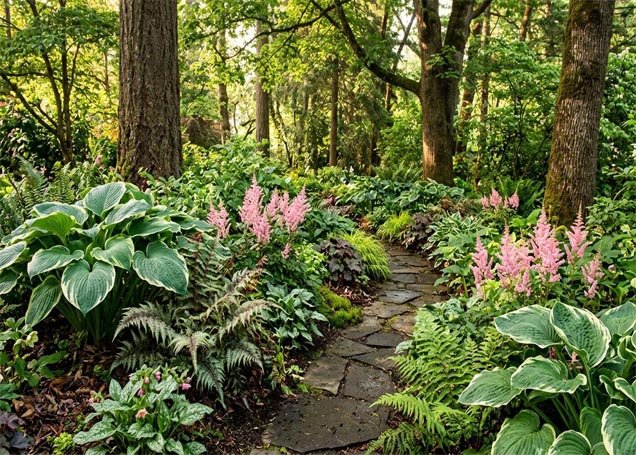
Hostas are among the most popular garden plants for shade because of their broad leaves, attractive textures, and wide range of colors.
Varieties include deep blue-green, bright chartreuse, and striking green-and-white patterns. Many hostas also produce lavender or white flowers during summer.
Plant hostas in fertile, well-drained soil that retains some moisture. Protect delicate varieties from strong afternoon sunlight, which can scorch their leaves.
Hostas look especially beautiful when planted in groups beneath trees or along shaded walkways.
Design idea: Combine blue-leaved hostas with Japanese painted ferns for a layered foliage display.
University extension guidance confirms that hostas generally perform best in partial to heavy shade, although sunlight tolerance varies by cultivar.
2. Astilbe — Best for Colorful Summer Flowers

- Botanical name: Astilbe spp.
- USDA zones: Approximately 3–8
- Light: Partial shade; some tolerate heavier shade
- Bloom season: Late spring through summer, depending on variety
Astilbe is one of the most attractive flowering plants for shade.
Its feathery flower plumes appear in shades of pink, red, lavender, and white above finely divided green foliage.
These colorful plants for shade are excellent for woodland borders, shaded garden beds, and areas beside patios.
Astilbe grows best in rich, consistently moist soil. It may struggle in dry locations beneath thirsty tree roots.
For a beautiful combination, plant astilbe behind shorter hostas or coral bells.
3. Coral Bells — Best for Colorful Leaves
- Botanical name: Heuchera spp. and hybrids
- USDA zones: Often 4–9, depending on cultivar
- Light: Partial shade; varies by variety
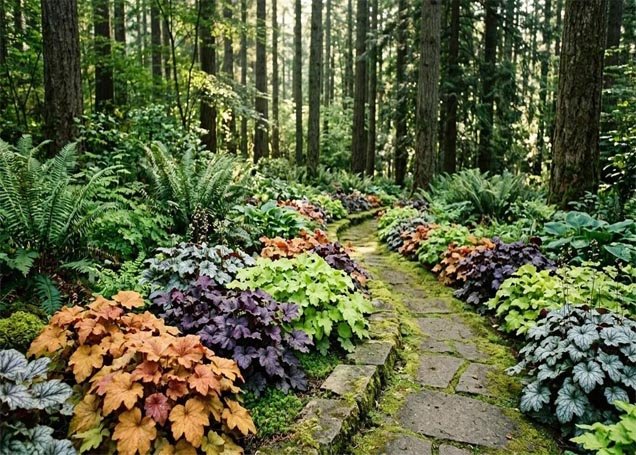
- Best feature: Purple, burgundy, amber, and lime-colored foliage
Coral bells are ideal garden plants for shade when you want color even without flowers.
Their rounded, scalloped leaves come in an impressive range of shades, from deep purple to golden yellow.
Small bell-shaped flowers rise above the foliage on slender stems during late spring and summer.
Plant coral bells in well-drained soil and avoid burying their crowns too deeply.
Many varieties benefit from morning sunlight, particularly those with lighter foliage.
4. Japanese Painted Fern — Best for Silvery Foliage

- Botanical name: Athyrium niponicum var. pictum
- USDA zones: Commonly 3–8
- Light: Partial to full shade
- Best feature: Silver-green foliage with purple accents
Japanese painted fern brings a soft, elegant appearance to shaded garden beds.
Its delicate fronds feature silvery green tones with subtle purple highlights.
Unlike flowering plants, this fern creates visual interest through leaf color and texture.
It grows well in woodland-style gardens with moist, well-drained soil.
Pair Japanese painted ferns with hostas, coral bells, and spring-flowering perennials.
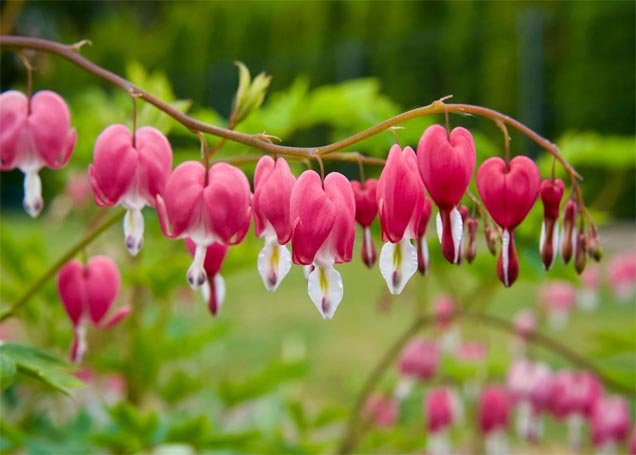
5. Bleeding Heart — Best for Romantic Spring Flowers
- Botanical name: Lamprocapnos spectabilis
- USDA zones: Approximately 3–9
- Light: Partial to full shade
- Bloom season: Spring
Bleeding heart is a classic shade-loving perennial known for its delicate heart-shaped flowers.
The pink or white blossoms hang from gracefully arching stems, creating an elegant woodland appearance.
This plant grows best in cool, moist conditions with rich, well-drained soil.
In warmer climates, its foliage may die back during summer dormancy. Plant nearby hostas or ferns to fill the space later in the growing season.
6. Hellebore — Best for Late-Winter and Early-Spring Color
- Botanical name: Helleborus spp. and hybrids
- USDA zones: Often 4–9
- Light: Partial to full shade
- Bloom season: Late winter to spring
Hellebores are among the most useful perennial plants for shade because they flower when many other garden plants remain dormant.
Their nodding blooms appear in white, pink, purple, and greenish shades.
Many varieties also retain attractive foliage through much of the year.
Plant hellebores in fertile, well-drained soil. Once established, some tolerate moderately dry shade.
All parts of hellebores are toxic if eaten, so consider placement carefully around children and pets.
7. Foamflower — Best for Native Woodland Gardens
- Botanical name: Tiarella spp.
- USDA zones: Generally 4–9, depending on species
- Light: Partial to full shade
- Bloom season: Spring
Foamflower is a charming choice for shaded woodland gardens.
Its small white or pinkish flowers form delicate clusters above attractive, often patterned foliage.
Several Tiarella species are native to North America, making appropriate locally native selections useful in woodland-inspired landscaping.
Foamflower prefers humus-rich, well-drained soil with reliable moisture.
It works beautifully as a low-growing companion to ferns and hostas.
8. Solomon’s Seal — Best for Graceful Garden Borders
- Botanical name: Polygonatum spp.
- USDA zones: Commonly 3–8, depending on species
- Light: Partial to full shade
- Best feature: Arching stems and hanging flowers
Solomon’s seal adds height and movement to a shade garden.
Its gracefully curved stems carry alternating green leaves and small, bell-shaped flowers during spring.
The plant creates a natural woodland atmosphere and works well behind lower-growing perennials.
Choose a species appropriate to your region, and provide rich, well-drained soil.
9. Wild Ginger — Best for Shaded Ground Cover
- Botanical name: Asarum canadense
- USDA zones: Approximately 3–8
- Light: Partial to full shade
- Best feature: Heart-shaped leaves
Wild ginger is a North American woodland plant with attractive, rounded leaves.
It spreads gradually to form a low-growing ground cover in suitable conditions.
Wild ginger is particularly useful beneath trees and along shaded borders where conventional lawn grass struggles.
Provide organically rich soil and adequate moisture while plants establish.
10. Epimedium — Best for Dry Shade
- Botanical name: Epimedium spp. and hybrids
- USDA zones: Often 4–8, depending on variety
- Light: Partial to full shade
- Best feature: Drought tolerance after establishment
Epimedium, also called barrenwort, is one of the best plants for shade beneath established trees.
Its delicate spring flowers rise above heart-shaped foliage, while wide varieties develop attractive leaf colors during spring and fall.
Once established, certain epimedium cultivars tolerate drier conditions better than moisture-loving shade perennials.
The Missouri Botanical Garden identifies epimedium as a useful choice for dry shade.
11. Lungwort — Best for Spotted Foliage
- Botanical name: Pulmonaria spp.
- USDA zones: Often 3–8
- Light: Partial to full shade
- Bloom season: Early spring
Lungwort provides both colorful spring flowers and distinctive spotted leaves.
Its blossoms may appear pink, blue, purple, or white, depending on the variety.
The foliage often remains attractive after flowering ends.
Lungwort prefers cool conditions and soil that retains moisture without becoming waterlogged.
12. Columbine — Best for Delicate Spring Blooms
- Botanical name: Aquilegia spp.
- USDA zones: Vary widely by species
- Light: Partial shade
- Bloom season: Spring to early summer
Columbines produce distinctive flowers in shades of red, yellow, blue, purple, pink, and white.
Several species are native to North America and can be useful in regionally appropriate pollinator gardens.
These flowering shade plants generally perform best with some direct sunlight or bright filtered light.
Choose locally adapted species rather than assuming every columbine thrives in deep shade.
13. Brunnera — Best for Heart-Shaped Leaves
- Botanical name: Brunnera macrophylla
- USDA zones: Commonly 3–8
- Light: Partial to full shade
- Best feature: Silver-patterned leaves and blue spring flowers
Brunnera, sometimes called Siberian bugloss, is an attractive perennial for shady borders.
Its small blue flowers resemble forget-me-nots, while selected cultivars have striking silver-patterned foliage.
Plant brunnera in moist, well-drained soil and protect it from intense afternoon heat.
14. Trillium — Best for Natural Woodland Landscapes
- Botanical name: Trillium spp.
- USDA zones: Species-dependent
- Light: Dappled to full shade
- Bloom season: Spring
Trilliums are woodland wildflowers valued for their distinctive three-part leaves and flowers.
They grow naturally in many forest environments across North America.
Choose nursery-propagated plants suited to your local climate. Never remove trilliums from wild populations.
They are particularly suitable for naturalistic shade gardens with undisturbed, organically rich soil.
15. Japanese Forest Grass — Best for Soft Texture
- Botanical name: Hakonechloa macra
- USDA zones: Approximately 5–9
- Light: Partial shade
- Best feature: Gracefully arching foliage
Japanese forest grass creates soft movement in garden borders.
Golden and variegated cultivars can brighten shaded spaces, especially when planted in groups.
This ornamental grass prefers fertile, well-drained soil with consistent moisture.
It is particularly attractive beside pathways, rocks, and woodland garden edges.
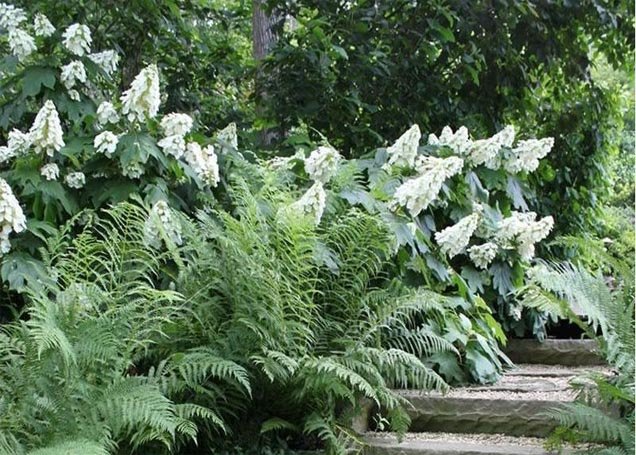
16. Oakleaf Hydrangea — Best Flowering Shrub for Partial Shade
- Botanical name: Hydrangea quercifolia
- USDA zones: Approximately 5–9
- Light: Partial shade
- Bloom season: Late spring to summer
Oakleaf hydrangea is a beautiful shrub for woodland edges and partially shaded gardens.
Its large, oak-shaped leaves and cone-shaped white flowers provide seasonal interest.
During autumn, the foliage often develops burgundy and reddish-purple tones.
Oakleaf hydrangea is native to the southeastern United States and is especially useful where some morning sunlight reaches the planting area.
For the best flowering performance, avoid extremely dark locations.
17. Virginia Sweetspire — Best for Fragrant Flowers
- Botanical name: Itea virginica
- USDA zones: Approximately 5–9
- Light: Partial shade; tolerates considerable shade
- Bloom season: Late spring to early summer
Virginia sweetspire is a North American native shrub that produces fragrant white flower clusters.
Its foliage may turn red, orange, or purple during autumn.
It adapts to a range of soil moisture conditions, although flowering can be reduced in deeper shade.
Use it in woodland borders, rain garden edges, or naturalistic landscapes.
18. Summersweet — Best for Moist Shady Areas
- Botanical name: Clethra alnifolia
- USDA zones: Approximately 3–9
- Light: Partial shade
- Bloom season: Summer
Summersweet is a deciduous shrub known for fragrant white or pink flower spikes.
It is native to eastern North America and grows particularly well in moist, acidic soils.
Its flowers can attract pollinators, making it a useful addition to wildlife-friendly landscapes.
Choose a partially shaded position for reliable flowering.
19. Green-and-Gold — Best Native Ground Cover
- Botanical name: Chrysogonum virginianum
- USDA zones: Approximately 5–9
- Light: Partial shade
- Bloom season: Spring, sometimes intermittently afterward
Green-and-gold is a low-growing perennial with cheerful yellow flowers.
It is native to parts of eastern North America and can form an attractive ground cover in woodland gardens.
Plant it in well-drained soil with sufficient moisture while establishing.
It combines beautifully with native ferns, woodland sedges, and wild ginger.
20. Pennsylvania Sedge — Best Lawn Alternative for Shade
- Botanical name: Carex pensylvanica
- USDA zones: Approximately 3–8
- Light: Partial to full shade
- Best feature: Fine-textured, grass-like foliage
Pennsylvania sedge is a useful alternative to traditional turfgrass in some shaded landscapes.
Its narrow leaves create a soft, natural appearance.
It performs well in appropriate woodland conditions and may require less mowing than a conventional lawn.
However, it does not tolerate heavy foot traffic like durable lawn grasses.
Choose locally appropriate sedges when planning a native shade garden.
21. Japanese Anemone — Best for Late-Season Flowers
- Botanical name: Eriocapitella × hybrida (often sold as Anemone × hybrida)
- USDA zones: Commonly 4–8
- Light: Partial shade
- Bloom season: Late summer to fall
Japanese anemones produce elegant pink or white flowers when many spring-blooming perennials have finished.
They are attractive additions to woodland edges and partially shaded perennial borders.
These plants prefer moist, well-drained soil and generally flower better with some sunlight.
Some varieties spread vigorously, so check local recommendations before planting.
Shade Garden Plants Comparison Table
Use this table to compare the best garden plants for shade based on light requirements, visual appeal, and growing conditions.
| Plant | Shade tolerance | Main attraction | Moisture preference |
|---|---|---|---|
| Hosta | Partial–full | Colorful foliage | Moderate |
| Astilbe | Partial–full | Summer flowers | Consistently moist |
| Coral bells | Partial | Colorful leaves | Moderate, well-drained |
| Japanese painted fern | Partial–full | Silver foliage | Moist |
| Bleeding heart | Partial–full | Spring flowers | Moist |
| Hellebore | Partial–full | Early flowers | Well-drained |
| Foamflower | Partial–full | Spring blooms | Moderate |
| Solomon’s seal | Partial–full | Arching stems | Moderate |
| Wild ginger | Partial–full | Ground cover | Moderate |
| Epimedium | Partial–full | Dry-shade ground cover | Low–moderate once established |
| Lungwort | Partial–full | Spotted leaves | Moderate |
| Columbine | Partial | Colorful flowers | Well-drained |
| Brunnera | Partial–full | Silver leaves | Moderate |
| Trillium | Dappled–full | Woodland flowers | Moderate |
| Japanese forest grass | Partial | Golden foliage | Moderate |
| Oakleaf hydrangea | Partial | White flowers | Moderate |
| Virginia sweetspire | Partial–full | Flowers and fall color | Moderate–moist |
| Summersweet | Partial | Fragrant flowers | Moist |
| Green-and-gold | Partial | Yellow flowers | Moderate |
| Pennsylvania sedge | Partial–full | Lawn alternative | Low–moderate |
| Japanese anemone | Partial | Fall flowers | Moderate |
Shade tolerance and moisture needs are general guides. Exact requirements depend on cultivar, region, soil, and climate.
Best Garden Plants for Shade by Growing Condition
Not all shady areas have the same growing conditions. Choosing plants based on soil moisture and sunlight can significantly improve gardening success.
Best Plants for Full Shade
Full shade plants receive little direct sunlight, but they still need enough ambient daylight for healthy growth.
Consider:
- Japanese painted fern
- Wild ginger
- Solomon’s seal
- Selected hosta varieties
- Epimedium
- Woodland sedges
Even these plants may struggle in extremely dark locations, especially where tree roots compete for moisture.
Best Colorful Plants for Shade
If you want a shade garden filled with color, choose plants that offer both flowers and decorative foliage.
Good options include astilbe, coral bells, bleeding heart, hellebore, brunnera, and Japanese painted fern.
For season-long interest, combine spring flowers with colorful foliage that remains attractive through summer.
Best Low-Maintenance Shade Plants
Low-maintenance shade plants are especially useful for busy homeowners.
Consider established epimedium, appropriate native sedges, wild ginger, hellebores, and selected hosta varieties.
Remember that low maintenance does not mean no maintenance. Newly planted perennials still need watering, weed control, and occasional inspection.
Best Plants for Dry Shade Under Trees
Dry shade is challenging because tree roots compete with garden plants for water and nutrients.
Suitable options may include epimedium, certain established hellebores, and locally adapted woodland sedges.
Avoid planting large specimens directly among major tree roots. Young plants or containers may be easier to establish without damaging the tree.
How to Design a Beautiful Shade Garden

A successful shade garden depends on thoughtful plant placement, foliage contrast, and suitable growing conditions.
Create layers with different plant heights
Place taller shrubs and large perennials toward the back of garden beds.
Use medium-height plants such as astilbe, coral bells, and brunnera in the middle.
Finish the front with low-growing ground covers such as wild ginger or green-and-gold.
Mix leaf shapes and textures
Combine broad hosta leaves with delicate fern fronds.
Add coral bells for contrasting leaf colors and Japanese forest grass for movement.
This creates visual interest even when few plants are flowering.
Use repeating plant groups
Instead of planting one of every species, repeat small groups of compatible plants.
For example, a combination of hostas, astilbe, and ferns can create a cohesive woodland border.
Include seasonal interest
Choose plants that look attractive at different times of the year.
Hellebores and bleeding hearts provide early flowers, astilbe offers summer color, and Japanese anemones extend interest into fall.
How to Plant Garden Plants for Shade Successfully
Step 1: Check sunlight exposure
Observe your garden at several times throughout the day.
Record whether the location receives morning sun, afternoon sun, filtered light, or almost no direct sunlight.
Step 2: Test your soil
Check drainage, soil texture, and pH.
Many shade-loving perennials prefer soil enriched with organic matter, but requirements differ by species.
A local cooperative extension service can help with soil testing.
Step 3: Choose plants for your USDA zone
Use the USDA Plant Hardiness Zone Map to identify your area’s average annual extreme minimum temperature.
Then check each plant’s hardiness range and local growing recommendations.
Step 4: Prepare the planting area
Remove weeds and loosen the soil carefully.
Avoid damaging large tree roots when planting beneath mature trees.
Add compost when appropriate for the soil and selected plants.
Step 5: Plant at the correct depth
Set each plant at approximately the same soil depth it occupied in its nursery container unless its planting instructions specify otherwise.
Keep crowns and stems from being buried too deeply.
Step 6: Water during establishment
Newly planted shade garden plants require consistent attention until their root systems develop.
Check soil moisture rather than assuming shade automatically keeps the ground damp.
Step 7: Apply mulch
Use a suitable layer of organic mulch to help conserve moisture and reduce weed growth.
Keep mulch away from tree trunks and plant crowns.
Common Shade Gardening Mistakes to Avoid
Choosing plants based only on appearance
A plant may look beautiful at a garden center but struggle in your backyard if its light and soil requirements are unsuitable.
Always check its growing conditions first.
Assuming all shade plants tolerate dry soil
Many plants that thrive in shade prefer consistently moist soil.
Astilbe, for example, may perform poorly in dry locations beneath mature trees.
Overwatering poorly drained soil
Shade reduces evaporation, and poorly drained areas may remain wet longer.
Check soil moisture before watering.
Ignoring plant size
Small nursery plants may grow into large clumps over time.
Allow enough space for mature foliage and root development.
Using aggressive ground covers
Some commonly sold shade plants spread rapidly or become invasive in particular regions.
Check your state extension service or local invasive plant list before selecting unfamiliar ground covers.
Frequently Asked Questions About Garden Plants for Shade
What are the best garden plants for shade?
Hostas, ferns, astilbe, hellebores, coral bells, epimedium, and Solomon’s seal are excellent options for many shaded gardens. The best choice depends on sunlight, soil moisture, and local climate.
What plants grow well in full shade?
Certain ferns, wild ginger, Solomon’s seal, epimedium, and selected hostas can tolerate full shade. Extremely dark locations may still be unsuitable for healthy growth.
Can flowering plants grow in shade?
Yes. Astilbe, bleeding heart, hellebore, foamflower, and lungwort can produce attractive flowers in suitable shaded conditions. Flowering may be reduced when light is extremely limited.
What are the best low-maintenance shade plants?
Epimedium, wild ginger, selected hostas, hellebores, and regionally adapted sedges are useful options. Maintenance requirements vary with local growing conditions.
Which plants grow in dry shade?
Established epimedium, some hellebores, and certain native sedges can tolerate dry shade better than moisture-loving perennials.
Can I grow a garden beneath large trees?
Yes, but tree roots compete for moisture and nutrients. Choose suitable woodland plants, avoid damaging major roots, and consider containers in especially difficult areas.
How can I make a shade garden more colorful?
Combine flowering perennials with plants that have decorative foliage. Coral bells, Japanese painted ferns, variegated hostas, and golden Japanese forest grass can create color without relying entirely on flowers.
Are shade plants suitable for containers?
Many shade plants grow well in containers, including hostas, coral bells, ferns, and compact astilbe varieties. Choose containers with adequate drainage and monitor moisture carefully.
Final Thoughts
Choosing the right garden plants for shade can transform a difficult backyard into a lush, welcoming landscape.
Whether you prefer colorful flowers, bold foliage, native woodland plants, or low-maintenance ground covers, there are many options for different climates and growing conditions.
Start by understanding your garden’s light exposure and soil moisture. Then combine plants with different heights, textures, and bloom seasons to create a balanced design.
With thoughtful planning and suitable plant choices, even a heavily shaded garden can become one of the most attractive parts of your outdoor space.
For more practical gardening advice, explore our Gardening Tips for Beginners and How to Start Vegetable Gardening guides.
References and Further Reading
The following horticultural resources support the plant-selection and growing-condition guidance in this article: