Table of Contents
When temperatures start dropping and the first frost appears in the forecast, your garden needs a little attention before winter settles in. You don’t have to remove every plant or completely rebuild your garden beds. A few well-timed tasks can protect vulnerable plants, improve soil conditions, and make spring gardening easier.
Learning how to winterize garden beds is especially useful for homeowners in colder parts of the United States, where freezing temperatures, snow, and repeated thawing can affect plants and soil.
But winter preparation matters in warmer regions, too. Even gardens in the South may experience unexpected freezes, heavy winter rain, or seasonal changes that require adjustments.
The best approach is to work with your local climate rather than follow a single national gardening calendar.
This guide explains how to winterize your garden in 15 practical steps, including preparing vegetable beds, protecting perennials, caring for soil, preventing frost, and a regional winter gardening checklist.
If you’re wondering how to winterize garden beds before the first hard freeze, begin with the basics. Remove diseased plants, protect exposed soil, and prepare vulnerable perennials for colder temperatures. These simple tasks can reduce winter damage and make spring cleanup easier.
What Does Winterizing a Garden Mean?
Winterizing a garden means preparing plants, soil, equipment, and outdoor growing spaces for the colder months.
The goal is to reduce preventable winter damage while maintaining healthy soil and protecting plants that will return in spring.
A complete garden winterization plan may include:
- Removing diseased plants and spent vegetable crops.
- Protecting exposed soil from erosion.
- Mulching plants that need winter insulation.
- Harvesting vegetables before damaging freezes.
- Preparing containers and irrigation systems.
- Protecting tender plants from frost.
- Leaving selected seed heads and stems for wildlife.
Winterizing does not mean stripping every garden bed bare.
In fact, leaving some healthy plant material standing can provide winter habitat for birds and beneficial insects.
When Should You Winterize Your Garden?
The best time depends on your location, plant types, and the first expected frost.
In northern states, winter preparation may begin in September or October. In many southern areas, some tasks can wait until November or later.
Rather than relying only on the calendar, pay attention to local weather forecasts and frost conditions.
Understanding how to winterize garden areas in different climates is important because winter conditions vary across the United States. Northern gardeners often need to prepare earlier, while homeowners in warmer regions may have more time to protect plants and maintain their growing beds.
Winter Garden Preparation by US Region
| US region | General preparation period | Main concerns |
|---|---|---|
| Northeast | September–November | Freezing temperatures, frost heaving, snow |
| Midwest | September–November | Early hard freezes, exposed soil, perennial protection |
| Pacific Northwest | October–November | Winter rainfall, drainage, soil erosion |
| Southeast | October–December | Occasional freezes, wet soil, tender plants |
| Southwest | October–December | Dry conditions, cold nights, temperature changes |
| Mountain West | September–October | Early frost, dry winds, temperature extremes |
These periods are broad planning guidelines, not guaranteed frost dates. High-elevation locations may freeze much earlier than nearby lower-elevation areas.
Check your local National Weather Service forecast and university extension resources before scheduling temperature-sensitive work.

15 Essential Steps to Winterize Your Garden
1. Remove Diseased and Spent Vegetable Plants
Start by inspecting your vegetable garden.
Tomatoes, peppers, cucumbers, beans, and other warm-season crops may stop producing when temperatures fall.
Once the growing season ends, remove spent plants that no longer serve a useful purpose.
Pay particular attention to plants showing signs of disease, including:
- Unusual leaf spotting or blight symptoms.
- Powdery mildew on foliage.
- Severe stem or fruit decay.
- Persistent disease problems during the growing season.
Do not automatically put diseased material into a home compost pile. Many backyard composting systems do not consistently reach temperatures sufficient to destroy plant pathogens.
Instead, follow local disposal guidance.
Healthy plant residues can often be composted, chopped for appropriate soil coverage, or managed according to the needs of the garden.
Gardening tip: Clean reusable plant supports before storing them, particularly if they were in contact with diseased crops.
2. Remove Weeds Before They Spread
Fall is an excellent opportunity to reduce next year’s weed problems.
Some weeds continue growing in cool weather, while others have already produced seeds that can remain in the soil.
Walk through your garden and remove established weeds, paying particular attention to those carrying mature seed heads.
For persistent perennial weeds, remove as much of the root system as practical without unnecessarily disturbing nearby desirable plants.
After clearing weeds, cover exposed soil with an appropriate organic mulch or living cover crop.
This helps reduce bare ground where additional weeds may establish.
For more detailed weed-control methods, read our guide to getting rid of weeds.
3. Harvest Vegetables Before a Damaging Freeze
Not all vegetables respond to cold weather in the same way.
Tomatoes, peppers, basil, and beans are generally vulnerable to freezing temperatures.
Many cool-season crops tolerate light frost, and some may remain productive during cooler weather.
Check your local forecast and harvest sensitive crops before a damaging freeze.
| Vegetable | General cold tolerance | Fall action |
|---|---|---|
| Tomatoes | Frost-sensitive | Harvest before freezing weather |
| Peppers | Frost-sensitive | Pick remaining usable fruit |
| Green beans | Frost-sensitive | Complete harvest before frost |
| Kale | Tolerates frost | Continue harvesting where conditions allow |
| Carrots | Can tolerate cool soil | Harvest or protect according to local conditions |
| Spinach | Cool-season crop | Consider frost protection in suitable regions |
| Lettuce | Depends on variety and temperature | Protect from hard freezes |
These are general characteristics. Cultivar, plant maturity, soil conditions, and the severity of the freeze can change the outcome.
If you want to continue growing vegetables through the cooler months, see our existing Winter Vegetables content for suitable crop choices.
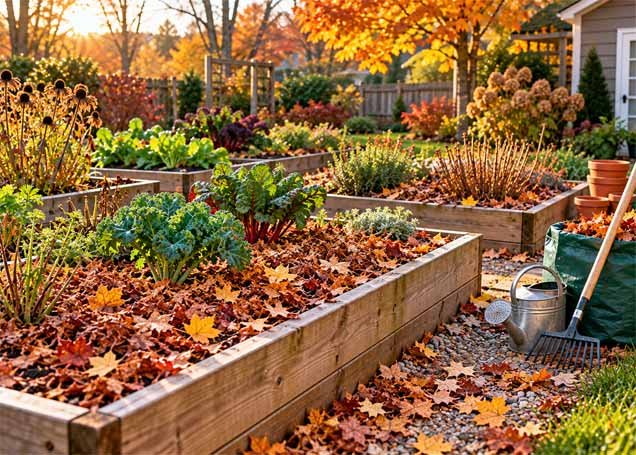
4. Prepare Raised Garden Beds for Winter

Raised beds need special attention because their soil can experience greater temperature changes than soil in the surrounding ground.
After harvesting crops and removing weeds, inspect the bed for erosion, exposed roots, and settling soil.
Add finished compost where needed and appropriate for your soil conditions.
Next, cover the soil with suitable organic material.
A layer of approximately 2–4 inches of mulch is recommended in the University of Minnesota Extension’s October 2026 fall garden guidance for raised beds.
Mulch can help reduce erosion, limit weed establishment, and protect exposed soil.
Suitable materials may include shredded leaves or other clean organic mulches.
Avoid burying living plants beneath excessive material.
For additional soil improvement advice, see our Compost for Raised Bed Garden guide.
5. Add Compost Where Your Soil Needs It
Autumn can be a convenient time to improve garden soil.
Finished compost adds organic matter and can improve soil structure.
However, more compost is not always better.
Before adding large amounts of compost, consider the condition of your soil and the results of any recent soil test.
If your soil already contains high nutrient levels, unnecessary amendments can create problems.
Spread finished compost over appropriate beds according to your soil-management plan.
Avoid using unfinished compost directly around sensitive plants when it could interfere with growth.
If you are learning how to winterize your garden for the first time, start with basic soil protection and make major amendments only when there is a clear need.
6. Use Leaf Mulch to Protect Exposed Soil
Fallen autumn leaves are one of the most accessible mulching materials for American homeowners.
Instead of sending all leaves away with yard waste, consider using suitable leaves to cover vegetable beds and other exposed garden soil.
Shredded leaves can help reduce erosion, conserve moisture, and gradually contribute organic matter as they decompose.
Whole leaves can also provide habitat in selected naturalized areas.
For actively maintained beds, avoid creating dense, wet mats that may interfere with plant growth.
Keep mulch away from vulnerable stems and tree trunks.
For a detailed explanation of leaf preparation, benefits, and application methods, read our Leaf Mulch guide .
7. Protect Perennials at the Right Time
Many hardy perennials survive winter without extensive intervention when they are suitable for the local USDA Plant Hardiness Zone.
However, newly planted, shallow-rooted, or marginally hardy perennials may benefit from additional protection.
In colder climates, repeated freezing and thawing can sometimes push roots upward, a problem known as frost heaving.
A protective mulch layer helps moderate temperature fluctuations.
Timing matters.
For certain perennial and spring-flowering bulb beds, University of Minnesota Extension recommends applying winter-protection mulch after the soil begins freezing.
Applying deep protective mulch too early may keep the soil warmer than intended and interfere with normal dormancy.
Suitable protective materials can include leaves or straw, depending on the plants and local guidance.
Do not assume every perennial requires the same mulch depth.
8. Leave Selected Stems and Seed Heads for Wildlife
A perfectly cleared garden may look tidy, but removing every stem and leaf can eliminate useful winter habitat.
Many beneficial insects spend part of their life cycle in plant stems, leaf litter, or protected areas near the ground.
Birds may also feed on seeds remaining on mature flowers.
Consider leaving healthy stems and seed heads on plants such as:
- Purple coneflower
- Black-eyed Susan
- Ornamental grasses
- Other suitable native perennials
Remove diseased material, but leave some healthy plant structures standing where practical.
You can tidy heavily used paths and entrances while keeping selected wildlife-friendly garden areas less disturbed.
This approach can make winter garden preparation easier while supporting local biodiversity.
9. Protect Tender Plants From Frost
Some plants cannot survive the winter outdoors in colder parts of the United States.
These may include tropical container plants, tender flowering plants, and certain herbs.
Before freezing weather arrives, identify which plants need protection.
For suitable portable plants, moving containers into an appropriate sheltered location may be the simplest option.
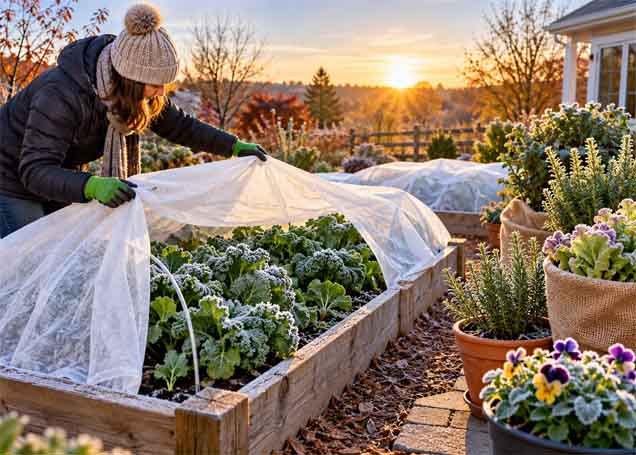
Temporary frost covers can also protect certain outdoor crops during short cold periods.
When using covers, make sure they are secured appropriately and do not damage the plants.
Remove or adjust covers as temperatures rise to prevent overheating.
Remember that a lightweight frost cover cannot make a tropical plant winter-hardy in a severely cold climate.
10. Prepare Outdoor Containers and Pots

Outdoor pots are often more exposed to cold temperatures than plants growing in the ground.
Container soil can freeze more quickly, and repeated temperature changes may stress roots.
Inspect outdoor pots before winter.
For containers holding tender plants, consider moving them to a suitable protected location.
Empty containers that are not frost-resistant should be cleaned and stored where freezing conditions will not damage them.
Terracotta and certain decorative pots can crack when trapped moisture freezes.
If you leave hardy plants outdoors in containers, choose containers and plants appropriate for the expected winter conditions.
11. Dig and Store Tender Summer Bulbs
Some summer-flowering bulbs and tubers are not winter-hardy in colder regions.
Examples may include:
- Dahlias
- Cannas
- Gladiolus
- Caladiums
- Tuberous begonias
The correct lifting, curing, and storage methods vary by plant species.
In regions where these plants cannot overwinter outdoors, follow species-specific instructions for digging them after the appropriate seasonal conditions.
Inspect stored material periodically for drying, decay, or other problems.
Avoid assuming that every bulb should be stored at the same temperature or moisture level.
Hardy spring-flowering bulbs, such as many daffodils and tulips, generally follow a different seasonal routine.
12. Water Trees and Shrubs Before the Ground Freezes
Cold weather does not always mean plants have enough moisture.
In some regions, autumn can be dry even as temperatures fall.
Newly planted trees, shrubs, and certain evergreens may be especially vulnerable to moisture stress.
Check soil moisture during dry periods before the ground freezes.
Water where necessary, following the needs of the plant and local recommendations.
Avoid leaving soil waterlogged.
Once the ground is frozen, normal watering may no longer be practical.
For evergreen shrubs exposed to winter winds, appropriate placement, soil moisture, and protection can help reduce seasonal stress.
13. Prepare Garden Hoses and Irrigation Systems
Freezing water can damage garden plumbing and irrigation components.
Before sustained freezing conditions arrive, disconnect garden hoses from outdoor faucets and drain them.
Store hoses in a protected location where practical.
If your garden has a drip irrigation or automatic watering system, follow the manufacturer’s winterization instructions.
Some systems require specialized draining procedures, and underground irrigation systems may need professional service.
Do not assume that disconnecting a timer is sufficient to protect every component.
This small maintenance task can help prevent inconvenient repairs in spring.
14. Clean and Store Garden Tools
Winter is a good time to inspect and organize garden equipment.
Clean soil and plant debris from tools before storage.
Check handles, fasteners, and other components for damage.
Allow equipment to dry before placing it in storage.
For powered equipment, follow the manufacturer’s maintenance and storage instructions.
Keep tools in a secure, dry location.
A little organization now can make spring planting more convenient.
15. Plan Next Year’s Garden Before Winter Ends
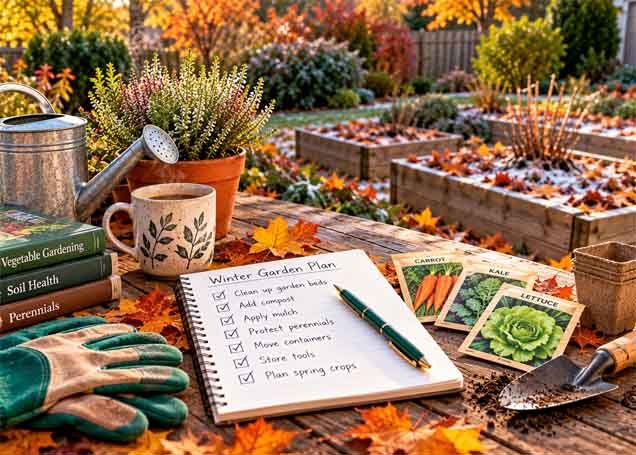
The final step in learning how to winterize garden spaces is reviewing what worked during the growing season.
Take a few notes before you forget the details.
Record which vegetables performed well, where weeds were difficult to control, and which beds had drainage or sunlight problems.
Consider:
- Which crops should return next year?
- Did any plants suffer repeated disease problems?
- Do certain beds need improved soil?
- Is the garden layout practical?
- Would a different watering system save time?
You can also take photographs of your garden before snow or winter dormancy changes its appearance.
These records make spring planning easier.
For readers starting a new garden, our How to Start Vegetable Gardening guide provides useful planning information.
Winter Garden Preparation Checklist
Use this checklist as a quick reference before the coldest weather arrives.
| Task | Best general timing | Priority |
|---|---|---|
| Harvest frost-sensitive vegetables | Before damaging frost | High |
| Remove diseased plant material | After harvest or when identified | High |
| Pull established weeds | Before winter dormancy | High |
| Cover bare vegetable beds | After cleanup | High |
| Add compost if needed | Fall, based on soil needs | Medium |
| Protect vulnerable perennials | At locally recommended freeze timing | High where needed |
| Leave healthy wildlife habitat | Throughout fall and winter | Recommended |
| Move tender containers | Before freezing temperatures | High |
| Store tender bulbs | According to species and climate | High where needed |
| Water young trees during dry fall weather | Before soil freezes | As needed |
| Drain hoses and irrigation | Before sustained freezing | High |
| Clean garden tools | End of growing season | Medium |
Save this checklist for your next fall cleanup.
Knowing how to winterize garden beds properly makes seasonal maintenance more manageable. A practical checklist helps you prioritize essential tasks, from clearing spent crops and protecting soil to preparing outdoor containers and storing gardening equipment.
How to Winterize Your Garden in Different US Climates
Winter preparation varies considerably across the United States.
A Minnesota vegetable garden faces different conditions from a garden in coastal Georgia or southern Arizona.
Northeast: Prepare for Frost, Snow, and Freeze–Thaw Cycles
In states such as New York, Pennsylvania, Vermont, and Massachusetts, focus on protecting vulnerable plants and preparing soil for freezing weather.
Complete sensitive vegetable harvests before damaging freezes.
Cover exposed beds and follow regional guidance for protecting perennials.
Avoid unnecessary disturbance of soil when it is wet or frozen.
Midwest: Protect Raised Beds and Perennials
Midwestern gardens may experience substantial winter temperature changes.
Raised beds can be especially exposed.
Mulching bare soil, managing moisture, and protecting vulnerable perennials are useful priorities.
In colder areas, the timing of winter mulch is particularly important.
Southeast: Prepare for Occasional Freezes
Southern gardeners may have a longer growing season, but sudden cold events can still damage tender plants.
Monitor forecasts closely.
Keep suitable frost protection available and identify container plants that may need to move indoors.
Avoid applying cold-climate winter practices automatically to plants that remain actively growing.
Pacific Northwest: Focus on Drainage and Soil Protection
Many parts of the Pacific Northwest experience cool, wet winters.
Protect bare soil from erosion and avoid working saturated garden beds.
Check drainage around containers and raised beds.
Gardeners in higher elevations or colder inland locations may also need significant freeze protection.
Southwest: Watch for Dry Soil and Cold Nights
In the Southwest, winter preparation often involves managing dry conditions alongside occasional freezing temperatures.
Pay attention to moisture needs and nighttime forecasts.
Container plants and frost-sensitive species may need protection during cold spells.
Because climates vary widely by elevation, use local rather than statewide guidance.
Common Winter Garden Mistakes to Avoid
Clearing Every Plant From the Garden
Not all plant material needs to be removed.
Healthy perennial stems and seed heads can provide wildlife habitat and winter interest.
Remove diseased material, but preserve suitable healthy growth where practical.
Mulching Vulnerable Perennials Too Early
Deep winter mulch applied before the appropriate freeze conditions may interfere with normal dormancy.
Follow local extension guidance and distinguish protective winter mulch from ordinary soil-covering mulch.
Leaving Soil Bare All Winter
Exposed soil is more vulnerable to erosion and weed establishment.
Use appropriate mulch, plant residue, or a suitable cover crop when practical.
Forgetting Outdoor Containers
Some plants that survive in the ground may struggle in exposed containers.
Evaluate both plant hardiness and container conditions.
Ignoring Regional Weather Differences
A gardening calendar designed for northern Minnesota will not fit every garden in Texas or California.
Use local frost forecasts and climate guidance to decide when individual tasks are necessary.
Frequently Asked Questions
When should I start winterizing my garden?
Begin planning several weeks before your area’s typical first frost. Complete tasks according to local conditions, with tender plant protection before damaging freezes and certain perennial mulching tasks after the soil begins freezing.
Should I remove all plants from my vegetable garden before winter?
Remove spent crops and diseased plant material as appropriate. Healthy plant residues may be composted or managed as soil cover, while overwintering crops can remain where the climate allows.
Should I till my garden before winter?
Routine fall tilling is not always necessary. Minimizing soil disturbance can help preserve soil structure and reduce erosion. Consider cover crops or mulch instead, depending on your soil and gardening goals.
Is it better to mulch a garden in fall or spring?
Both seasons can be useful, but the purpose matters. Fall mulch can protect exposed soil, while deep winter-protection mulch for certain perennials may need to wait until freezing begins. Spring mulch can help conserve moisture and suppress weeds during the growing season.
How do I winterize raised garden beds?
Remove spent and diseased plants, clear weeds, add compost if needed, and cover exposed soil with suitable mulch or a cover crop. Inspect the bed structure and drainage before winter.
Can I leave fallen leaves in my garden?
Yes. Leaves can protect soil and provide wildlife habitat. Shredded leaves are useful in many maintained beds, while whole leaves may be left in selected naturalized areas. Avoid smothering lawns or sensitive plants.
Should I fertilize my garden before winter?
Do not apply fertilizer automatically. A soil test can help determine whether nutrients are needed. Fertilizer timing depends on the plant, soil conditions, and local recommendations.
What happens if I don’t winterize my garden?
The results depend on your climate and plants. Some established gardens may survive with little intervention, while vulnerable plants, exposed soil, containers, and irrigation systems may experience preventable problems.
Can I grow vegetables during winter?
Yes, in suitable climates or with appropriate season-extension methods. Cold-hardy crops may grow during cooler weather, but results depend on temperature, daylight, crop variety, and protection.
What is the most important step in winterizing a garden?
There is no single step for every garden. However, protecting frost-sensitive plants, managing diseased material, and covering exposed soil are often among the most useful priorities.
Final Thoughts
Learning how to winterize your garden doesn’t require complicated equipment or an expensive renovation.
Start with the essentials. Harvest sensitive crops, remove diseased material, protect exposed soil, and identify plants that need special winter care.
Then adjust your plan for your local climate.
Some plants need insulation. Others benefit from being left undisturbed. And certain garden tasks, such as storing containers and preparing irrigation systems, can prevent problems that have little to do with plant growth.
A thoughtful fall routine can leave your garden in better condition for spring while supporting healthier soil and a more wildlife-friendly landscape.
References and Further Reading
- University of Minnesota Extension: Fall Garden Care That Pays Off
- University of Minnesota Extension: Mulch Perennials and Bulbs After the Soil Freezes
- University of Maryland Extension: November Gardening Tips and Tasks
- Penn State Extension: Fall Garden Tasks
- Penn State Extension: Fall Garden Care for Pollinators