
Table of Contents
A shady backyard does not have to be a garden without flowers. While many popular flowering plants need six or more hours of direct sunlight, others produce beautiful blooms in filtered light, morning sun, or even heavily shaded woodland settings.
The secret is choosing plants for the kind of shade you actually have.
Some of the best flowering plants for shade are colorful annuals that brighten containers throughout summer. Others are hardy perennials that return each spring, or North American native wildflowers that support local wildlife.
This guide covers 17 flowering plants for shady gardens across the United States, including practical advice on light, soil moisture, bloom seasons, and landscape uses.
Whether you have a shaded patio, a garden beneath deciduous trees, or a narrow border beside your house, there are flowers worth trying.
Understanding Shade Before Choosing Flowering Plants
Not every shaded garden receives the same amount of light. Understanding the difference can prevent disappointing blooms and unhealthy plants.
Full Shade
Full shade generally means a location receives less than three hours of direct sunlight daily. It may still receive bright indirect light throughout the day.
Very few flowering plants perform well in extremely dark conditions. A bright, fully shaded garden is different from a nearly lightless corner beneath dense evergreen trees.
Partial Shade
Partial shade typically means about three to six hours of direct sunlight, often with protection from intense afternoon heat.
This is an excellent setting for many flowering plants, especially those that prefer morning sunshine.
Dappled Shade
Dappled shade occurs when sunlight passes through tree branches and leaves, creating moving patches of light.
Many woodland flowers thrive in this environment.
Gardening tip: Observe your garden at several times of day before buying plants. A bed receiving gentle morning sunshine may support different flowers from one exposed to intense afternoon sun.
17 Best Flowering Plants for Shade
The following plants include annuals, tender perennials, hardy perennials, and native wildflowers. Their suitability depends on your local climate, drainage, and the amount of available light.
1. Impatiens — Best for Colorful Shady Borders
Botanical name: Impatiens walleriana
Traditional impatiens are among the most familiar flowering plants for shaded gardens. Their cheerful flowers come in pink, red, coral, purple, white, and other shades.
These plants work beautifully along walkways, beneath open tree canopies, and in containers near shaded entrances.
Growing conditions:
- Light: Partial to full shade with sufficient indirect light
- Soil: Moist, fertile, well-drained
- Bloom season: Summer until frost in many climates
- Best use: Borders, hanging baskets, and containers
Garden tip: Look for varieties with improved resistance to impatiens downy mildew, a disease that can seriously affect susceptible plants. Avoid crowded planting and overhead watering where possible.
In most of the United States, common impatiens are grown as annuals.
2. Tuberous Begonias — Best for Large, Showy Flowers
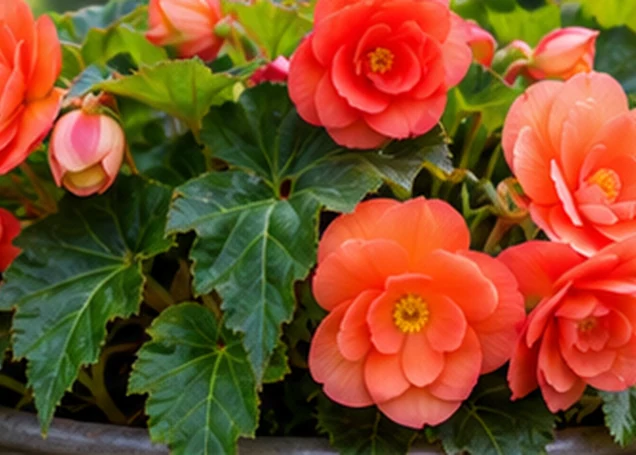
Botanical name: Begonia × tuberhybrida and related hybrids
Tuberous begonias produce spectacular blooms in shades of orange, pink, yellow, red, and white. Some varieties have large, rose-like flowers, while others have a trailing growth habit.
They are excellent flowering potted plants for shade, especially on sheltered patios and porches.
Growing conditions:
- Light: Bright shade or filtered light
- Soil: Well-drained potting mix that retains some moisture
- Bloom season: Summer into fall
- Best use: Containers, hanging baskets, and protected garden beds
Garden tip: Keep tuberous begonias out of harsh afternoon sunshine and protect them from strong winds. Their stems and flowers can be delicate.
In cold-winter climates, gardeners can grow them as seasonal plants or store their tubers indoors over winter.
3. Wax Begonias — Best for Easy-Care Seasonal Color
Botanical name: Begonia Semperflorens-Cultorum Group
Wax begonias have glossy foliage and clusters of small pink, red, or white flowers. Bronze-leaved varieties add another layer of color.
Compared with tuberous begonias, wax begonias have a tidier, more compact appearance.
They perform well in partial shade, although flowering may decrease in very dark locations.
Growing conditions:
- Light: Partial shade or bright filtered light
- Soil: Well-drained and moderately moist
- Bloom season: Summer through frost
- Best use: Edging, containers, and mass planting
Garden tip: Avoid constantly saturated soil. Begonias are vulnerable to root problems when drainage is poor.
4. Wishbone Flower — Best for Small Shaded Containers
Botanical name: Torenia fournieri
Wishbone flower, commonly called torenia, produces distinctive trumpet-shaped flowers, often in blue, purple, pink, or white combinations.
Its compact growth makes it a useful choice for small patios, window boxes, and shaded container arrangements.
Growing conditions:
- Light: Partial shade or bright shade
- Soil: Moist but well-drained
- Bloom season: Summer into fall
- Best use: Window boxes, containers, and border edges
Garden tip: Torenia generally appreciates consistent moisture, particularly during hot summer weather.
It is usually grown as a warm-season annual in the United States.
5. Fuchsia — Best for Shaded Hanging Baskets
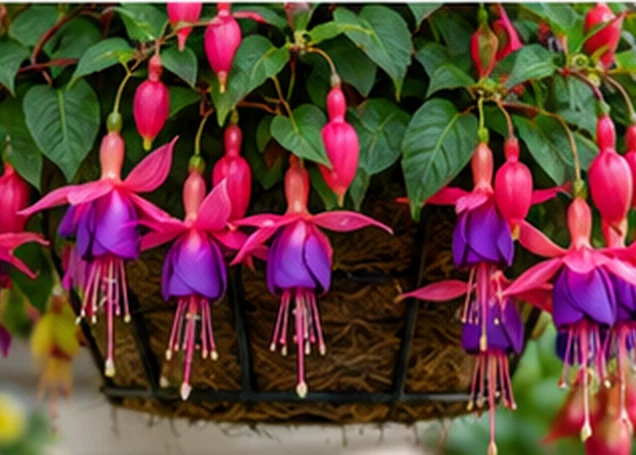
Botanical name: Fuchsia spp. and hybrids
Fuchsias are known for their elegant, hanging flowers in combinations of pink, purple, red, and white.
Their unusual flower shape makes them especially attractive in hanging baskets and raised planters.
Many popular varieties prefer mild temperatures and protection from intense afternoon sunshine.
Growing conditions:
- Light: Bright shade or gentle morning sun
- Soil: Fertile, well-drained, consistently moist
- Bloom season: Late spring through fall, depending on climate
- Best use: Hanging baskets and patio containers
Garden tip: In hot regions, select heat-tolerant cultivars and provide afternoon shade. Not all fuchsias perform equally well in humid or very hot summers.
6. Astilbe — Best for Feathery Summer Flowers
Botanical name: Astilbe spp. and hybrids
Astilbe produces soft, feathery flower plumes in pink, red, white, and lavender tones.
Its fern-like foliage adds texture even after flowering has finished.
Astilbe is particularly useful in partially shaded beds where the soil remains consistently moist.
Growing conditions:
- Light: Partial shade
- Soil: Moist, organic-rich, well-drained
- Bloom season: Late spring through summer, depending on cultivar
- Best use: Woodland borders and moist shade gardens
Garden tip: Astilbe is not a good choice for dry shade. Its foliage may brown or scorch when the roots become too dry.
For more perennial options, read our guide to shade perennials.
7. Bleeding Heart — Best for Romantic Spring Blooms
Botanical name: Lamprocapnos spectabilis
Bleeding heart is a classic spring-flowering perennial with arching stems and distinctive heart-shaped pink or white flowers.
Its graceful appearance suits cottage gardens and woodland-style landscapes.
Growing conditions:
- Light: Partial shade
- Soil: Humus-rich, moist, well-drained
- Bloom season: Spring
- Best use: Woodland borders and sheltered perennial beds
Garden tip: Traditional bleeding heart may go dormant during summer, especially in warmer conditions. Plant it alongside ferns or later-emerging shade plants to help fill the space.
8. Hellebores — Best for Late-Winter and Early-Spring Flowers
Botanical name: Helleborus spp. and hybrids
Hellebores bring welcome color to the garden when many other perennials are still dormant.
Depending on the species and cultivar, flowers may appear in white, pink, burgundy, green, or near-purple shades.
Many hellebores retain attractive foliage through much of winter.
Growing conditions:
- Light: Partial to full shade, depending on climate and cultivar
- Soil: Fertile, well-drained
- Bloom season: Late winter to spring
- Best use: Woodland edges and perennial borders
Garden tip: Plant hellebores where you can see their downward-facing blooms, such as beside a path or on a gently raised bed.
Safety note: Hellebores are toxic if eaten. Wear gloves when handling them and keep plant material away from children and pets.
9. Foamflower — Best Native Flowering Ground Cover
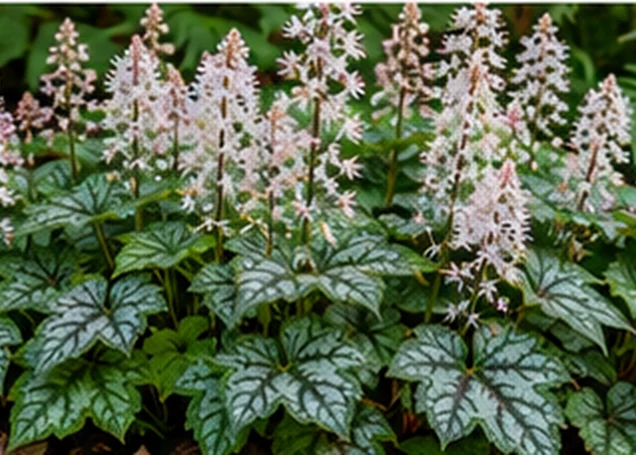
Botanical name: Tiarella cordifolia
Foamflower is a North American woodland perennial with delicate white flower spikes rising above attractive foliage.
It is a particularly useful option for gardeners interested in native shade plants.
The University of Maryland Extension identifies foamflower as a good ground cover for shaded areas with moist, organic-rich soil.
Growing conditions:
- Light: Partial to heavy shade
- Soil: Moist, organic-rich
- Bloom season: Spring into early summer, depending on conditions
- Best use: Woodland gardens and shaded ground-cover plantings
Garden tip: Plant foamflower in groups to create a soft carpet of foliage and spring flowers. Avoid letting newly planted specimens dry out.
10. Wild Blue Phlox — Best for Woodland Spring Color
Botanical name: Phlox divaricata
Wild blue phlox produces clusters of lavender-blue to pale violet flowers in spring.
Unlike sun-loving creeping phlox commonly planted on slopes, wild blue phlox is associated with woodland environments.
It works especially well beneath deciduous trees and along partially shaded borders.
Growing conditions:
- Light: Partial shade or dappled woodland light
- Soil: Moist, well-drained, organic-rich
- Bloom season: Spring
- Best use: Native woodland gardens and naturalized borders
Garden tip: Give plants adequate airflow and avoid prolonged drought. Wild blue phlox is better suited to woodland conditions than exposed, dry garden beds.
11. Virginia Bluebells — Best for Early-Spring Woodland Flowers
Botanical name: Mertensia virginica
Virginia bluebells create a beautiful spring display of nodding blue flowers that develop from pinkish buds.
This North American native is especially attractive when planted in drifts beneath deciduous trees.
It is a spring ephemeral, meaning its foliage naturally disappears as the growing season progresses.
Growing conditions:
- Light: Partial shade and woodland conditions
- Soil: Moist, fertile, well-drained
- Bloom season: Spring
- Best use: Woodland naturalization and native plant gardens
Garden tip: Mark planting locations after foliage disappears. Combine bluebells with later-emerging perennials to maintain summer interest.
12. Wild Columbine — Best for Hummingbird-Friendly Spring Flowers
Botanical name: Aquilegia canadensis
Wild columbine is a North American native perennial with distinctive red-and-yellow flowers.
Its delicate appearance makes it attractive in naturalistic gardens, woodland edges, and rocky areas with partial shade.
The flowers are especially appealing to hummingbirds.
Growing conditions:
- Light: Partial shade to sun, depending on region
- Soil: Well-drained; tolerates relatively lean soils
- Bloom season: Spring into early summer
- Best use: Native gardens and woodland edges
Garden tip: Wild columbine may self-seed in suitable locations. Allow some seed heads to mature if you want a more naturalized appearance.
13. Cardinal Flower — Best for Moist, Partially Shaded Gardens
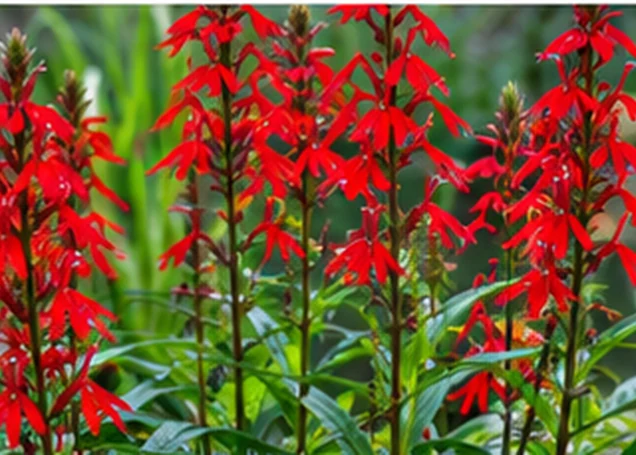
Botanical name: Lobelia cardinalis
Cardinal flower stands out with brilliant red flower spikes that attract hummingbirds.
This North American native is especially valuable in rain gardens, moist borders, and areas near ponds.
It is not a plant for dry shade.
Growing conditions:
- Light: Partial shade to full sun with adequate moisture
- Soil: Rich, consistently moist to wet
- Bloom season: Summer into early fall
- Best use: Rain gardens, moist woodland edges, and pollinator gardens
Garden tip: Never allow the root zone to dry out completely during active growth. In hotter climates, afternoon shade can be beneficial.
14. Great Blue Lobelia — Best for Blue Flowers in Moist Shade
Botanical name: Lobelia siphilitica
Great blue lobelia is another North American native with upright spikes of blue to violet-blue flowers.
It provides color later in the growing season, when many woodland spring flowers have finished blooming.
It performs particularly well in gardens with dependable moisture.
Growing conditions:
- Light: Partial shade to sun with adequate moisture
- Soil: Moist, rich soil
- Bloom season: Summer into early fall
- Best use: Rain gardens, native borders, and pollinator plantings
Garden tip: Pair great blue lobelia with cardinal flower for contrasting blue and red blooms in a moist planting area.
15. Green-and-Gold — Best for Yellow Flowers in Woodland Borders
Botanical name: Chrysogonum virginianum
Green-and-gold is a low-growing North American native that produces small, bright yellow flowers above spreading foliage.
It is useful near woodland paths and along the front of partially shaded beds.
Its relatively low growth habit makes it an attractive alternative to taller flowering perennials.
Growing conditions:
- Light: Partial shade to shade
- Soil: Well-drained, dry to moderately moist, depending on site
- Bloom season: Primarily spring, sometimes with additional flowers
- Best use: Native ground cover and woodland edging
Garden tip: Avoid assuming all shaded ground covers tolerate the same moisture conditions. Green-and-gold generally needs better drainage than moisture-loving cardinal flower.
16. Dwarf Crested Iris — Best for Low-Growing Spring Blooms
Botanical name: Iris cristata
Dwarf crested iris is a small North American native iris with delicate lavender-blue flowers.
It spreads gradually by rhizomes and can form attractive colonies in suitable woodland conditions.
This plant is a useful choice for gardeners who want spring color without tall flower stalks.
Growing conditions:
- Light: Partial shade or bright woodland light
- Soil: Well-drained, moderately moist, organic-rich
- Bloom season: Spring
- Best use: Woodland edges and low perennial borders
Garden tip: Plant it where spring sunlight reaches the soil before nearby trees develop a dense leaf canopy.
17. Oakleaf Hydrangea — Best Flowering Shrub for Partial Shade

Botanical name: Hydrangea quercifolia
Oakleaf hydrangea offers a different kind of flowering display from the smaller plants in this guide.
This North American native shrub produces large clusters of white flowers that gradually change color as they age. Its distinctive leaves also develop attractive fall color.
It can become a substantial shrub, so it needs more space than compact flowering perennials.
Growing conditions:
- Light: Partial shade; some sunlight generally improves flowering
- Soil: Moist, well-drained
- Bloom season: Late spring to summer, depending on climate
- Best use: Woodland edges, shrub borders, and foundation plantings with adequate room
Garden tip: Avoid planting oakleaf hydrangea in extremely dark shade if abundant flowers are your main goal. Check the mature size of the cultivar before planting.
Quick Comparison: Best Flowering Plants for Shade
| Plant | Plant Type | Preferred Light | Soil Moisture | Main Flowering Season |
|---|---|---|---|---|
| Impatiens | Tender perennial, usually annual | Partial to full shade | Consistently moist | Summer–fall |
| Tuberous Begonia | Tender perennial | Bright shade | Evenly moist, well-drained | Summer–fall |
| Wax Begonia | Tender perennial, usually annual | Partial shade | Moderate | Summer–fall |
| Wishbone Flower | Usually grown as annual | Partial shade | Consistently moist | Summer–fall |
| Fuchsia | Tender perennial or shrub | Bright shade | Consistently moist | Spring–fall |
| Astilbe | Perennial | Partial shade | Moist | Late spring–summer |
| Bleeding Heart | Perennial | Partial shade | Moist | Spring |
| Hellebore | Perennial | Partial to full shade | Moderate, well-drained | Winter–spring |
| Foamflower | Native perennial | Partial to heavy shade | Moist | Spring |
| Wild Blue Phlox | Native perennial | Partial shade | Moist | Spring |
| Virginia Bluebells | Native perennial | Woodland shade | Moist | Spring |
| Wild Columbine | Native perennial | Partial shade | Moderate, well-drained | Spring–early summer |
| Cardinal Flower | Native perennial | Partial shade | Wet to moist | Summer–fall |
| Great Blue Lobelia | Native perennial | Partial shade | Moist | Summer–fall |
| Green-and-Gold | Native perennial | Partial shade | Dry to moderately moist | Spring |
| Dwarf Crested Iris | Native perennial | Partial shade | Moderate | Spring |
| Oakleaf Hydrangea | Native shrub | Partial shade | Moderate | Late spring–summer |
Bloom times vary with region, weather, species, and cultivar. Some plants flower better with several hours of morning sunlight than in deep shade.
Best Flowering Plants for Different Shady Garden Conditions
Choosing the best flowering plants for shade becomes easier when you match each plant to a particular growing situation.
Best Flowering Plants for Full Shade
For a garden with bright indirect light but little direct sunshine, consider:
- Impatiens
- Foamflower
- Selected hellebores
- Tuberous begonias in sheltered locations
Even these plants may flower poorly in extremely dense shade.
If your garden receives almost no usable daylight, improving light conditions may be more effective than repeatedly replacing flowering plants.
Best Flowering Plants for Partial Shade
Partial shade offers the widest range of choices.
Excellent candidates include astilbe, wild columbine, wild blue phlox, cardinal flower, great blue lobelia, and oakleaf hydrangea.
However, soil moisture still matters. A sunny morning followed by afternoon shade is not enough to keep moisture-loving plants healthy in dry soil.
Best Flowering Plants for Dry Shade
Dry shade is one of the most challenging gardening conditions, especially beneath mature trees whose roots compete for water.
Green-and-gold, certain hellebores once established, and wild columbine in suitable well-drained locations may be worth considering.
Avoid choosing astilbe or cardinal flower for a dry site without a reliable watering plan.
Best Flowering Potted Plants for Shade
Containers allow you to control drainage and soil moisture more easily than planting beneath established trees.
Consider these combinations:
Shaded porch: Tuberous begonias with attractive foliage plants.
Small patio: Wishbone flowers in decorative pots.
Hanging baskets: Trailing fuchsia cultivars in a sheltered location.
Front entrance: Wax begonias for a neat, colorful display.
Choose containers with drainage holes and check moisture frequently during warm weather.
How to Design a Colorful Shade Garden
A successful shade garden depends on more than selecting individual flowers. Good design creates interest even when some plants are not blooming.
Combine Different Bloom Seasons
Use spring-flowering woodland plants such as Virginia bluebells, wild blue phlox, and dwarf crested iris for early color.
Follow them with summer-flowering annuals such as begonias and impatiens.
In consistently moist gardens, cardinal flower and great blue lobelia can add later-season interest.
This layered approach creates a longer season of color without expecting every plant to bloom continuously.
Mix Flower Colors and Foliage Textures
Shade gardens often look especially attractive when flowers contrast with foliage.
For example, combine the upright red flowers of cardinal flower with broad-leaved companions in a moist bed.
In a woodland border, the delicate spring flowers of foamflower can be complemented by ferns and other foliage plants.
A combination of leaf shapes, heights, and textures remains interesting after flowering ends.
Repeat Plants Instead of Using One of Everything
Planting several specimens of the same species can create a stronger visual effect than scattering many unrelated plants throughout a bed.
Use repeated groups of compatible plants to establish a natural rhythm.
Always allow enough space for mature growth and airflow.
How to Grow Flowering Plants Successfully in Shade
1. Test the Light
Watch the planting area during morning, midday, and afternoon.
Identify whether the site receives direct sunlight, filtered light, or mostly indirect daylight.
Remember that shade changes through the seasons as deciduous trees gain and lose leaves.
2. Improve Soil Carefully
Many woodland plants appreciate organic-rich soil, but not every flowering shade plant needs the same conditions.
In new planting beds, incorporate suitable organic matter where necessary.
Under mature trees, avoid deep digging or burying roots beneath thick layers of new soil. Tree roots are easily damaged.
3. Water According to the Plant
Shade does not automatically mean moist soil.
A bed beneath a mature maple may be much drier than an open garden because the tree roots compete for moisture.
Water newly planted flowers consistently until established, adjusting frequency for weather, drainage, and the plant’s needs.
4. Use Mulch Appropriately
A modest layer of organic mulch can reduce evaporation and moderate soil temperature.
Keep mulch away from plant crowns and woody stems.
In established native woodland gardens, retained leaf litter may also support beneficial insects and soil organisms.
5. Avoid Excess Fertilizer
More fertilizer does not necessarily produce more flowers.
Excess nitrogen may encourage leafy growth instead of blooms, and fertilizer cannot compensate for inadequate light.
Follow soil-test recommendations and plant-specific guidance rather than fertilizing automatically.
6. Choose Plants for Your Climate
The United States includes a wide range of growing conditions, from cold northern winters to hot southern summers.
Before purchasing a perennial, check its USDA Plant Hardiness Zone, local heat tolerance, and moisture requirements.
A plant suitable for a shaded garden in Pennsylvania may need different care in Texas or Florida.
Common Mistakes When Growing Flowering Plants in Shade
Mistake 1: Treating all shade as identical.
Bright shade, dappled shade, and extremely dark shade support different plants.
Mistake 2: Ignoring soil moisture.
Astilbe and cardinal flower need more moisture than many gardeners expect.
Mistake 3: Expecting annuals and perennials to behave the same way.
Impatiens and wax begonias are usually grown as seasonal flowers in colder climates, while hardy woodland perennials can return year after year.
Mistake 4: Planting too close to tree trunks.
This can disturb tree roots and expose new plants to severe competition.
Mistake 5: Expecting constant flowers from spring ephemerals.
Virginia bluebells naturally disappear aboveground after their spring growth cycle. This is not necessarily a sign of failure.
Frequently Asked Questions
What are the best flowering plants for shade?
Some of the best flowering plants for shade include impatiens, tuberous begonias, foamflower, hellebores, bleeding heart, and wild blue phlox. The right choice depends on light levels, soil moisture, climate, and whether you want annuals or perennials.
What flowers bloom all summer in the shade?
Impatiens, wax begonias, tuberous begonias, and wishbone flowers can provide long-lasting summer color in suitable shaded conditions. Most require bright shade or partial shade rather than extremely dark locations.
What perennial flowers grow in the shade?
Astilbe, hellebores, bleeding heart, foamflower, wild blue phlox, and dwarf crested iris are examples of flowering perennials for shaded gardens. Each has different moisture and seasonal requirements.
What flowering plants grow in partial shade?
Partial shade can support many flowering plants, including astilbe, wild columbine, cardinal flower, great blue lobelia, oakleaf hydrangea, and several begonias.
Can flowers grow in full shade?
Yes, some flowers can grow in bright full shade. However, extremely low light usually reduces flowering. Most flowering shade plants perform best with filtered daylight or some gentle direct sunshine.
What are the best flowering plants for shade in pots?
Tuberous begonias, wishbone flowers, impatiens, wax begonias, and suitable fuchsia cultivars are good options for shaded containers. Use well-drained potting mix and monitor moisture.
Are there native flowering plants for shade?
Yes. Depending on your region, native options may include foamflower, Virginia bluebells, wild blue phlox, wild columbine, green-and-gold, and dwarf crested iris. Always check whether a species is native to your specific area.
Do flowering shade plants need fertilizer?
Not always. Fertilizer needs depend on soil fertility, plant species, and growing conditions. A soil test is a better starting point than applying fertilizer routinely.
Final Thoughts
The best flowering plants for shade are not necessarily the ones with the largest flowers or longest bloom season. They are the plants that match the light, soil, and climate of your particular garden.
For long-lasting seasonal color, consider impatiens, begonias, and wishbone flowers.
For a traditional perennial border, try astilbe, hellebores, and bleeding heart.
For a more natural woodland garden, explore foamflower, wild blue phlox, Virginia bluebells, and other regionally appropriate native flowers.
With thoughtful plant selection, a shady yard can become one of the most colorful and inviting parts of your landscape.
Explore more shade gardening guides:
References and Further Reading
- University of Maryland Extension — Native Plants for Shade — Native woodland gardening, seasonal light, and habitat-friendly planting.
- University of Minnesota Extension — Begonia — Begonia light requirements, drainage, and growing practices.
- University of Minnesota Extension — Tuberous Begonias — Shade suitability, containers, and seasonal care.
- University of Maryland Extension — Foamflower — Native foamflower characteristics and growing conditions.
- NC State Extension — Cardinal Flower — Moisture requirements, light exposure, and pollinator value.
- University of Maryland Extension — Landscape Designs with Native Plants — Native plant combinations and landscape planning.
Editorial note: Plant performance, bloom periods, and winter survival vary by region and cultivar. Consult your local Cooperative Extension service for site-specific recommendations.