
Table of Contents
If you want a landscape shrub that adds brilliant color without demanding constant attention, Sunshine Ligustrum deserves a place on your gardening list. With its golden-yellow foliage, naturally compact growth, and versatile landscaping uses, this ornamental shrub can brighten front yards, garden borders, walkways, and outdoor containers.
Also known as Sunshine Privet or Ligustrum sinense ‘Sunshine’, this distinctive plant stands out from traditional green privet varieties. Its foliage becomes especially vibrant in full sunlight, creating a beautiful contrast against darker shrubs, ornamental grasses, and flowering perennials.
The plant care is relatively straightforward once you understand its sunlight, soil, watering, and pruning requirements. Whether you are planning a Sunshine Ligustrum hedge or growing a single shrub near your front entrance, the following 11 tips will help you create a healthy, attractive landscape.
What Is Sunshine Ligustrum?
Sunshine Ligustrum is a cultivated variety of Chinese privet known for its bright golden foliage and dense, rounded growth habit. Its botanical name is Ligustrum sinense ‘Sunshine’, and it is marketed through the Southern Living Plant Collection.
Unlike many traditional privet varieties, this cultivar is sterile and does not produce flowers or berries. As a result, it does not spread through seed production.
This is an important distinction because several other privet species and varieties have become invasive in parts of the United States. However, gardeners should still check regional planting recommendations before introducing any Ligustrum to their landscapes.
Sunshine Ligustrum Quick Facts
| Feature | Details |
|---|---|
| Botanical name | Ligustrum sinense ‘Sunshine’ |
| Common names | Sunshine Ligustrum, Sunshine Privet |
| Plant type | Ornamental evergreen or semi-evergreen shrub |
| USDA hardiness zones | 6–10 |
| Mature height | Approximately 3–6 feet |
| Mature width | Approximately 3–4 feet |
| Sun exposure | Full sun to partial shade |
| Foliage | Golden-yellow to chartreuse |
| Soil | Well-drained garden soil |
| Growth rate | Moderate |
| Flowering | Does not produce flowers |
| Landscape uses | Hedges, borders, foundation plantings, containers |
Plant size and evergreen performance vary according to climate, growing conditions, and pruning practices.
1. Give Sunshine Ligustrum Plenty of Sunlight
Sunlight is one of the most important factors in maintaining the beautiful golden color of Sunshine Ligustrum.
For the brightest foliage, choose a planting location that receives at least six hours of direct sunlight daily.
This golden shrub can tolerate partial shade, but its leaves may develop a greener or chartreuse appearance when sunlight is limited.
In particularly hot inland climates, some afternoon shade may help reduce heat stress, especially while young plants are establishing.
Best Sunlight Conditions
- Full sun: Produces the brightest golden foliage.
- Partial shade: Supports growth but may result in greener leaves.
- Deep shade: Generally unsuitable for maintaining the plant’s best appearance.
Gardening tip: Plant Sunshine Ligustrum where its golden foliage can contrast with dark green evergreens, burgundy-leaved shrubs, or a brick exterior.
2. Choose Well-Drained Soil for Healthy Growth
Sunshine Ligustrum grows best in soil that drains efficiently while retaining enough moisture to support healthy roots.
It adapts to several soil textures, including sandy and loamy soils, provided drainage is adequate.
Heavy, compacted soil that remains wet for extended periods can increase the risk of root problems.
Before planting, inspect the area after rainfall. If water remains standing for long periods, improve drainage or select a better location.
How to Prepare the Planting Area
- Remove weeds and competing vegetation.
- Dig a planting hole approximately twice as wide as the root ball.
- Keep the planting depth close to the original container depth.
- Place the shrub carefully without burying the root crown.
- Backfill with native soil and water thoroughly.
- Add mulch around the planting area, keeping it away from the stems.
Avoid placing the shrub too deeply. Correct planting depth encourages healthy establishment and reduces unnecessary stress.
3. Water Sunshine Ligustrum Properly
Sunshine Ligustrum care requires more frequent watering during establishment than after the shrub develops a strong root system.
Newly planted shrubs generally benefit from deep watering once or twice weekly during the first growing season, depending on rainfall, temperature, and soil conditions.
Sandy soil may dry more quickly, while heavier soil can retain moisture longer.
Rather than following a rigid watering schedule, check the soil regularly and adjust according to actual conditions.
Watering Guide
| Plant Stage | Watering Recommendation |
|---|---|
| Newly planted | Water deeply and monitor soil moisture |
| First growing season | Usually 1–2 times weekly, adjusted for weather |
| Established shrubs | Water during prolonged dry periods |
| Container plants | Check more frequently because pots dry faster |
| Winter | Water when needed if the ground is not frozen |
Once established, this plant develops useful drought tolerance, although extended dry weather can still affect its appearance.
Avoid constantly saturated soil, which can interfere with healthy root function.
4. Fertilize in Spring for Strong Growth
Sunshine Ligustrum generally does not require heavy fertilization.
An application of balanced, slow-release shrub fertilizer in early spring can support healthy foliage and new growth, especially in nutrient-poor soil.
Always follow the fertilizer label and consider soil-test results before adding unnecessary nutrients.
Excessive fertilization can encourage overly vigorous growth and may contribute to plant stress.
Simple Fertilizing Tips
- Apply fertilizer in early spring when needed.
- Use a product suitable for ornamental shrubs.
- Follow the manufacturer’s recommended application rate.
- Water appropriately after application.
- Avoid unnecessary late-season feeding in colder regions.
Healthy soil, proper watering, and sufficient sunlight are more important than frequent fertilizer applications.
5. Understand Sunshine Ligustrum Size and Growth Rate
One reason gardeners choose this shrub is its manageable mature size.
Sunshine Ligustrum commonly reaches approximately 3–6 feet tall and 3–4 feet wide, although dimensions can vary with local conditions and maintenance.
The plant has a dense, naturally rounded growth habit, making it useful for foundation plantings and ornamental borders.
Its moderate growth rate allows gardeners to maintain a neat appearance without constant pruning.
How Much Space Does Sunshine Ligustrum Need?
For individual shrubs, provide enough room for their expected mature width.
For a Sunshine Ligustrum hedge, plants are commonly spaced around 3 feet apart, depending on the desired appearance and available growing space.
A closer arrangement creates a continuous hedge more quickly but may require additional shaping as the plants mature.
Avoid placing shrubs too close to walls, walkways, or other plants where their natural spread would create crowding.
6. Prune Sunshine Ligustrum at the Right Time
Pruning Sunshine Ligustrum helps maintain an attractive shape, encourages branching, and controls the shrub’s overall size.
Although the plant naturally develops a compact form, occasional pruning can create a more formal appearance.
Late winter or early spring is generally a suitable time for shaping, with light maintenance pruning during the growing season when necessary.
How to Prune Sunshine Ligustrum
- Inspect the shrub for dead, damaged, or crossing branches.
- Remove unhealthy growth using clean pruning tools.
- Shorten excessively long stems to improve shape.
- Thin selected branches if the interior becomes crowded.
- Maintain a slightly wider base when shaping a formal hedge.
- Avoid excessive pruning late in autumn.
For a natural landscape design, selective hand pruning usually produces a softer appearance than repeated heavy shearing.
Pruning tip: Avoid removing large amounts of healthy foliage unnecessarily. Gradual shaping is often sufficient to maintain the shrub’s appearance.
7. Protect Sunshine Ligustrum in Winter
Sunshine Ligustrum in winter can look different depending on the USDA hardiness zone.
According to the Southern Living Plant Collection, the shrub is generally evergreen in USDA Zones 7–10 but may become semi-deciduous in Zone 6.
In colder locations, some leaf loss or foliage discoloration may occur during harsh weather.
This does not automatically mean the plant has died.
Winter Care Tips
- Apply mulch around the root zone to moderate soil temperature.
- Keep mulch away from the trunk and stems.
- Avoid heavy pruning before freezing weather.
- Water during extended dry periods when the soil is workable.
- Protect young shrubs from severe winter winds when practical.
In spring, allow time for new growth to emerge before deciding whether winter-damaged branches need removal.
For gardeners in colder parts of Zone 6, a protected planting location may improve winter performance.
8. Identify Common Sunshine Ligustrum Problems
Although this golden shrub is relatively easy to maintain, improper growing conditions can cause problems.
Early identification helps prevent minor issues from becoming more serious.
Sunshine Ligustrum Problems and Solutions
| Problem | Possible Cause | Recommended Action |
|---|---|---|
| Leaves becoming greener | Insufficient sunlight | Increase sun exposure where practical |
| Brown leaf edges | Drought, heat, or other environmental stress | Check soil moisture and growing conditions |
| Excessive leaf drop | Winter stress, moisture problems, or transplant shock | Inspect roots, drainage, and seasonal conditions |
| Wilting with wet soil | Poor drainage or root damage | Reduce saturation and assess root health |
| Weak growth | Limited sunlight, poor roots, or nutrient issues | Check site conditions and consider soil testing |
| Leaf spots | Possible fungal disease | Improve airflow and avoid prolonged wet foliage |
| Sticky leaves or visible insects | Possible aphids, whiteflies, or scale | Identify the pest before selecting a treatment |
Why Is My Sunshine Ligustrum Turning Brown?
Browning may result from several causes, including drought stress, prolonged wet soil, winter damage, or excessive heat.
Check the soil before watering. A dry root zone and saturated soil require very different responses.
If the shrub is declining rapidly, consult a local Cooperative Extension office or plant diagnostic service for help identifying the underlying problem.
Why Is My Sunshine Ligustrum Losing Leaves?
Seasonal leaf loss may occur in colder growing regions, particularly USDA Zone 6.
However, sudden or widespread leaf drop during the growing season can indicate environmental stress.
Inspect the planting site, drainage, and recent weather conditions before assuming the plant has a disease.
9. Create a Beautiful Sunshine Ligustrum Hedge
A Sunshine Ligustrum hedge adds bright foliage and visual structure to residential landscapes.
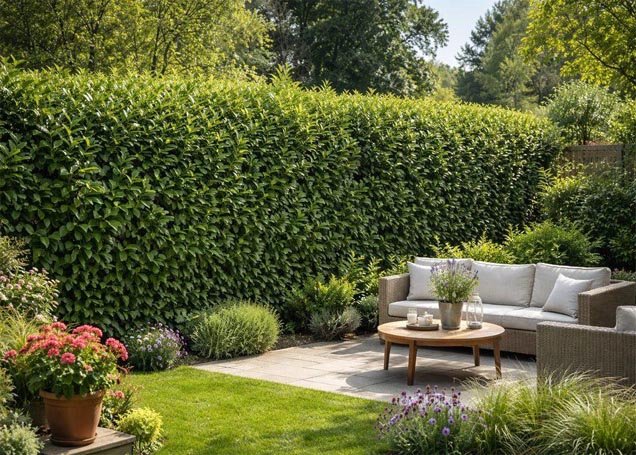
Its compact habit makes it particularly suitable for low to medium-height hedges, walkway borders, and decorative property divisions.
Unlike taller privacy shrubs, this ornamental shrub is often better suited to ornamental screening than complete privacy.
Sunshine Ligustrum Hedge Ideas
Front walkway border: Plant a row along a sunny walkway to create a welcoming entrance.
Foundation hedge: Use the golden foliage to contrast with brick, stone, or dark siding.
Garden room divider: Create a low hedge that separates a seating area from surrounding flower beds.
Mixed shrub border: Combine Sunshine Ligustrum with darker evergreen shrubs for contrasting foliage colors.
Curved landscape edging: Repeat the shrub along gently curved garden beds to create a cohesive design.
For more outdoor inspiration, explore our Small Backyard Landscaping Ideas.
10. Choose the Best Sunshine Ligustrum Companion Plants
The best Sunshine Ligustrum companion plants share similar sunlight and drainage requirements while offering contrasting foliage, flowers, or textures.
Because this plant already provides a strong yellow accent, pairing it with darker plants can create an especially attractive landscape.
Recommended Companion Plants
| Companion Plant | Design Benefit |
|---|---|
| Loropetalum | Burgundy foliage contrasts with golden leaves |
| Dwarf Yaupon Holly | Dense green foliage adds structure |
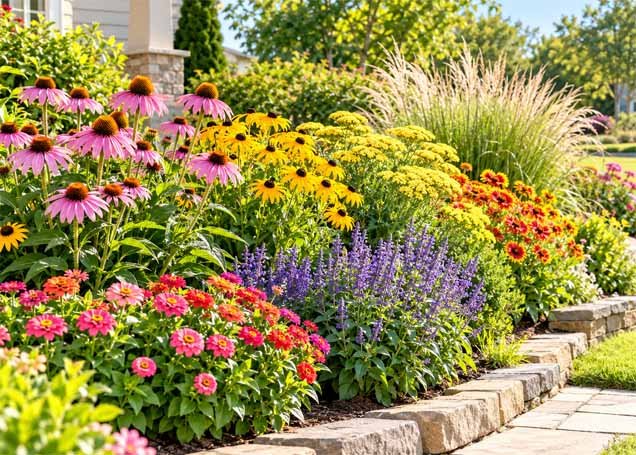
| Coneflowers | Colorful seasonal flowers attract pollinators |
| Salvia | Flower spikes create vertical interest |
| Daylilies | Colorful blooms complement shrub borders |
| Ornamental grasses | Fine foliage adds movement and texture |
| Boxwood | Green foliage creates a classic contrast |
Choose individual species and cultivars based on local climate, mature size, soil drainage, and sunlight.
For example, some ornamental grasses and flowering perennials require different moisture conditions than Sunshine Ligustrum.
Simple Landscaping Combination
Try combining three Sunshine Ligustrum shrubs with dark-leaved loropetalum and a group of purple-flowering salvia.
The golden foliage creates a bright foundation, while the darker shrubs and seasonal flowers introduce contrast.
This combination can work especially well in sunny front-yard planting beds where the selected companion varieties are locally adapted.
11. Grow Sunshine Ligustrum in Containers
Sunshine Ligustrum can also grow successfully in large outdoor containers.
Container planting is useful for patios, entryways, and smaller outdoor spaces where traditional garden beds are unavailable.
Select a sturdy container with drainage holes and enough room for the shrub’s root system.
Use a quality potting mix formulated for outdoor container plants rather than heavy garden soil.
Container Care Tips
- Choose a container with adequate drainage.
- Position it where the shrub receives sufficient sunlight.
- Check soil moisture regularly during hot weather.
- Avoid allowing the container to remain waterlogged.
- Repot when roots become crowded.
- Consider additional root protection during freezing temperatures.
Container-grown shrubs generally require closer moisture monitoring than plants growing directly in the ground.
In cold climates, exposed containers may experience lower root temperatures than surrounding garden soil, so winter protection is especially important.
Sunshine Ligustrum vs. Traditional Privet
Sunshine Ligustrum differs from many traditional privet varieties in several important ways.
| Feature | Sunshine Ligustrum | Many Traditional Privets |
|---|---|---|
| Foliage color | Golden-yellow | Usually green |
| Flowers | Does not flower | Many produce flowers |
| Berries | Does not produce berries | Many produce berries |
| Seed spread | Sterile cultivar | Some spread readily by seed |
| Landscape appearance | Bright ornamental accent | Often used for green hedges |
| Invasive concerns | Does not spread by seed | Several species are invasive in parts of the USA |
Not all privets have the same characteristics. Gardeners should identify the exact species or cultivar rather than assuming every Ligustrum behaves alike.
Sunshine Ligustrum is promoted as a sterile, non-reseeding cultivar, but local environmental recommendations should still guide planting decisions.
Best Places to Plant Sunshine Ligustrum
Sunshine Ligustrum is particularly useful in sunny residential landscapes where its golden foliage can become a focal point.
Consider using it in:
- Front-yard foundation beds
- Walkway borders
- Low ornamental hedges
- Mixed shrub gardens
- Outdoor patio containers
- Mass plantings
- Entryway landscapes
Before planting, consider the mature size, available sunlight, drainage, and maintenance access.
Gardeners planning larger landscape improvements may also enjoy our Gardening Tips for Beginners.
Frequently Asked Questions About Sunshine Ligustrum
Is Sunshine Ligustrum evergreen?
Sunshine Ligustrum is generally evergreen in USDA Zones 7–10. In Zone 6, it may behave as a semi-deciduous shrub and lose some foliage during cold weather.
How big does Sunshine Ligustrum get?
The shrub commonly reaches approximately 3–6 feet tall and 3–4 feet wide. Actual size depends on growing conditions and pruning.
Does Sunshine Ligustrum need full sun?
Full sun produces the brightest golden foliage. The plant tolerates partial shade, but its leaves may become greener when sunlight is limited.
How fast does Sunshine Ligustrum grow?
Sunshine Ligustrum generally has a moderate growth rate. Healthy plants can develop noticeable new growth during the growing season, but annual growth varies with climate and care.
Can Sunshine Ligustrum grow in pots?
Yes. Sunshine Ligustrum grows in outdoor containers when provided with suitable potting mix, drainage, sunlight, and regular moisture monitoring.
When should I prune Sunshine Ligustrum?
Late winter or early spring is a good time for general shaping. Light maintenance pruning can also be performed during the growing season.
Is Sunshine Ligustrum invasive?
The ‘Sunshine’ cultivar is sterile and does not produce seeds, unlike many other privets. Nevertheless, gardeners should check local recommendations because invasive-plant guidance can differ by region.
Why is my Sunshine Ligustrum turning green?
Insufficient sunlight is a common reason for greener foliage. Increasing direct sunlight, when appropriate for the climate, can help maintain its characteristic golden color.
How far apart should Sunshine Ligustrum be planted for a hedge?
Approximately 3 feet between plants is a commonly recommended starting point for a continuous hedge. Adjust spacing according to the intended appearance and mature plant dimensions.
Is Sunshine Ligustrum safe for pets?
Do not assume Sunshine Ligustrum is safe for pets. Ligustrum plants can contain compounds that are harmful if eaten. Keep pets and children from consuming the plant, and consult a veterinarian promptly if a pet eats it.
Final Thoughts
Sunshine Ligustrum is an attractive option for gardeners who want golden foliage, manageable growth, and versatile landscaping possibilities.
The most important care practices for this golden shrub are simple: provide adequate sunlight, maintain well-drained soil, water carefully during establishment, and prune only when necessary.
Whether grown as a decorative hedge, a foundation shrub, or a container accent, this plant can add warmth and structure to a thoughtfully designed garden.
With suitable growing conditions and seasonal maintenance, this distinctive golden shrub can remain an appealing part of your landscape for years.
References and Further Reading
- Southern Living Plant Collection — Sunshine Ligustrum — Botanical identity, hardiness zones, plant dimensions, and landscape uses.
- Southern Living Plant Collection — Sunshine Ligustrum FAQs — Watering, pruning, winter performance, spacing, and common problems.
- Royal Horticultural Society — Ligustrum sinense ‘Sunshine’ — Plant characteristics and growing requirements.
- Sunset Plant Collection — Sunshine Ligustrum — Soil, fertilizer, sunlight, and container care.
- United States Plant Patent PP20379 — Ligustrum ‘Sunshine’ — Cultivar identification and documented plant characteristics.